Normal Short Vowels Worksheets for Ages 5-9
12 filtered results
-
From - To
Unlock your child's reading potential with our Normal Short Vowels Worksheets, designed for ages 5-9. These engaging, printable resources focus on reinforcing short vowel sounds through various fun activities, including matching, coloring, and fill-in-the-blank exercises. Perfect for homeschooling or classroom use, our worksheets help young learners develop their phonetic skills while enhancing their vocabulary and comprehension. Each worksheet is aligned with early literacy standards, ensuring a well-rounded approach to learning. Explore our collection and give your child the foundational tools they need to excel in reading and writing! Download now for a fun-filled educational experience!
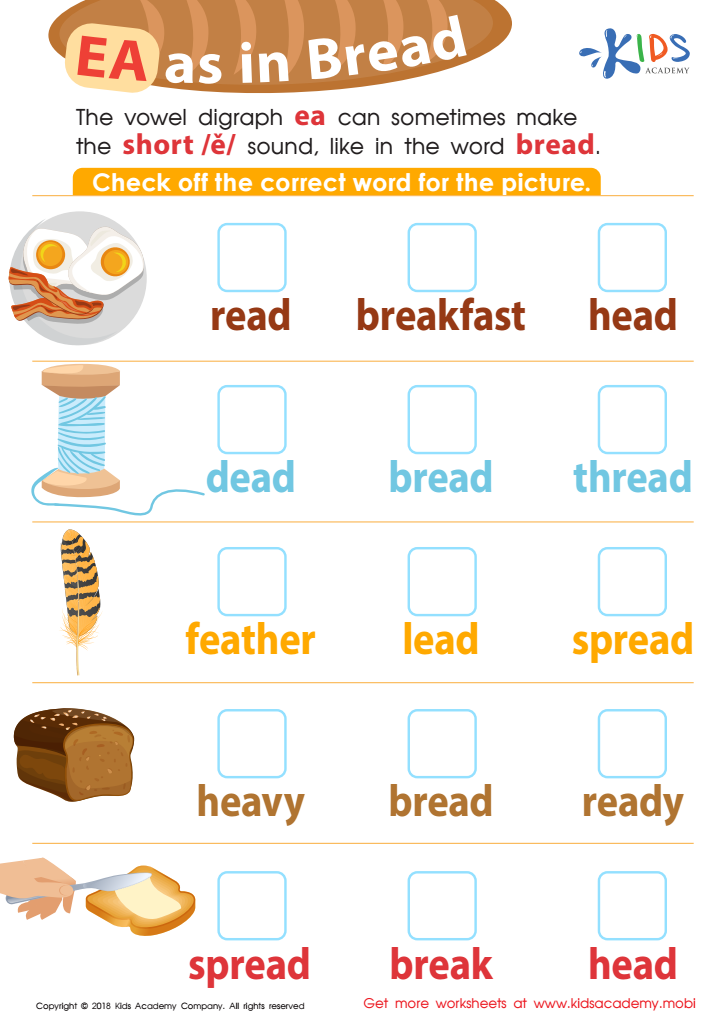
Reading: EA as in Bread Worksheet
 Assign to My Students
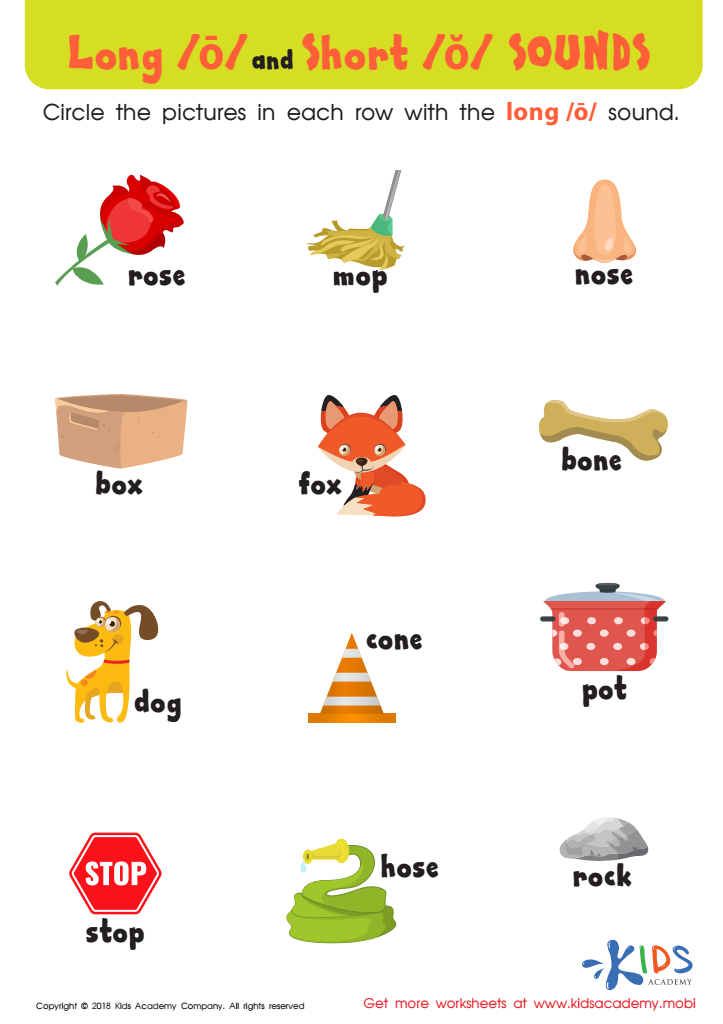
Reading: Long O and Short O Sounds Worksheet
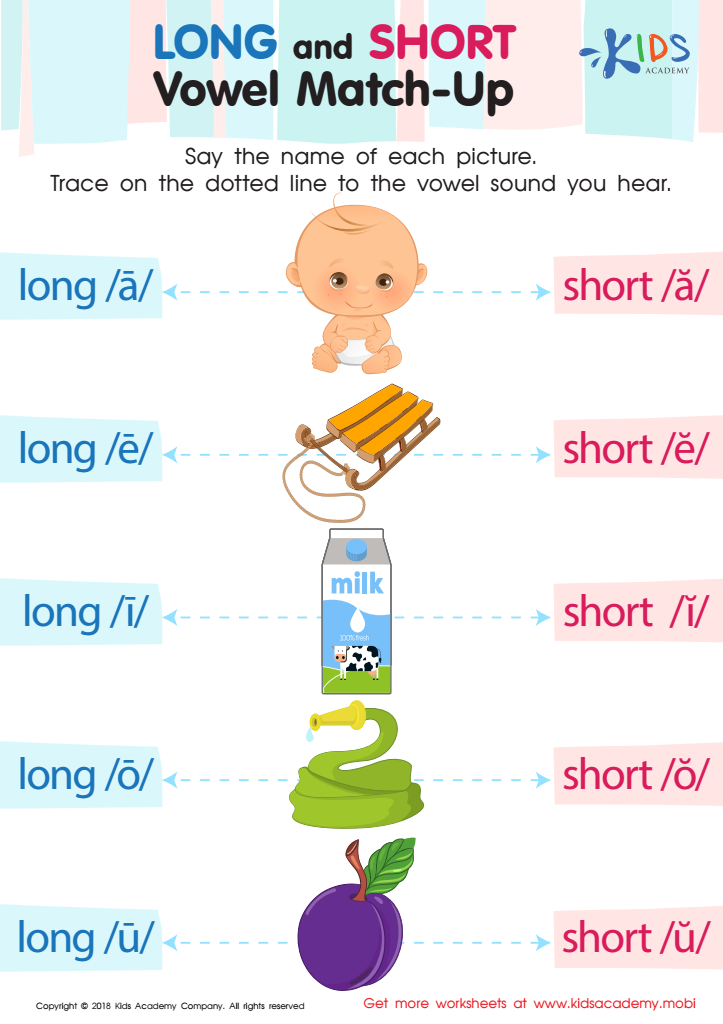
Long and Short Vowel Match up Reading Worksheet
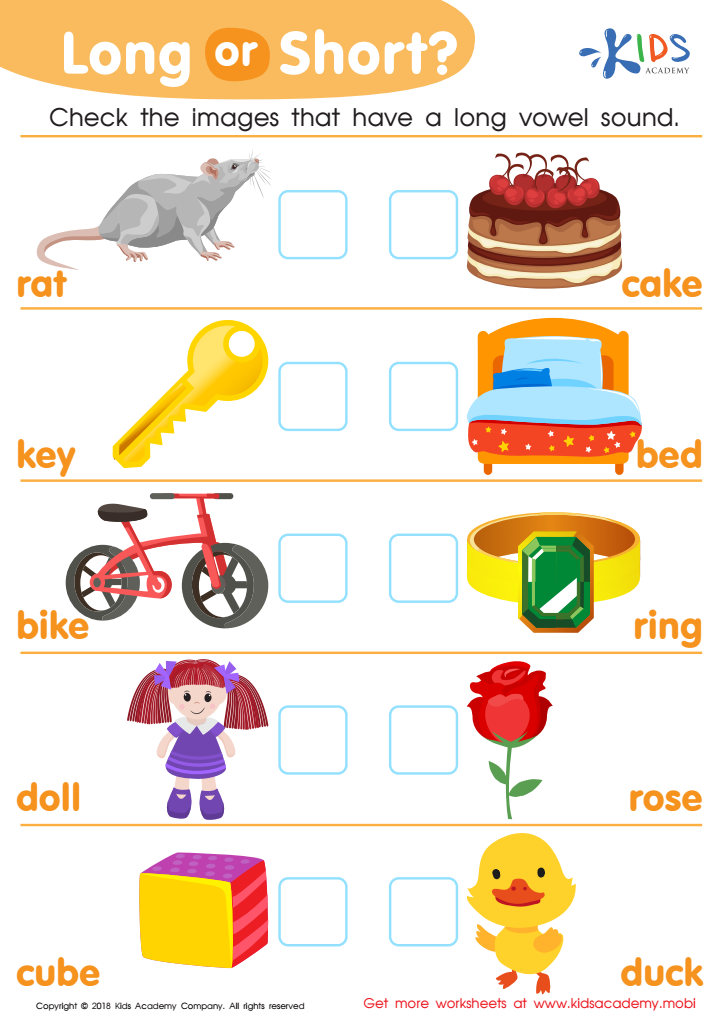
Long or Short Reading Worksheet
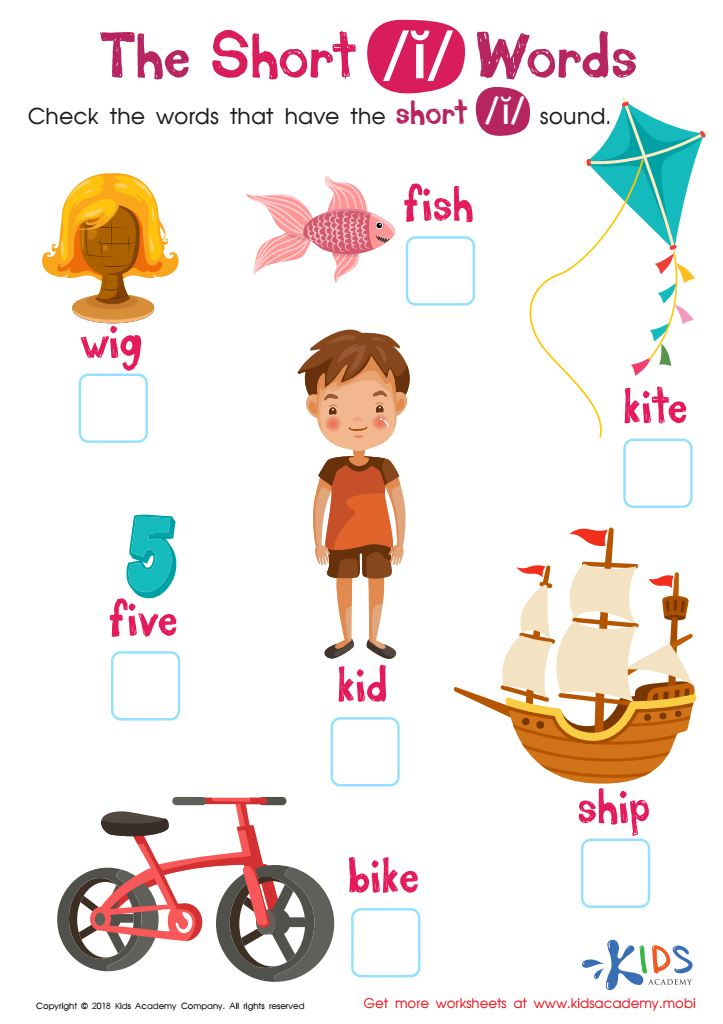
The Short I Words Reading Worksheet
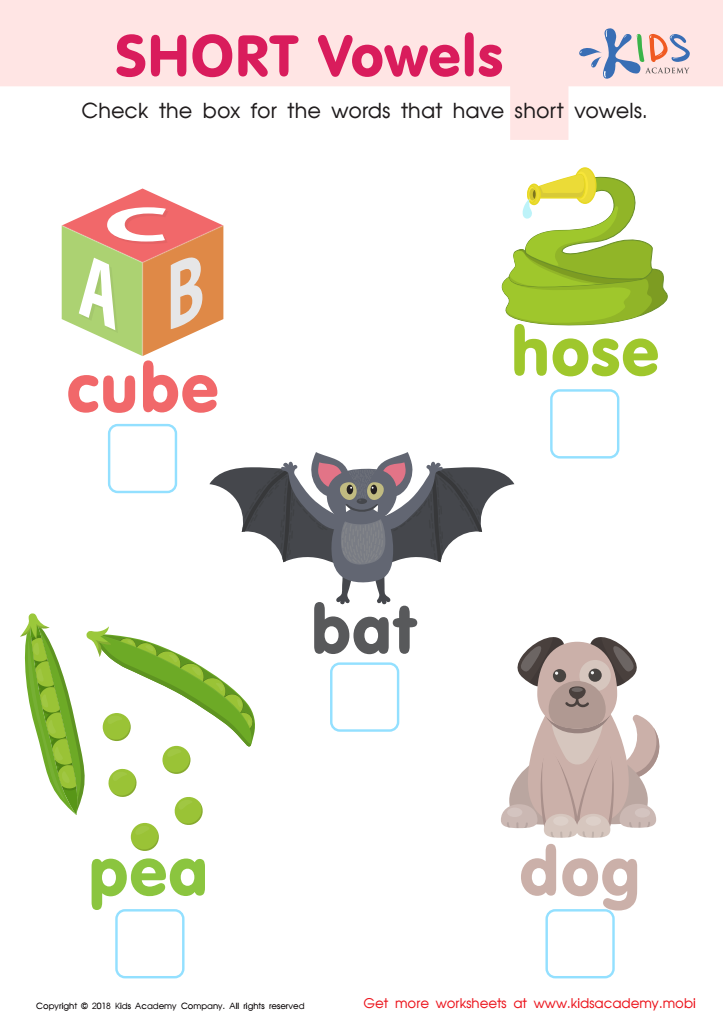
short vowels Worksheet
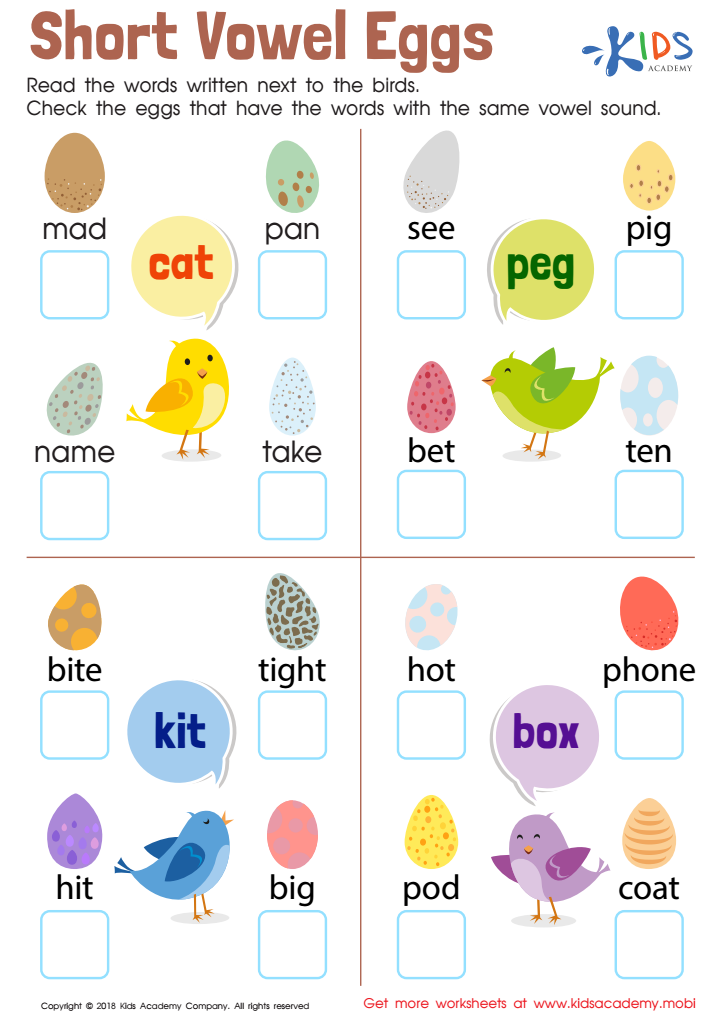
Short Vowel Eggs Worksheet
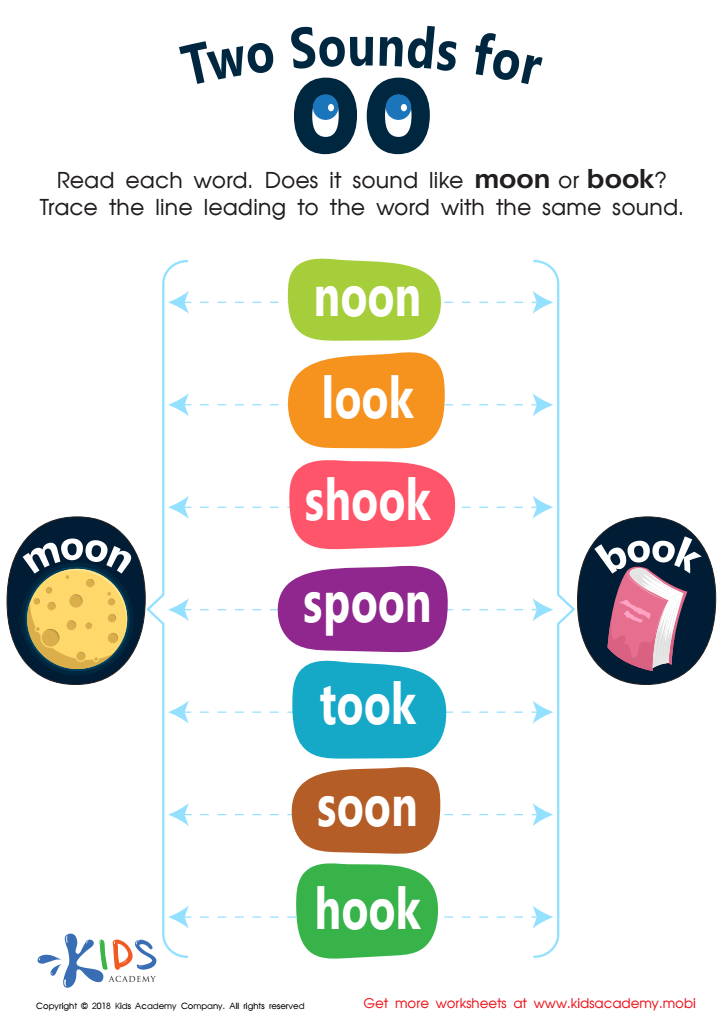
Two Sounds for OO Worksheet
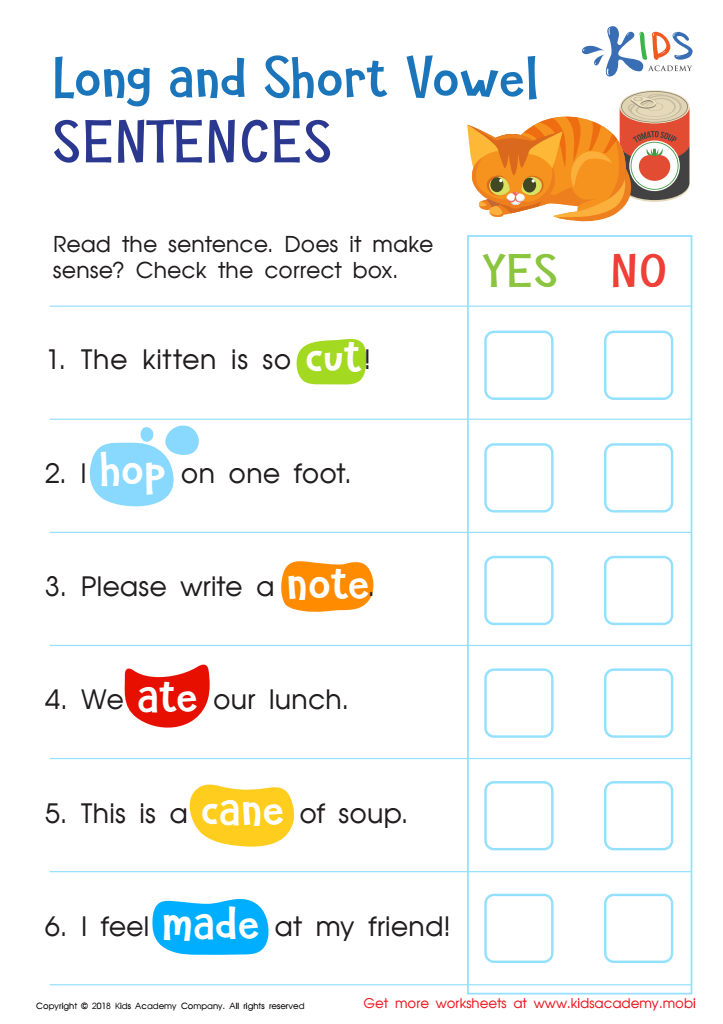
Long and Short Vowel Sentences: Assessment Worksheet
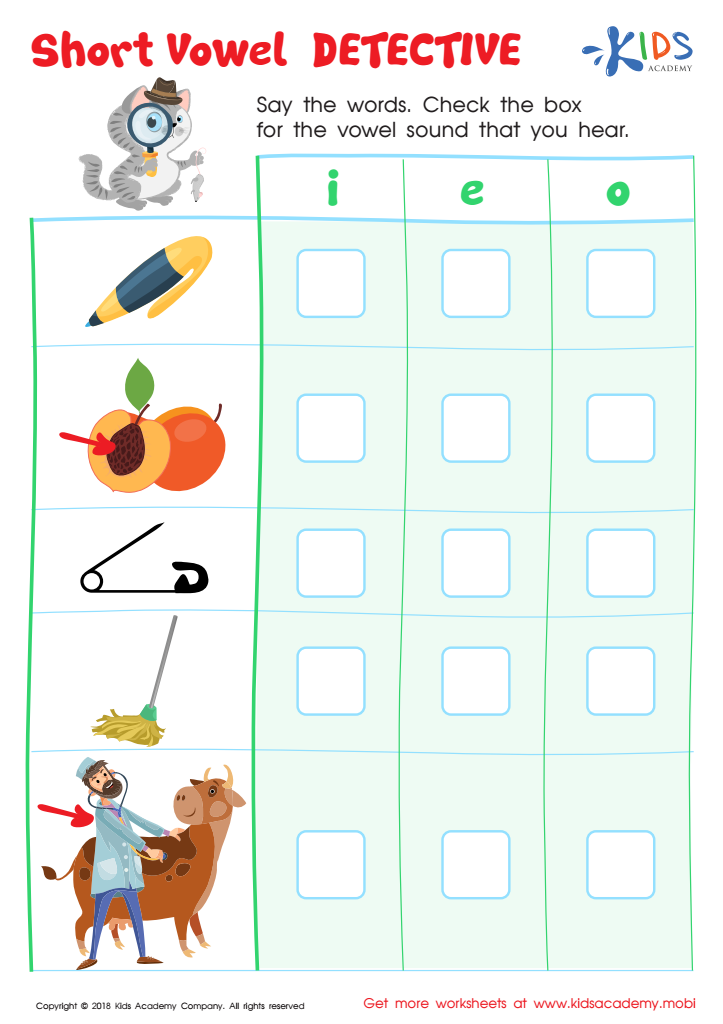
Short Vowel Detective Worksheet
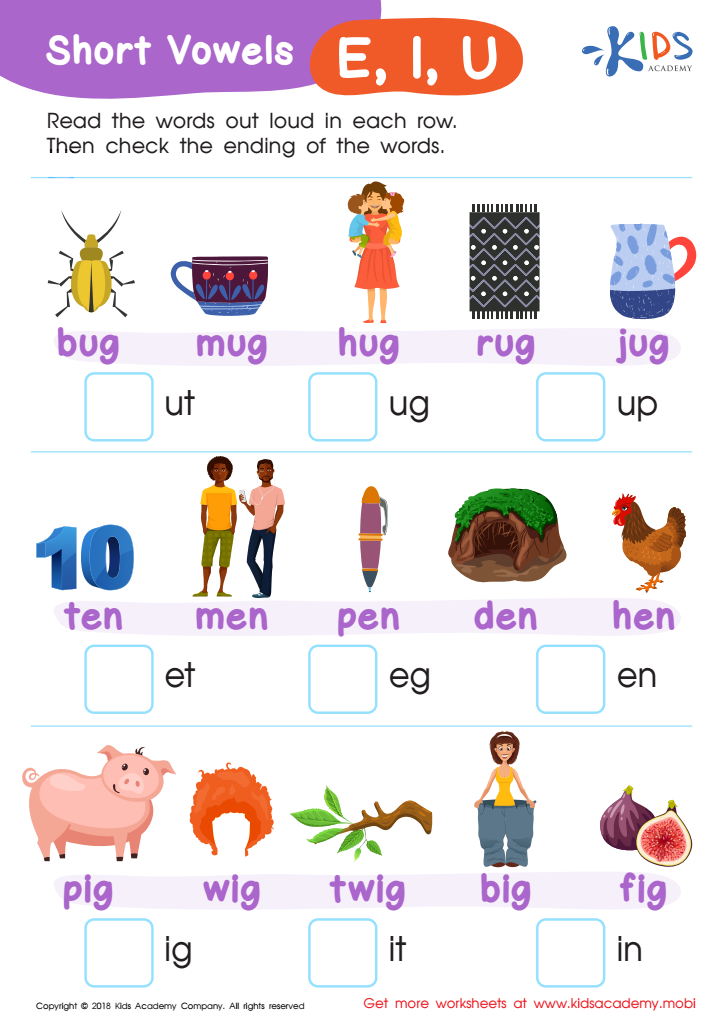
Short Vowels /e/, /i/, and /u/ Worksheet
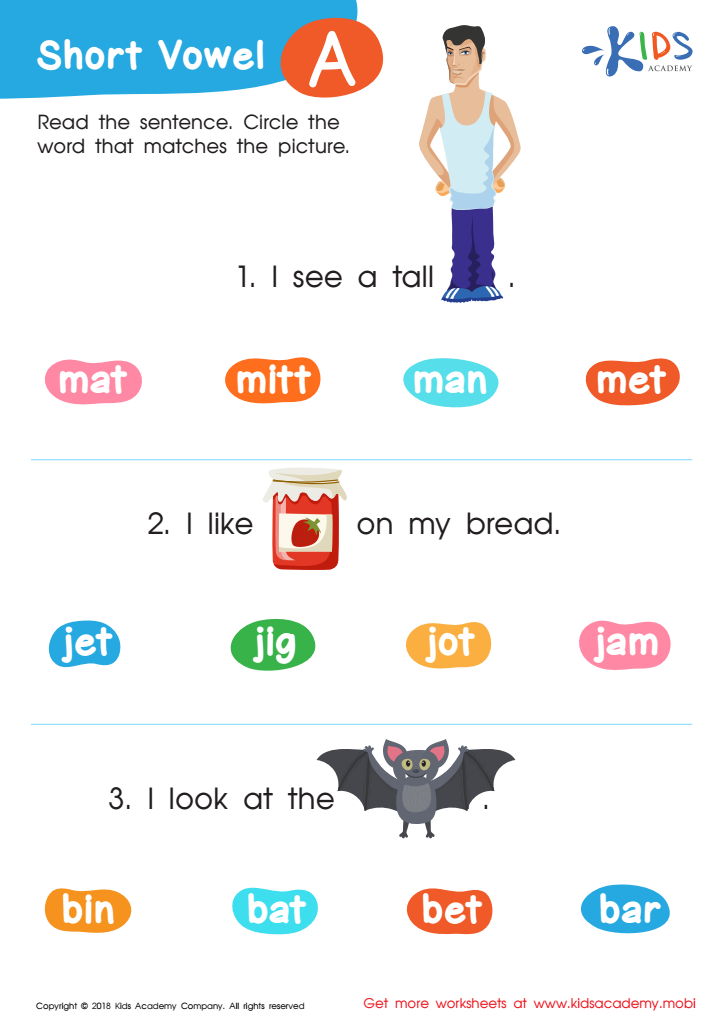
Short Vowel /a/ Worksheet



Normal short vowels are fundamental building blocks of reading and writing for children aged 5-9. Understanding these sounds lays the foundation for literacy. Short vowels—like those in "cat," "bed," "pig," "dog," and "fun"—help children decode words and develop phonemic awareness. This skill is crucial as it makes up nearly 50% of the English language.
For teachers and parents, caring about short vowels means investing in a child’s future academic success. Mastery of these phonetic sounds assists children in sounding out unfamiliar words and enhances spelling skills, building their confidence as emerging readers. Additionally, short vowels are integral to phonics instruction, a style proven effective for teaching young readers.
Encouraging practice with short vowels through reading, games, and activities nurtures curiosity and promotes a positive attitude towards learning. By prioritizing short vowel skills, parents and teachers empower children to become effective communicators who can express themselves clearly.
Moreover, strong literacy skills are linked to better performance across subjects, helping foster a love of learning that lasts a lifetime. In essence, mastering short vowels equips children with essential tools for success in both academic and real-world scenarios. Therefore, it is vital for adults to actively support this area of literacy development.