Normal Silent Vowels Worksheets for Ages 5-9
5 filtered results
-
From - To
Discover our engaging "Normal Silent Vowels Worksheets" designed for children aged 5-9! These interactive worksheets focus on teaching young learners the essential concept of silent vowels in a fun and creative way. Students will enjoy a variety of exercises that promote reading skills, phonemic awareness, and vocabulary development. Each worksheet includes colorful illustrations and relatable examples to captivate children's interest while enhancing literacy skills. Perfect for home or classroom use, these resources empower educators and parents to support their child's language development effectively. Explore our collection today and transform learning silent vowels into an enjoyable adventure!
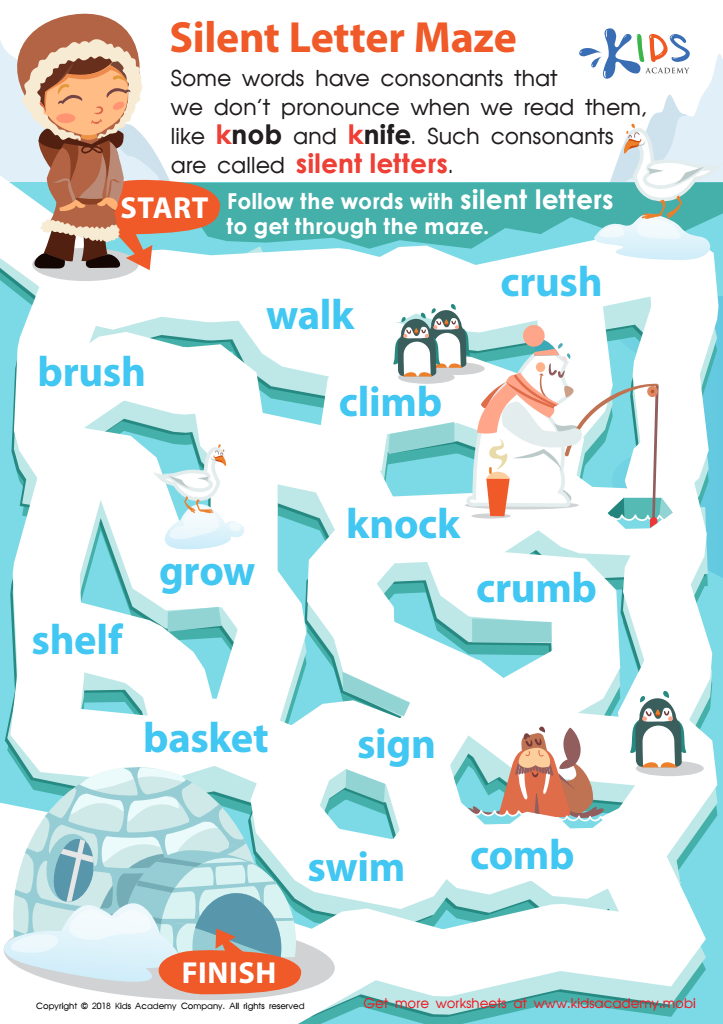
Silent Letter Maze Worksheet
 Assign to My Students
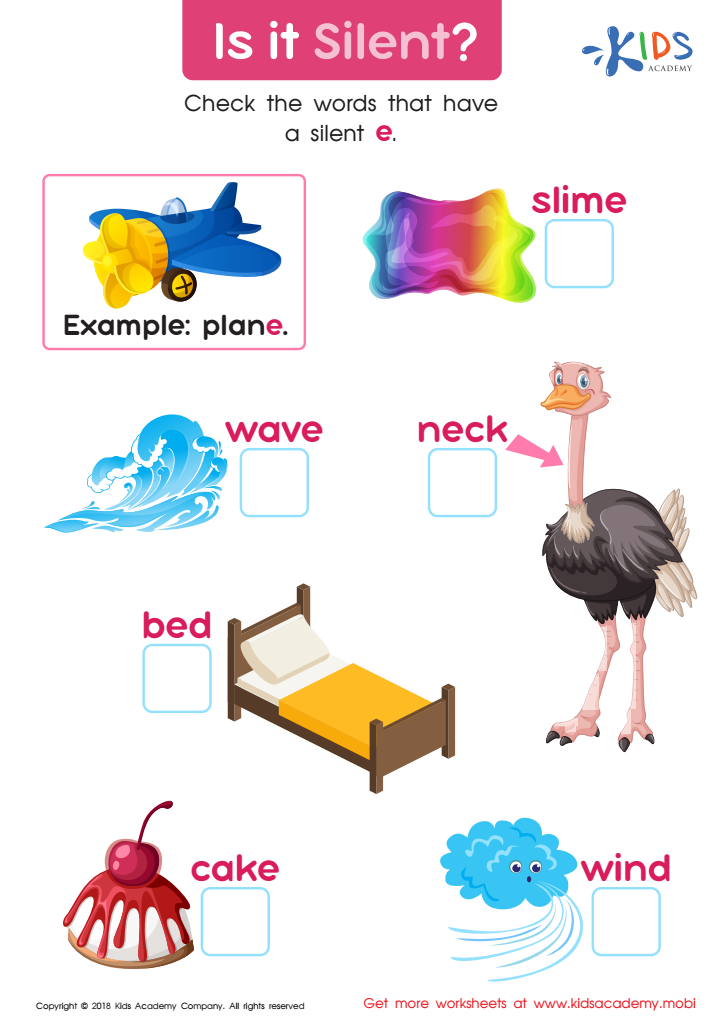
Is It Silent? Worksheet
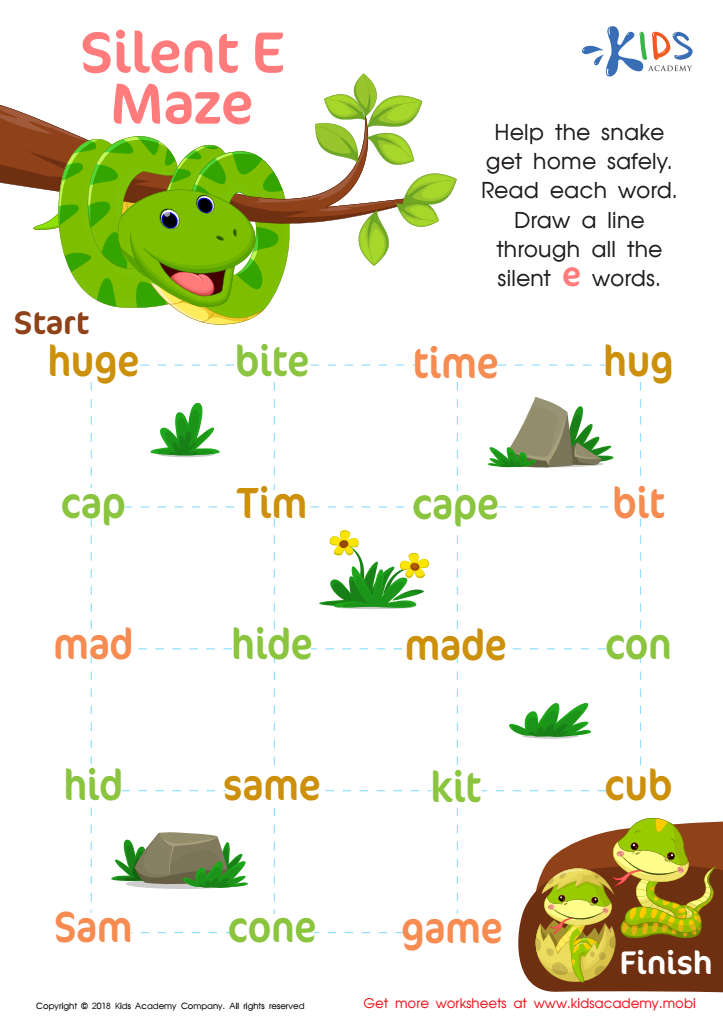
Silent E Maze Worksheet
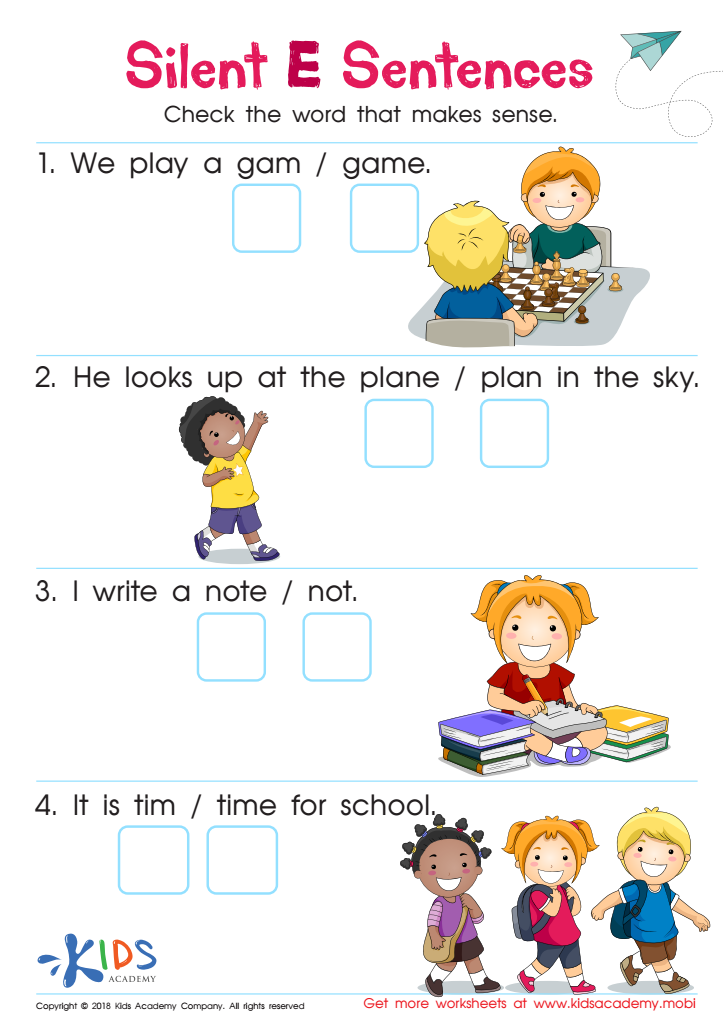
Silent E Sentences Worksheet
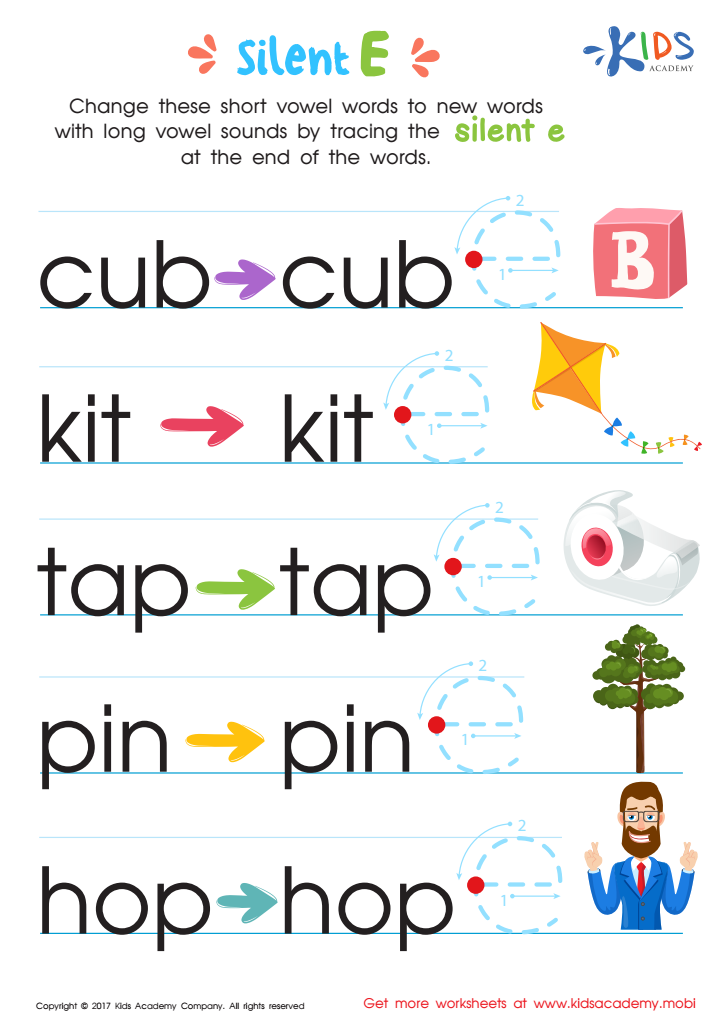
Silent E Words Worksheet


Normal Silent Vowels, often overlooked in early education, play a crucial role in helping children aged 5-9 develop strong phonetic awareness and spelling skills. These are vowels that don't have a pronounced sound in specific words, such as the ‘e’ in “lake” or “bike.” Understanding these silent vowels aids children in recognizing patterns in words, which is vital for reading fluency and comprehension.
Parents and teachers should care about this issue because it directly affects a child’s language development. Mastery of phonics, including normal silent vowels, lays the groundwork for future literacy skills. As children become more familiar with silent vowels, they improve their spelling accuracy and reading proficiency, leading to greater confidence in their abilities.
Moreover, with a firm grasp on normal silent vowels, children are less likely to struggle with more complex language rules as they progress in their education. Incorporating fun activities that focus on silent vowels can engage young learners, making the process enjoyable. Ultimately, fostering an awareness of these vowels not only supports immediate academic success but also cultivates a lifelong love for reading and literacy. For these reasons, parents and teachers should prioritize this aspect of phonics in their educational endeavors.