Cognitive Development Preschool Alphabet Worksheets
5 filtered results
Difficulty Level
Grade
Age
-
From - To
Subject
Activity
Standards
Enhance your child's cognitive development with our Preschool Alphabet Worksheets! Designed to support early learners, these engaging activities foster critical thinking, problem-solving, and memory skills as children explore the fascinating world of letters. Our worksheets incorporate fun and interactive elements that make learning the alphabet an enjoyable experience. Kids will practice letter recognition, sounds, and sorting while developing essential cognitive skills through creative exercises. With vibrant illustrations and simple instructions, these worksheets are perfect for parents and educators looking to enrich young minds. Download now to give your preschooler a strong foundation in literacy and cognitive growth!
Favorites
With answer key
Interactive
Beginning Sounds Worksheet
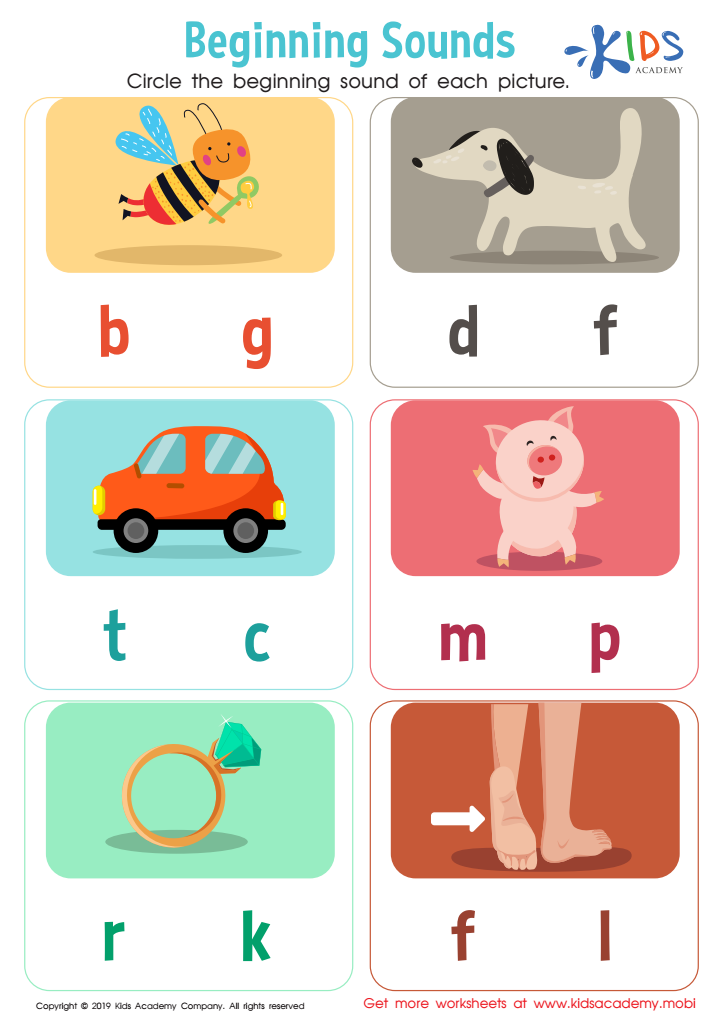
Test your child's knowledge with this colorful worksheet! Before beginning, have your kids recite the alphabet and sound them off. Give examples and ask them to do the same, then help them circle the beginning sound of each picture to complete the exercise.
 Assign to My Students
Beginning Sounds Worksheet
Worksheet
Opposite Day Worksheet
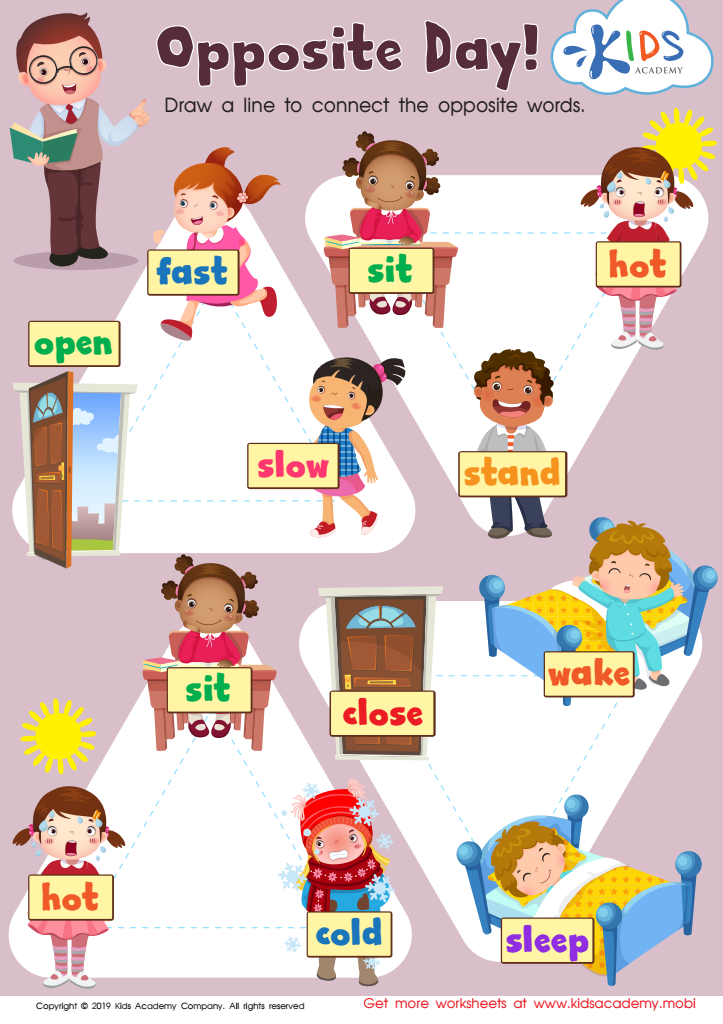
Early learners need to know about opposites to improve their higher-order thinking and critical thinking. This fun worksheet helps them understand the concept, practice opposite words, read high-frequency words and work on fine motor skills. Download the traceable PDF to get started.
Opposite Day Worksheet
Worksheet
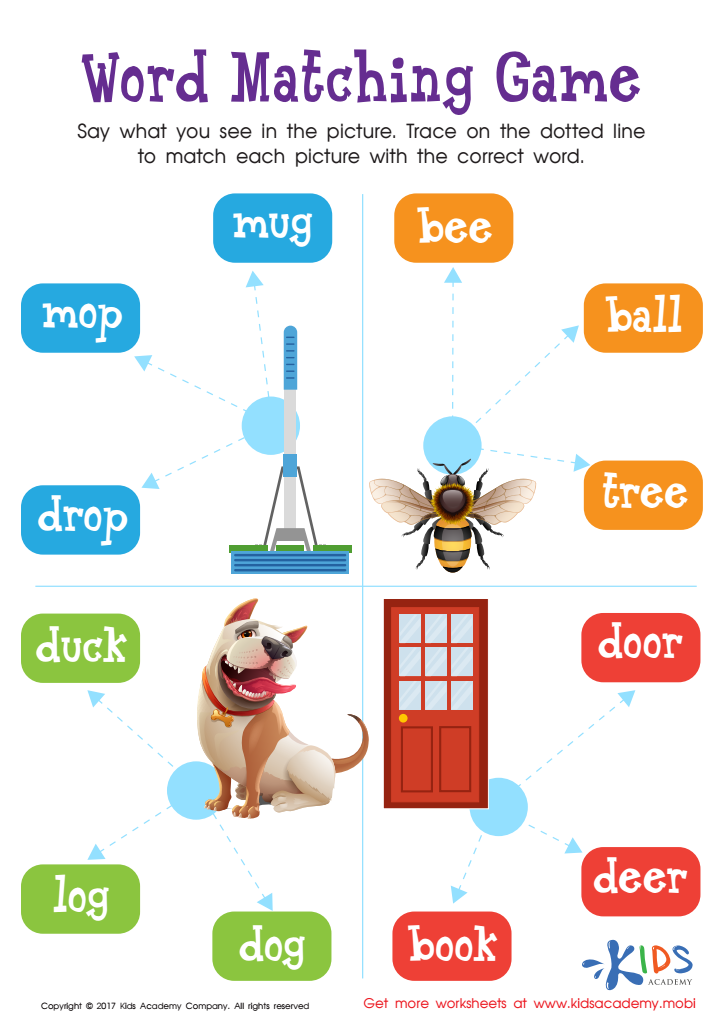
Word Matching Game Worksheet
Help your early reader develop prereading skills with this fun matching worksheet! Visual cues help them learn sight words, decode words in word families, and identify phonetic patterns. They'll practice discerning sounds past initial consonants while saying the name of the picture and finding the matching word - and reading at the same time!
Word Matching Game Worksheet
Worksheet
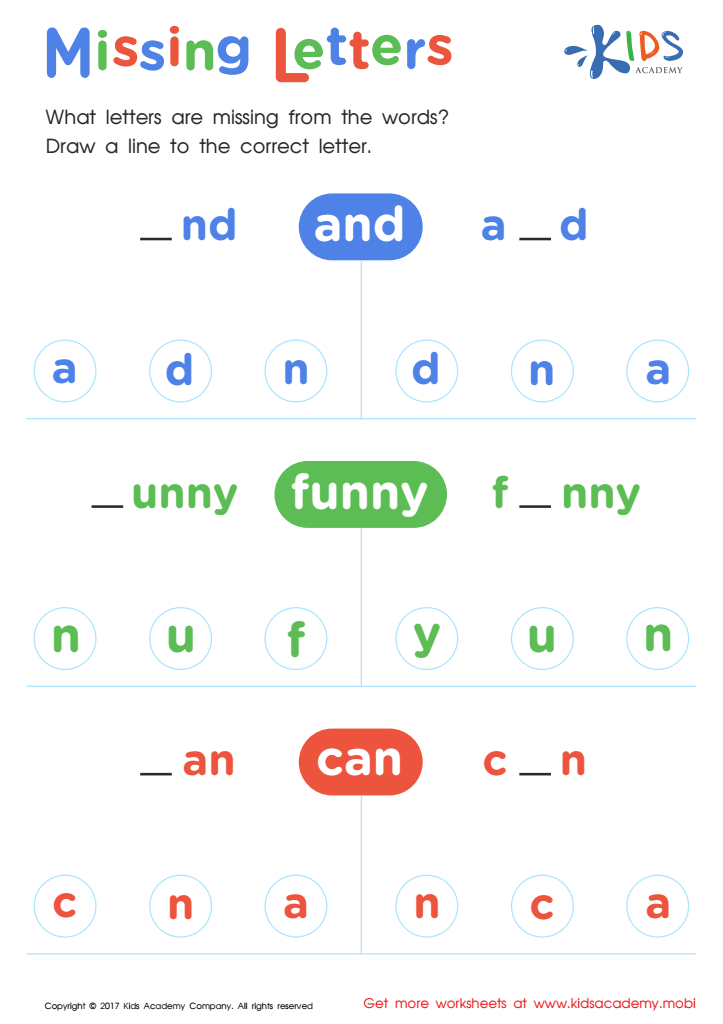
Missing Letters Worksheet
Review sight words with this fun matching worksheet from Kids Academy! Look at the sight words in the middle, read them aloud and find the missing letter on each side for each word. Draw a line to the correct letter to complete the sheet!
Missing Letters Worksheet
Worksheet
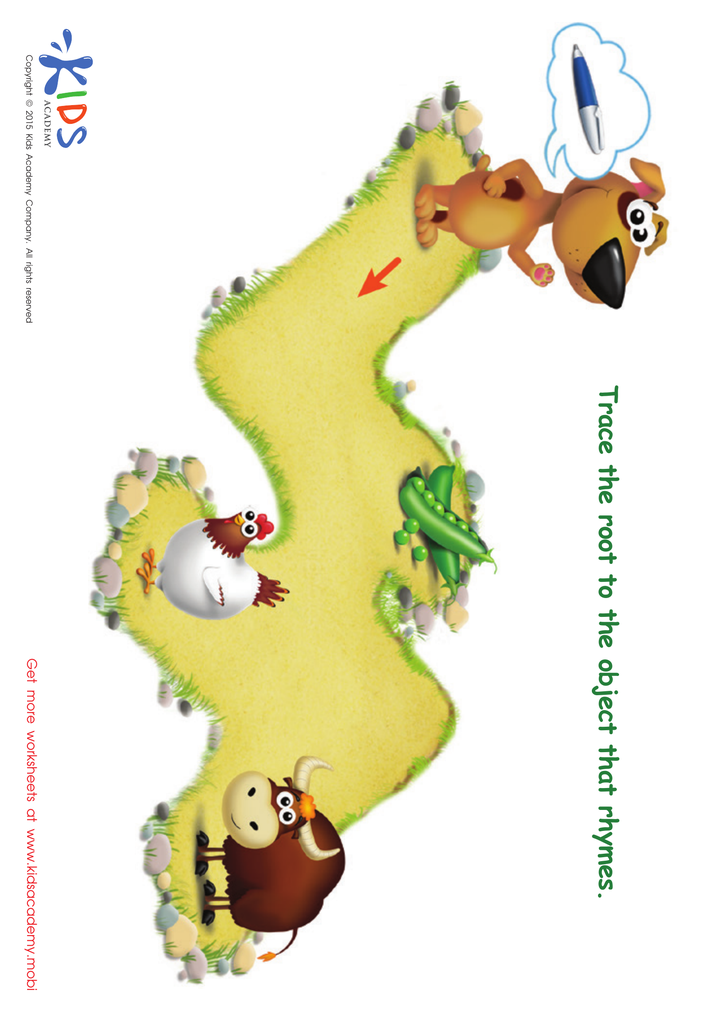
Pen Rhyming Words Worksheet
Check out the cute pup, pondering away. He's thinking of a root word - no suffix or prefix. Now check the hen, green beans, and the cow. Can you find the word that rhymes with pen? Draw a line from the root word to its rhyme for this simple yet beneficial worksheet. It helps young learners practice hearing and recognizing rhymes.
Pen Rhyming Words Worksheet
Worksheet
Join Kids Academy for Free
Who is primarily going to use this learning content?








Cognitive development in preschoolers, particularly concerning alphabet recognition, is foundational for future academic success. Understanding the alphabet is not just about recognizing letters; it encompasses critical skills such as phonemic awareness, which is vital for reading and writing. When parents and teachers focus on the alphabet at this early stage, they are laying the groundwork for literacy, enabling children to decode words and comprehend text.
Moreover, engaging with the alphabet during preschool years promotes problem-solving and critical thinking skills. This process of learning involves cognitive activities like categorization, pattern recognition, and memory, which spur overall brain development. For teachers, organizing engaging and interactive alphabet activities fosters an enriching classroom environment that motivates children to learn.
For parents, reinforcing alphabet knowledge at home through games, songs, and storytelling creates a strong learning partnership. This support boosts children’s confidence and enthusiasm for learning, nurturing a lifelong love for reading.
Ultimately, recognizing the significance of cognitive development through alphabet learning equips children with essential skills necessary for progress in school and life. An early emphasis on these skills can lead to better outcomes, making it crucial for both parents and teachers to prioritize learning the alphabet during this critical developmental stage.