Sound recognition Preschool Worksheets
5 filtered results
Difficulty Level
Grade
Age
-
From - To
Subject
Activity
Standards
Explore our engaging Sound Recognition Preschool Worksheets designed to enhance your child's listening skills and phonemic awareness. These worksheets provide fun activities that help preschoolers identify, match, and differentiate various sounds, fostering their early literacy development. With colorful illustrations and interactive exercises, children will enjoy learning through play. Each worksheet is tailored to accommodate different learning styles, ensuring every child can participate and thrive. Ideal for home or classroom use, our sound recognition worksheets support teachers and parents in cultivating a strong foundation in reading and communication. Download the worksheets now to embark on an exciting auditory learning adventure!
Favorites
With answer key
Interactive
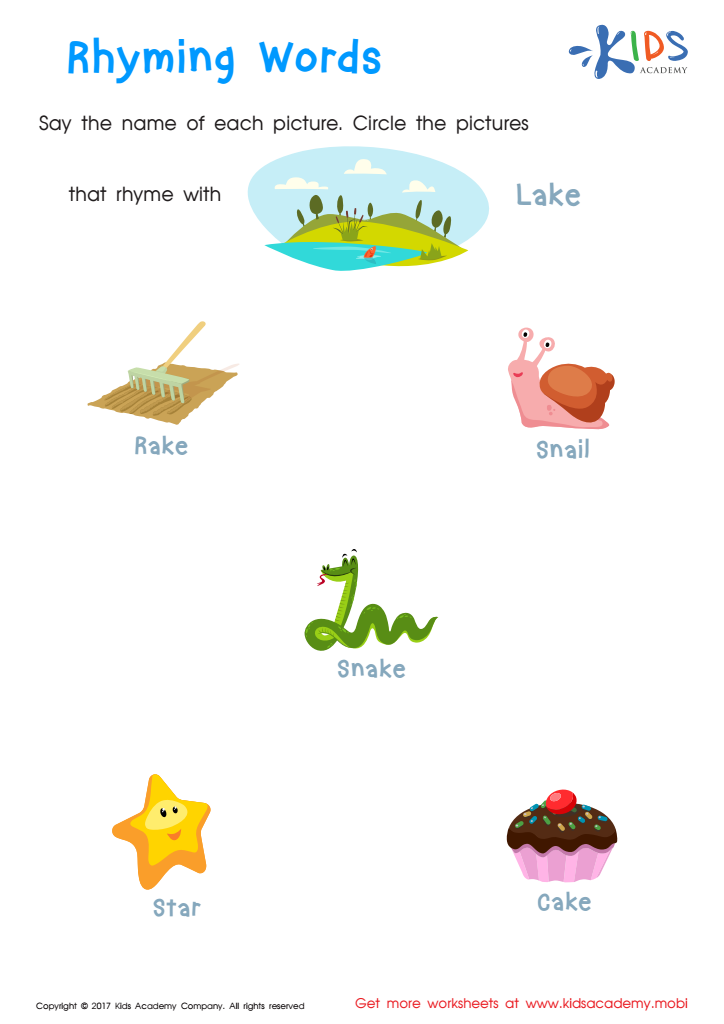
Rhyming Words Rhyming Worksheet
This worksheet is great for honing pre-reading skills. It helps kids make connections between pictures and written words, use problem-solving, and recognize sounds and words that rhyme. Have fun exploring rhyming words with your child, and they'll be rhyming in no time!
Rhyming Words Rhyming Worksheet
Worksheet
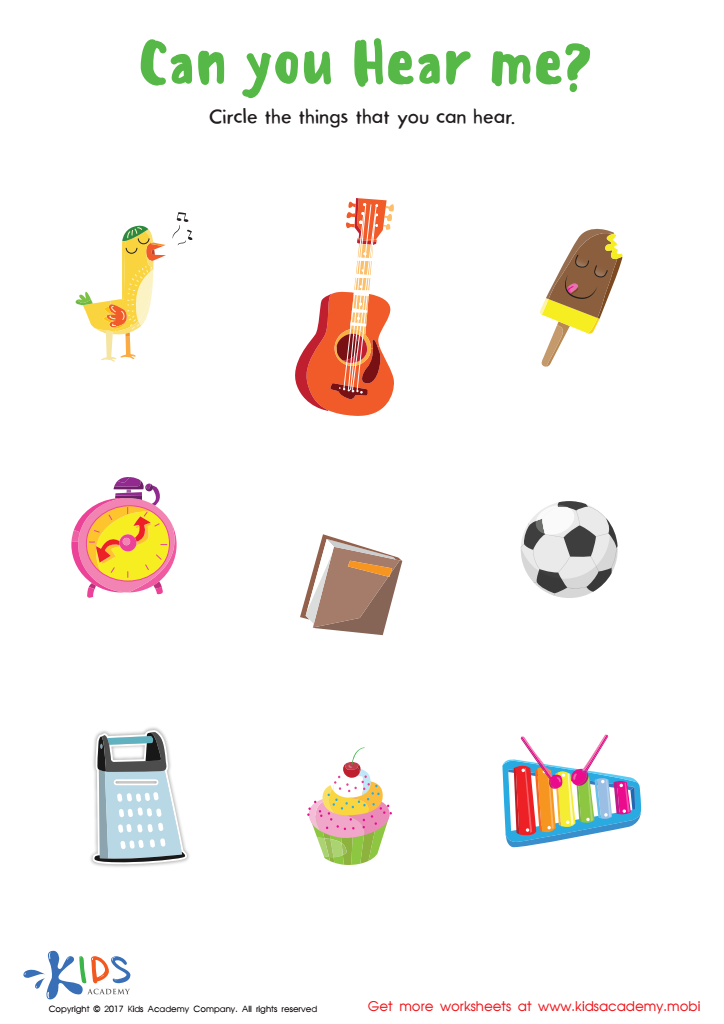
Can You Hear Me Worksheet
Challenge your child's thinking and help them learn by using this cute "Can You Hear Me?" worksheet. It encourages use of prior knowledge to identify objects that make sounds, developing critical thinking skills. As they imagine balls and cupcakes making sounds, your child will have plenty of laughs. Extend learning by talking about the sounds and why certain objects make them.
Can You Hear Me Worksheet
Worksheet

Long and Short U Worksheet
Revised: Spice up your lesson on long and short vowels with this fun printout! Kids read the words "tube" and "tub," then reinforce the sound by coloring in the words and pictures. It's a great way to make phonics class enjoyable!
Download (PDF)
 Assign to My Students
Assign to My Students
Long and Short U Worksheet
Worksheet
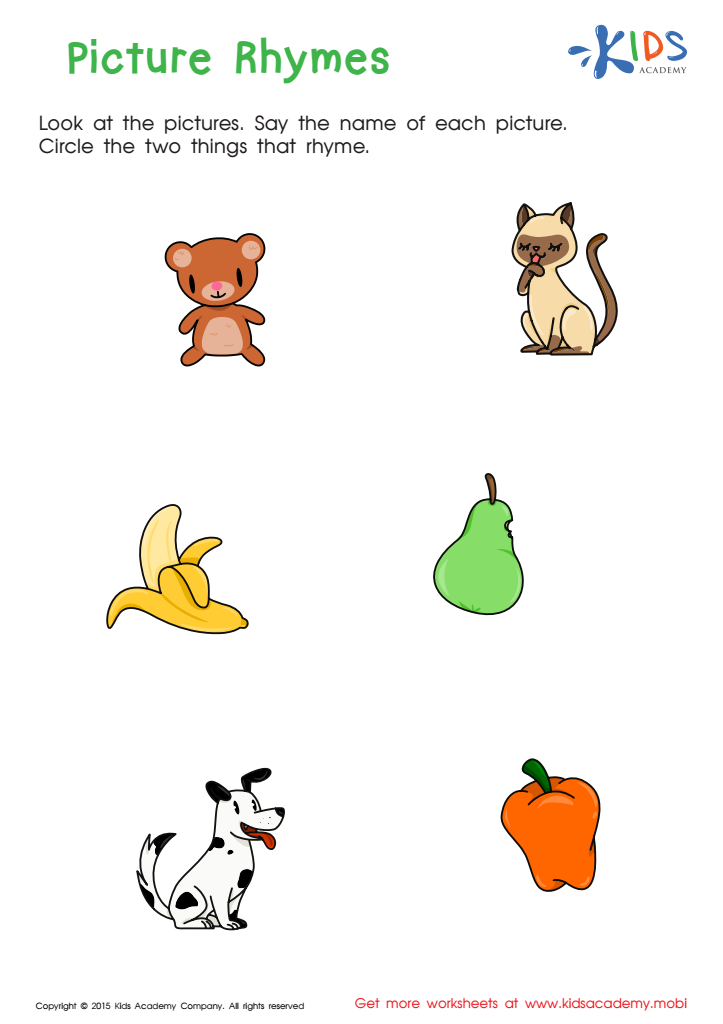
First Words: Picture Rhymes Worksheet
Rhyming helps kids understand language, read and write better. This printable worksheet boosts problem-solving and cognitive skills with vibrant pictures. It teaches kids to identify words, recognize rhymes, complete mental tasks and write words. An extra activity: show them how rhyming words share some of the same letters.
First Words: Picture Rhymes Worksheet
Worksheet
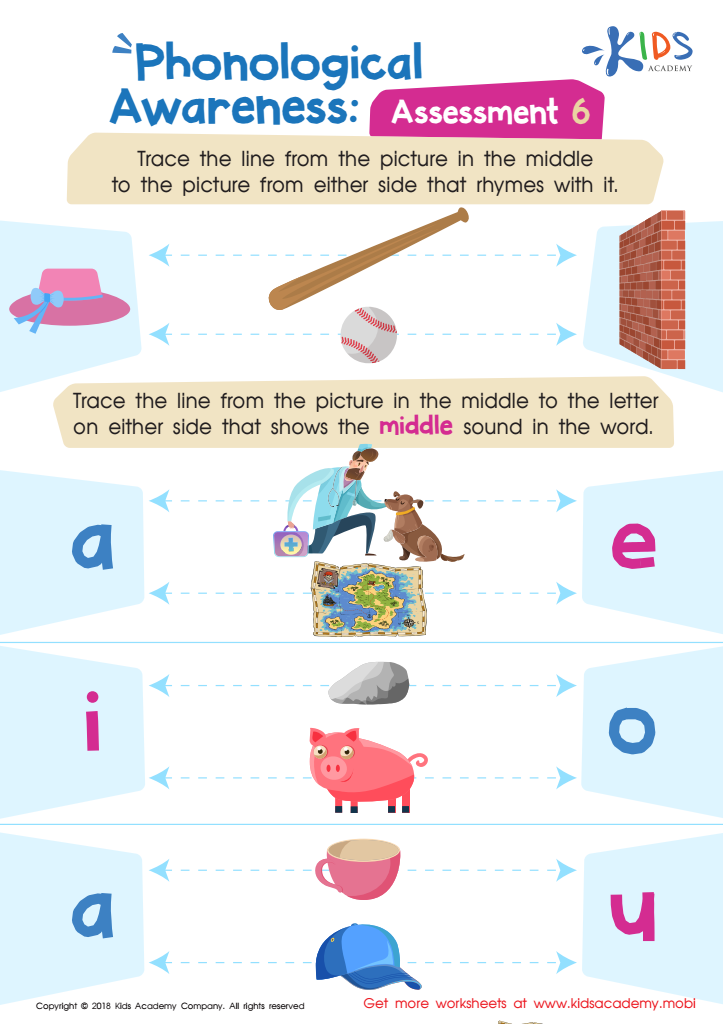
Phonological Awareness: Assessment 6 Worksheet
Check your child's ability to recognize middle word sounds using this free worksheet. Help them learn phonics by practicing with rhyming. Trace the line from the image to its rhyming match then encourage them to name each image aloud to identify which letter matches the sound. It's a great way to assess letter and sound recognition.
Phonological Awareness: Assessment 6 Worksheet
Worksheet
Join Kids Academy for Free
Who is primarily going to use this learning content?






Sound recognition serves as a foundational skill in early childhood education, making it crucial for parents and teachers to focus on it in preschool settings. Recognizing sounds enhances children’s phonemic awareness, enabling them to identify and manipulate the sounds in spoken language. This skill is essential for future literacy development, as it lays the groundwork for reading and writing abilities.
By learning to recognize sounds, children improve their vocabulary, comprehension, and overall communication skills. It also fosters listening abilities, which are vital for following directions and engaging in conversations. In a preschool environment, engaging activities such as singing, rhyming games, and environmental sound recognition help make learning fun and interactive, encouraging children to explore language in diverse ways.
Furthermore, sound recognition helps children develop critical thinking and problem-solving skills. By associating sounds with letters and words, kids start to understand how language is structured, allowing them to express their thoughts and ideas more clearly.
For parents and teachers, fostering sound recognition in preschoolers not only supports academic readiness but also enhances social interaction and confidence. Investing time and effort into cultivating this skill can significantly influence a child’s lifelong learning journey.