Spatial reasoning Preschool Worksheets
6 filtered results
Difficulty Level
Grade
Age
-
From - To
Subject
Activity
Standards
Enhance your preschooler's spatial reasoning skills with our engaging Spatial Reasoning Worksheets! Designed for early learners, these printable worksheets provide fun activities that help children understand shapes, positions, and patterns in their environment. By completing these exercises, kids will develop critical thinking, problem-solving abilities, and fine motor skills, laying the foundation for future math concepts. Our worksheets feature colorful illustrations and interactive tasks that keep young minds captivated. Perfect for home or classroom use, these resources make learning enjoyable and effective. Boost your child's confidence and understanding in spatial awareness today with these thoughtfully crafted preschool worksheets!
Favorites
With answer key
Interactive
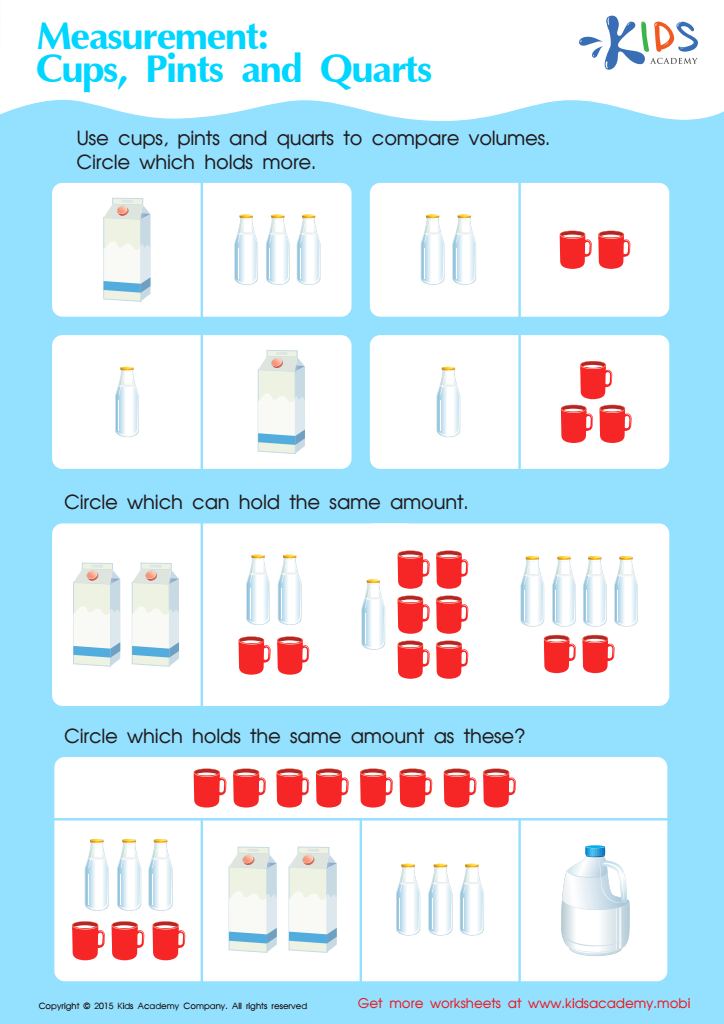
Measurement: Compare Volumes Worksheet
Compare volumes with Kids Academy and have fun! (80 words)
Practice measuring with Kids Academy and have fun! Compare volumes in pictures and circle which holds more. Keep learning with free math worksheets available on our website. Enjoy the process and have fun!
 Assign to My Students
Measurement: Compare Volumes Worksheet
Worksheet
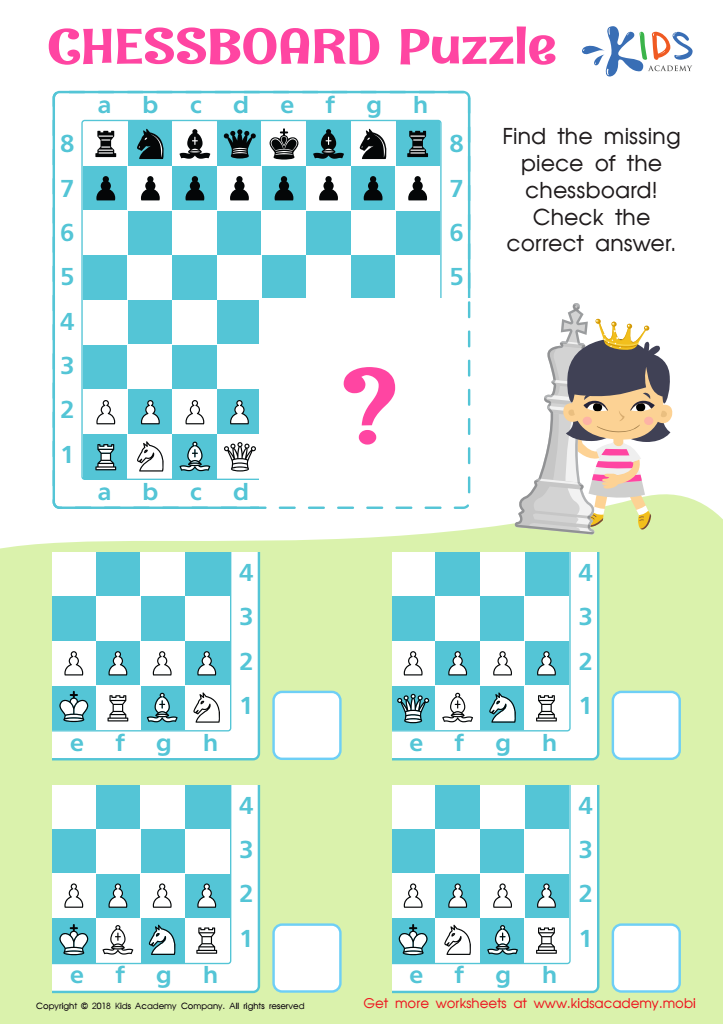
Chessboard Puzzle Worksheet
Test your child's chess prowess with this simple worksheet. They must find the missing pieces to complete the white side of an empty chessboard. The black pieces are already arranged properly on the board. Correct answers are provided so you can see how they did!
Chessboard Puzzle Worksheet
Worksheet
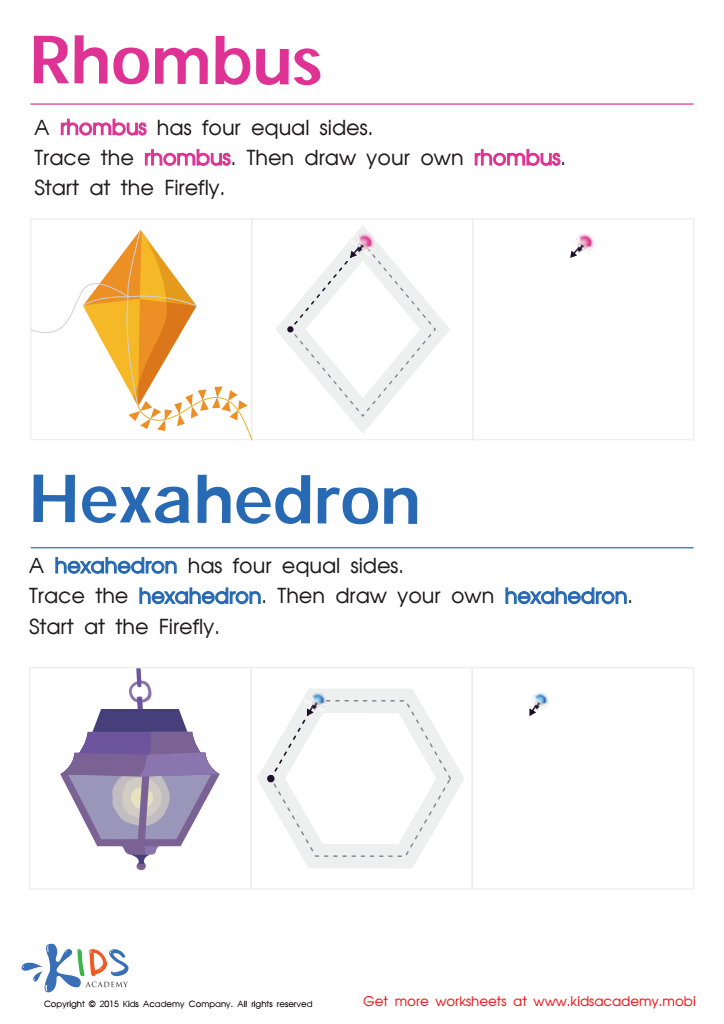
Draw a Rhombus And a Hexahedron Printable
Trace, draw and recognize shapes like rhombus, hexahedron and more! Start with the firefly to trace a rhombus, then use the yellow kite to remember the shape. Use the light to trace and draw a hexahedron. Learn with the best!
Draw a Rhombus And a Hexahedron Printable
Worksheet
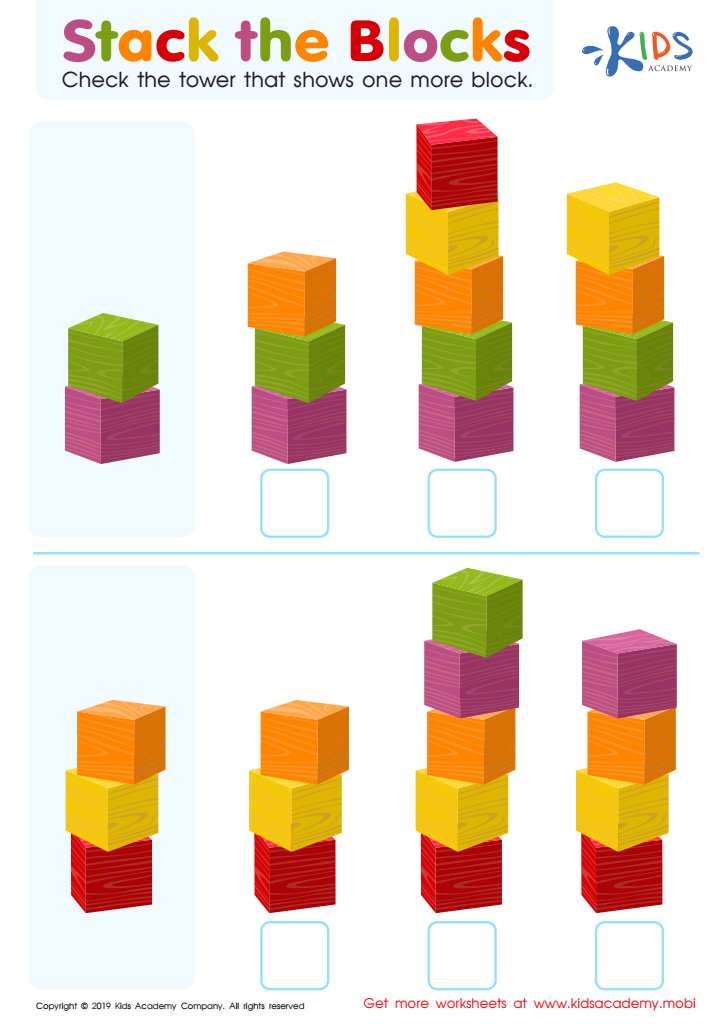
Stack the Blocks Worksheet
Playing with blocks is a great way for kids to learn! They can create patterns, shapes, and even count. In this worksheet, ask them to identify the colors and count each stack of blocks. If they can spot one extra block in the tower, even better! Encourage learning through play with these fun blocks.
Stack the Blocks Worksheet
Worksheet
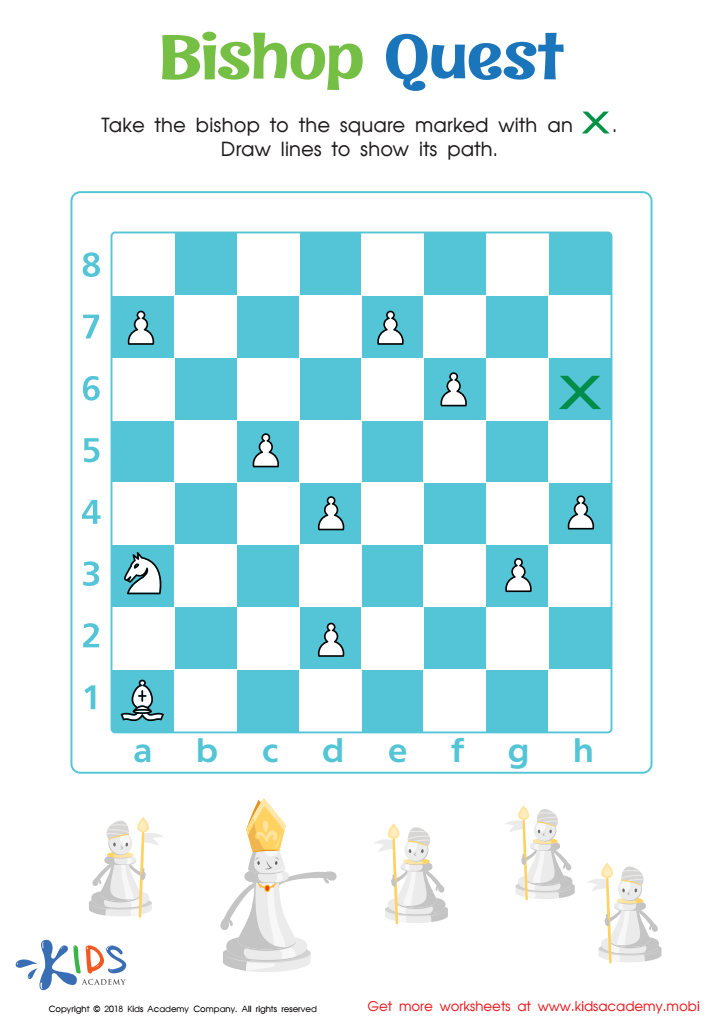
Bishop Quest Worksheet
Show kids the board and ask them to identify the bishop. Then ask them to move it to the square marked 'x', drawing lines to show its path. This worksheet helps teach kids how to move the bishop on a chessboard.
Bishop Quest Worksheet
Worksheet
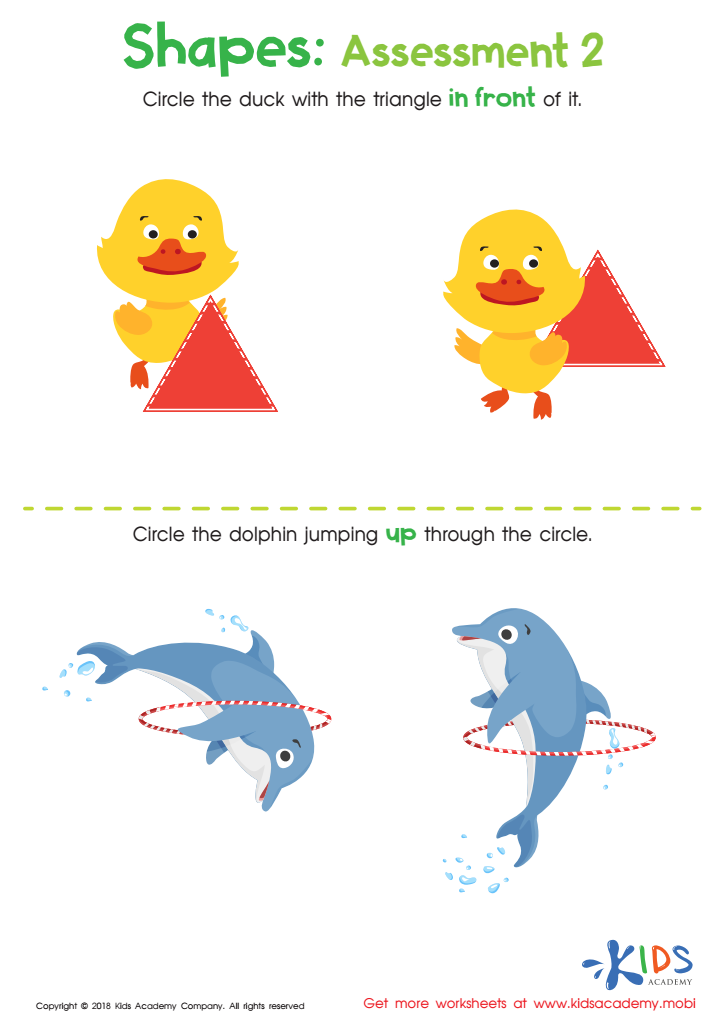
Geometry – Assessment 2 Worksheet
Preschoolers will learn to identify circles and triangles and practice using terms like "in front of" to place objects. This skill is key to further learning and is an important part of development.
Geometry – Assessment 2 Worksheet
Worksheet
Join Kids Academy for Free
Who is primarily going to use this learning content?





Spatial reasoning is a critical foundation for children's cognitive development, particularly in preschool. It refers to the ability to understand and manipulate spatial relationships, shapes, and visualizations in their minds. Parents and teachers should care about cultivating spatial reasoning for several reasons.
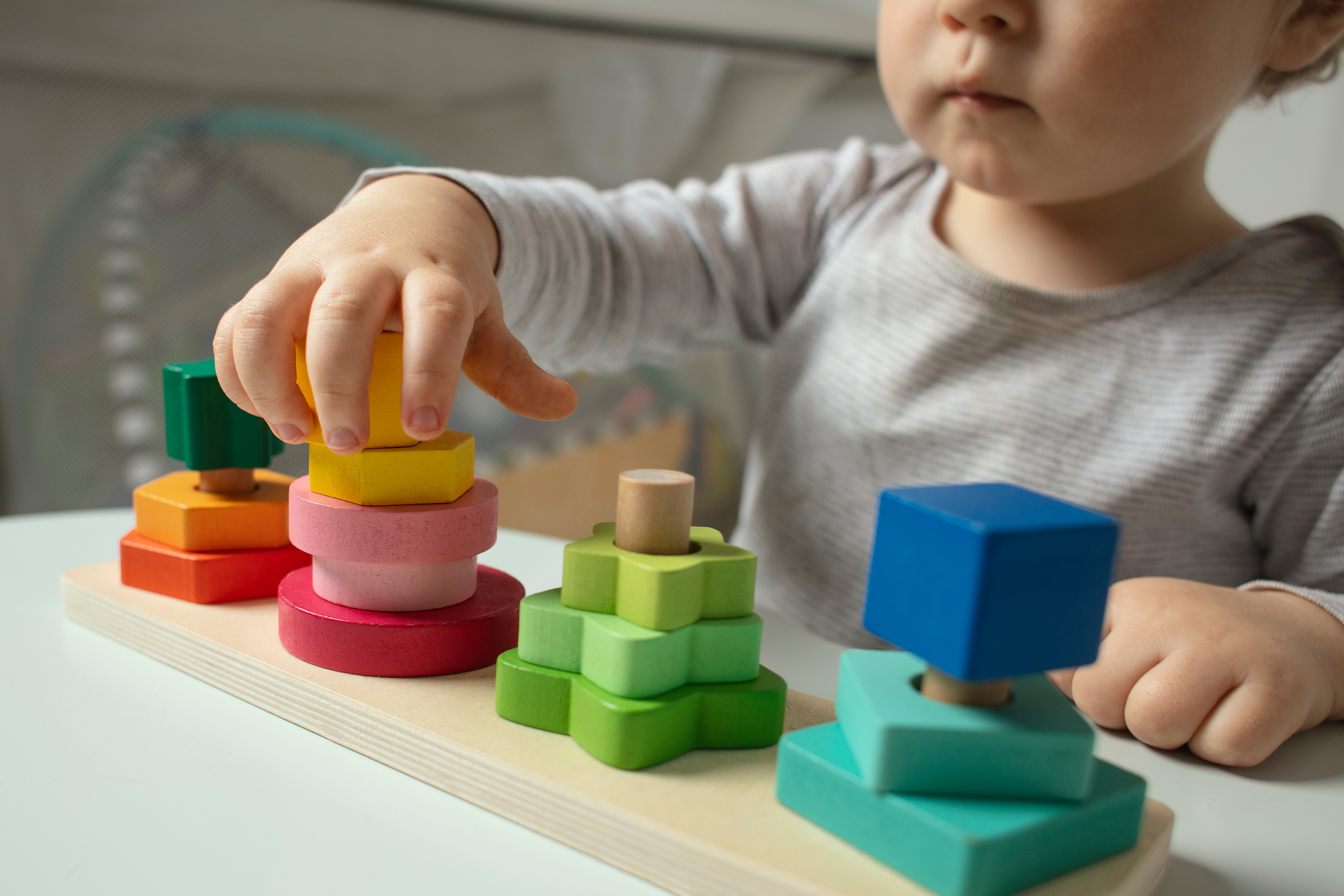
Firstly, strong spatial reasoning skills are linked to significant academic outcomes, particularly in subjects like mathematics and science. Early exposure to spatial activities, such as puzzles, building blocks, and map reading, lays the groundwork for more advanced problem-solving skills later in life.
Secondly, spatial reasoning impacts daily living skills. Children proficient in this area can better navigate their environments, understand directions, and visualize changes in space — skills that are critical as they grow and face more complex real-world challenges.
Additionally, fostering spatial reasoning supports creativity and critical thinking. Activities that promote this type of reasoning encourage imaginative play and innovation, critical elements for a child's overall development.
Ultimately, prioritizing spatial reasoning in preschool not only prepares children for academic success but also equips them with essential life skills, making it a key focus for both parents and teachers. By caring about and promoting these skills, adults can significantly influence a child's potential and future achievements.