Visual perception Preschool 2D Shapes Worksheets
4 filtered results
-
From - To
Enhance your preschooler’s visual perception skills with our engaging 2D Shapes Worksheets! Designed to promote early math learning, these fun, printable resources help children recognize and understand various shapes through interactive activities. From identifying circles and squares to sorting and matching shapes, each worksheet encourages critical thinking and visual discrimination. By participating in these exciting exercises, your little ones will develop essential foundational skills that boost their confidence in math and problem-solving. Perfect for at-home learning or classroom use, our worksheets provide a hands-on approach to learning that makes mastering shapes enjoyable and effective. Explore the world of shapes today!
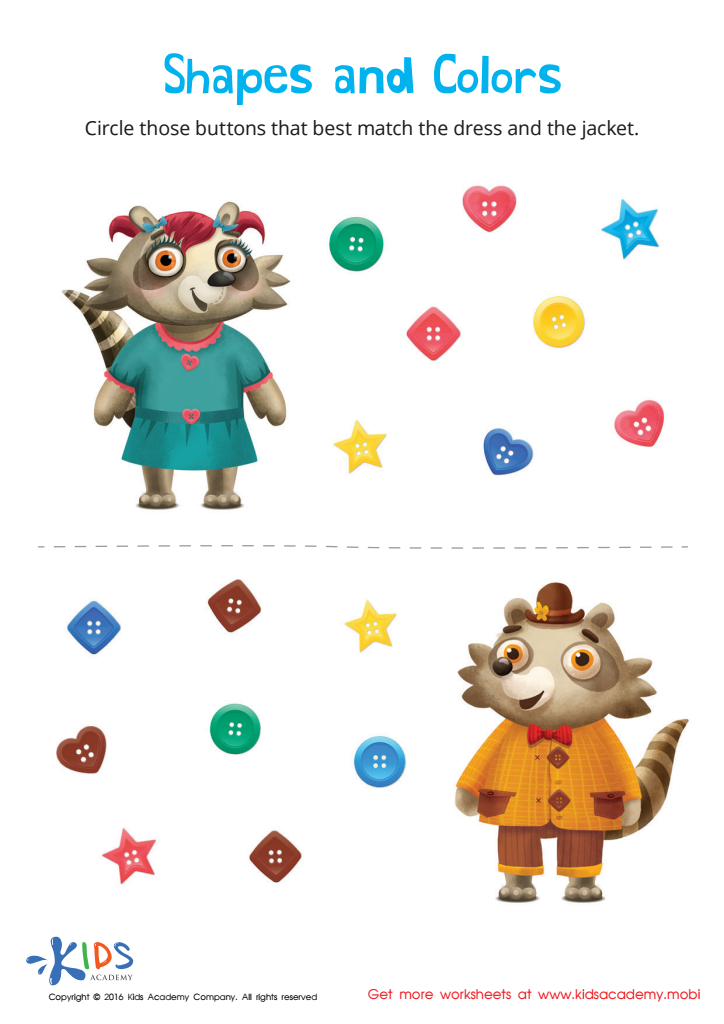
Matching: Shapes and Colors Worksheet
 Assign to My Students






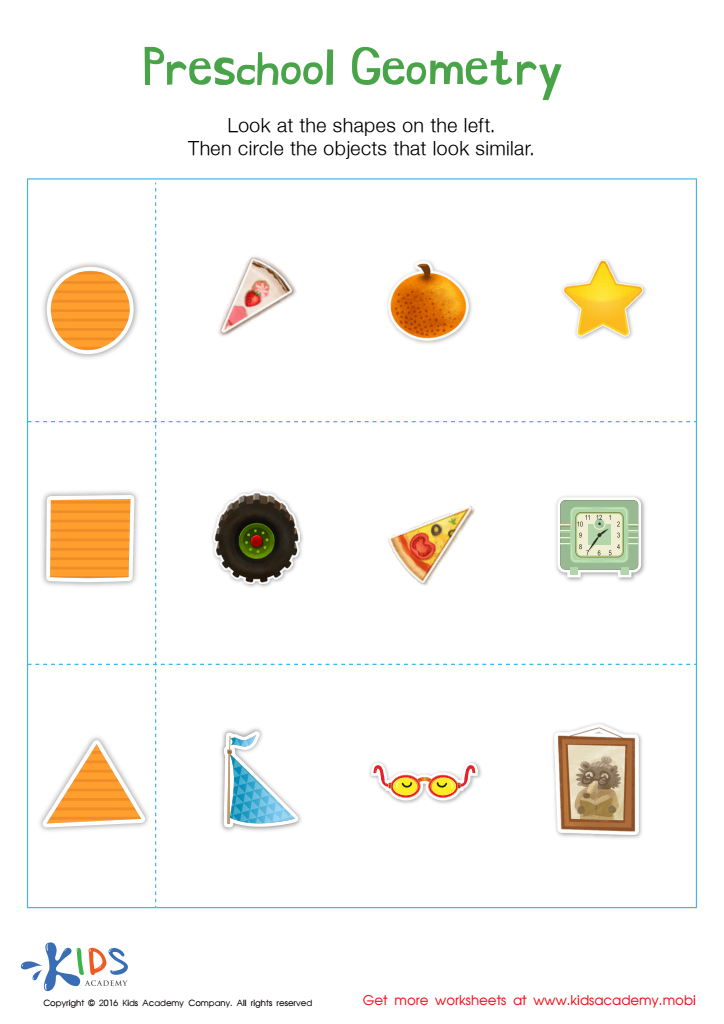
Preschool Geometry Match Up Worksheet
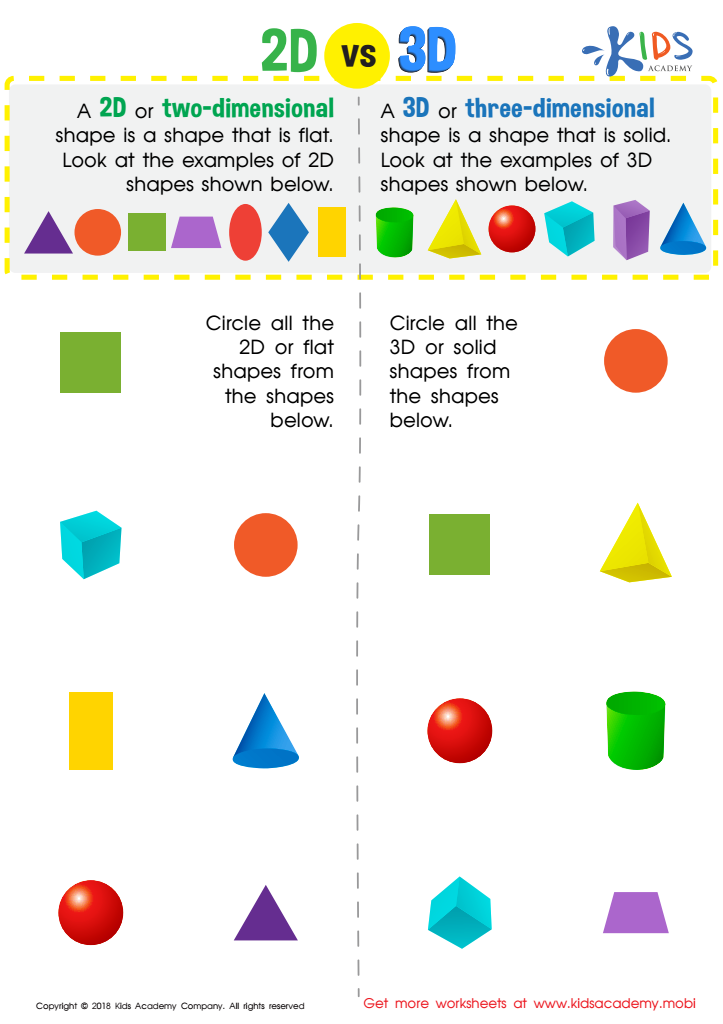
2D vs 3D Shapes Worksheet
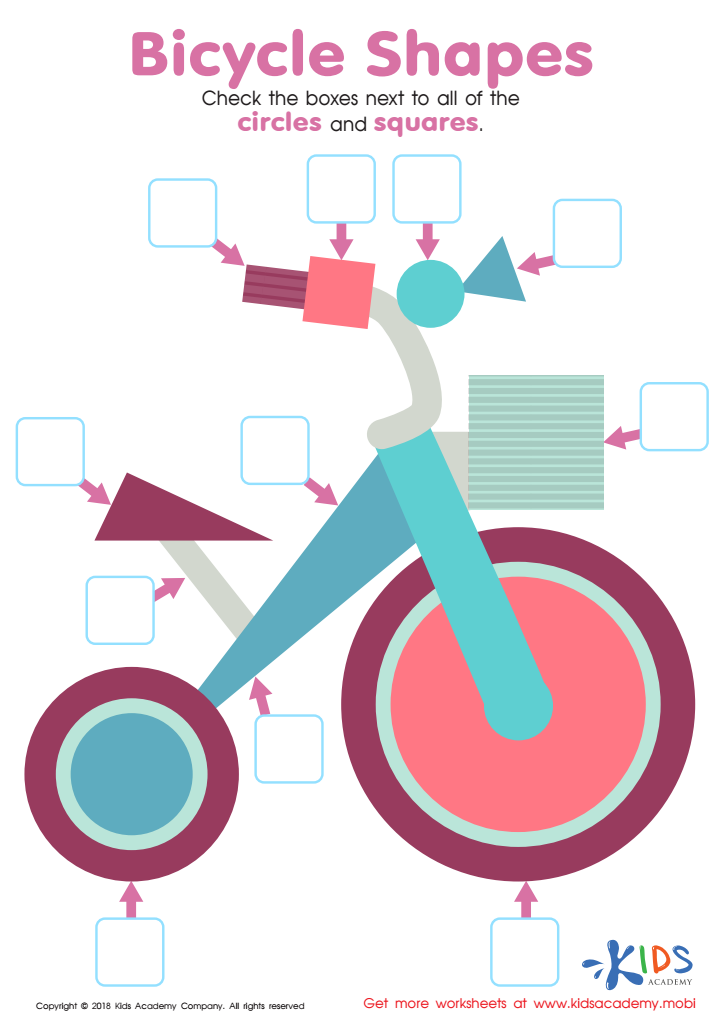
Bicycle Shapes Worksheet





Visual perception of 2D shapes plays a crucial role in early childhood development and learning. For parents and teachers, fostering strong visual perception skills in preschoolers is essential for a multitude of reasons. Firstly, these skills are foundational for later math learning; recognizing shapes is key to understanding geometry, spatial awareness, and problem-solving capacities. Children learn to differentiate between various shapes, which enhances critical thinking and categorization.
Moreover, the ability to recognize and manipulate shapes contributes to cognitive development. Engaging with 2D shapes encourages fine motor skills as children draw, cut, or construct shapes, which is fundamental for writing later on. Furthermore, visual perception is linked to language development; by discussing shapes, children enrich their vocabulary and improve communication skills.
In addition, activities related to 2D shapes often stimulate creativity and self-expression; art projects involving shapes inspire imagination and collaboration among peers. By caring about visual perception around 2D shapes, adults can support holistic child development: academic, social, and emotional. This foundation not only prepares children for school but also cultivates lifelong learning habits. Investing in children’s understanding of shapes unlocks numerous pathways for learning and personal growth.