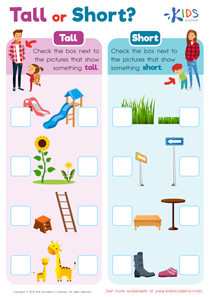
Math problem-solving Preschool Addition & Subtraction Worksheets
4 filtered results
-
From - To
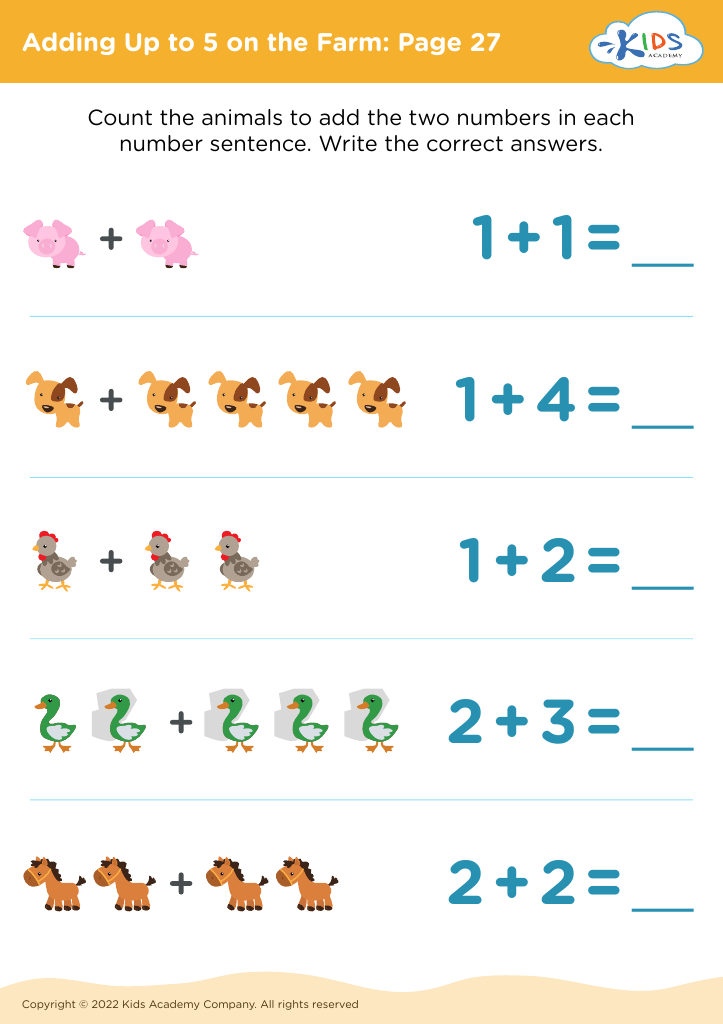
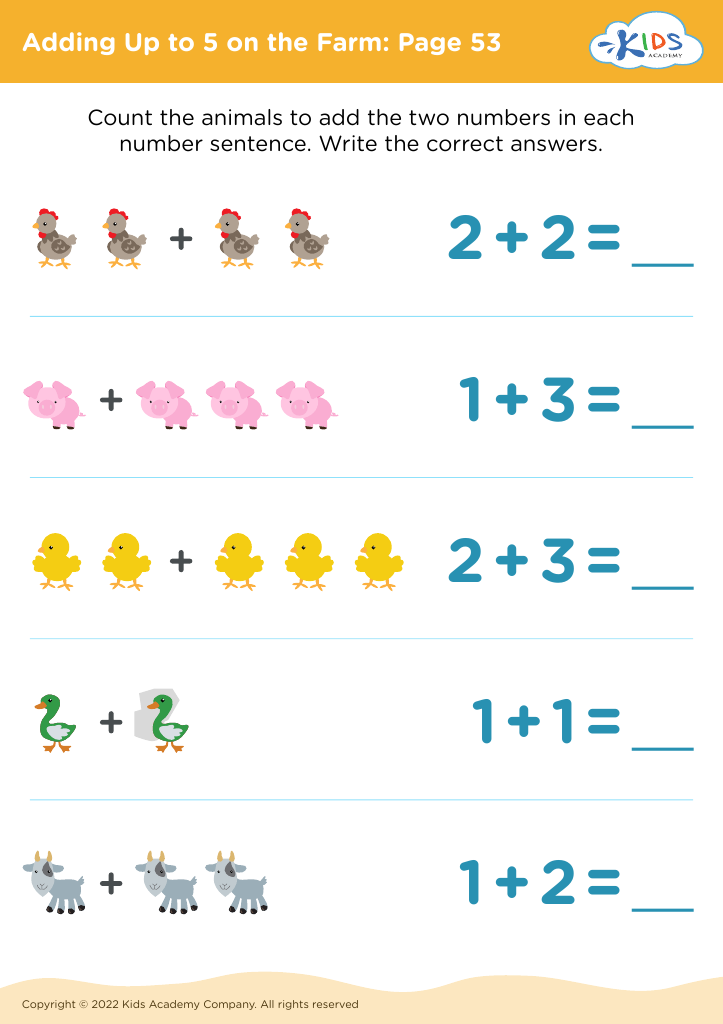
Discover our engaging Math Problem-Solving Preschool Addition & Subtraction Worksheets, designed to help young learners master essential math skills! These thoughtfully crafted worksheets provide a fun and interactive way for preschoolers to explore basic addition and subtraction concepts. Featuring colorful illustrations and relatable scenarios, children will develop their problem-solving abilities while enhancing their understanding of numbers. Each worksheet encourages critical thinking and promotes early numeracy skills, ensuring an enjoyable learning experience. Perfect for home or classroom use, our resources are ideal for inspiring a love of math and laying a strong foundation for future success in math. Start your math journey today!
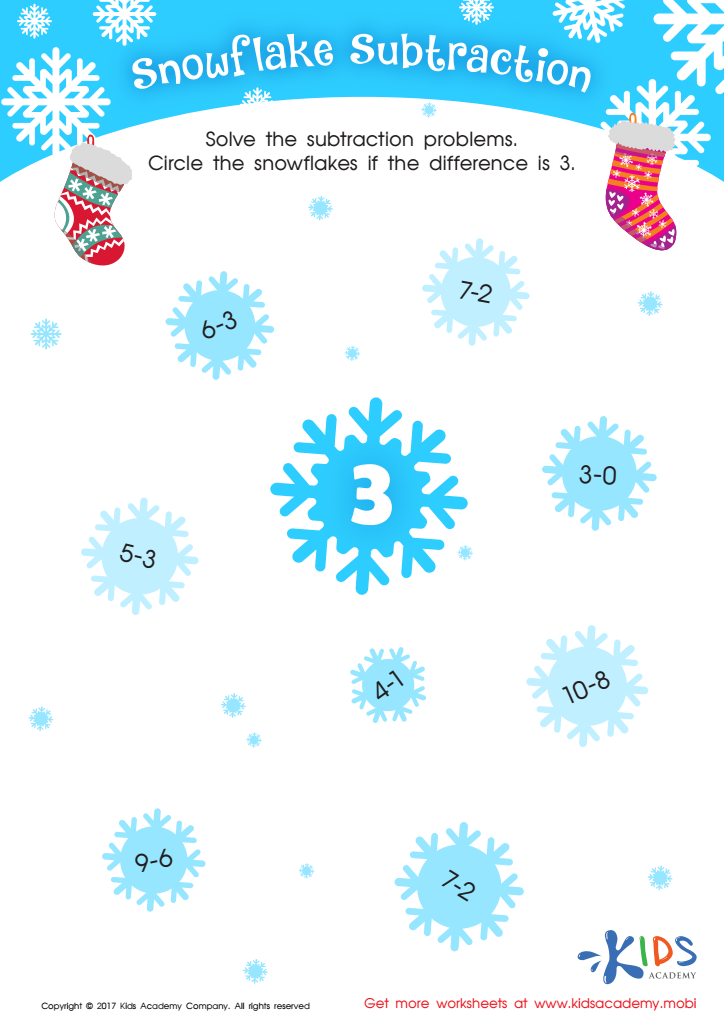
Snowflake Subtraction Worksheet
 Assign to My Students
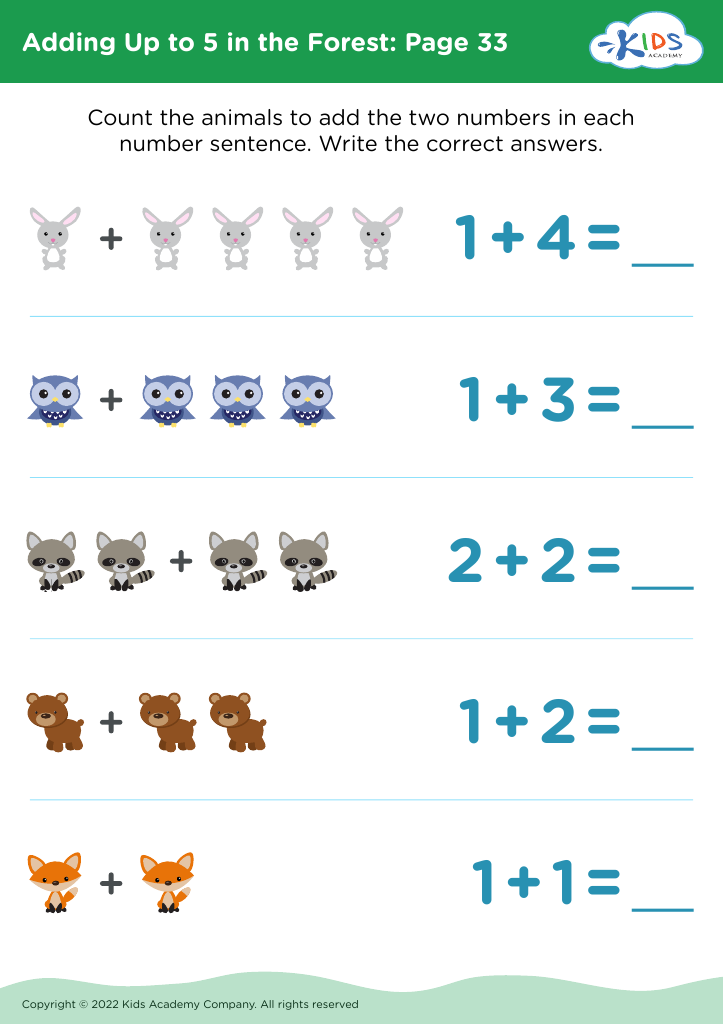








Parents and teachers should prioritize math problem-solving, particularly in preschool addition and subtraction, as it lays the foundation for future mathematical understanding and critical thinking skills. Early exposure to mathematical concepts enhances children's cognitive development and equips them with essential problem-solving strategies, which are applicable across various areas of life.
Engaging preschoolers in addition and subtraction fosters a strong number sense, enabling them to grasp more complex concepts later on. This stage of learning encourages curiosity, persistence, and resilience when they encounter challenges, traits that are vital for success in both academic and everyday contexts.
Moreover, problem-solving in math promotes communication skills as children articulate their thought processes and collaborate with peers to arrive at solutions. This interactive learning environment allows children to develop confidence and a positive attitude towards mathematics, combatting math anxiety that is often seen later in school.
Finally, parents and teachers play a crucial role in modeling enthusiasm for math, thereby reinforcing its relevance and importance. By nurturing these foundational skills, we empower children to become capable learners who approach mathematical challenges with confidence and creativity throughout their educational journey.