Animal recognition Preschool Addition Worksheets - Page 2
93 filtered results
-
From - To
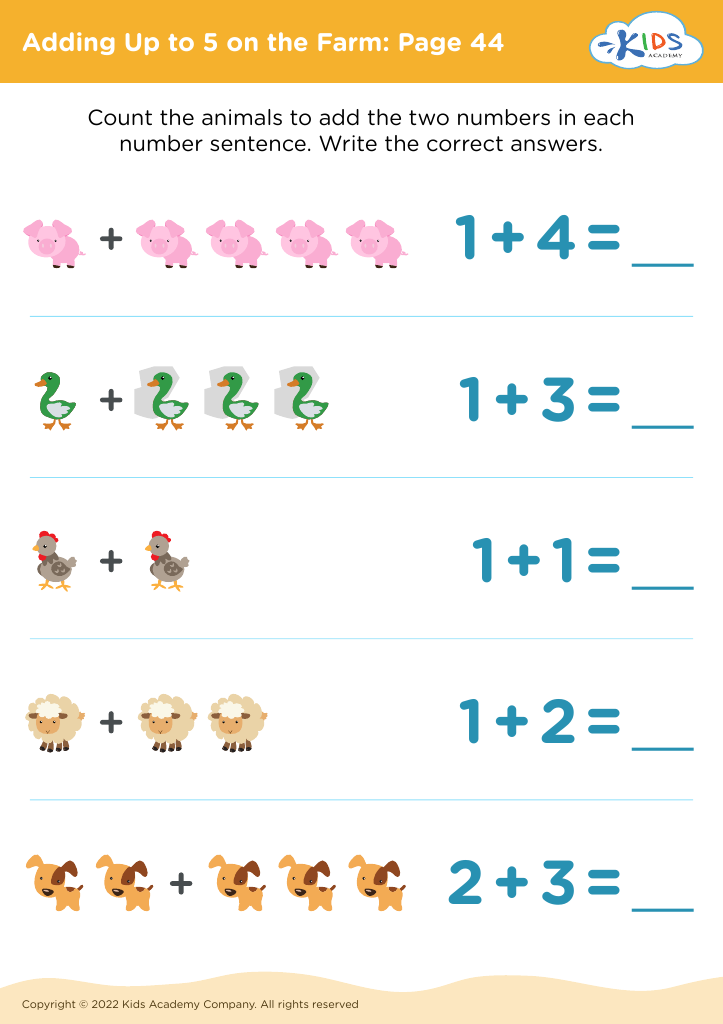
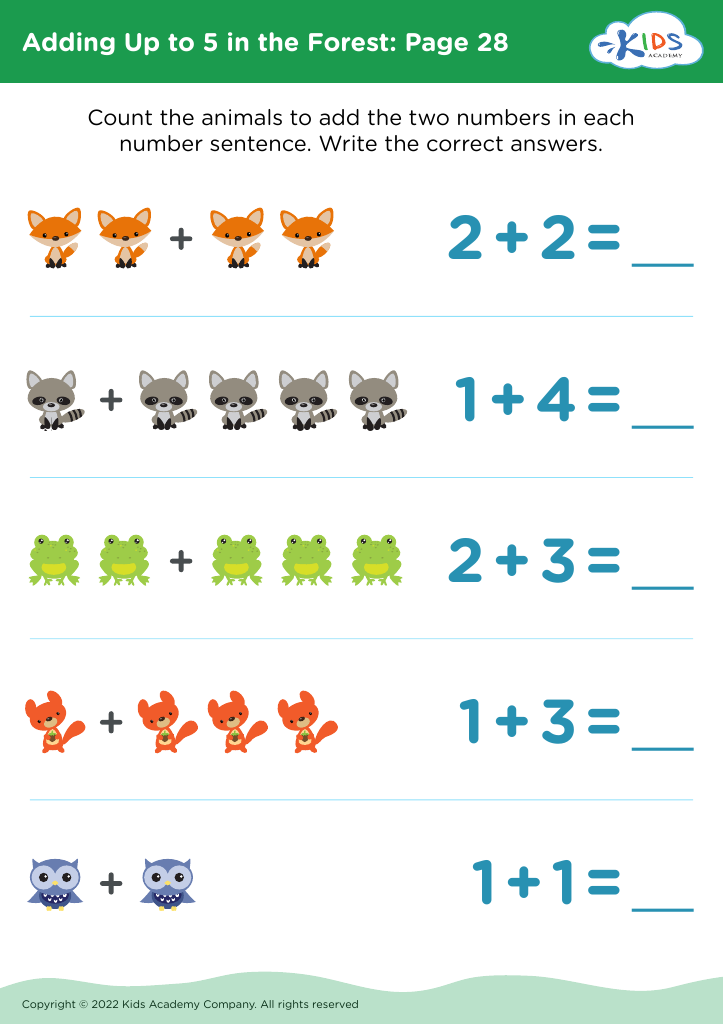
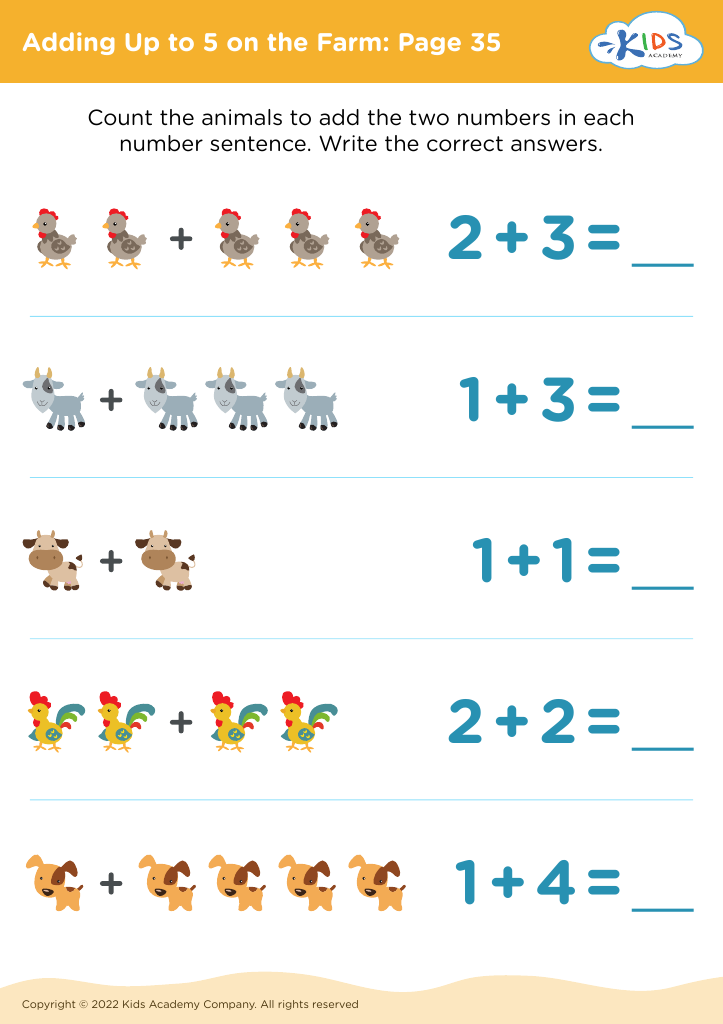
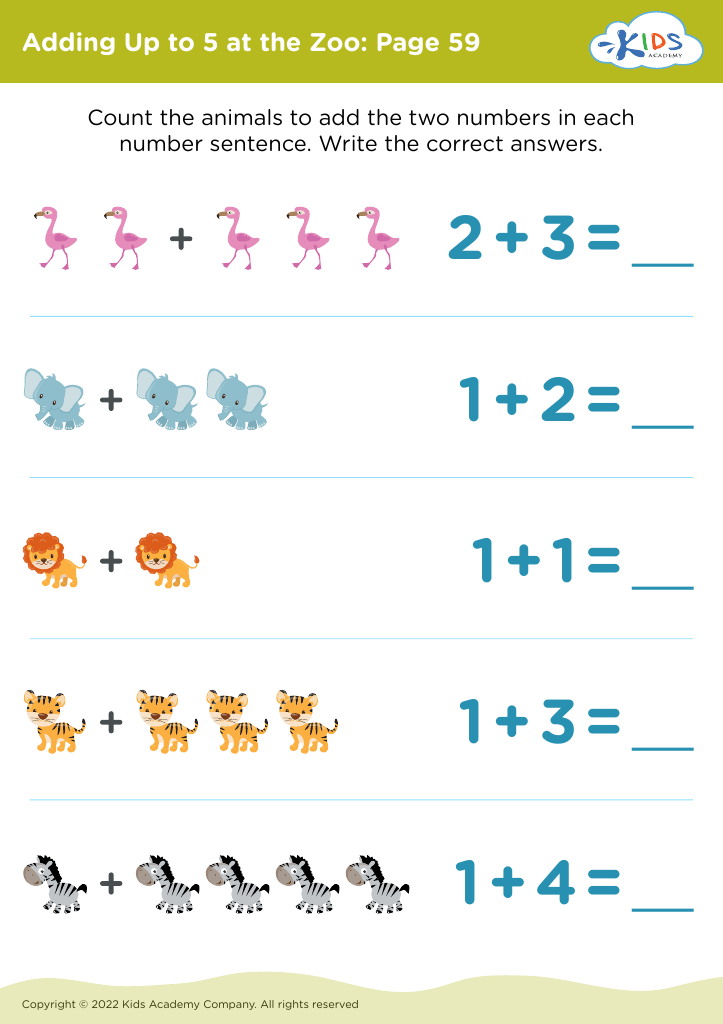
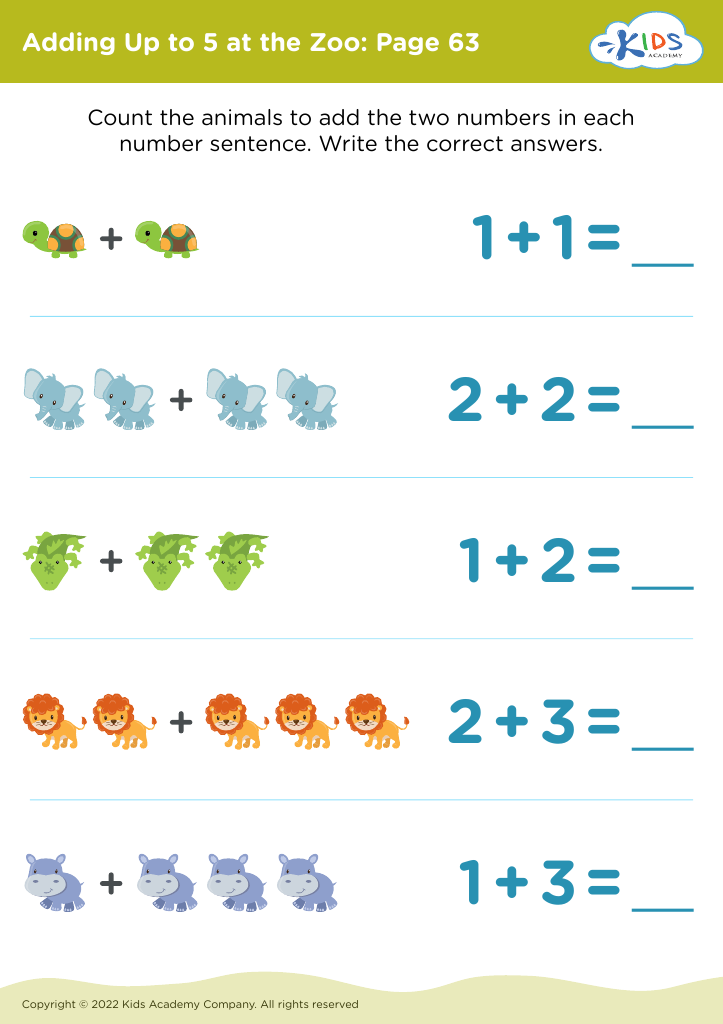
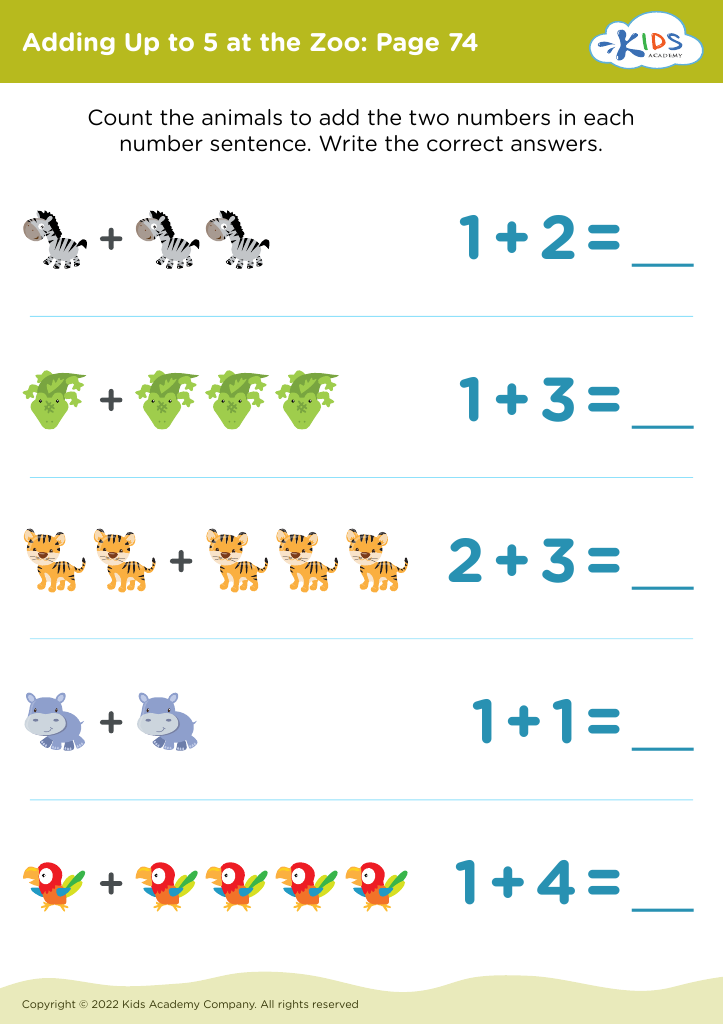
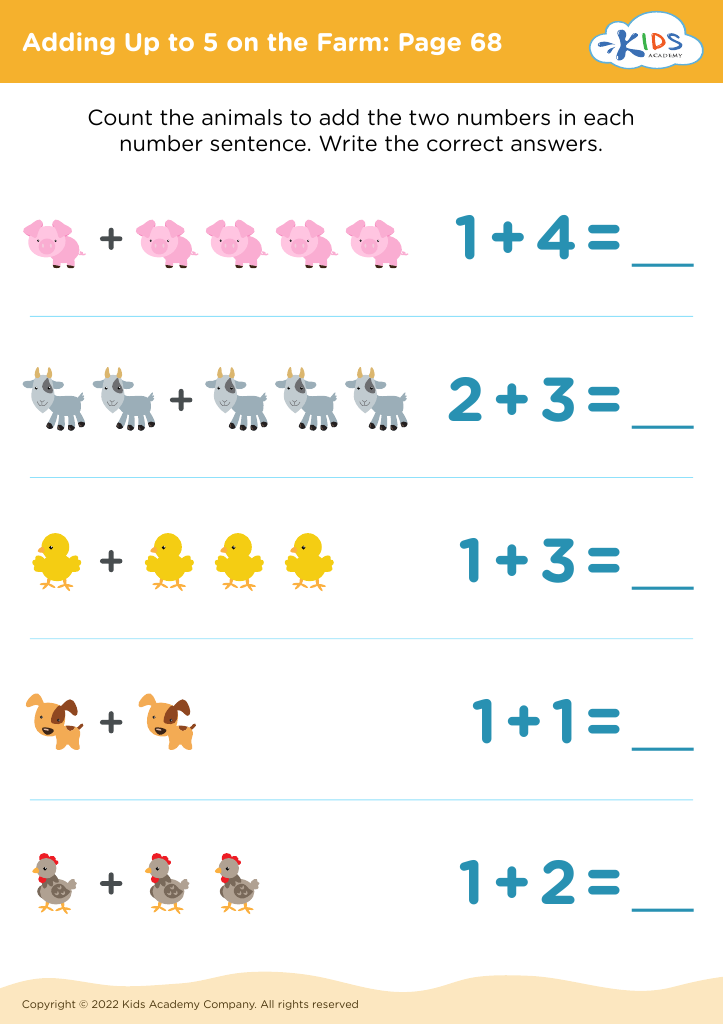
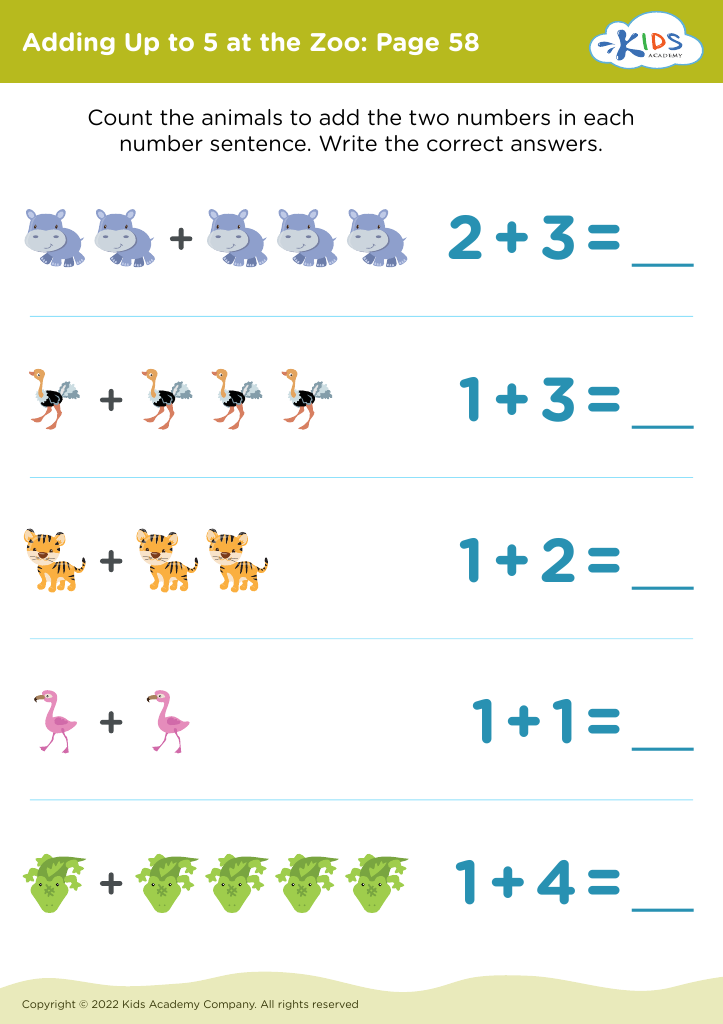
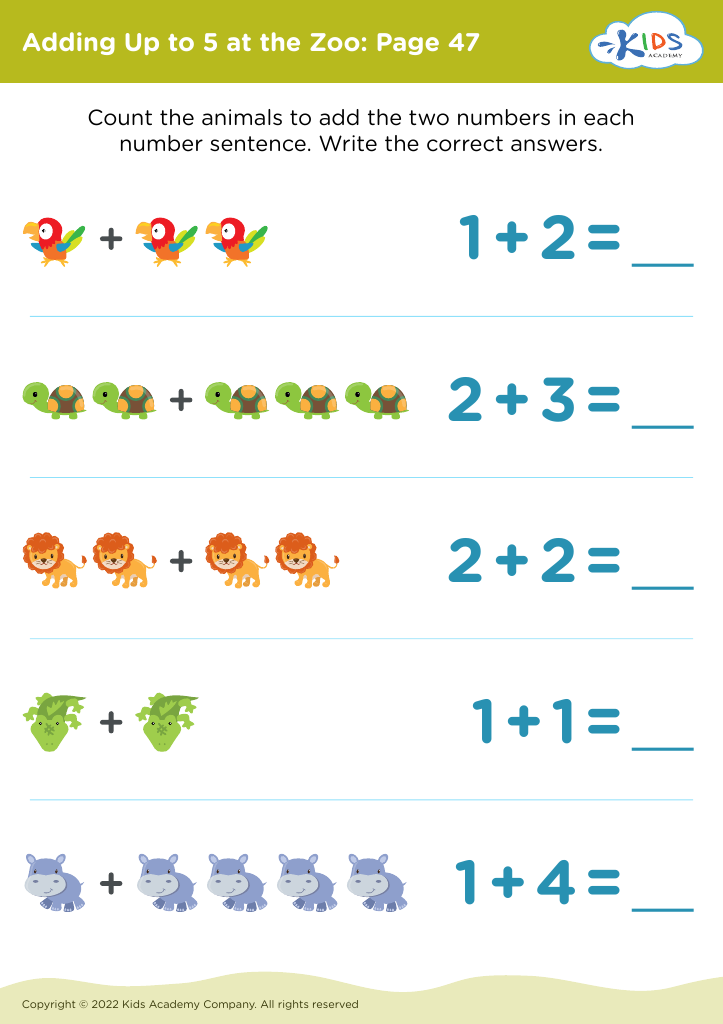
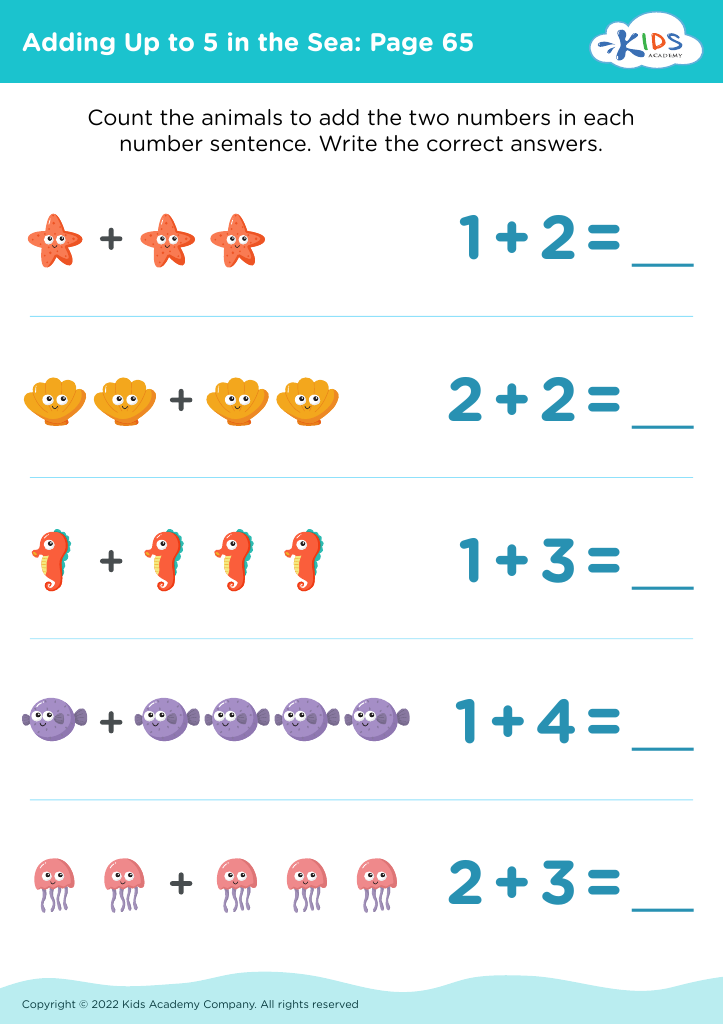
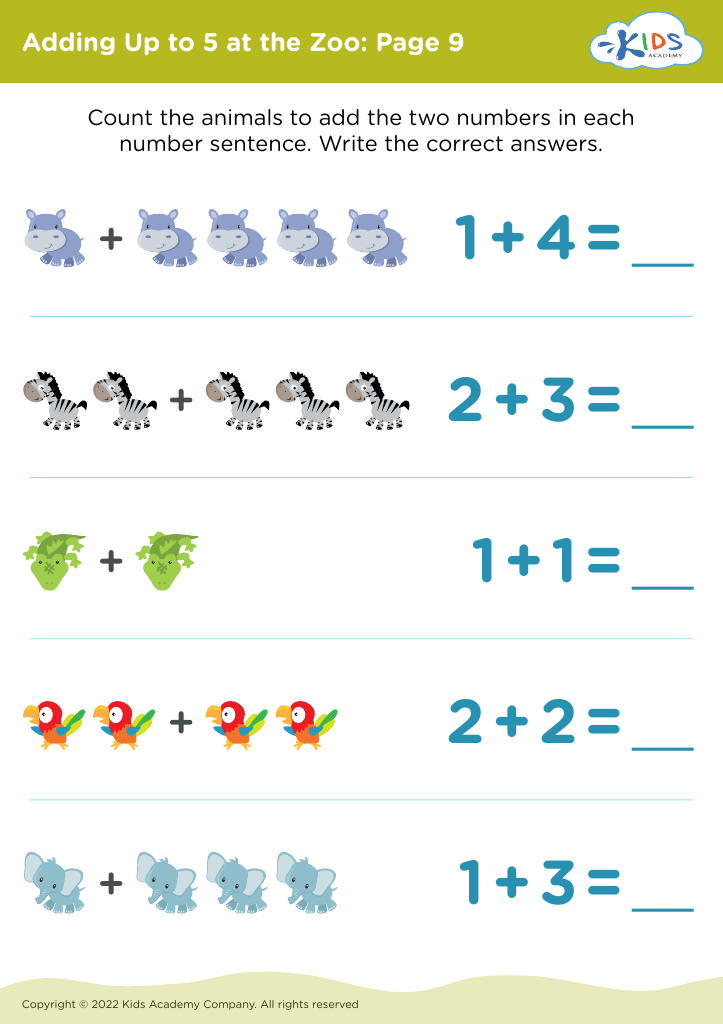
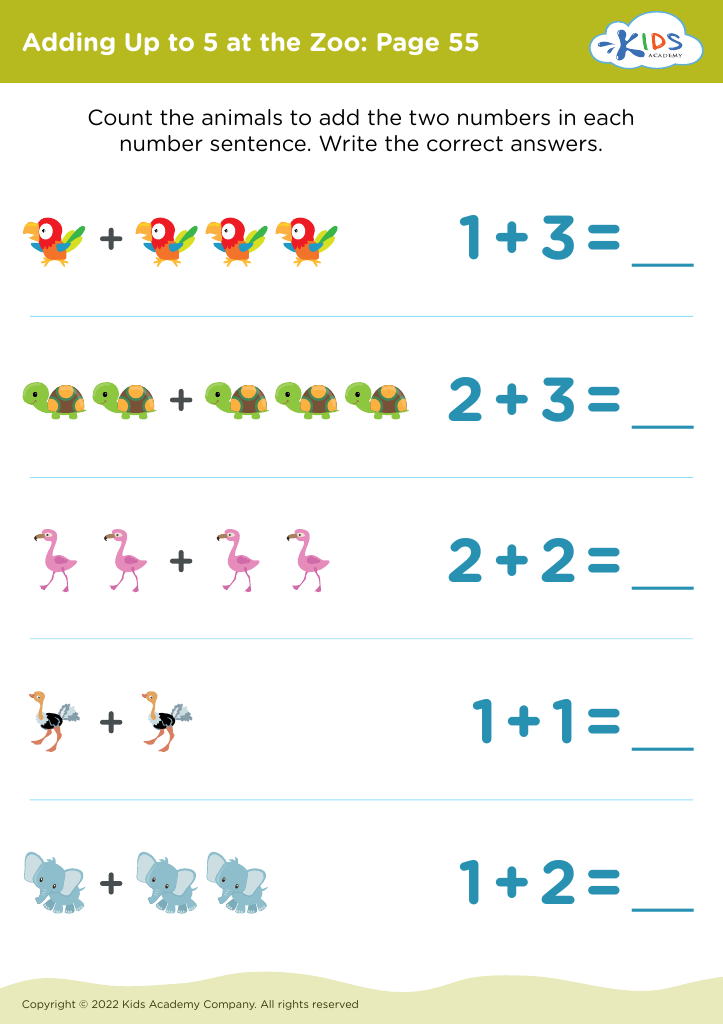
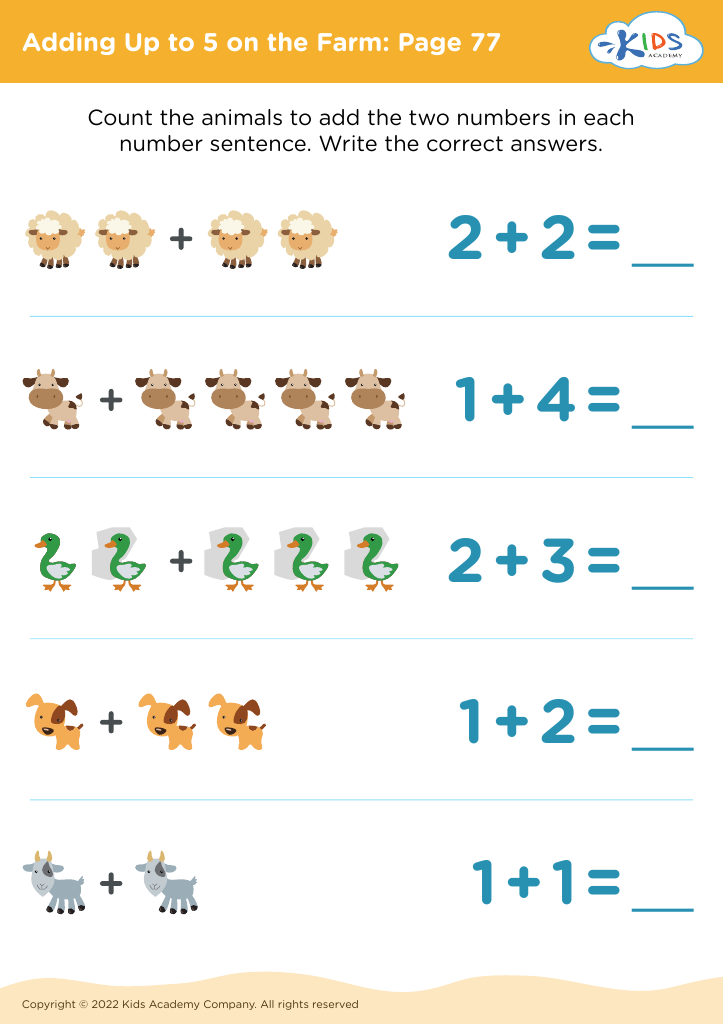
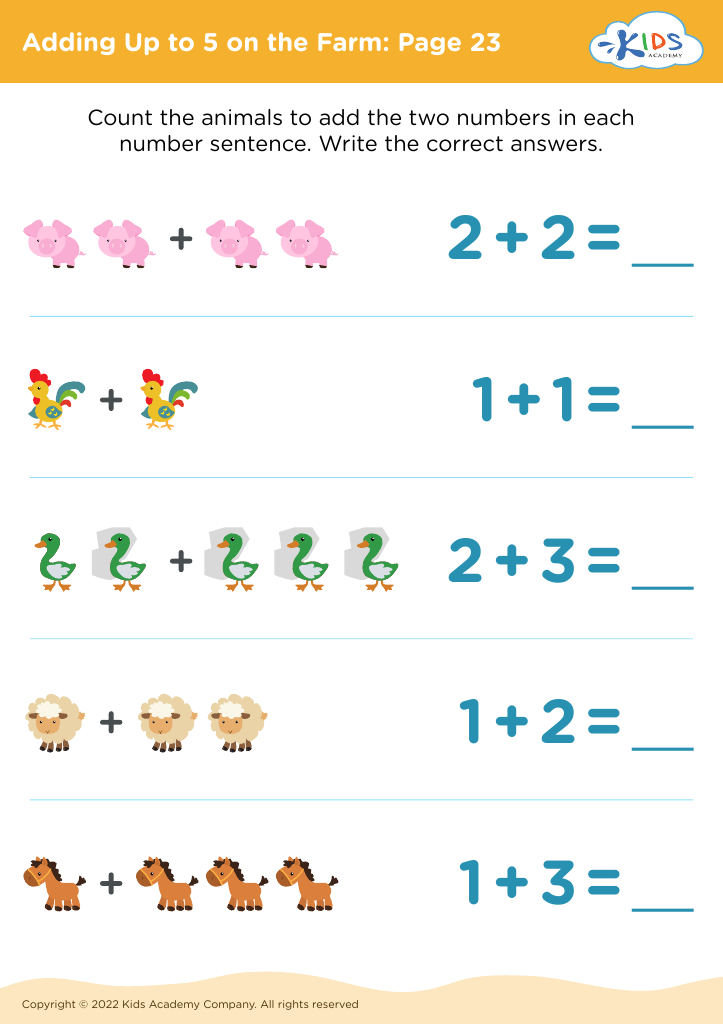
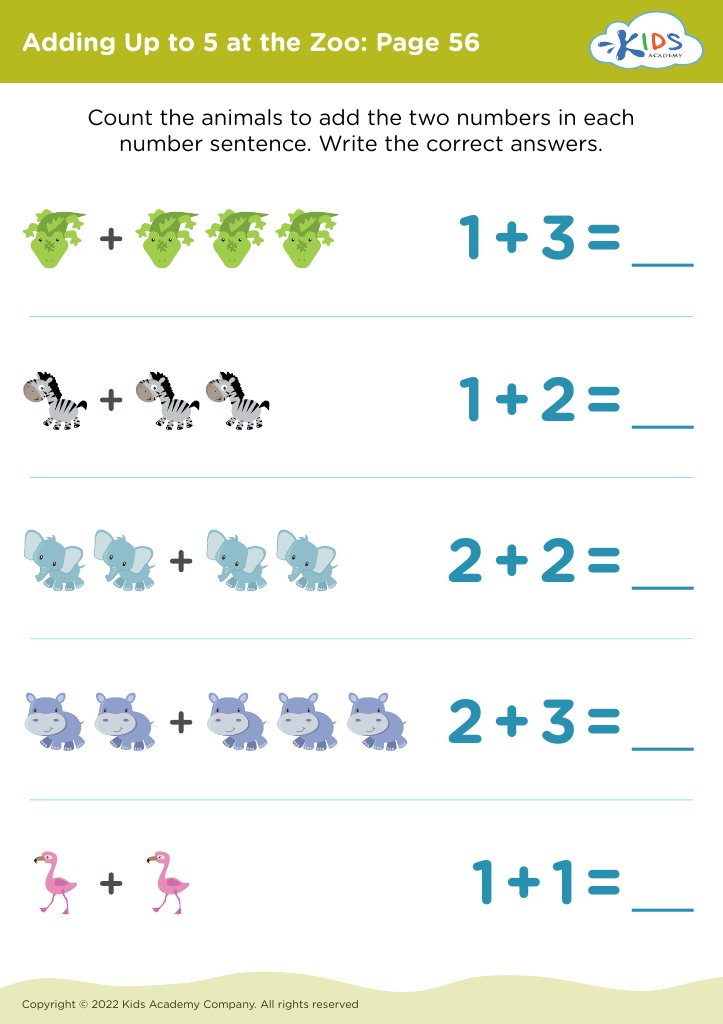
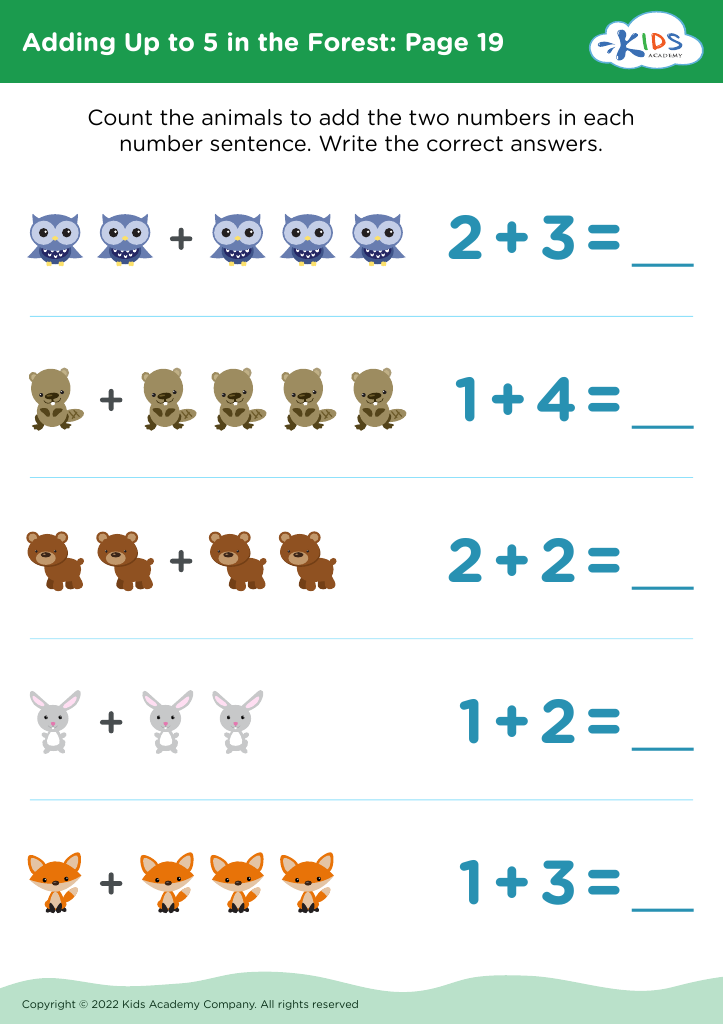
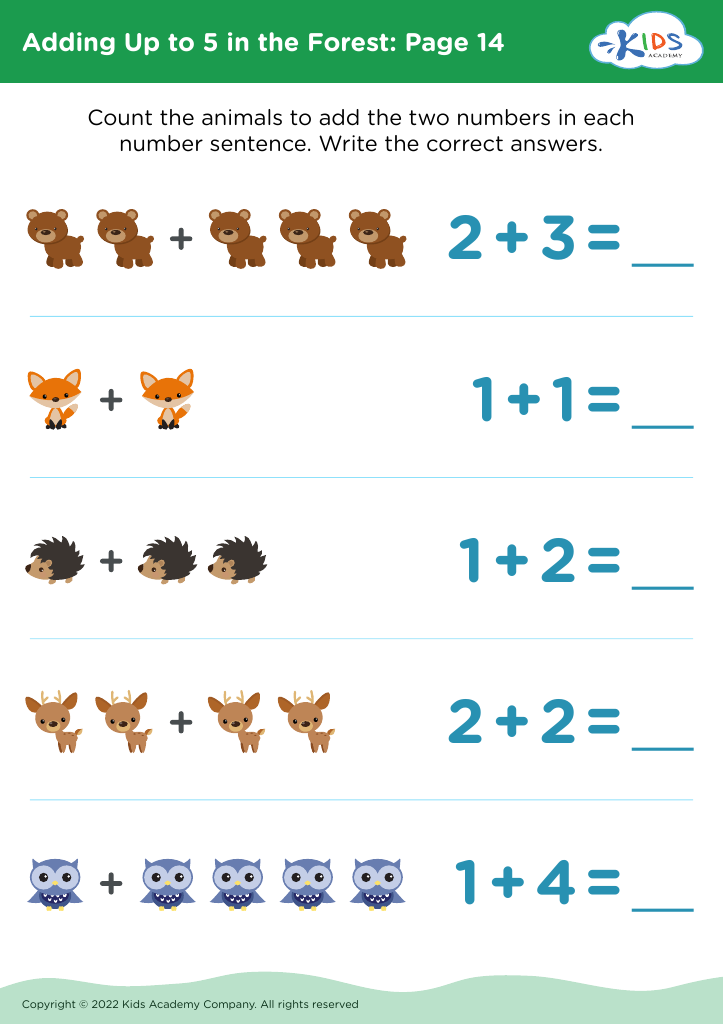
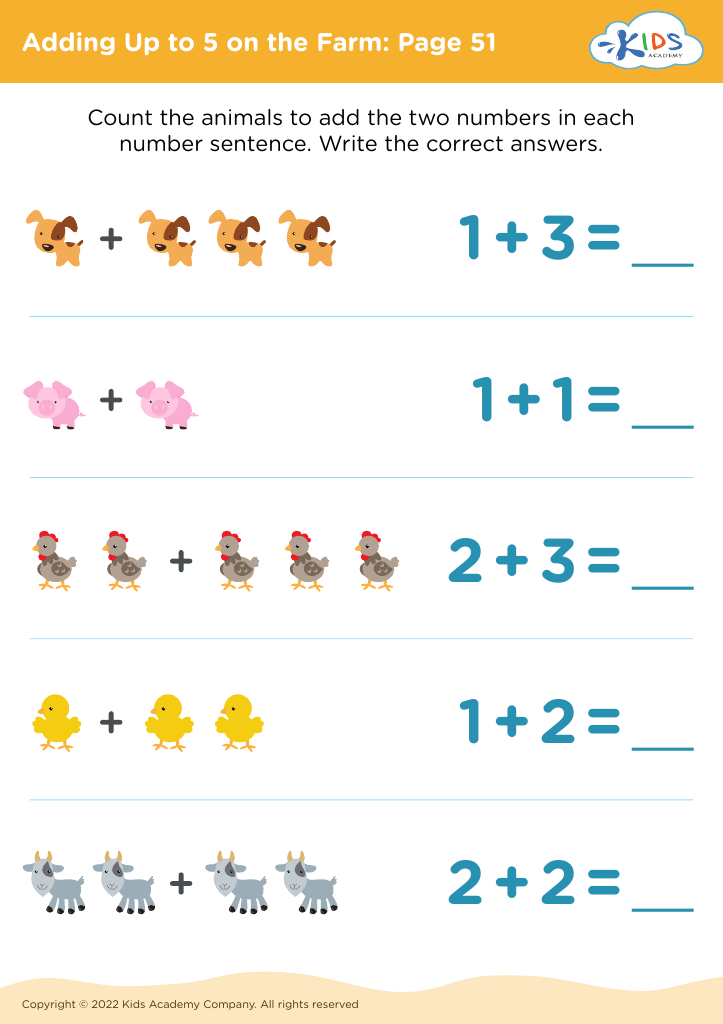
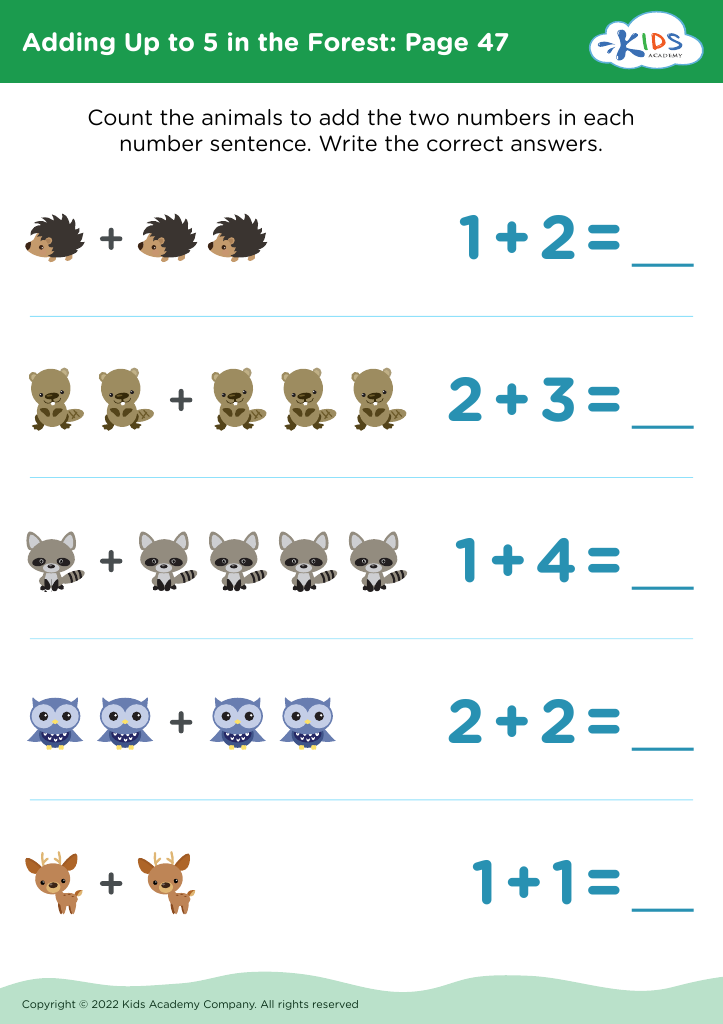
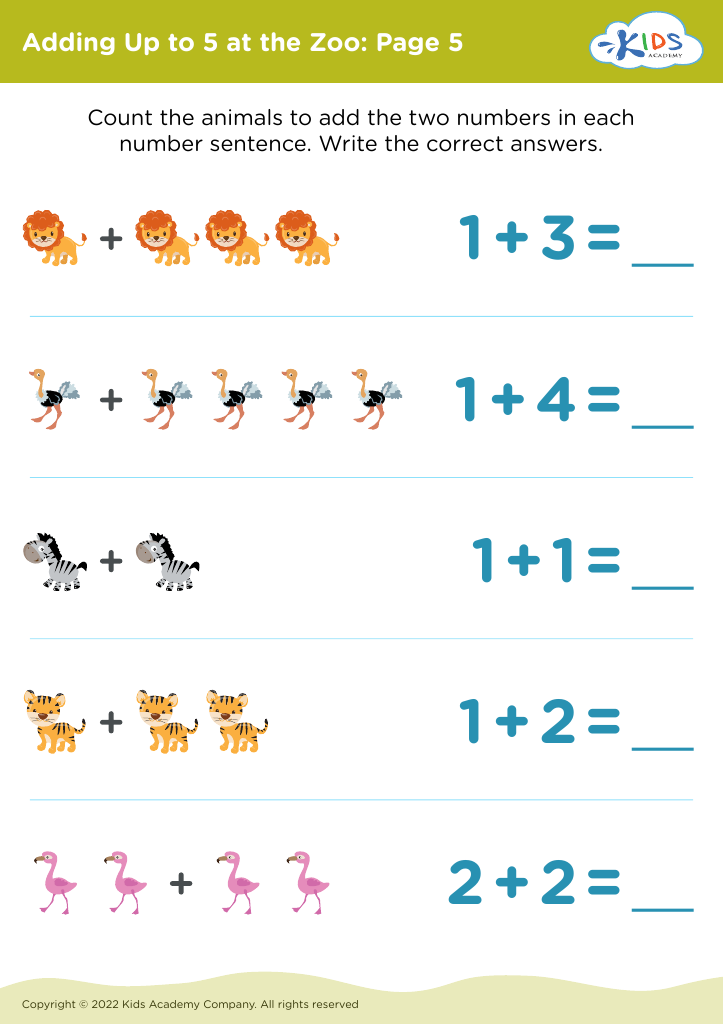
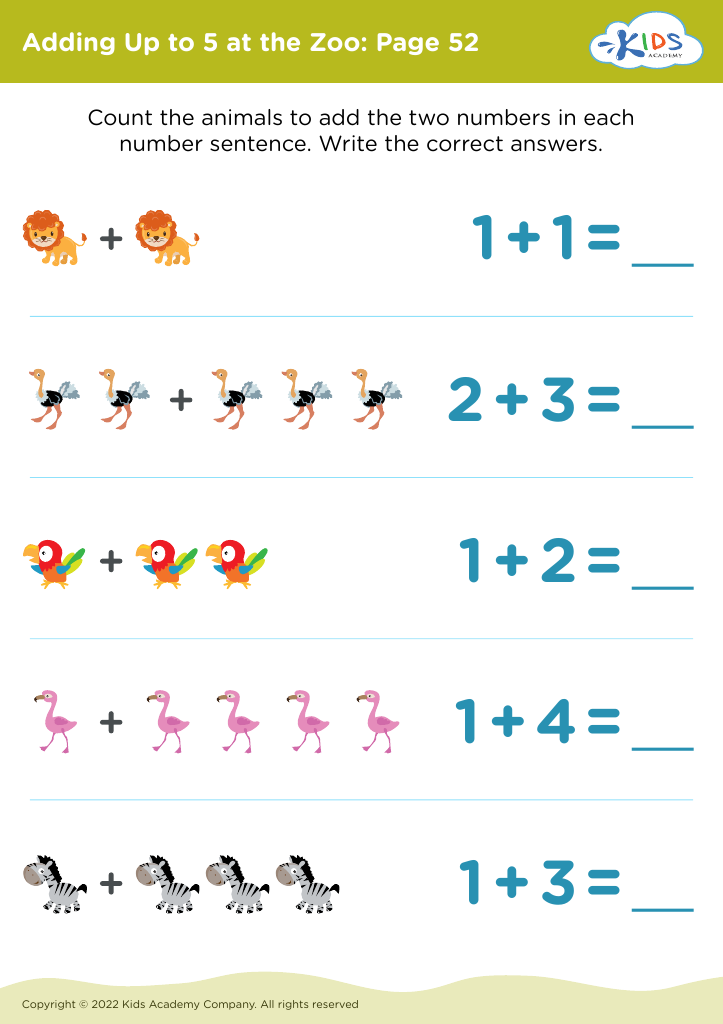
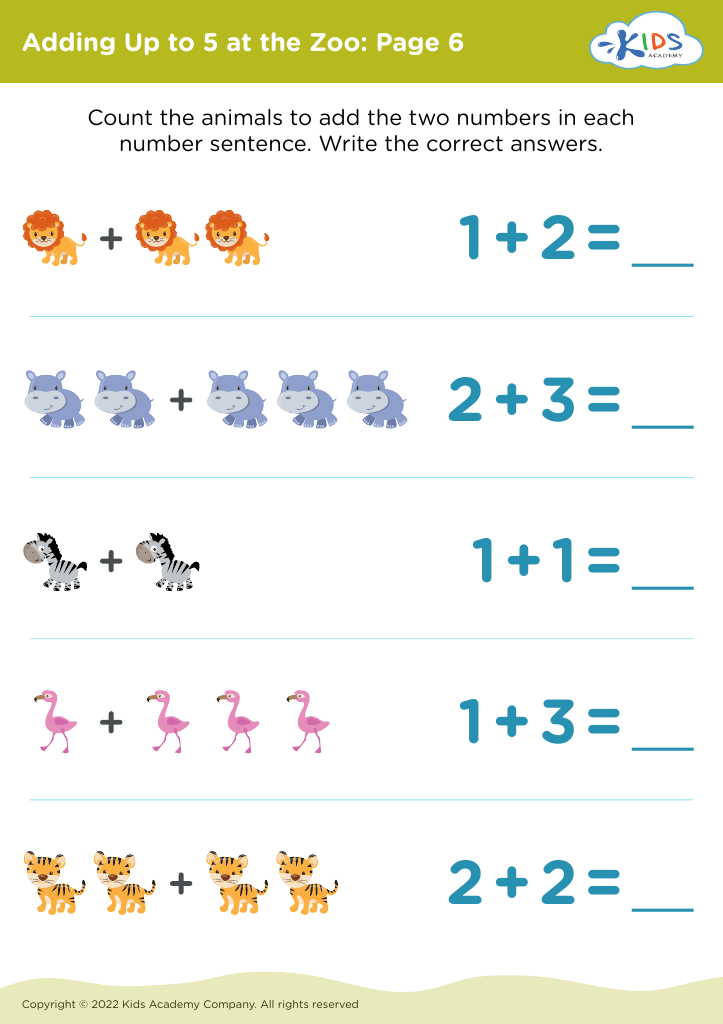
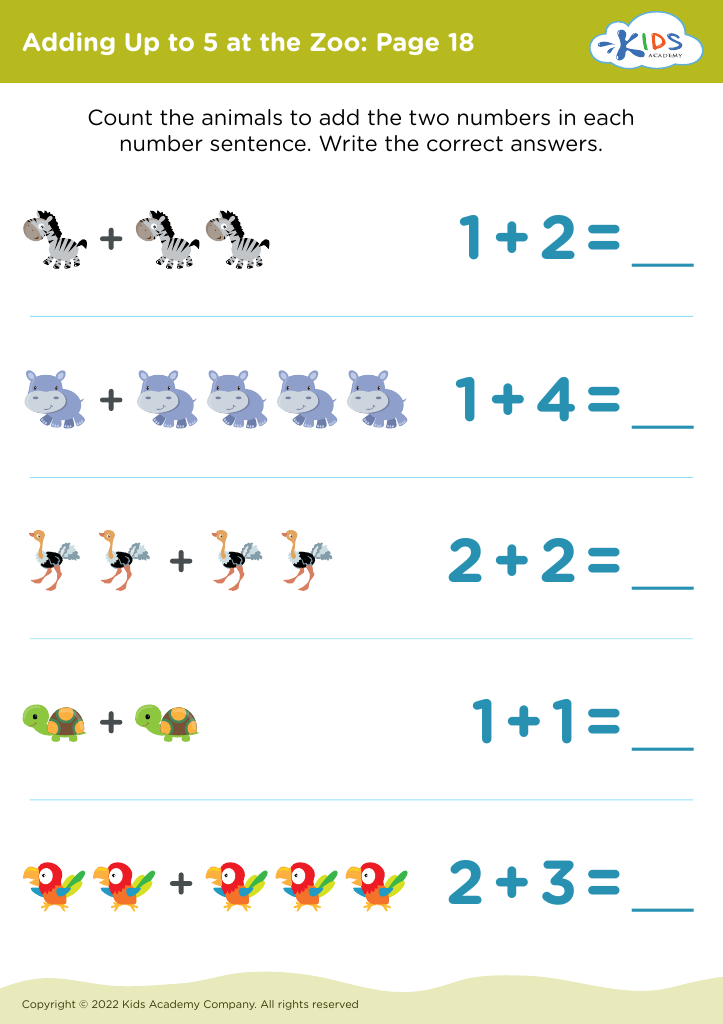
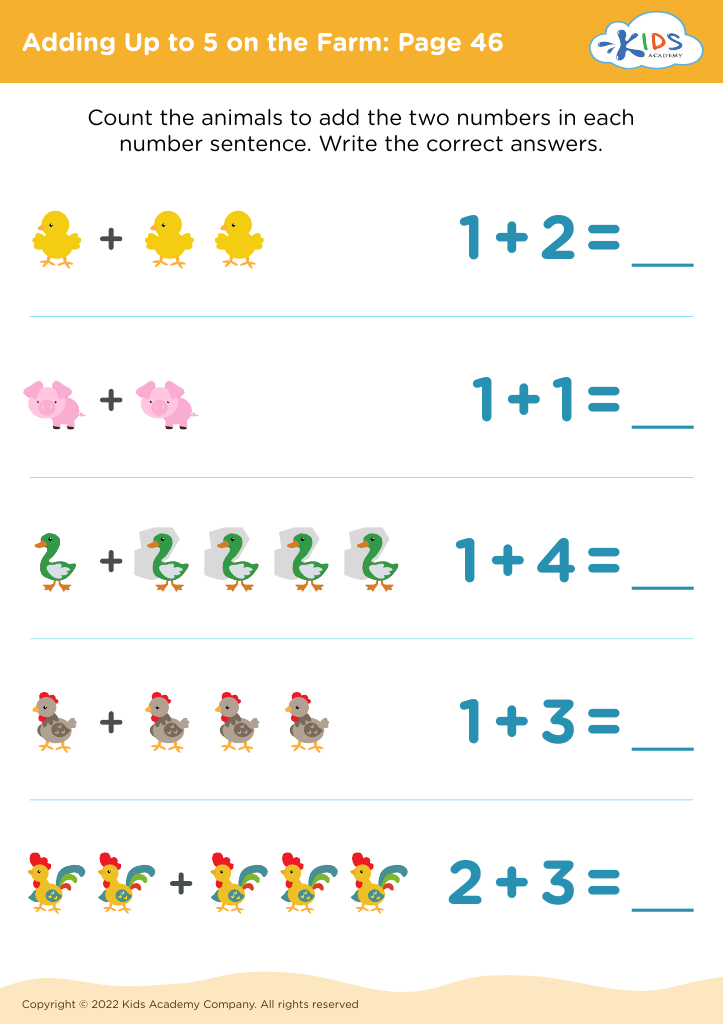








Animal recognition is a vital component of early childhood education, particularly in preschool settings. Parents and teachers should care about this skill because it plays a crucial role in cognitive, emotional, and social development. Recognizing animals enhances a child's vocabulary and language skills as they learn to identify different species and describe their characteristics. This foundational knowledge fosters curiosity and encourages little ones to appreciate the diversity of the natural world.
Moreover, animal recognition supports cognitive processes such as categorization and memory recall. When children engage in activities involving animals, they develop critical thinking skills as they compare and contrast various species, understanding their different habitats, behaviors, and needs.
From an emotional perspective, learning about animals can cultivate empathy and compassion. By understanding how to care for different types of animals, children learn important values like responsibility, kindness, and respect for living beings. Additionally, animal-related activities can aid social development—group activities centered around animals encourage teamwork, cooperation, and communication among peers.
In summary, animal recognition in preschool not only enriches a child’s educational experience but also nurtures emotional intelligence and social skills, making it a worthy focus for parents and teachers alike.