Enhancing concentration Preschool Addition Worksheets
9 filtered results
-
From - To
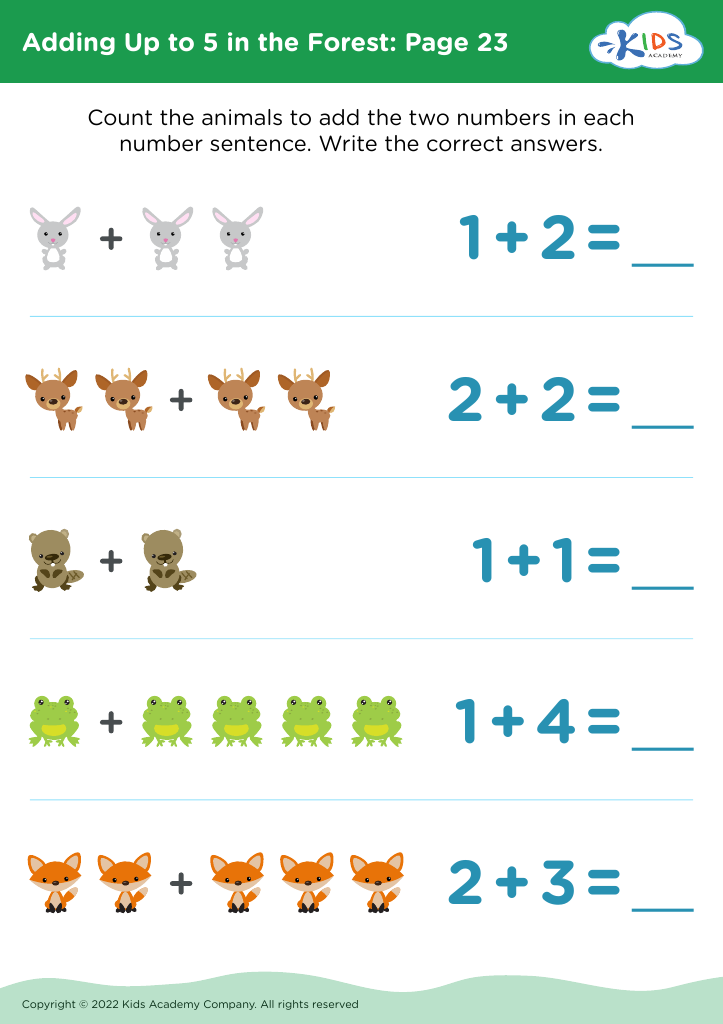
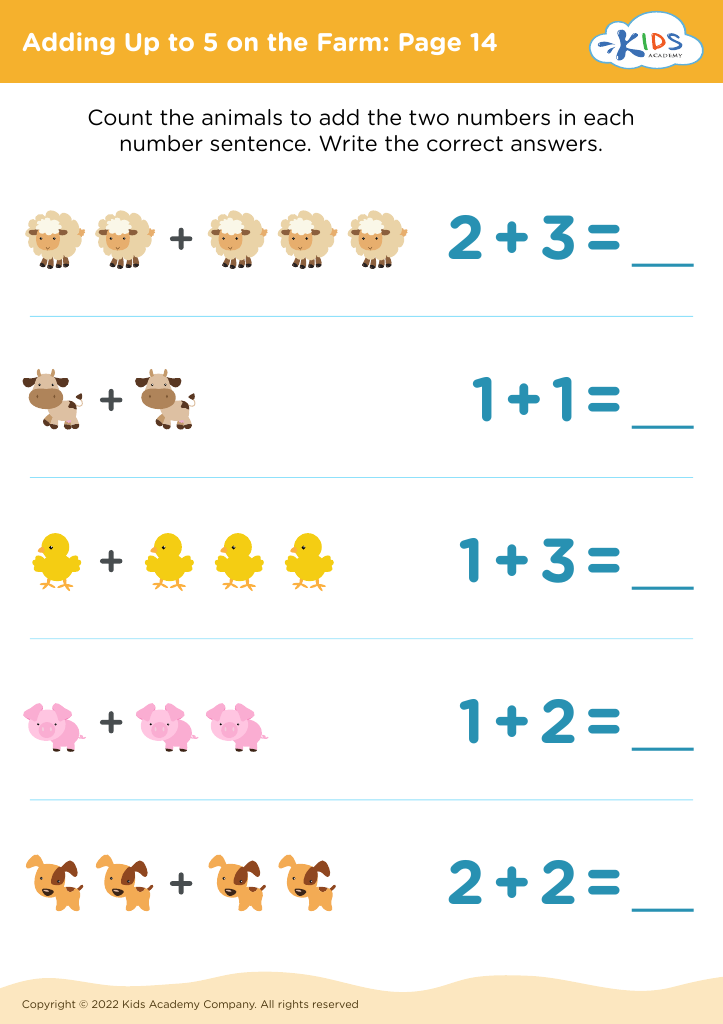
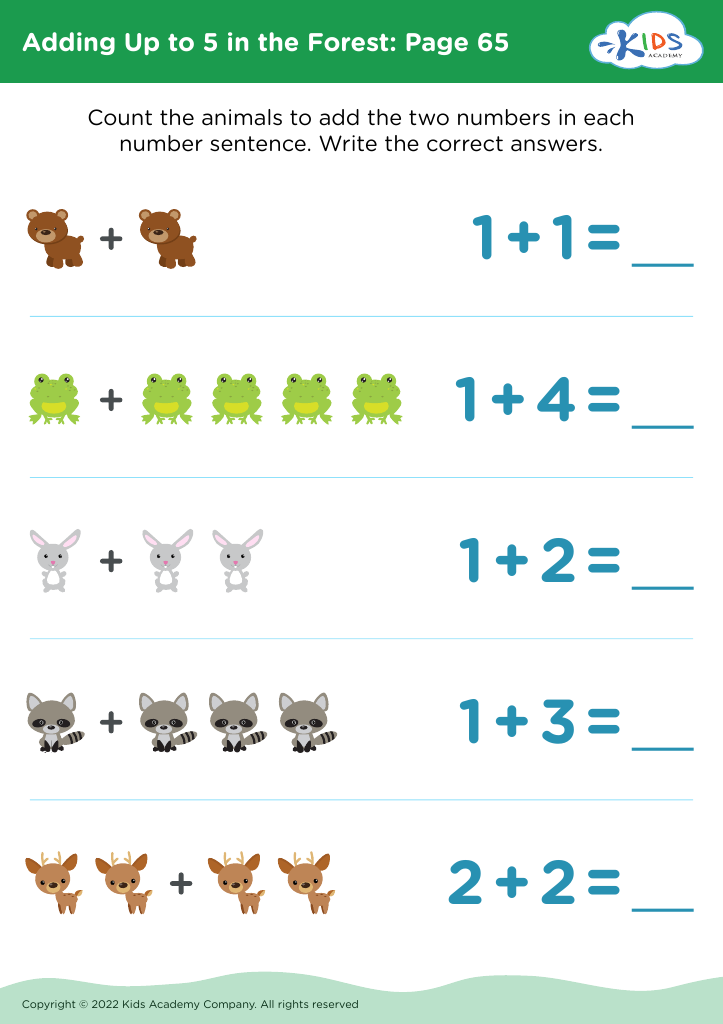
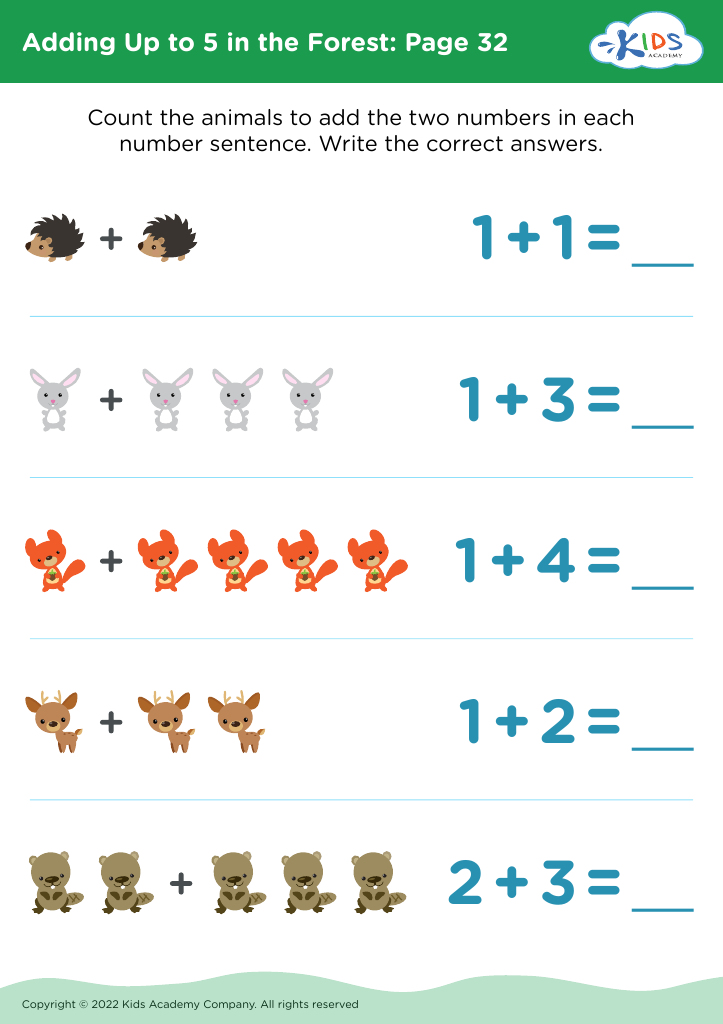
Enhance your preschooler’s concentration and math skills with our engaging "Enhancing Concentration Preschool Addition Worksheets." Tailored for young learners, these worksheets combine fun activities with essential addition exercises, promoting cognitive growth while keeping children entertained. Each worksheet features colorful graphics and interactive tasks designed to captivate young minds, making learning enjoyable. By integrating concentration-building challenges with addition, your child will develop focus and improve problem-solving abilities. Perfect for parents and educators alike, these resources foster a love for math while building foundational skills. Download our creative worksheets today and watch your child thrive in their early learning journey!
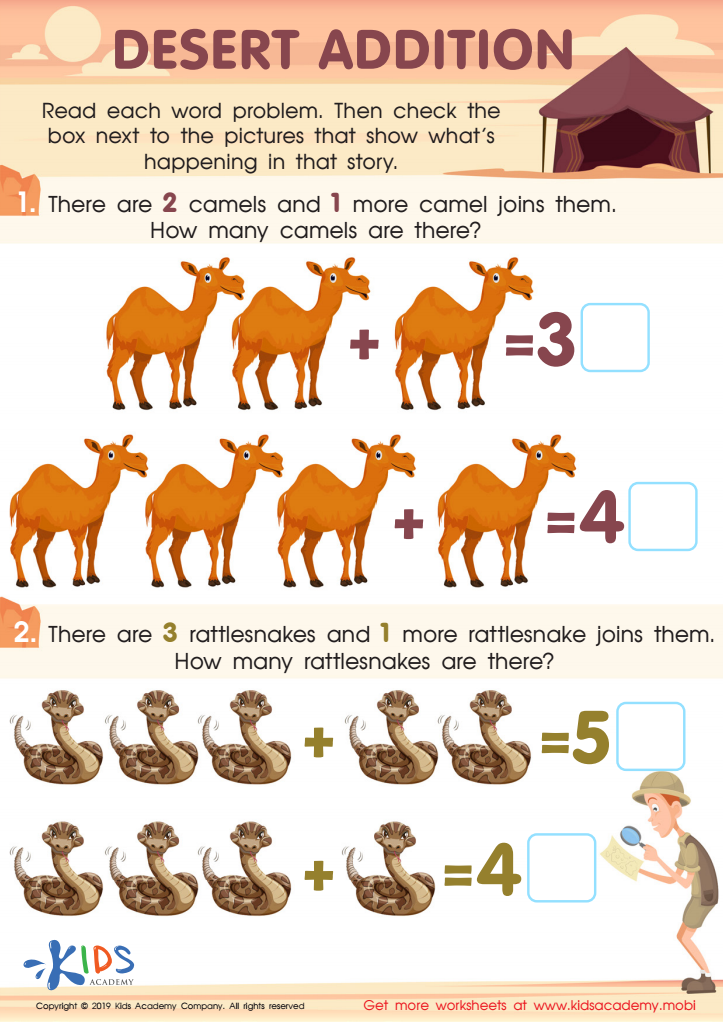
Desert Addition Worksheet
 Assign to My Students
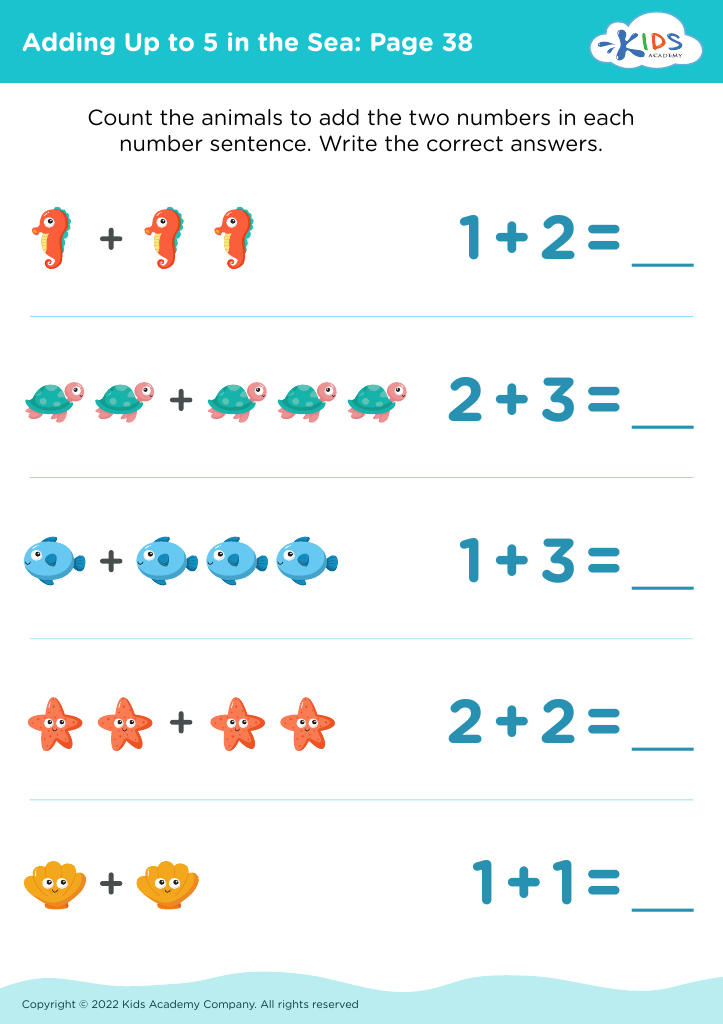
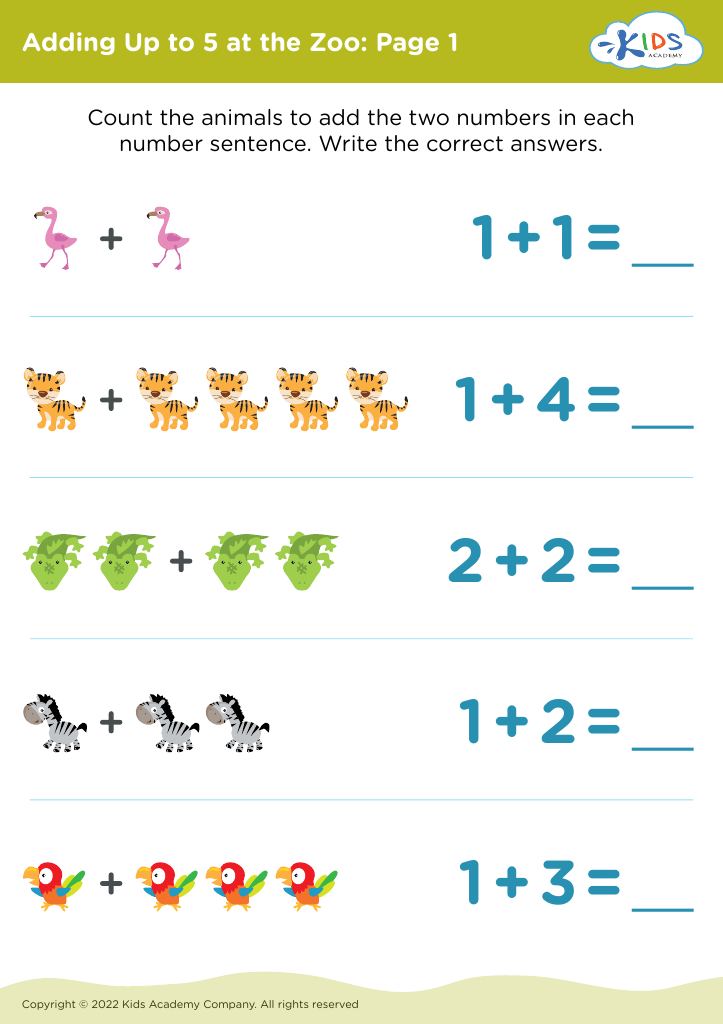
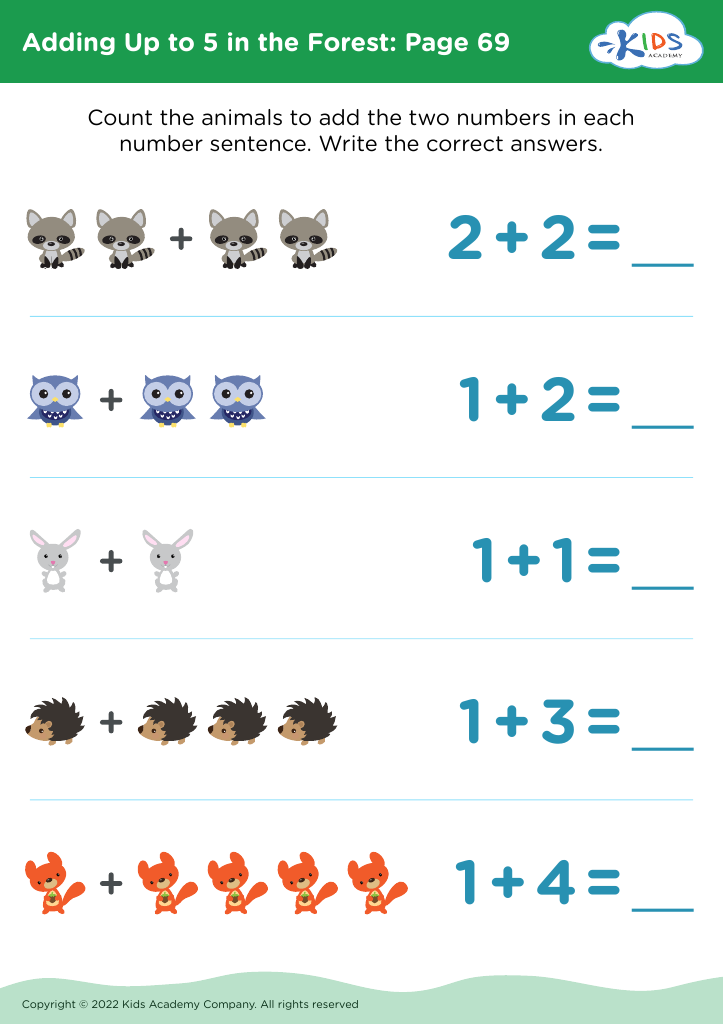
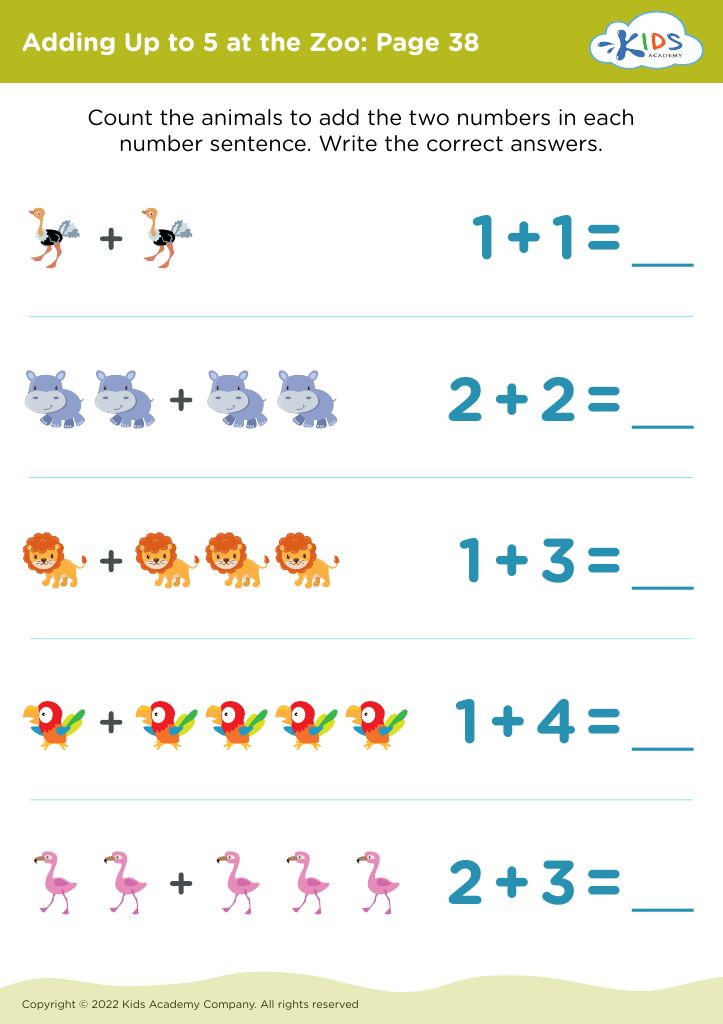








Enhancing concentration in preschoolers during addition activities is crucial for several reasons, making it a priority for both parents and teachers. First, early childhood is a foundational stage for cognitive development. Encouraging concentration skills during learning helps children develop the ability to focus, which paves the way for successful learning throughout their academic journey. When preschoolers concentrate on addition, they are better able to understand basic math concepts, laying a strong groundwork for more advanced skills in the future.
Moreover, improved concentration fosters resilience and self-discipline. Children learn to persevere through challenges in problem-solving, which is vital not only in math but across all disciplines. Just as importantly, by engaging in activities that promote concentration, children experience increased confidence and a sense of accomplishment when they successfully solve addition problems.
Additionally, enhancing concentration during addition activities can help reduce frustration and anxiety, as children learn effective strategies to manage their attention. Overall, when parents and teachers prioritize enhancing concentration in preschool addition, they cultivate not only mathematical skills but also lifelong learning dispositions, ultimately preparing children for a successful transition into primary education and beyond.