Understanding number values Preschool Addition Worksheets
3 filtered results
-
From - To
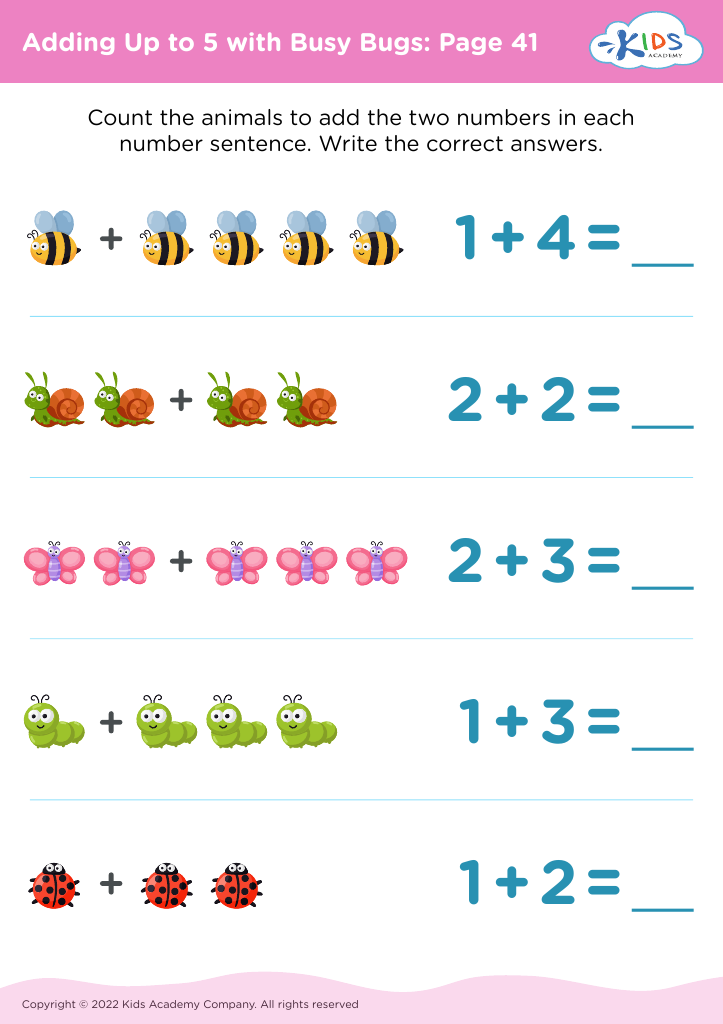
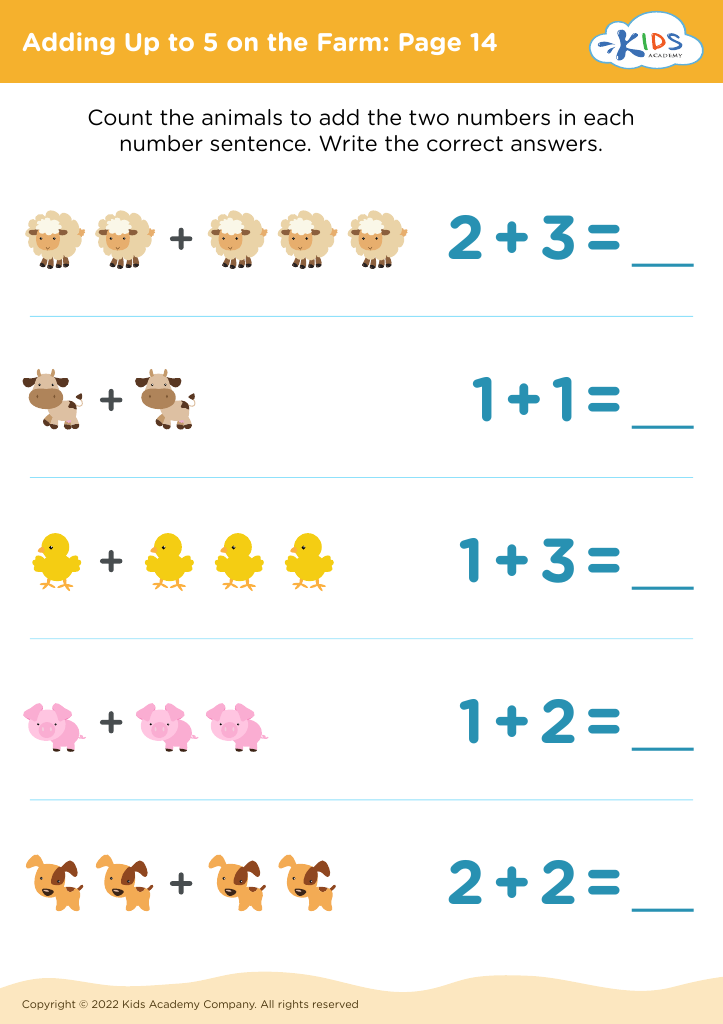
Introduce young learners to the basics of math with our "Understanding Number Values" Preschool Addition Worksheets. These engaging and interactive printables are designed to help preschoolers grasp the concept of addition while reinforcing their number recognition skills. Each worksheet features fun, visually appealing activities that make learning enjoyable and effective. With colorful illustrations and simple instructions, children can easily understand and practice adding numbers. Perfect for both classroom and at-home learning, these worksheets provide a solid foundation in math, preparing little ones for future mathematical success. Foster a love for numbers and boost early math skills with our expertly crafted addition worksheets.
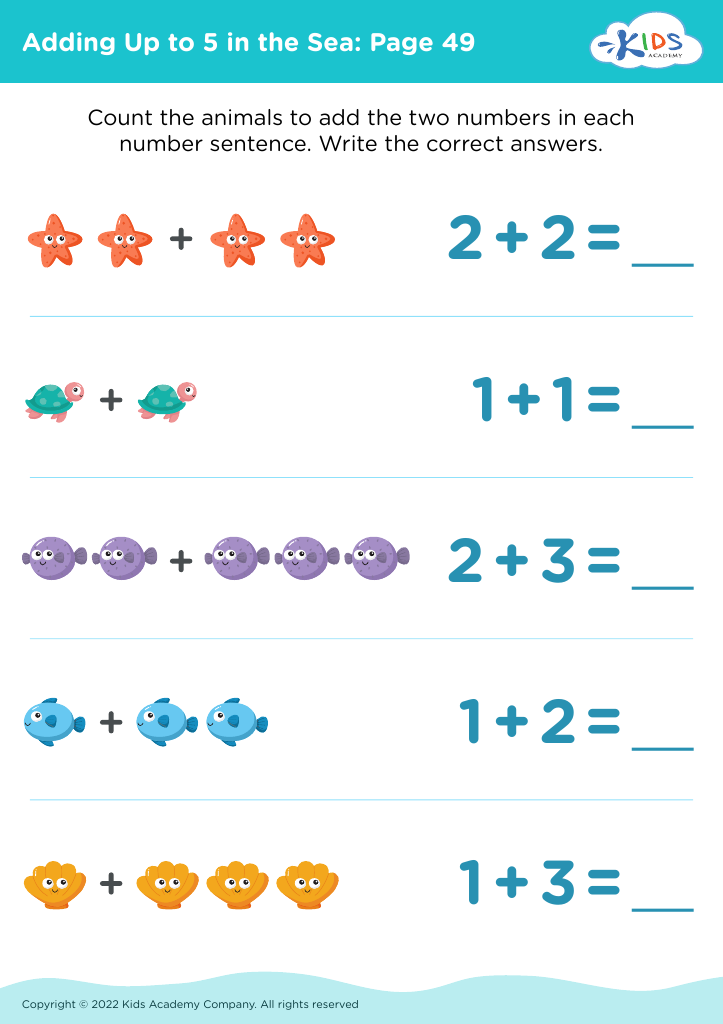








Understanding number values in preschool addition is crucial for several reasons. First, it lays the foundational groundwork for all future mathematical learning. When children grasp the concept of number values, they develop the ability to see numbers as quantities that can be added together. This understanding nurtures their numerical comprehension and prepares them for more complex operations in later grades, such as subtraction, multiplication, and division.
Parents and teachers should care because early numerical proficiency is linked to academic success. Studies show that children with strong early math skills tend to perform better in various academic areas, including reading and problem-solving. Introducing these concepts in preschool can stimulate cognitive development, enhance critical thinking, and encourage a positive attitude towards learning.
Moreover, a strong grasp of number values and basic addition helps foster confidence in young learners. When children understand and successfully apply these skills, they build self-efficacy and a sense of achievement. This confidence can lead to a love for learning and a greater willingness to tackle new challenges.
Finally, early math skills support everyday life skills, such as recognizing patterns, understanding time, and managing simple financial transactions. By caring about preschool addition and number values, parents and teachers equip children with essential tools for both academic success and daily life.