Understanding numerical values Preschool Addition Worksheets
4 filtered results
-
From - To
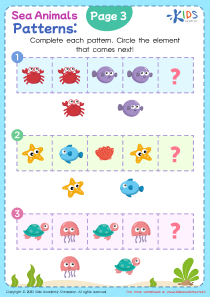
Boost your child's early math skills with our "Understanding Numerical Values: Preschool Addition Worksheets." Designed specifically for little learners, these fun and engaging sheets introduce children to basic addition concepts through colorful illustrations and interactive tasks. Each worksheet builds foundational skills, allowing preschoolers to grasp numerical values and improve their counting abilities. Presented in an easy-to-follow format, our resources keep young minds excited about learning and pave the way for future math success. Perfect for both classroom and home use, our preschool addition worksheets make mastering early math enjoyable and effective. Download and start your child's math journey today!
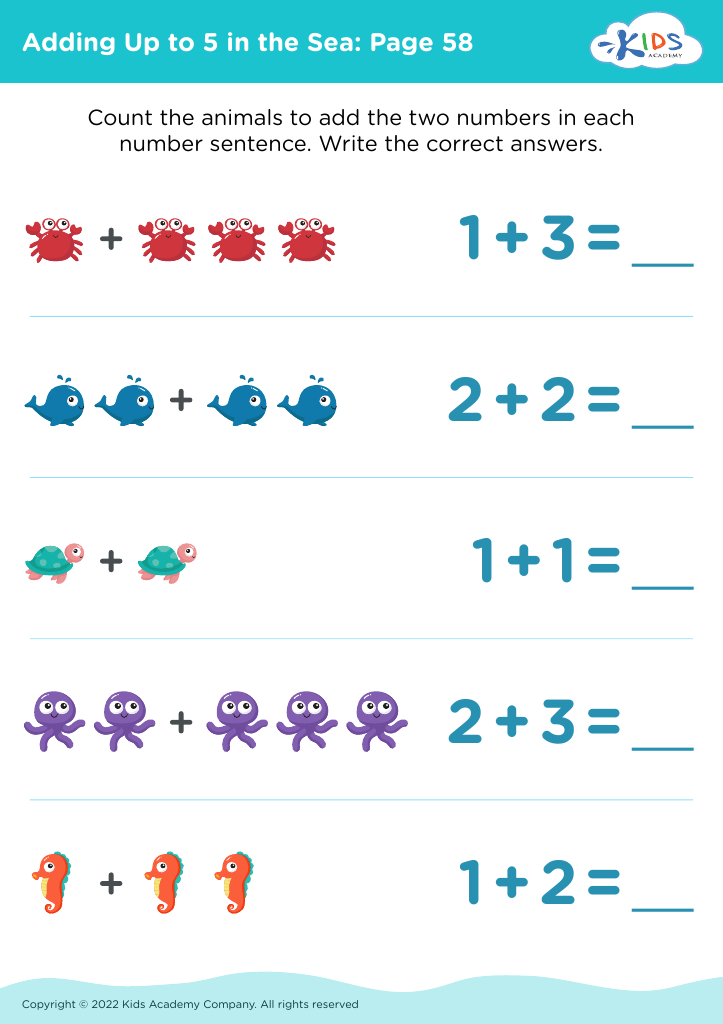
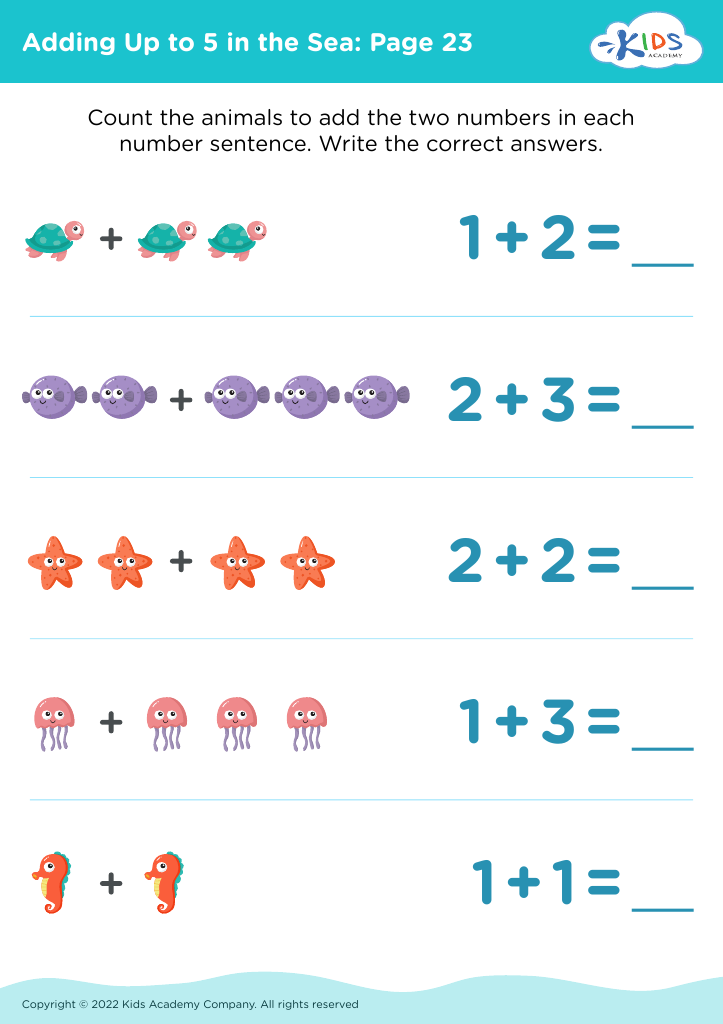
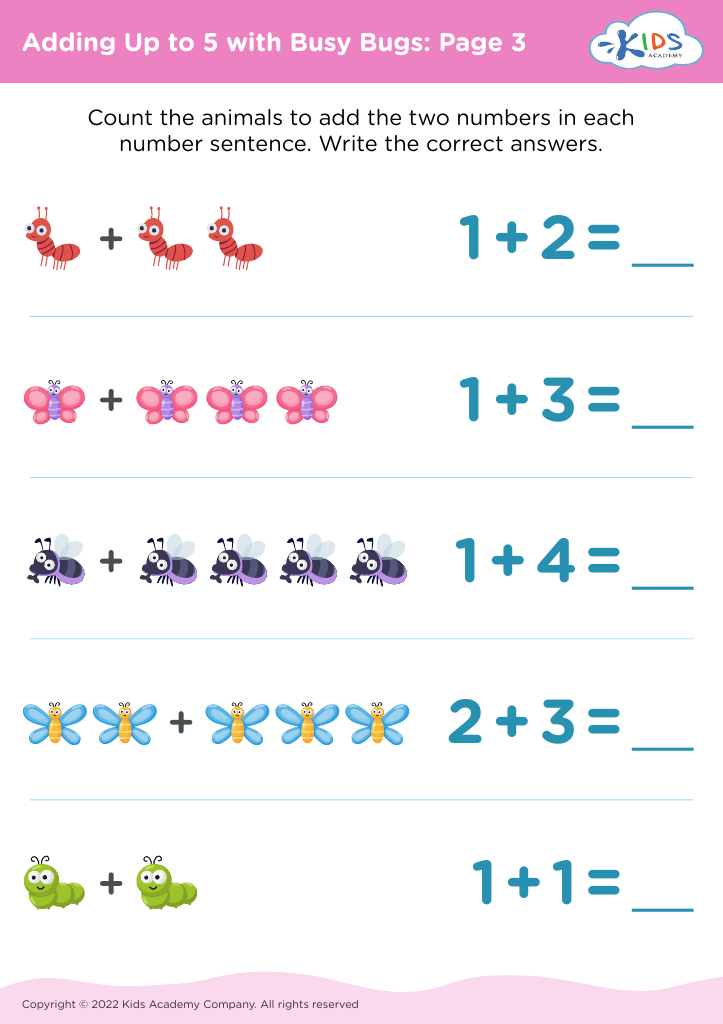
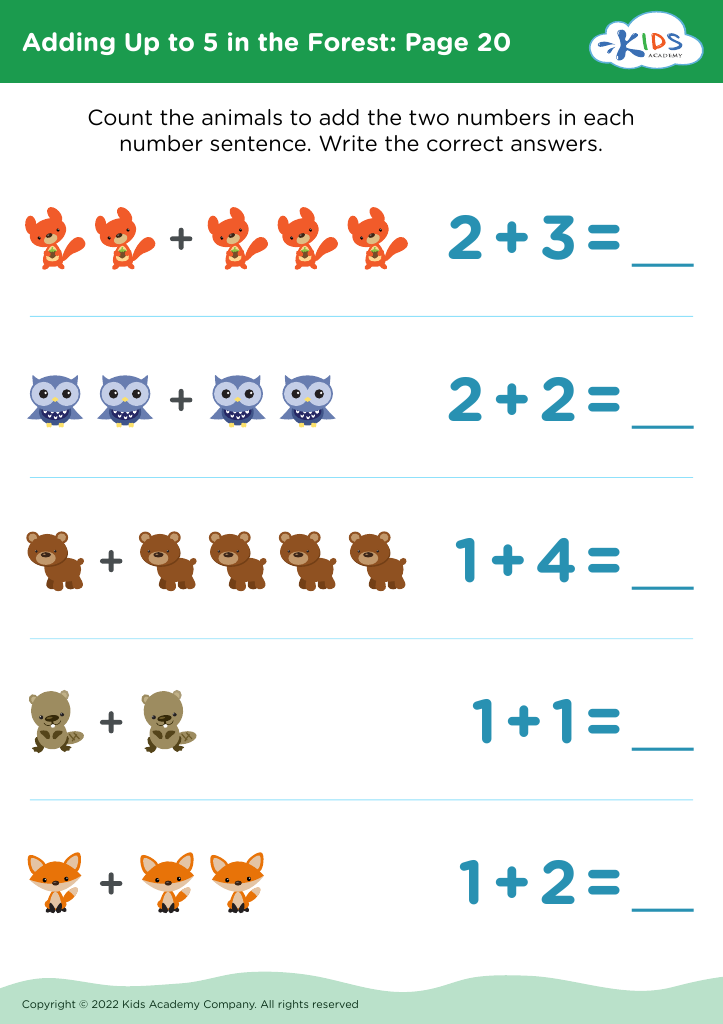








Understanding numerical values and early concepts of addition in preschool are foundational skills that set the stage for future mathematical learning. Parents and teachers should prioritize these early math skills because they promote cognitive development and critical thinking abilities. Research demonstrates that early numeracy skills are strong predictors of later academic success, not only in mathematics but across other subjects. When children learn to recognize numbers and begin to understand how quantities combine and relate to each other, they engage essential brain areas involved in problem-solving and logical reasoning.
Additionally, these early math concepts help children develop confidence in their abilities to tackle challenges, fostering a growth mindset that is crucial for lifelong learning. Parents and teachers can create a rich mathematical environment by incorporating playful, hands-on activities that make learning fun and relevant. Counting games, puzzles, and everyday activities like cooking or shopping can seamlessly integrate early addition practice.
By caring about and investing time in developing a child's understanding of numbers and addition, parents and teachers not only support academic readiness, but they also instill a sense of curiosity and enjoyment toward learning, creating a solid foundation for a child's overall development and future educational achievements.