Understanding currency Preschool Money Worksheets
3 filtered results
-
From - To
Introduce your preschooler to the basics of money with our "Understanding Currency Preschool Money Worksheets." These expertly designed printables from Kids Academy make learning about coins and bills fun and engaging. Through hands-on activities, young learners can explore different denominations, practice counting money, and grasp the value of currency in everyday life. Ideal for building strong foundational math skills, these worksheets combine colorful visuals with interactive exercises to keep children motivated. Perfect for use at home or in the classroom, our money worksheets are a valuable resource for nurturing financial literacy from an early age. Start your child's educational journey today!
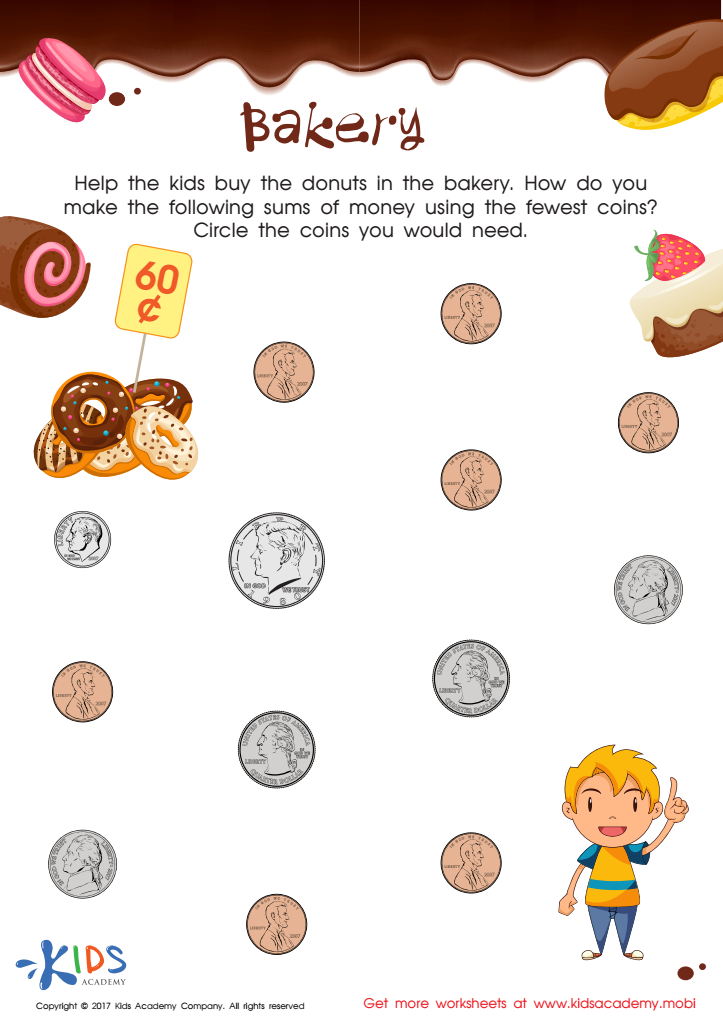
Counting Coins Worksheet
 Assign to My Students
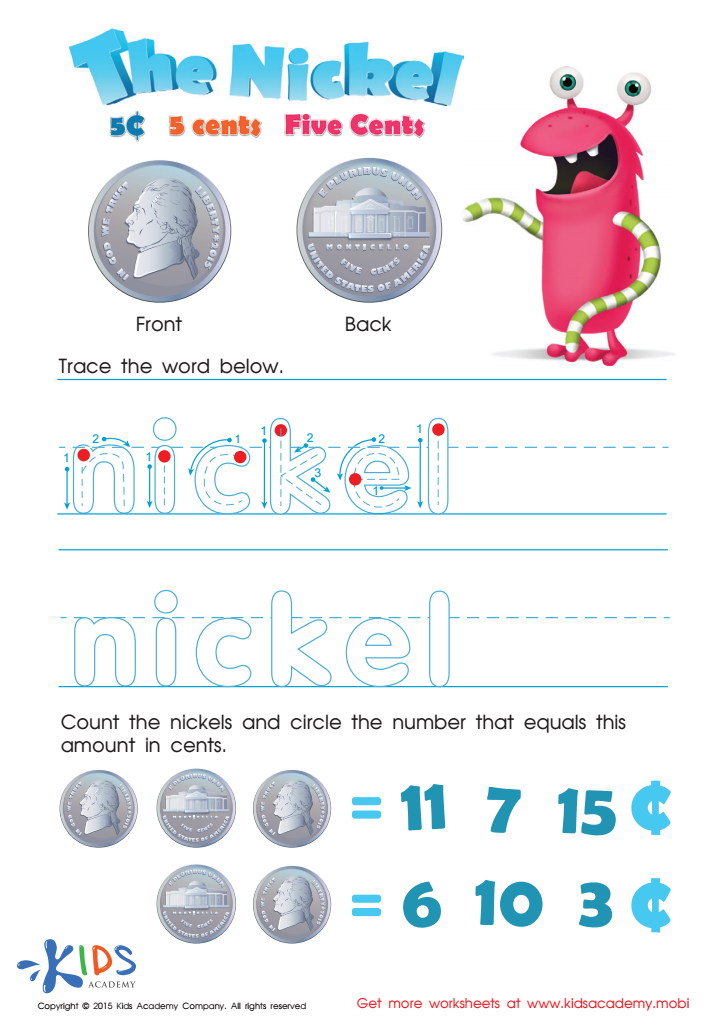
Five Cents or the Nickel Money Worksheet
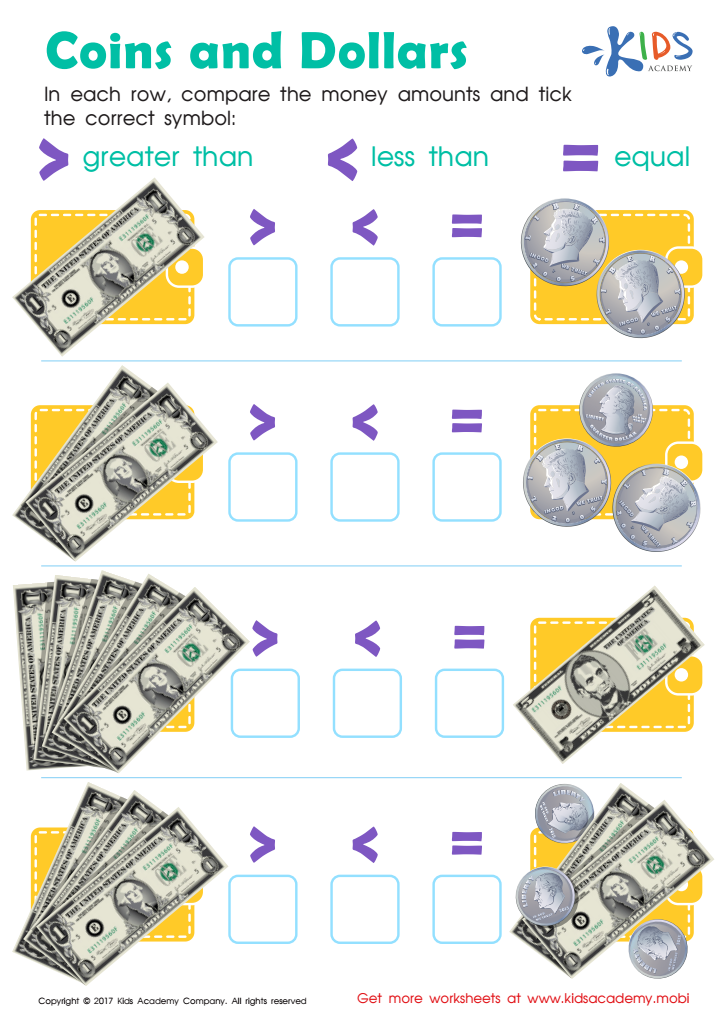
Money: Coins Dollars Printable







Teaching preschoolers about currency and money has significant benefits that parents and teachers should consider. At this formative age, children are highly receptive to new information and experiences, known as the "sponge" period. Understanding basic money concepts can fortify their cognitive development by enhancing skills such as counting, recognizing numbers and symbols, and simple arithmetic.
Introductions to currency can cultivate essential life skills, including financial literacy and decision-making. When children learn to identify coins and bills, they also grasp the concept of value and exchange, laying the groundwork for budgeting and saving habits in the future. Engaging in money-related activities sharpens their psychological grasp of fairness and trade, enhancing their social interaction skills.
Moreover, integrating money concepts into play can spark curiosity and creativity. For instance, setting up a mock store where children use play money can promote role-playing, which aids their understanding of real-world scenarios in a controlled environment. Early exposure to currency can demystify adult financial interactions, empowering children to grow into responsible and informed adults. Therefore, teaching the basics of money in preschool translates to invaluable developmental gains, making it an essential component of early education.