Handwriting practice Preschool Math Worksheets
10 filtered results
Difficulty Level
Grade
Age
-
From - To
Subject
Activity
Standards
Boost your child's early learning with our Handwriting Practice Preschool Math Worksheets! Designed for young learners, these engaging worksheets combine fun and education to enhance both handwriting and basic math skills. Kids will trace numbers, draw shapes, and learn to count while improving their fine motor skills. Each carefully crafted worksheet offers colorful, interactive activities that keep little ones excited about learning. Ideal for home or classroom use, our Handwriting Practice Preschool Math Worksheets provide a solid foundation in math and literacy, preparing children for future academic success. Discover a fun way to nurture your child’s education today!
Favorites
With answer key
Interactive
Write 8 Worksheet
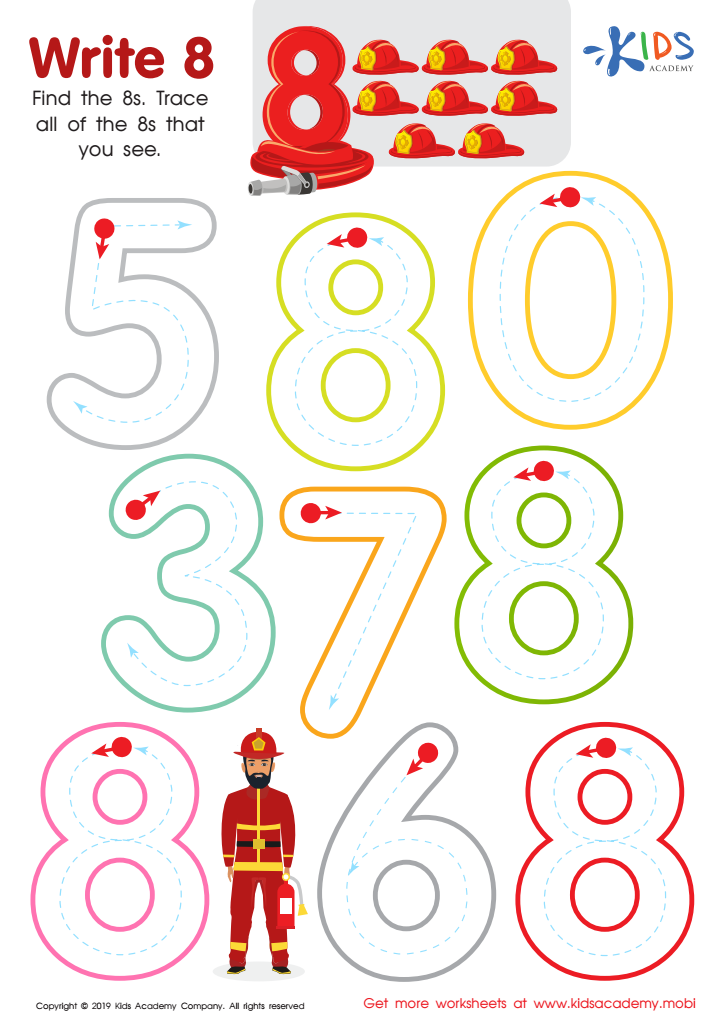
Once your kids can count small numbers, it's time to learn how to write them. With your help and patience, they will soon be pros! This worksheet will make learning easier. Help them spot the 8s in the picture, then help them trace them.
Write 8 Worksheet
Worksheet
Count and Trace 4 – 6 Worksheet
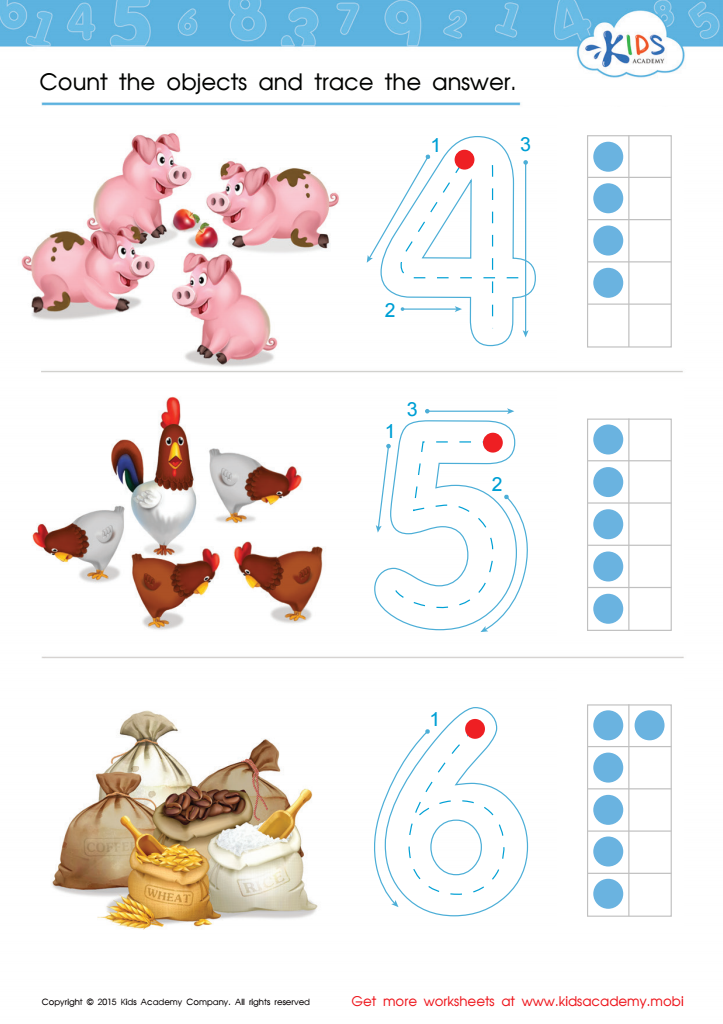
Download Kids Academy's brightly colored math worksheet for a fun and rewarding math experience for your little learner. Using Singapore Math, this worksheet helps children visualize, solve and practice fine motor skills. Click here for more math worksheets!
Count and Trace 4 – 6 Worksheet
Worksheet
Number 2 Printable
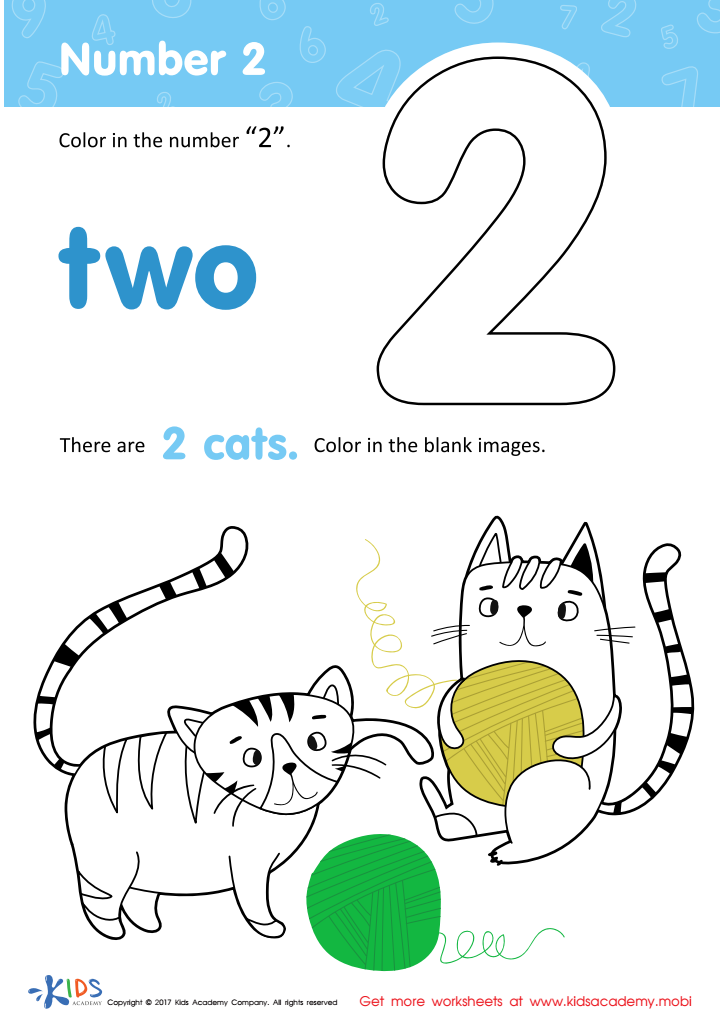
Help your child learn to recognize the number two with these cats and their yarn balls. Print this coloring page – it's great for counting and coloring fun! Your child will develop basic numeracy skills as they visually see numbers in action.
Download (PDF)
 Assign to My Students
Assign to My Students
Number 2 Printable
Worksheet
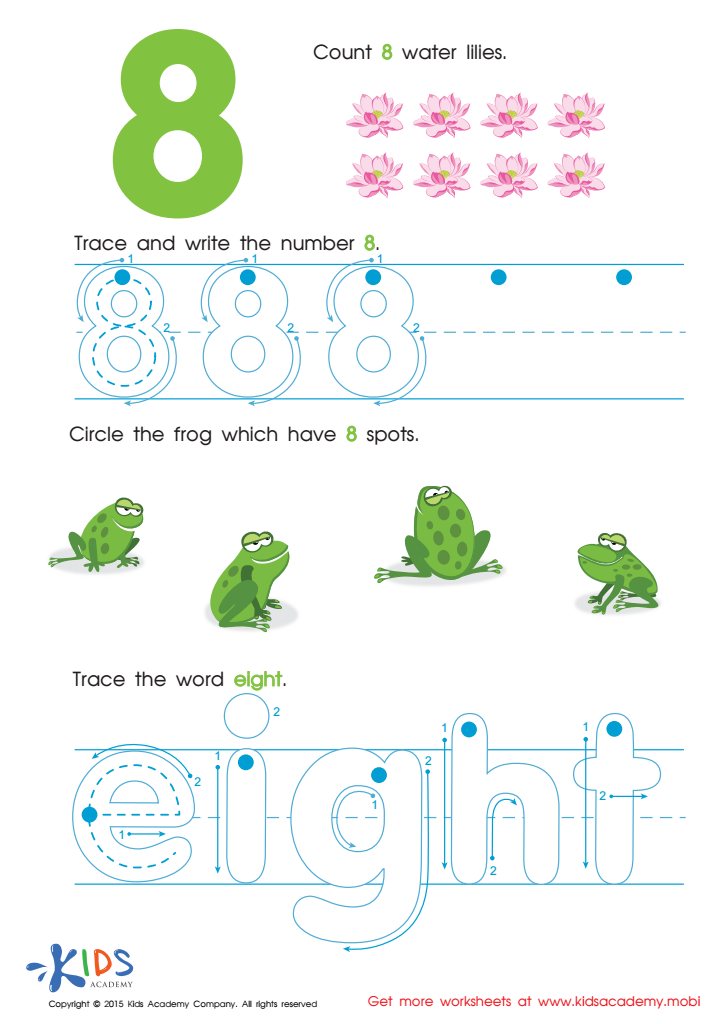
Learn Number 8 Easily Worksheet
Kids can trace, write numbers and learn to pronounce them through exciting activities and games. Try our number worksheets for preschoolers to make learning fun!
Learn Number 8 Easily Worksheet
Worksheet
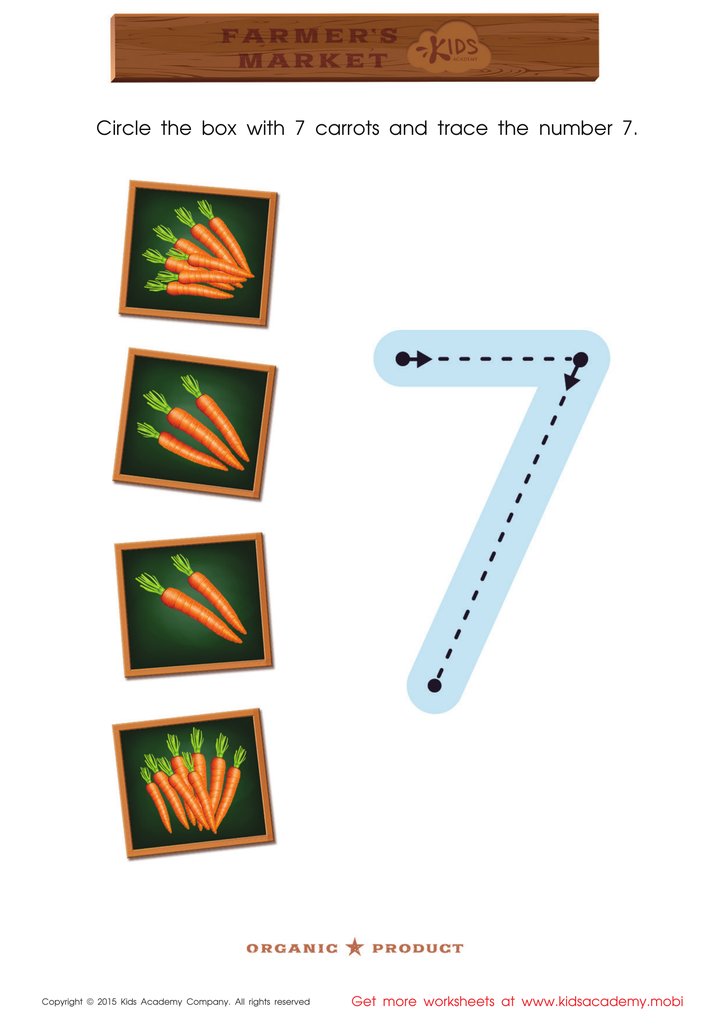
Count the Carrots and Trace the Number 7 Printable
Trace the number 7 and count the carrots with this worksheet from Kids Academy. Reinforce counting and writing skills while building confidence. Get started by downloading the kindergarten worksheet. For more worksheets by topic, check Kids Academy.
Count the Carrots and Trace the Number 7 Printable
Worksheet
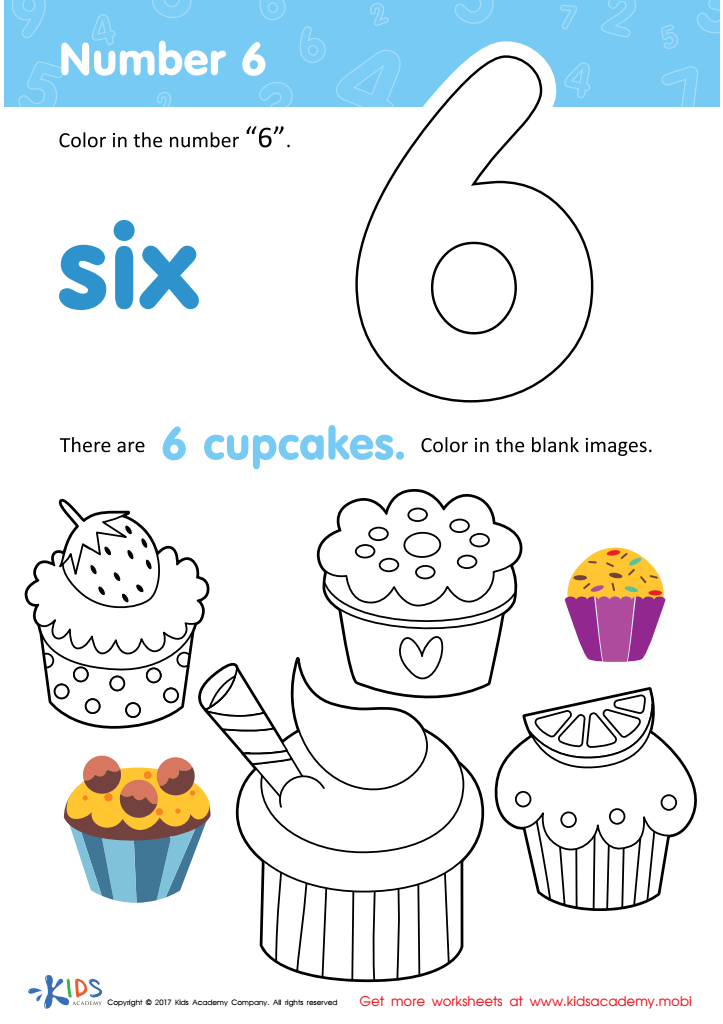
Number 6 Worksheet
Let's learn about the number six with cupcakes! Introduce your child to this fun and tasty coloring page. They'll love designing their own cupcakes while recognizing, counting, and reading the number six. An easy and enjoyable way to learn!
Download (PDF)
Assign to My Students
Assign to My Students
Number 6 Worksheet
Worksheet
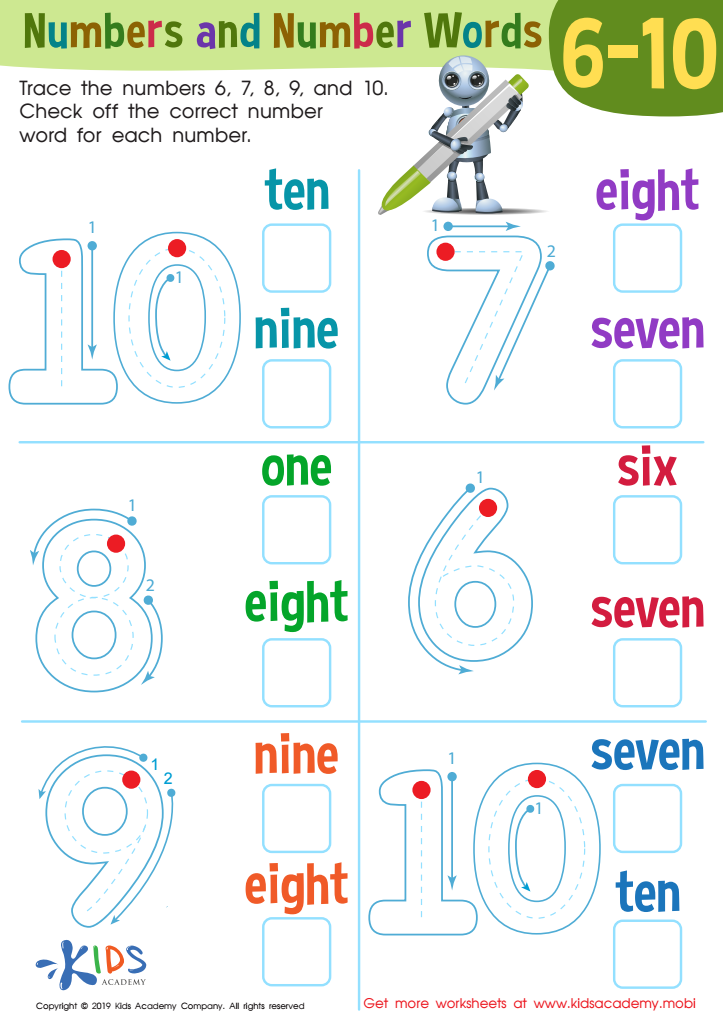
Numbers and Number Words 6–1 Worksheet
As children explore numbers and words, parents and teachers can help them learn to count and read with activities such as this worksheet. Here, the student traces numbers 6-10 and then selects the right number words to match. A fun and interactive way to learn!
Numbers and Number Words 6–1 Worksheet
Worksheet
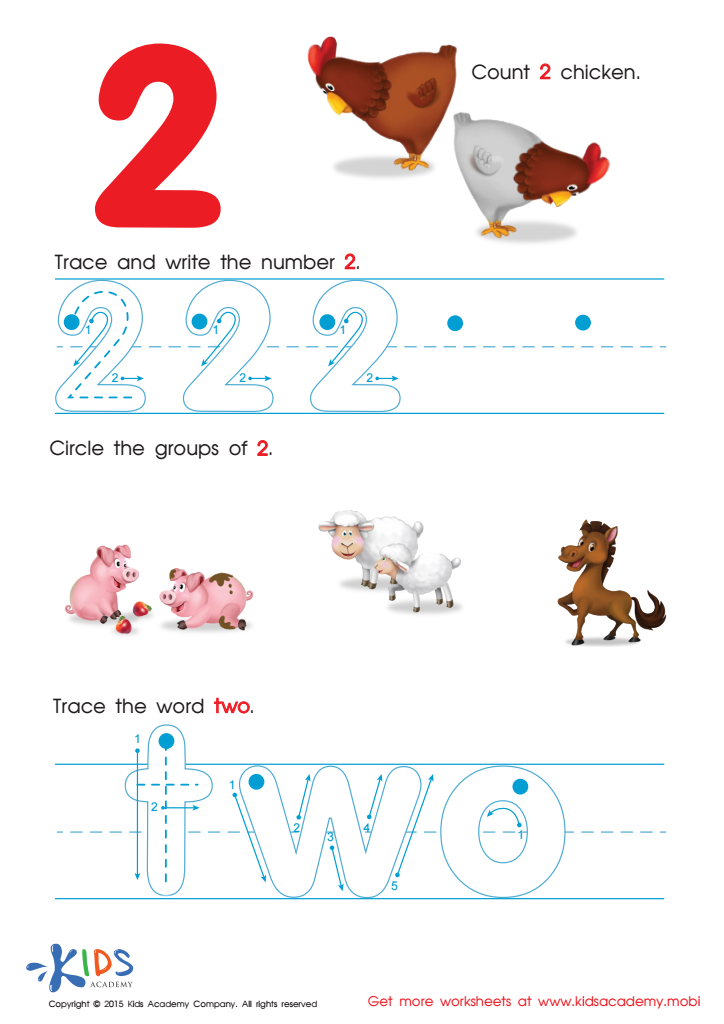
Learn to Write the Number 2 Worksheet
Teaching numbers should be fun! Ask your kids to count the two chicks, circle the groups of two among the animals, then trace and write the number and word. Get more fun worksheets from Kids Academy.
Learn to Write the Number 2 Worksheet
Worksheet
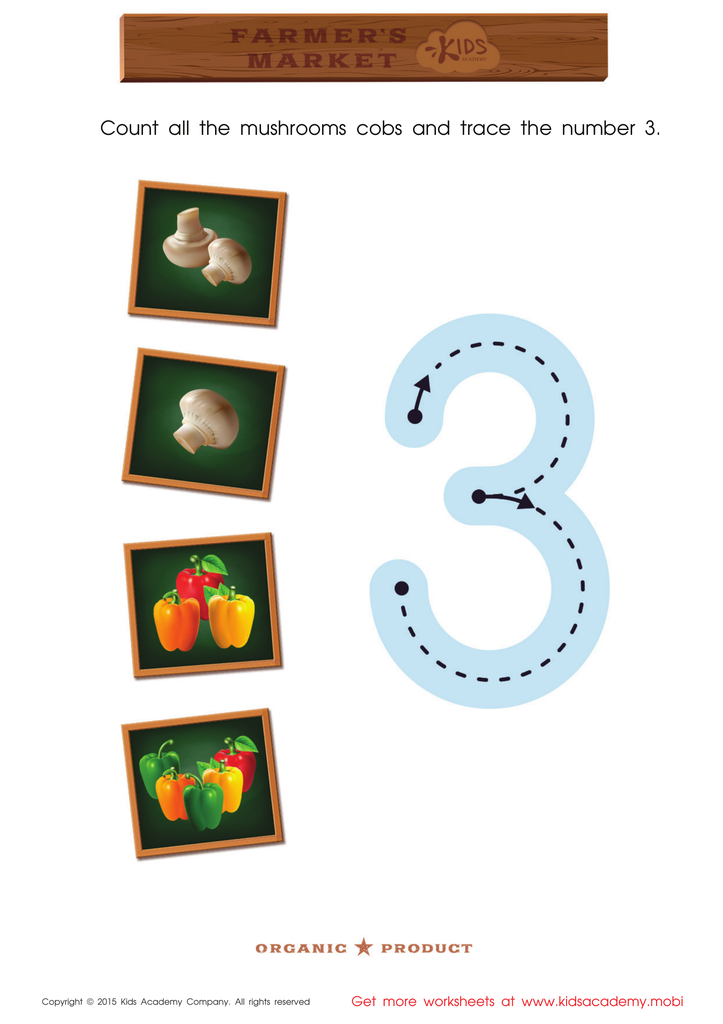
Count the Mushrooms and Trace the Number 3 Printable
Download and print this interactive math worksheet – your child will practice counting and addition, while exercising their fine motor muscles. Have them count and add mushrooms, and trace the number 3 – all from the comfort of home. Kids Academy offers more useful worksheets for preschool and kindergarten.
Count the Mushrooms and Trace the Number 3 Printable
Worksheet
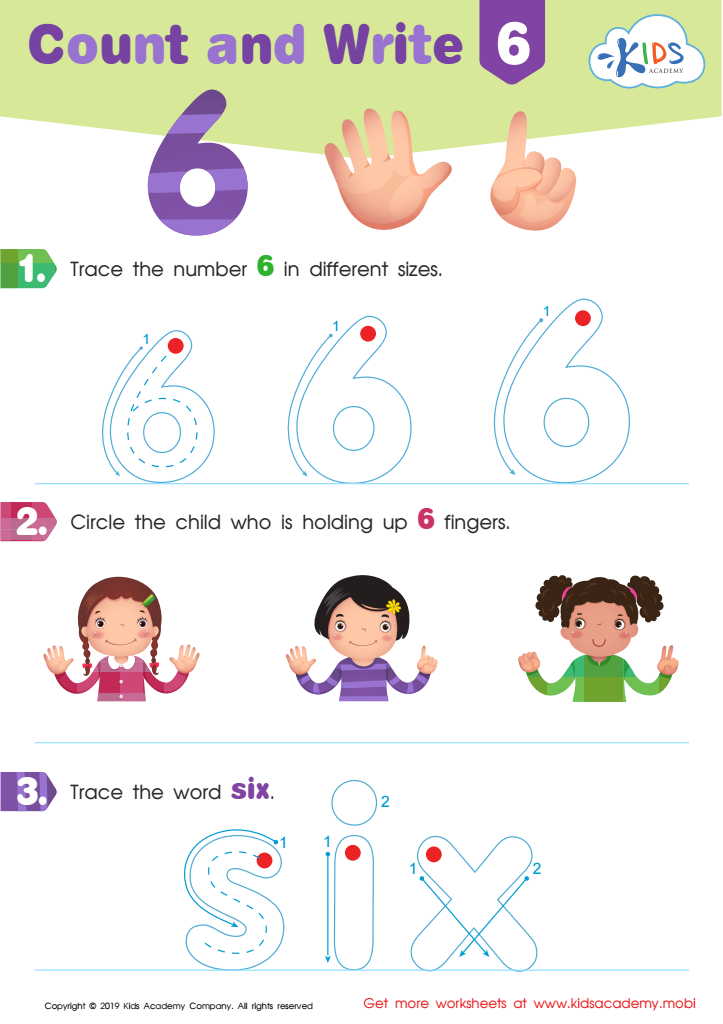
Count and Write 6 Worksheet
Kids begin math by mastering recognition skills. This worksheet helps with that by giving them practice writing "six" and the numeral 6, with guide dots and traceable lines. Giving kids multiple ways to learn the basics helps them build a strong math foundation.
Count and Write 6 Worksheet
Worksheet
Join Kids Academy for Free
Who is primarily going to use this learning content?








Handwriting practice and preschool math are foundational cornerstones of early childhood education, and they play a crucial role in a child's cognitive and motor skill development.
Handwriting practice is essential because it cultivates fine motor skills, hand-eye coordination, and muscle memory. As children practice forming letters and numbers, they strengthen the small muscles in their hands and fingers, which are crucial for other activities like buttoning clothes or tying shoelaces. Handwriting also promotes literacy. The act of writing letters helps children understand that each symbol corresponds to a sound, facilitating reading skills later on.
Preschool math fosters early numeracy skills which form the basic understanding of numbers, shapes, counting, and simple operations. These foundational principles not only prepare children for formal schooling but also develop their problem-solving and logical-thinking abilities. Recognizing patterns, understanding quantities, and grasping the fundamentals of mathematics are crucial for advanced learning in mathematics and the sciences.
Together, handwriting practice and preschool math nurture essential cognitive capacities and set the stage for lifelong learning. When parents and teachers focus on both areas, they provide a holistic approach that supports a well-rounded development, preparing children for academic success and everyday life challenges. Prioritizing these practices helps create a nurturing and effective early education environment.