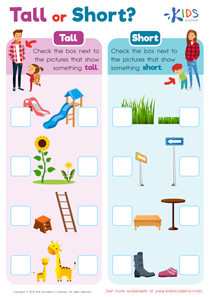
Spatial reasoning Preschool Math Worksheets
4 filtered results
-
From - To
Unlock your child's potential with our engaging Spatial Reasoning Preschool Math Worksheets! These thoughtfully designed activities help young learners develop essential spatial skills through fun, interactive tasks. Children will explore concepts such as shapes, spatial relationships, and visual perception, fostering critical thinking and problem-solving abilities in an enjoyable way. Our worksheets cater to diverse learning styles, making it easy for children to grasp important mathematical concepts while enhancing their cognitive development. Perfect for classroom or home use, these free printable resources ensure that your preschooler is well-prepared for future academic success. Dive into a world of exploration and discovery with our spatial reasoning worksheets today!
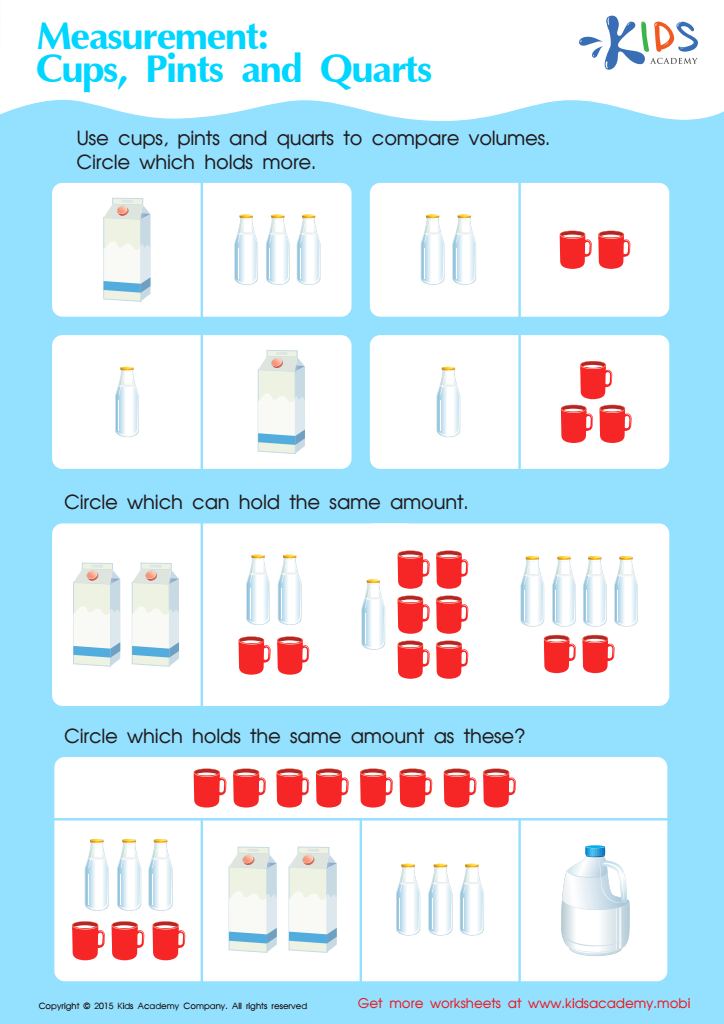
Measurement: Compare Volumes Worksheet
 Assign to My Students
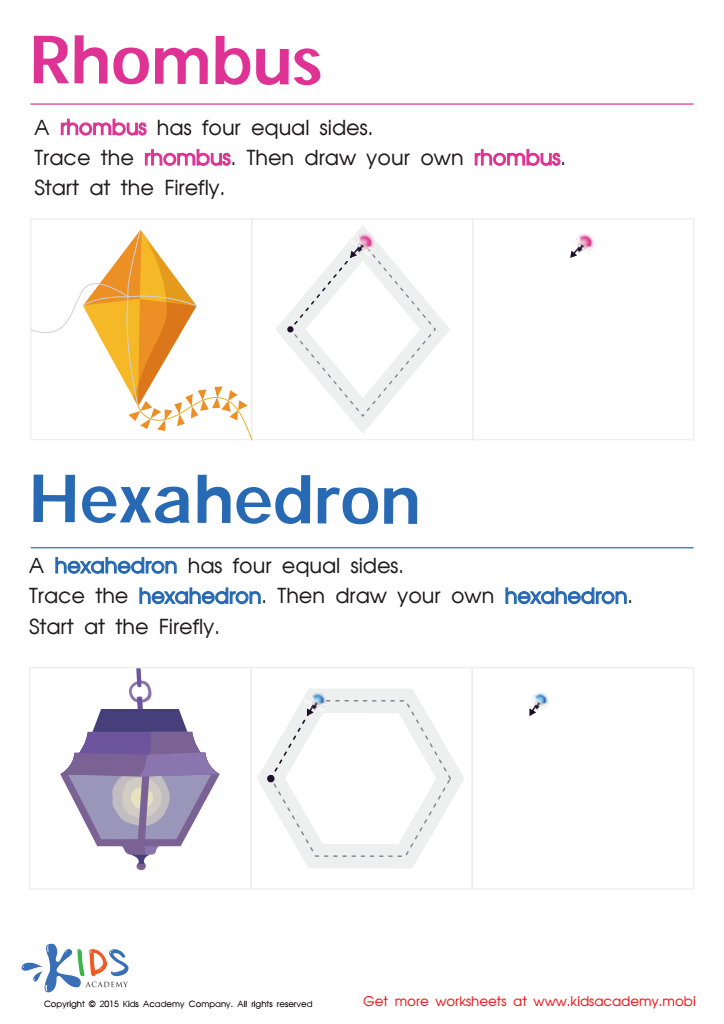
Draw a Rhombus And a Hexahedron Printable
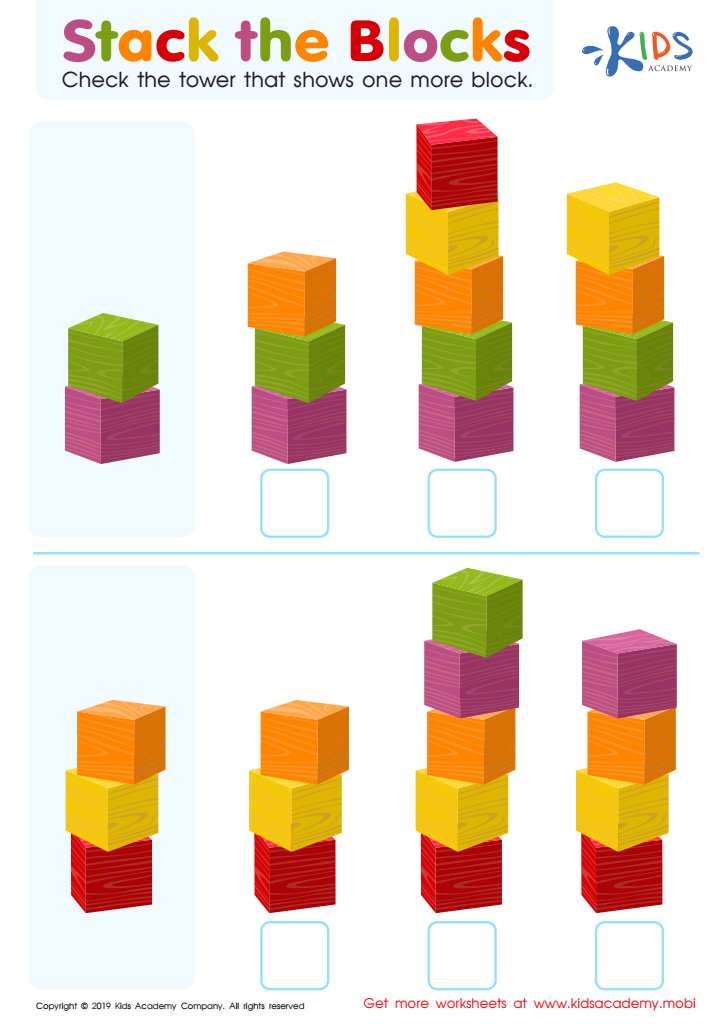
Stack the Blocks Worksheet
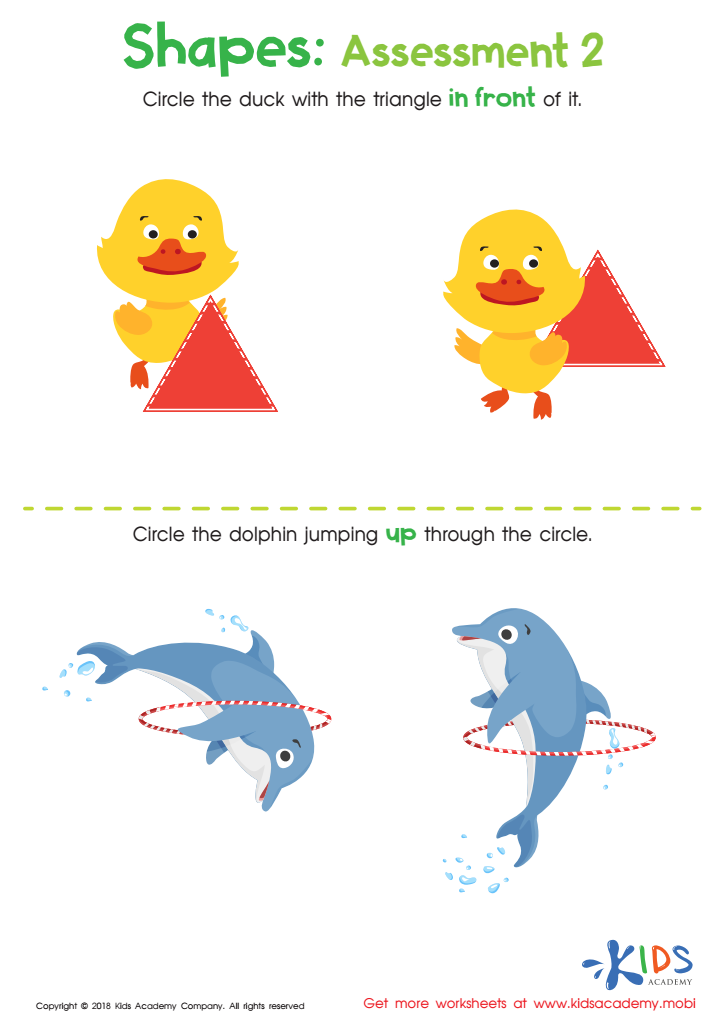
Geometry – Assessment 2 Worksheet




.jpg)


Spatial reasoning is a critical skill that significantly influences a child's ability to understand math and other subjects throughout their academic journey. For parents and teachers, nurturing spatial reasoning in preschool math lays a strong foundation for future learning. Throughout early development, children explore and manipulate objects, fostering an innate understanding of shapes, sizes, and spatial relationships. This helps them grasp basic mathematical concepts like addition and subtraction, as well as problem-solving and critical thinking skills.
Research shows that strong spatial skills correlate with a child's proficiency in not just math, but also science and engineering later in life. By exposing preschoolers to activities that encourage spatial reasoning, such as building with blocks, puzzles, and engaging in artistic tasks, educators and parents can enhance children's cognitive abilities and boost their self-confidence in tackling complex subjects.
Moreover, spatial reasoning plays a role in daily life, helping children navigate their surroundings, understand maps, and visualize tasks. By caring about and prioritizing spatial reasoning in preschool math, parents and teachers are not only equipping children with essential academic tools but also preparing them for practical, real-world challenges, leading to a better-rounded education.