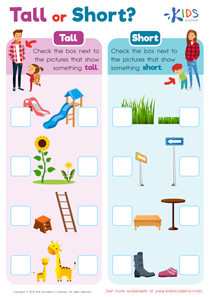
Understanding measurements Preschool Math Worksheets
3 filtered results
-
From - To
Discover the joy of learning with our "Understanding Measurements" preschool math worksheets. These engaging printables introduce young learners to basic measurement concepts through fun and interactive activities. Designed for preschoolers, the worksheets help children grasp essential math skills such as comparing sizes, understanding lengths, and recognizing patterns. Perfect for classroom use or homeschooling, our worksheets make math enjoyable and accessible, fostering a strong foundation for further mathematical exploration. Dive into our high-quality resources and watch your child’s confidence and curiosity in math grow! Taken from Kids Academy, where playful learning sparks success.
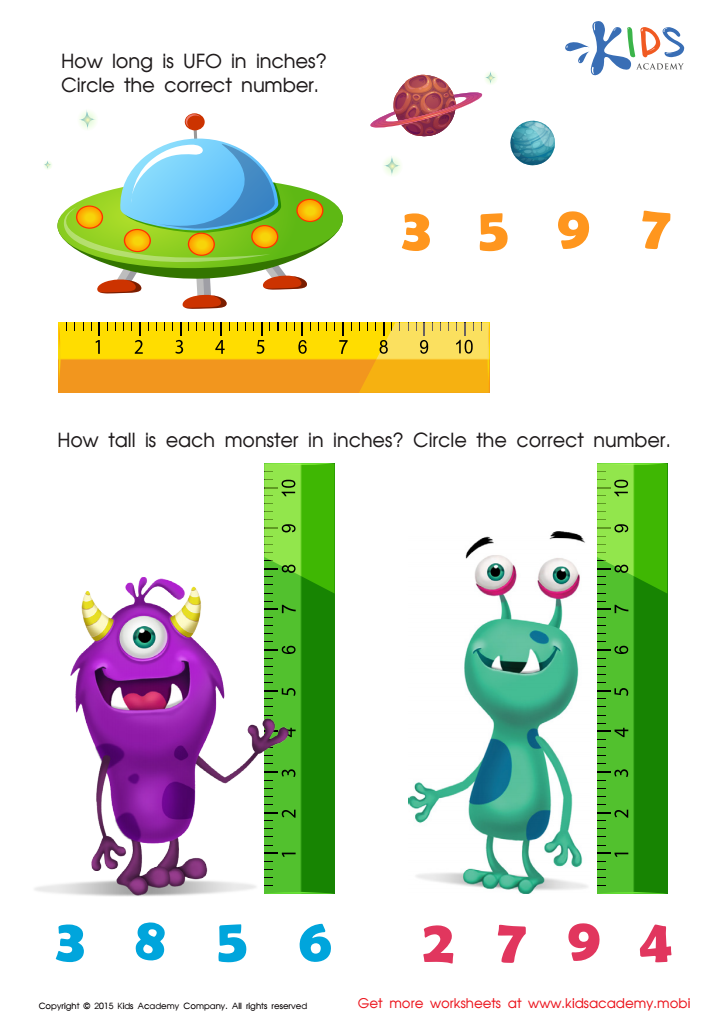
Measuring in Inches Worksheet
 Assign to My Students
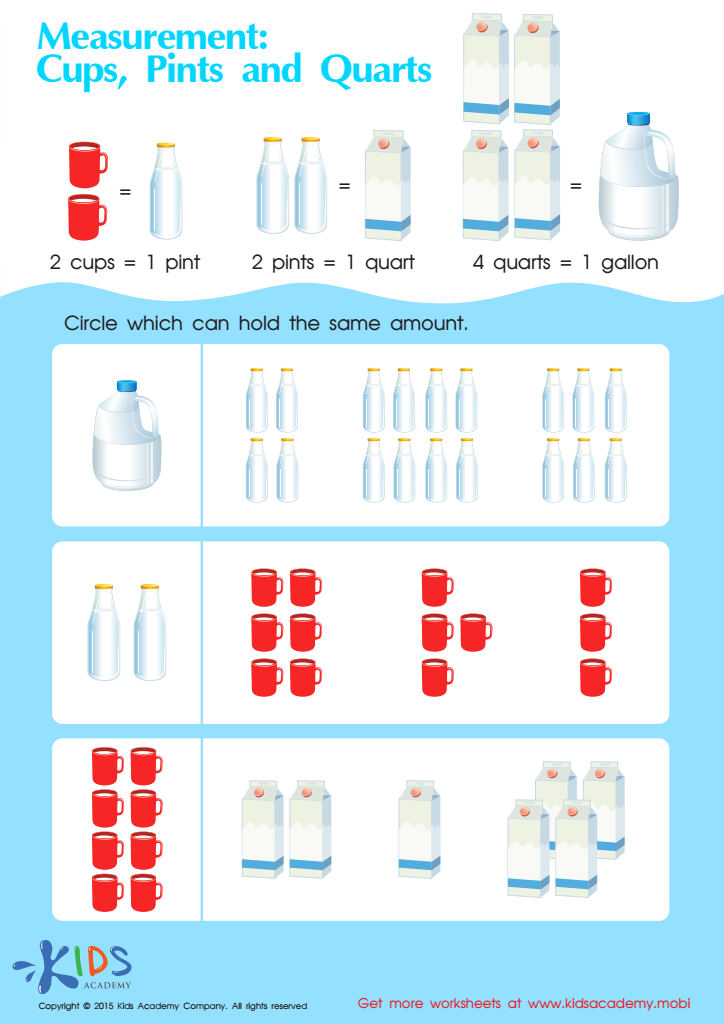
Cups, Pints and Quarts 2 Worksheet
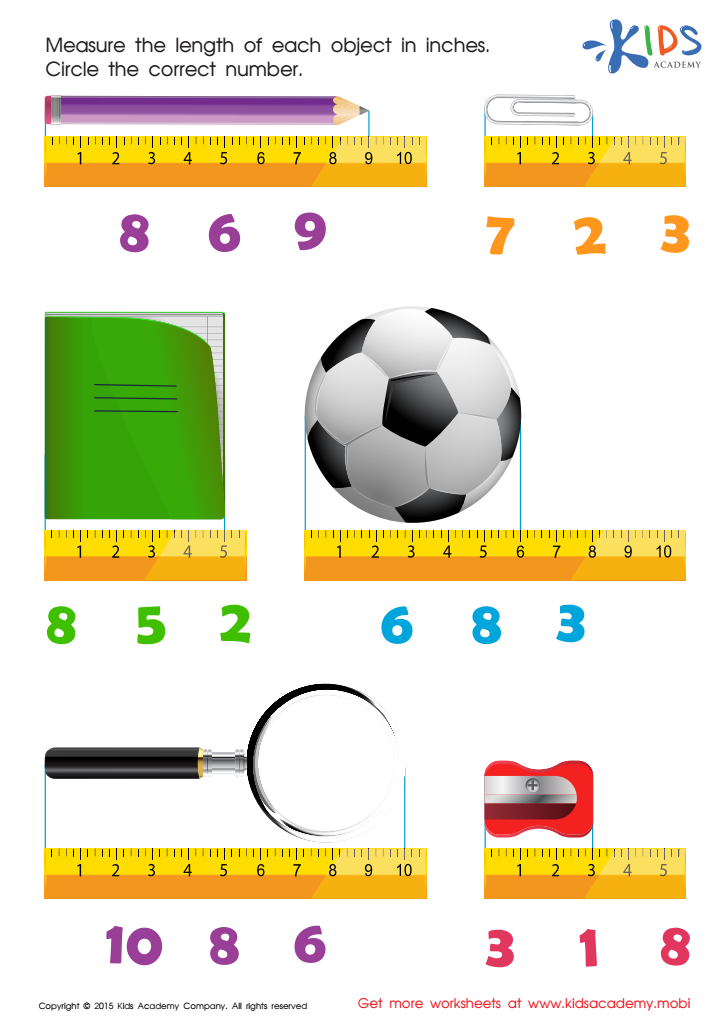
Learning measuring objects in inches Worksheet








Understanding measurements in preschool math is fundamental for young learners, laying the groundwork for more complex concepts they will encounter later in school and life. For parents and teachers, fostering these skills early on is crucial.
First, measurements help children make sense of the world. By learning to compare lengths, weights, and volumes, kids develop critical thinking and problem-solving skills. Measuring objects allows them to quantify their environment, fostering a practical understanding of size, space, and capacity, which are essential skills in daily life.
Additionally, early measurement skills are closely tied to language development. As children describe objects and their attributes, they build a rich vocabulary and improve their communication skills. This can lead to better social interactions and early literacy development.
Furthermore, measurement activities inherently involve counting and number recognition. When children measure, they not only learn the units of measurement but also enhance their numerical proficiency, setting a foundation for future math success.
Lastly, interaction with practical measuring activities can boost students’ confidence. Successfully completing tasks like comparing or ordering objects based on measurements gives them a sense of mastery and fosters a growth mindset.
In summary, an early understanding of measurements equips children with essential cognitive tools, bolsters language and numerical skills, contributes to real-world problem-solving, and builds confidence. Parents and teachers should prioritize this area to support holistic child development.