Visual comprehension Preschool Math Worksheets
7 filtered results
-
From - To
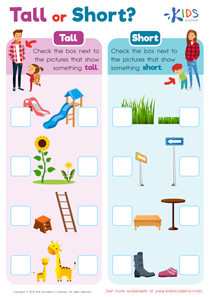
Welcome to our Visual Comprehension Preschool Math Worksheets! Designed to boost early math skills, these engaging worksheets help young learners develop critical visual understanding. Each activity encourages children to identify, compare, and analyze visual information through fun and interactive exercises. By exploring shapes, patterns, and simple calculations, your preschooler will enhance their ability to recognize mathematical concepts in everyday life. Our worksheets are perfect for independent practice or guided learning, promoting essential cognitive skills in a playful way. Discover how visual comprehension lays a strong foundation for future math success while keeping your child entertained and eager to learn!
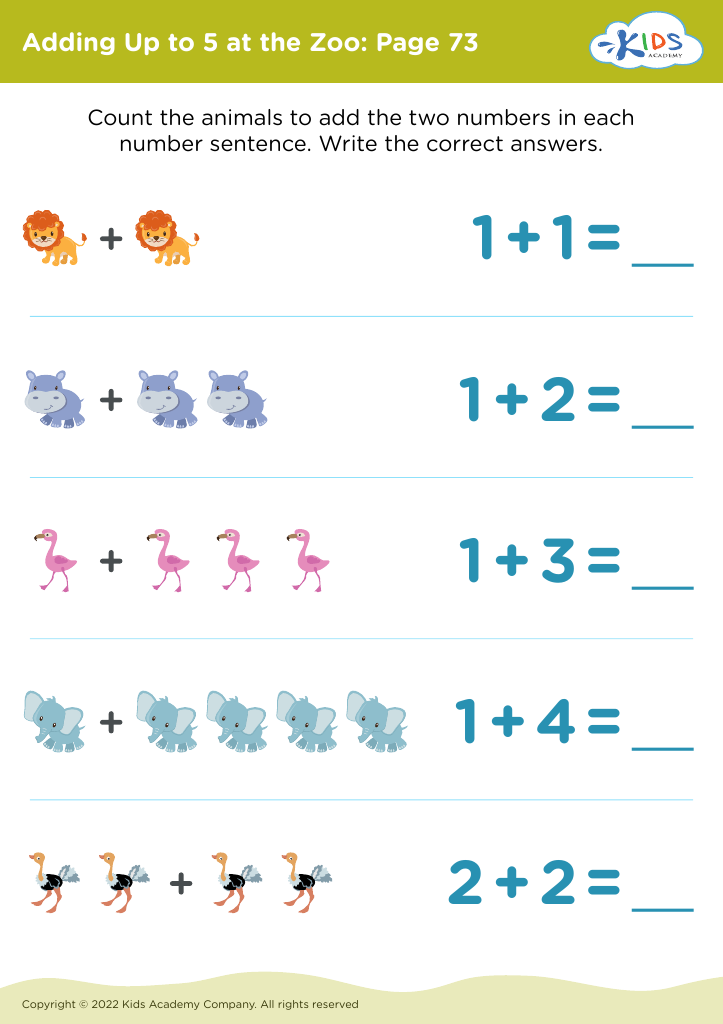
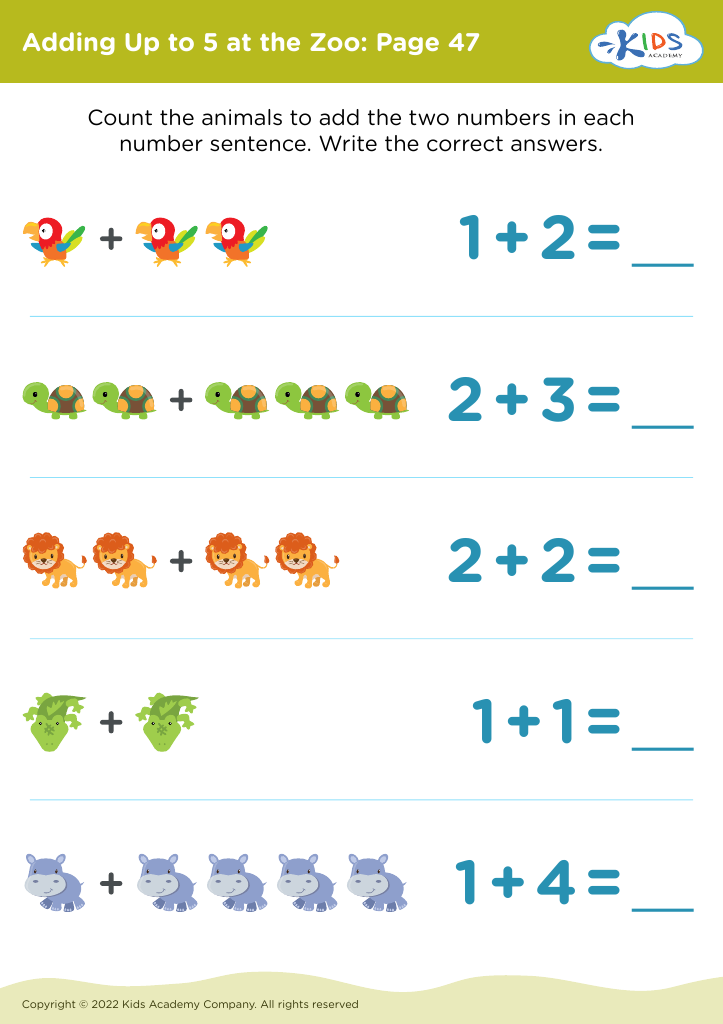
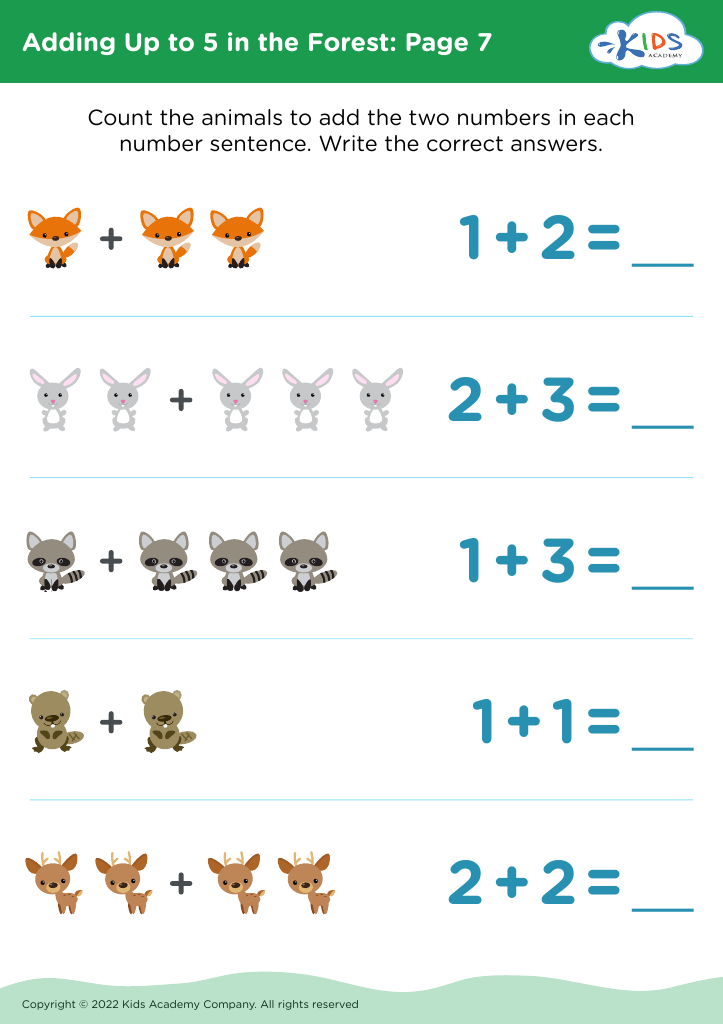
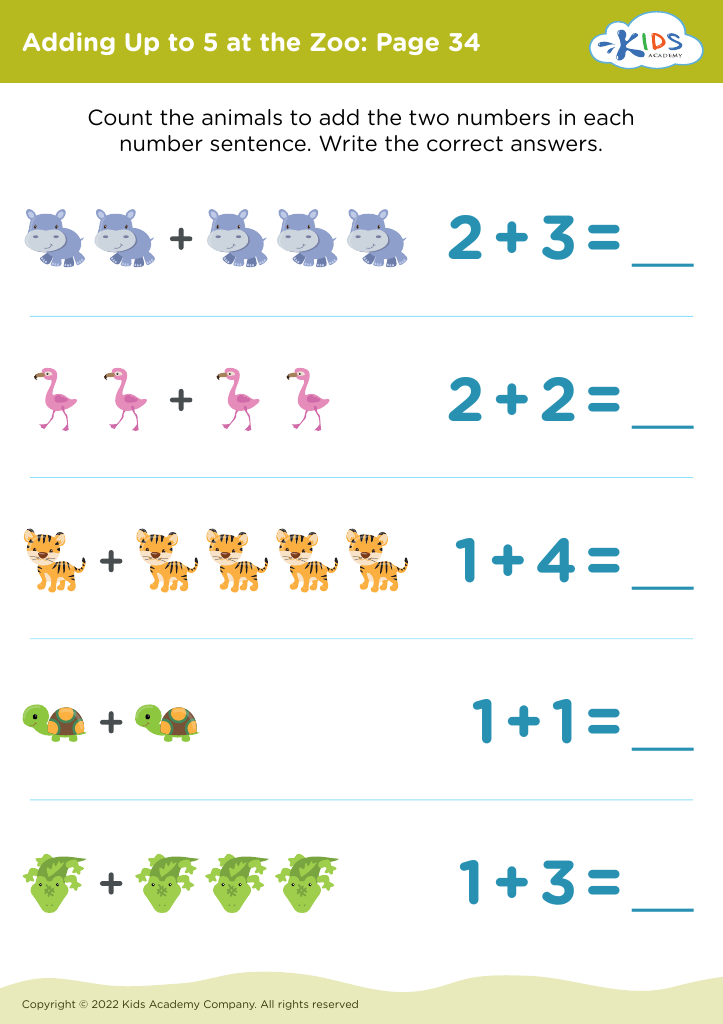
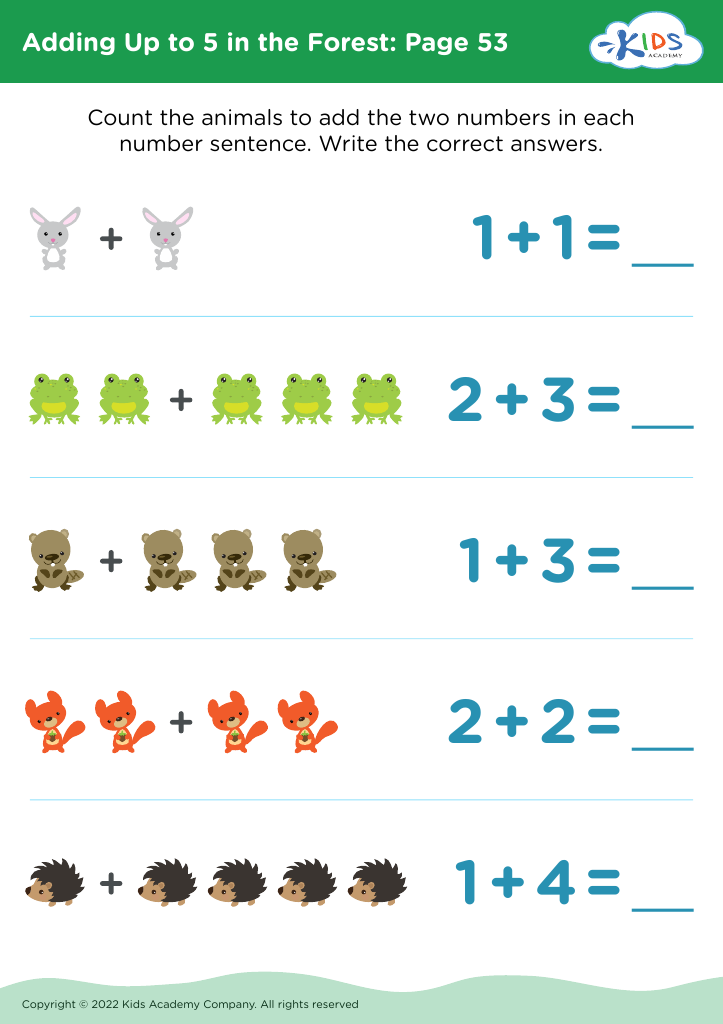
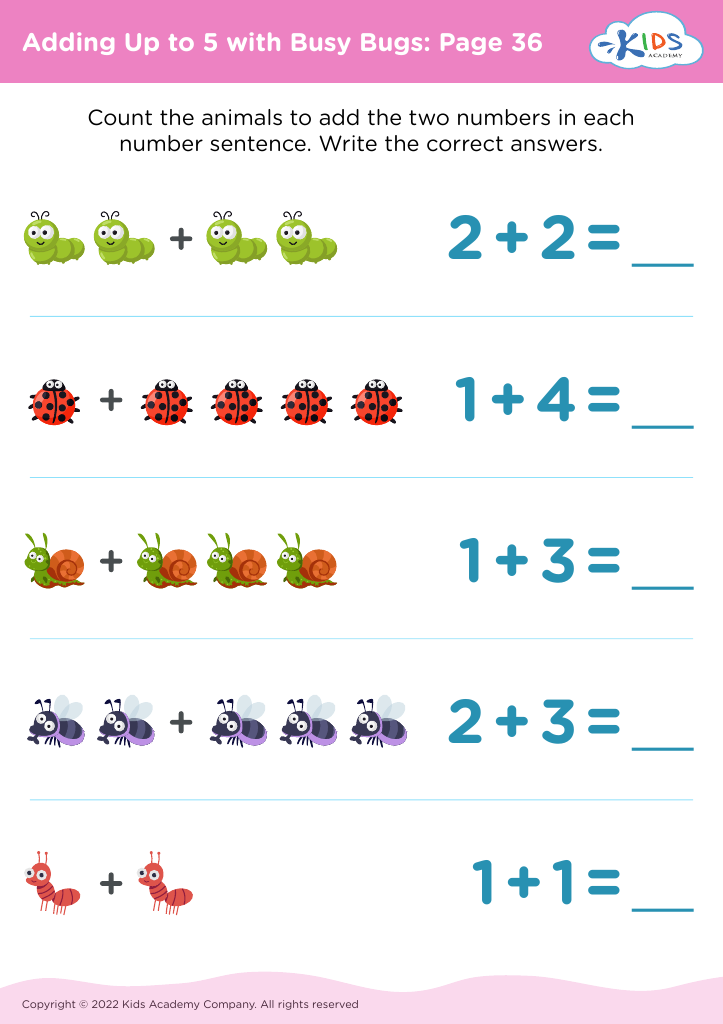
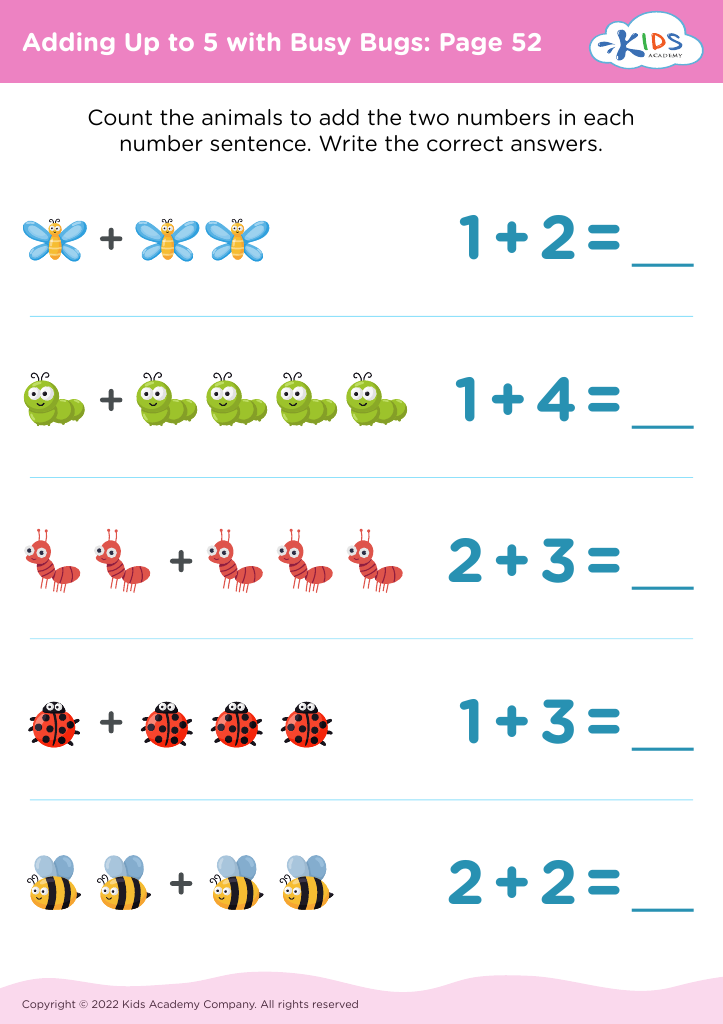








Visual comprehension in preschool math is crucial for developing foundational skills that children will use throughout their education. When parents and teachers prioritize visual comprehension, they help children understand mathematical concepts through engaging, intuitive methods. Young learners often grasp ideas better when they can see and manipulate objects — for instance, using blocks or images to visualize numbers and quantities. This active experience builds a robust cognitive framework, enabling children to transition smoothly into more complex mathematical operations as they grow.
Moreover, visual comprehension fosters problem-solving abilities. When children can visualize math concepts, they are more likely to be able to reason, analyze, and apply these skills to tackle real-world challenges. Parents and teachers who focus on visual learning enhance children's motivation to engage with math, making it an enjoyable and less daunting subject.
Additionally, early attention to visual comprehension can address diverse learning styles and needs, accommodating students who might struggle with traditional instruction methods. By creating a rich, visually engaging math environment, parents and teachers empower all children to build confidence and a positive attitude towards learning, ultimately setting the stage for lifelong mathematical understanding and success.