Fine Motor Skills Preschool Numbers 11–20 Worksheets
5 filtered results
Difficulty Level
Grade
Age
-
From - To
Subject
Activity
Standards
Enhance your preschooler's learning journey with our engaging "Fine Motor Skills Preschool Numbers 11–20 Worksheets"! Designed to support young learners in mastering numbers and fine motor skills simultaneously, these delightful worksheets blend fun and education. Each sheet features unique activities, such as tracing, coloring, and counting, to develop essential skills like hand-eye coordination, pencil control, and number recognition. Perfect for home or classroom use, these worksheets provide a strong foundation for early math success while making learning enjoyable and interactive. Help your child build confidence and proficiency with these expertly crafted resources.
Favorites
With answer key
Interactive
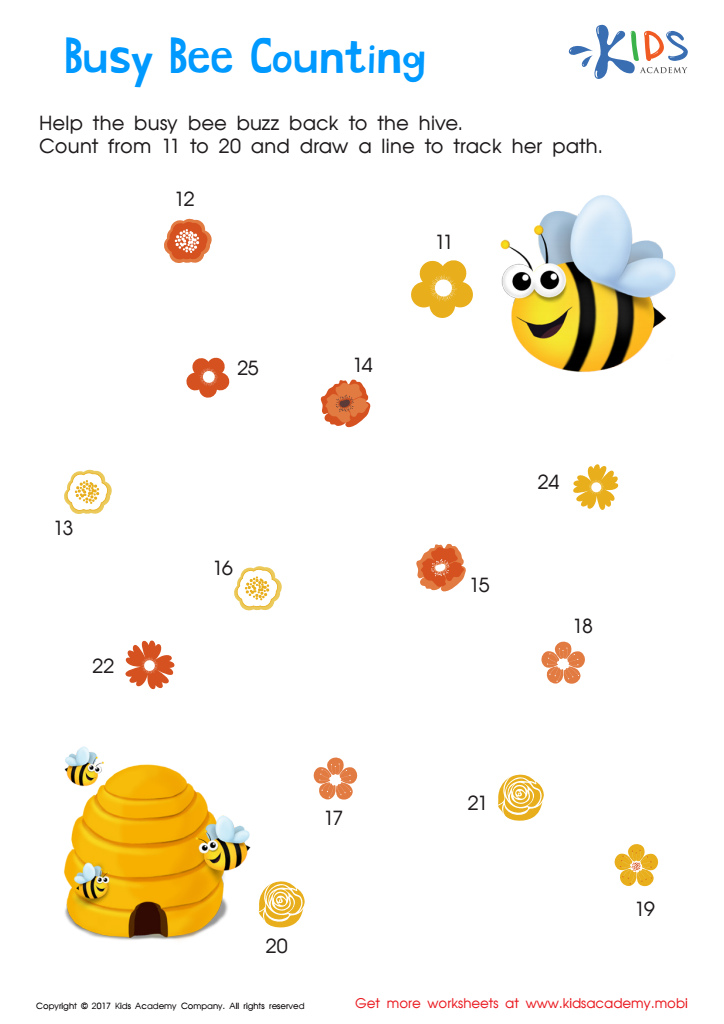
Ordering 11–20: Busy Bee Counting Worksheet
Help your child master counting from 11 to 20 with our connect the dot counting worksheet. Kids will have fun counting, drawing and problem-solving with this vibrant worksheet. With clear directions, adorable pictures and a sense of purpose, your child will develop crucial numeracy skills without even knowing it!
 Assign to My Students
Ordering 11–20: Busy Bee Counting Worksheet
Worksheet
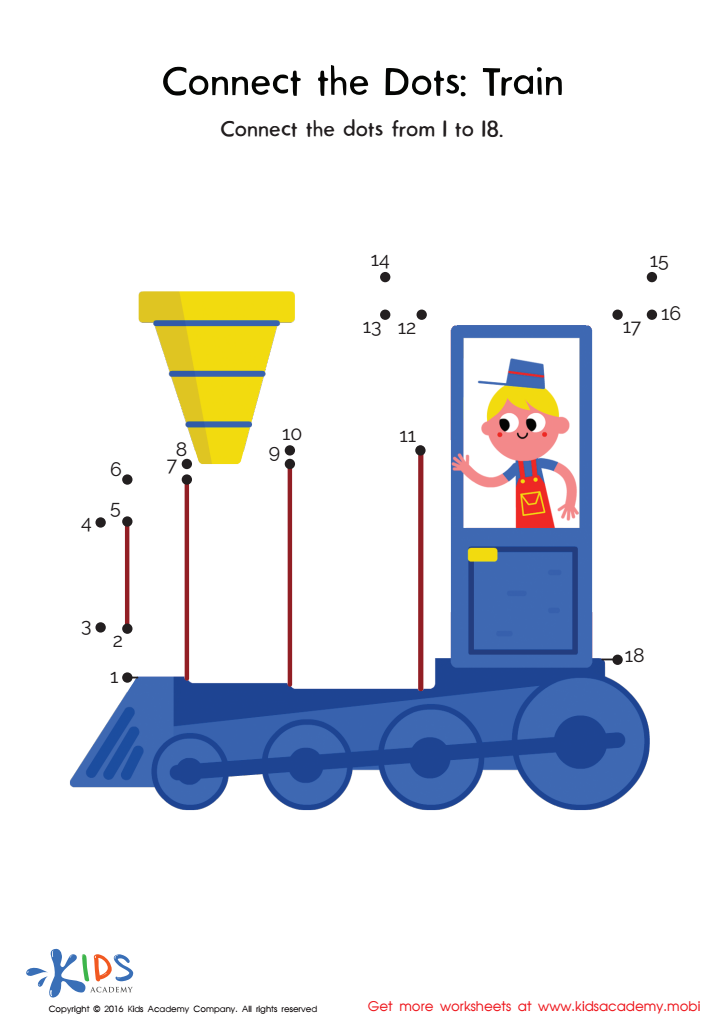
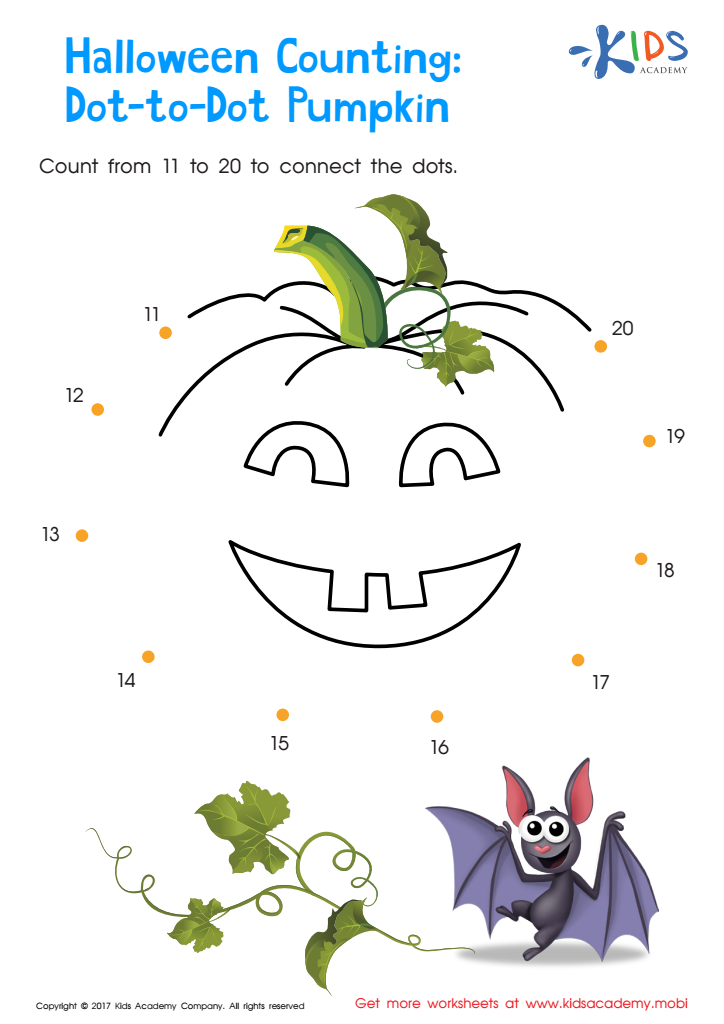
Ordering 11–20: Halloween Counting Worksheet
No matter the time of year, help your child get ready for Halloween with this worksheet. They'll practice counting from 11 to 20, recognizing numbers, and using a pencil to draw. By connecting the dots, they'll create a pumpkin picture, while unknowingly strengthening their early math skills. Print it today for an educational and fun experience!
Ordering 11–20: Halloween Counting Worksheet
Worksheet
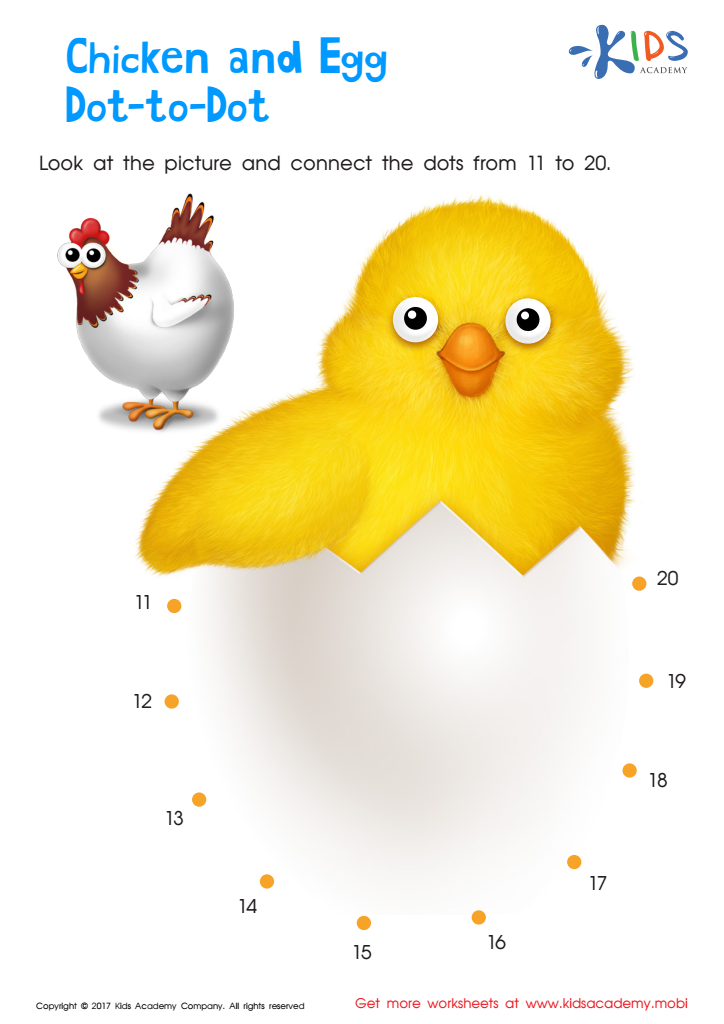
Ordering 11–20: Chicken & Egg Dot–to–dot Worksheet
Help your child hatch the chick and practice their counting skills with this dot to dot worksheet – the chicken came first! Connect the dots 11-20 to have fun and learn at the same time. Experience meaningful practice and gain confidence while drawing great pictures.
Ordering 11–20: Chicken & Egg Dot–to–dot Worksheet
Worksheet
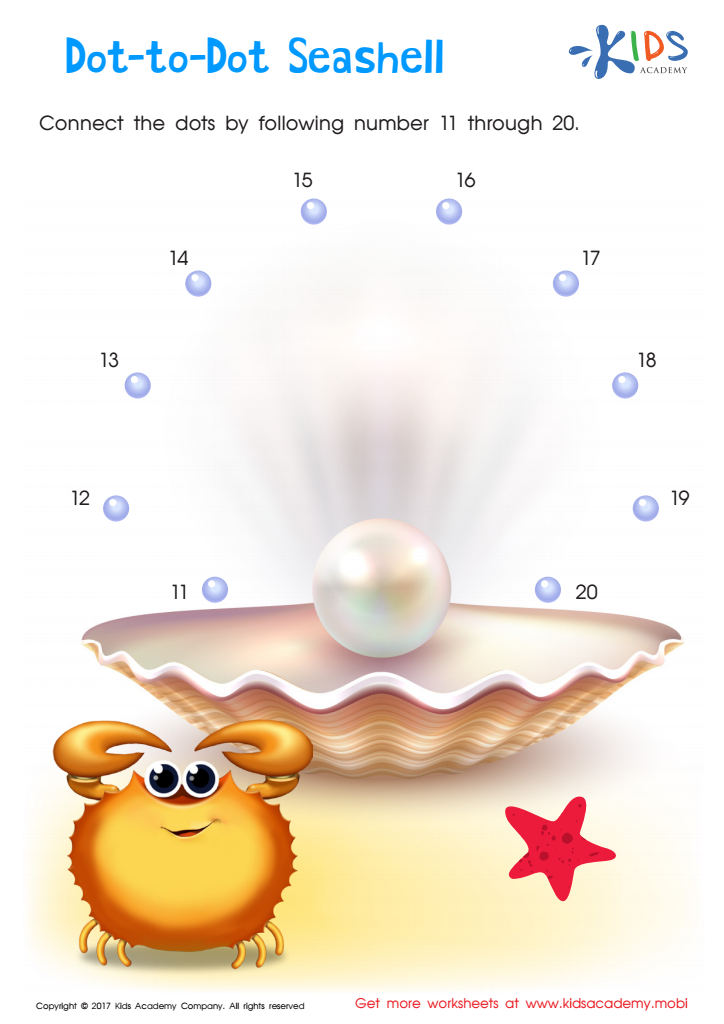
Ordering 11–20: Dot–to–dot Seashell Printable
Connecting the dots 11 to 20 is rewarding for kids, helping them practice counting, identifying numbers and gain cognitive and logical skills. Our worksheet features a vibrant image of a seashell, crab and sea star, and your child will feel rewarded creating it while honing their counting skills!
Ordering 11–20: Dot–to–dot Seashell Printable
Worksheet
Join Kids Academy for Free
Who is primarily going to use this learning content?


Fine motor skills and number recognition are fundamental aspects of early childhood development essential for future academic success. These skills encompass the ability to make small, precise movements with the hands and fingers, which are necessary for tasks like writing, buttoning clothes, and using scissors. For young children, honing fine motor skills through engaging activities with numbers 11–20 helps to integrate cognitive, physical, and language development.
Numbers 11–20 present a developmental milestone for preschoolers. Recognizing, counting, and writing these numbers foster early math literacy, an important predictor of future academic achievement. Through activities such as tracing, counting objects, or sorting items, children not only learn numerical concepts but also develop hand-eye coordination and dexterity.
Parents and teachers should be proactive in supporting fine motor and number skills because these abilities underpin many everyday tasks and later school activities. By creating a rich, interactive environment where learning is playful yet structured, adults can guide children through essential stages of development, boosting confidence and improving school readiness. Participating in fine motor skill activities with numerical content sets the stage for lifelong learning and adaptability in more complex academic subjects, promotes independence, and enhances critical problem-solving skills.