Counting skills Preschool Subtraction Worksheets
3 filtered results
-
From - To
Enhance your preschooler’s counting and subtraction skills with our engaging Counting Skills Preschool Subtraction Worksheets! These fun and interactive worksheets are specifically designed to support young learners as they explore the foundational concept of subtraction through counting. Each activity encourages children to visualize and understand the process of taking away, reinforcing essential math skills in a playful manner. Perfect for at-home practice or classroom activities, these worksheets ensure children remain engaged while developing critical thinking. Watch as your little ones confidently tackle subtraction challenges, all while enjoying a joyful learning experience. Download now and inspire a love for math today!
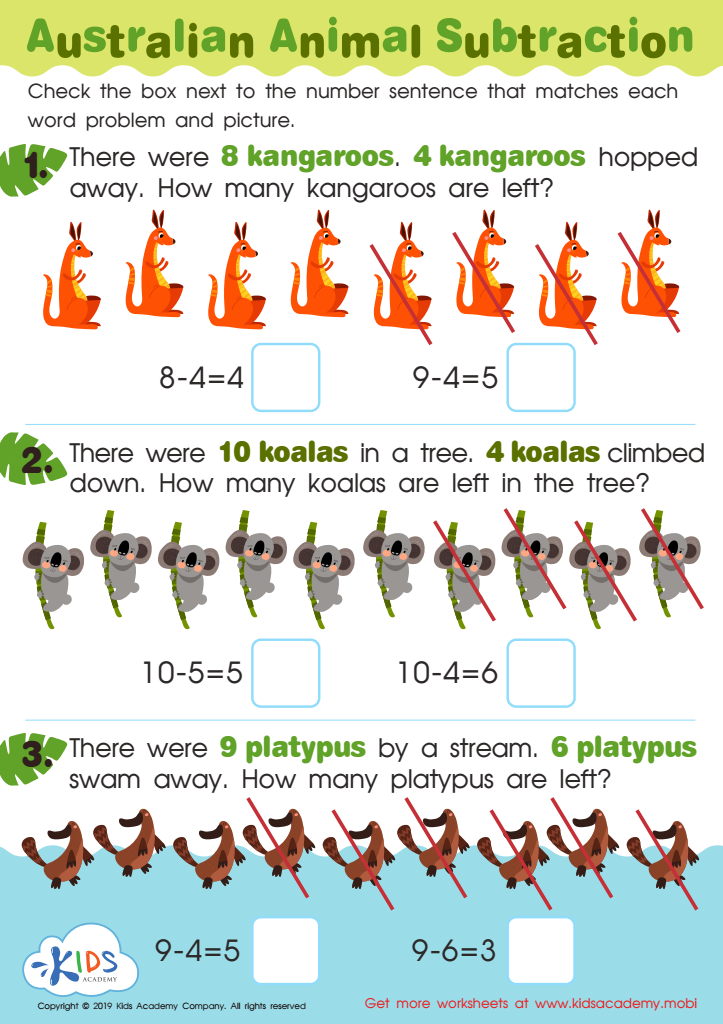
Australian Animal Subtraction Worksheet
 Assign to My Students
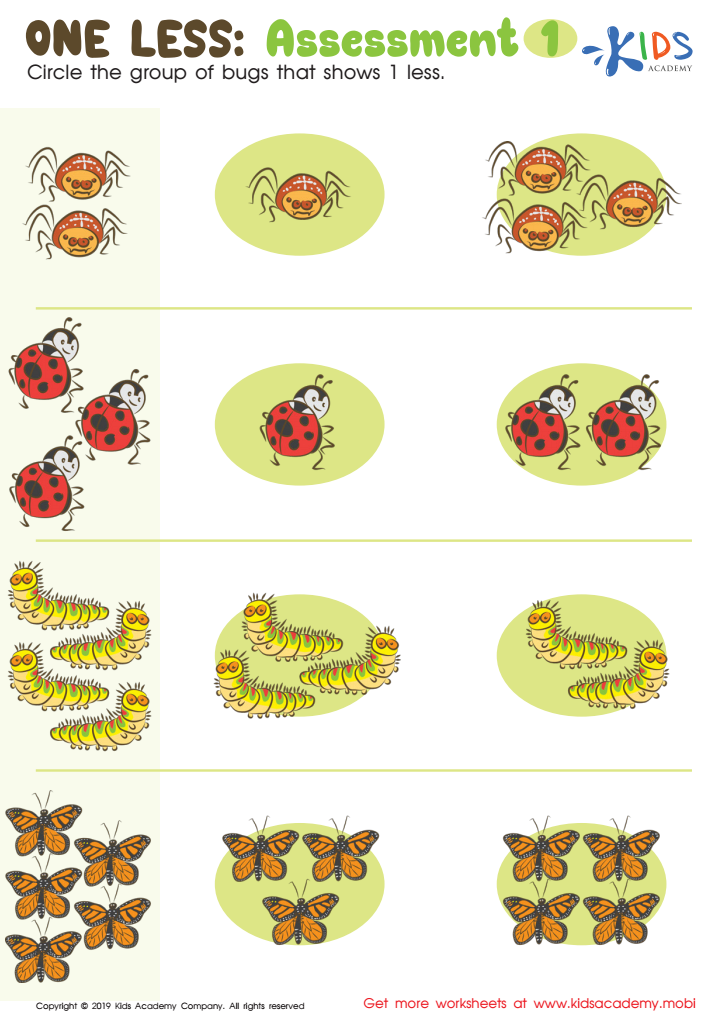
One Less: Assessment 1 Worksheet
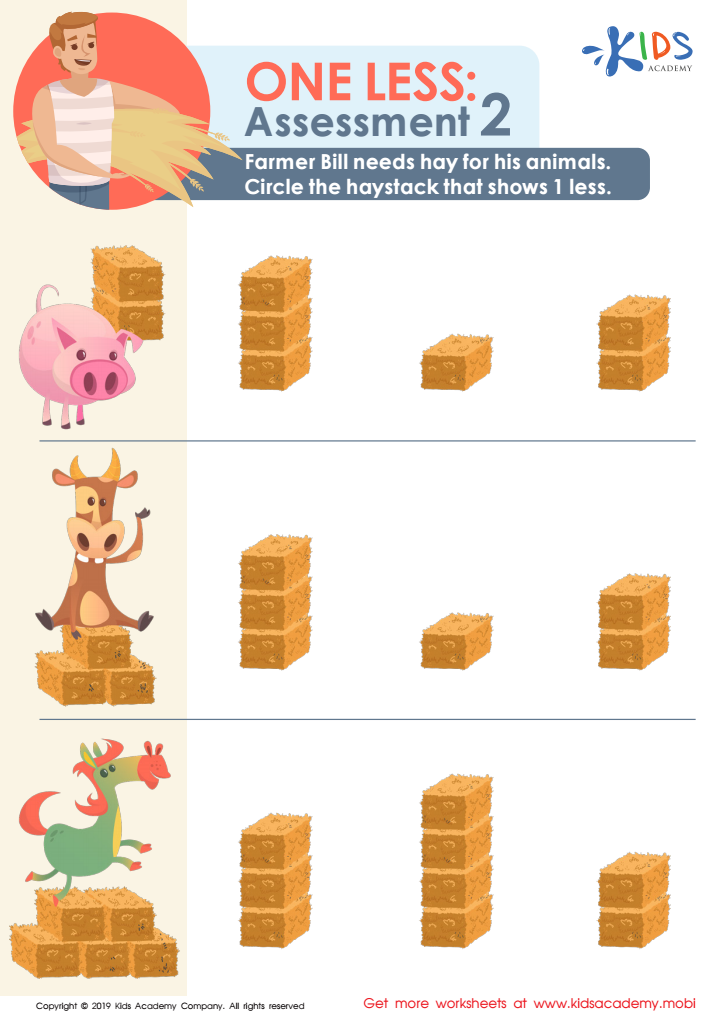
One Less: Assessment 2 Worksheet








Counting skills and subtraction are fundamental building blocks for preschool-aged children, laying the groundwork for future mathematical understanding. Parents and teachers should prioritize these skills because they foster critical thinking and problem-solving abilities from an early age. By mastering counting, children develop numerical fluency, allowing them to understand quantities, sequences, and relationships between numbers. This fluency is essential when introducing subtraction, as it teaches children to anticipate and understand the idea of "taking away," a crucial concept in both mathematics and daily life.
Early exposure to subtraction through playful activities enhances children's cognitive development. Engaging in simple subtraction activities, such as using toys or snacks to visually represent the process, makes learning enjoyable and relatable. Moreover, these skills help refine children’s fine motor skills and language abilities, as they articulate their understanding of numerical concepts.
Furthermore, strong counting and subtraction skills are essential for academic readiness. Children who grasp these concepts early on tend to experience greater confidence in school, promoting a positive attitude towards learning. Finally, by nurturing these skills, parents and teachers foster a love for mathematics, ensuring children are better equipped for future challenges in both academics and real-life situations.