Cognitive Development Preschool Word Problems Worksheets
4 filtered results
Difficulty Level
Grade
Age
-
From - To
Subject
Activity
Standards
Nurture your preschooler's cognitive development with our engaging word problems worksheets. Designed to spark curiosity and critical thinking, these worksheets offer fun, age-appropriate math challenges that also boost reading comprehension and vocabulary skills. Each problem combines imaginative scenarios with practical math practice, encouraging kids to think analytically and develop problem-solving strategies. Perfect for preschoolers, these resources provide a strong foundation in both cognitive and mathematical skills, fostering a love for learning and preparing them for future academic success. Download now to make learning both enjoyable and educational for your little ones!
Favorites
With answer key
Interactive
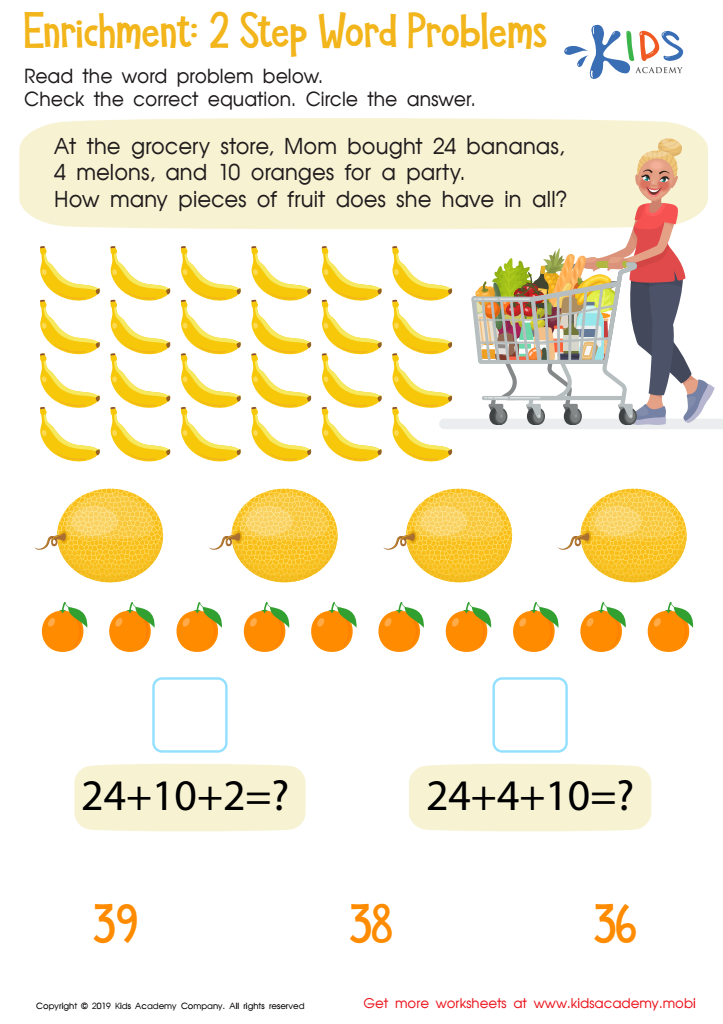
Enrichment -2 Step Word Problems Worksheet
Help your students learn math easier and faster with this colorful worksheet. Read the word problem and then guide them in checking the correct equation and finding the answer. Your students will benefit from the extra help, as they work through new concepts each day.
 Assign to My Students
Enrichment -2 Step Word Problems Worksheet
Worksheet
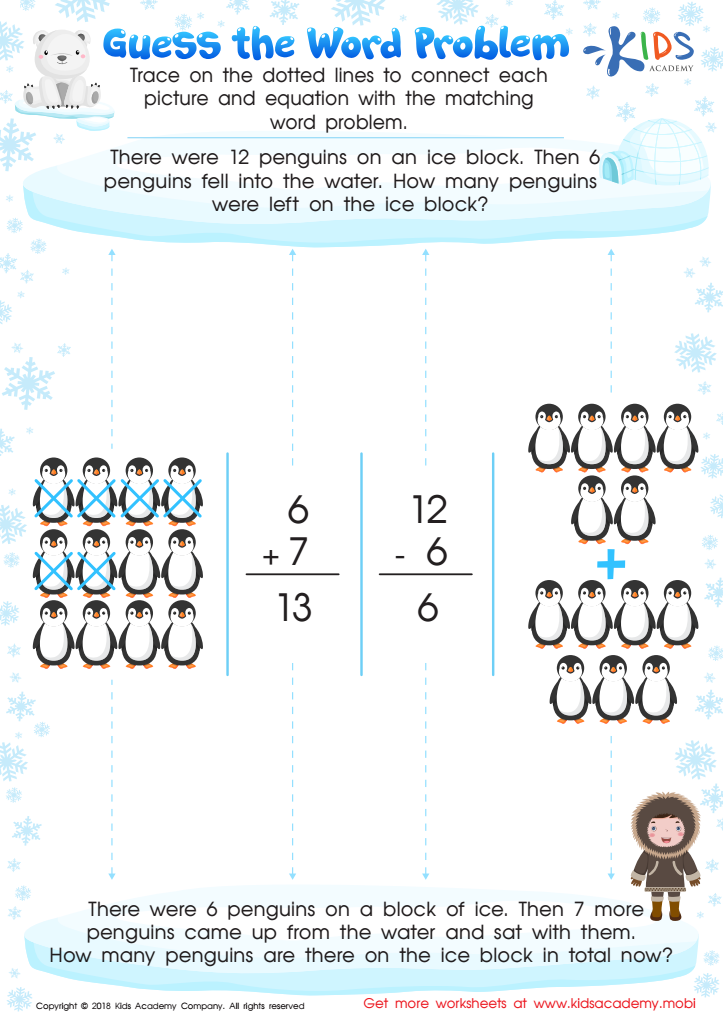
Guess the Word Problem Worksheet
Head to the Arctic Circle for math word problems with penguins, bears, and eskimos! This winter printable worksheet helps kids enjoy math with cute images. Guide kids through addition and subtraction in standard form with the penguins. Compare word problems to its written and pictorial forms for an enjoyable lesson!
Guess the Word Problem Worksheet
Worksheet
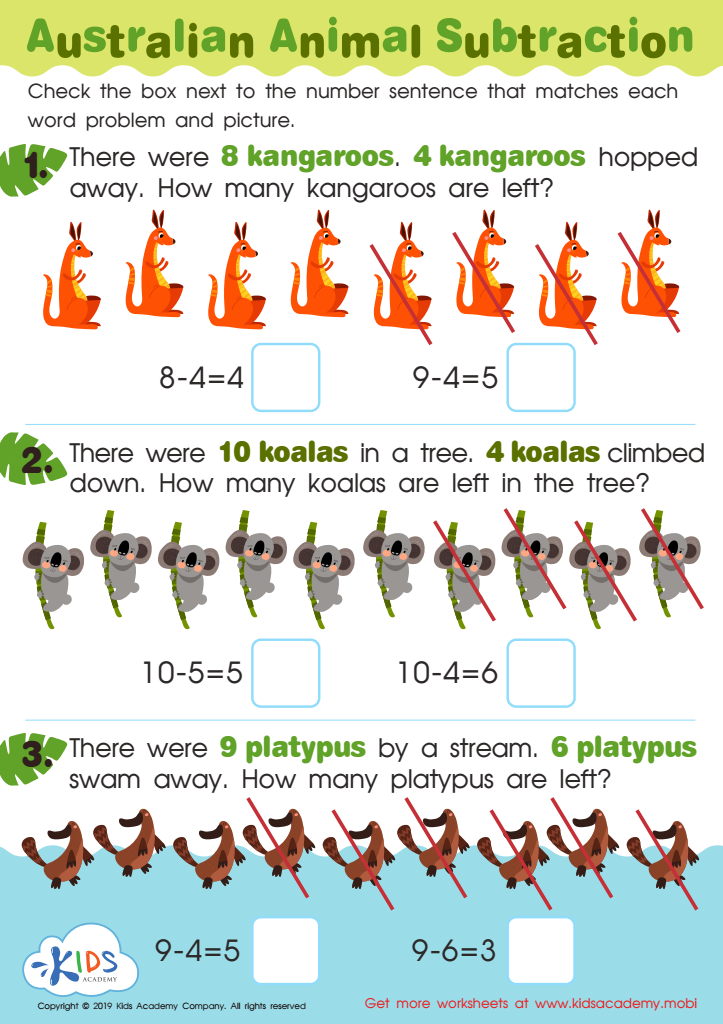
Australian Animal Subtraction Worksheet
Test your child's wildlife knowledge. Ask them to name animals indigenous to Australia or other countries. Show them the animals in this worksheet and have them match each word problem and picture with the correct number sentence.
Australian Animal Subtraction Worksheet
Worksheet
Solution Matching: Hobbies. Part 1 Worksheet
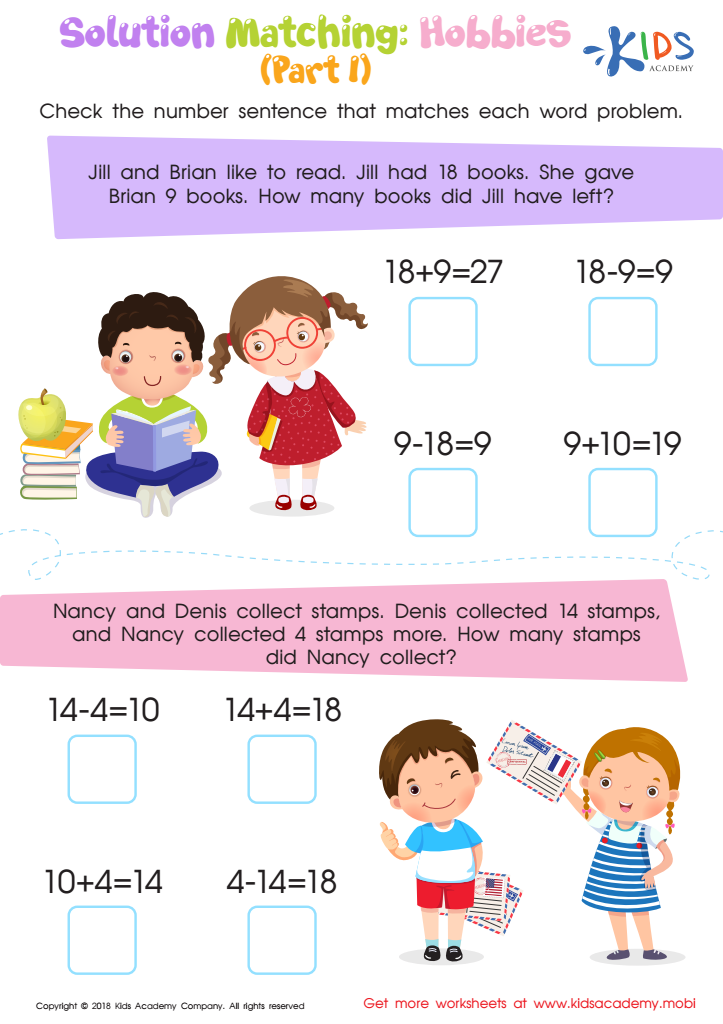
Math problems can be made more fun and easier to solve by relating them to real-life activities. Kids Academy's free printable worksheet helps your child to do this. Read each problem, paying attention to the numbers and terms, then choose the correct equation from the options given. This will help your child to understand the problem and get the right result!
Solution Matching: Hobbies. Part 1 Worksheet
Worksheet
Join Kids Academy for Free
Who is primarily going to use this learning content?








Parents and teachers should care about cognitive development through preschool word problems because it serves as a cornerstone in shaping a child's foundational thinking skills. These word problems are more than just math exercises; they stimulate critical thinking, improve problem-solving skills, and enhance a child's language comprehension and vocabulary. At a tender age when children's brains are highly receptive, engaging in these activities can accelerate mental development, setting them up for future academic success.
When children tackle word problems, they learn to understand and process information, identify key details, and determine the steps necessary to solve a problem. This primes their brains for more complex tasks later in life, such as logical reasoning and analytical thinking. Additionally, success in understanding and solving word problems can boost a child's confidence and foster a positive attitude toward learning.
Furthermore, integrating cognitive development word problems into early education can bridge the gap between knowing theory and applying it practically. It helps children transition from concrete thinking to more abstract concepts with ease. Therefore, parents and teachers can mutually invest in these learning tools to cultivate a robust educational foundation, paving the way for well-rounded cognitive growth and lifelong learning skills.