Improve vocabulary Building Vocabulary Worksheets
5 filtered results
-
From - To
Enhance your child's language skills with our "Improve Vocabulary Building Vocabulary Worksheets" crafted especially for young learners. Designed to expand your child’s lexicon through engaging and educational activities, these worksheets offer a blend of fun and learning. With a variety of exercises tailored to different skill levels, children can practice new words, understand their meanings, and use them in context. Whether you're a teacher or a parent, our resources are perfect for fostering effective communication and strong reading proficiency in children. Invest in your child's future with our expertly designed vocabulary improvement tools.
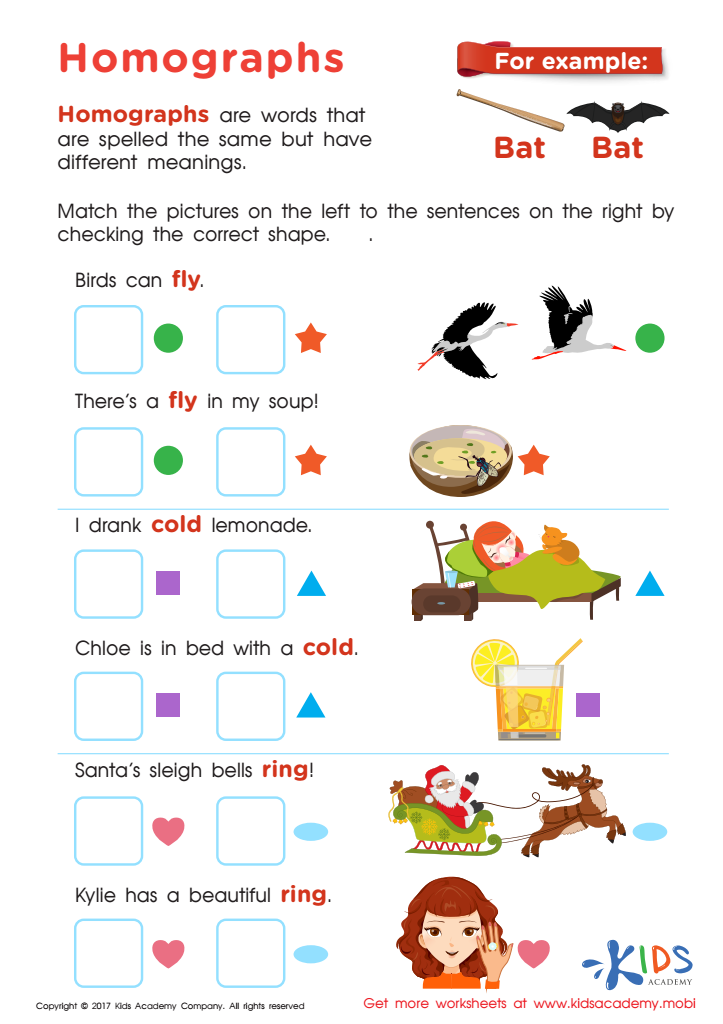
Homographs Free Printable Worksheet
 Assign to My Students











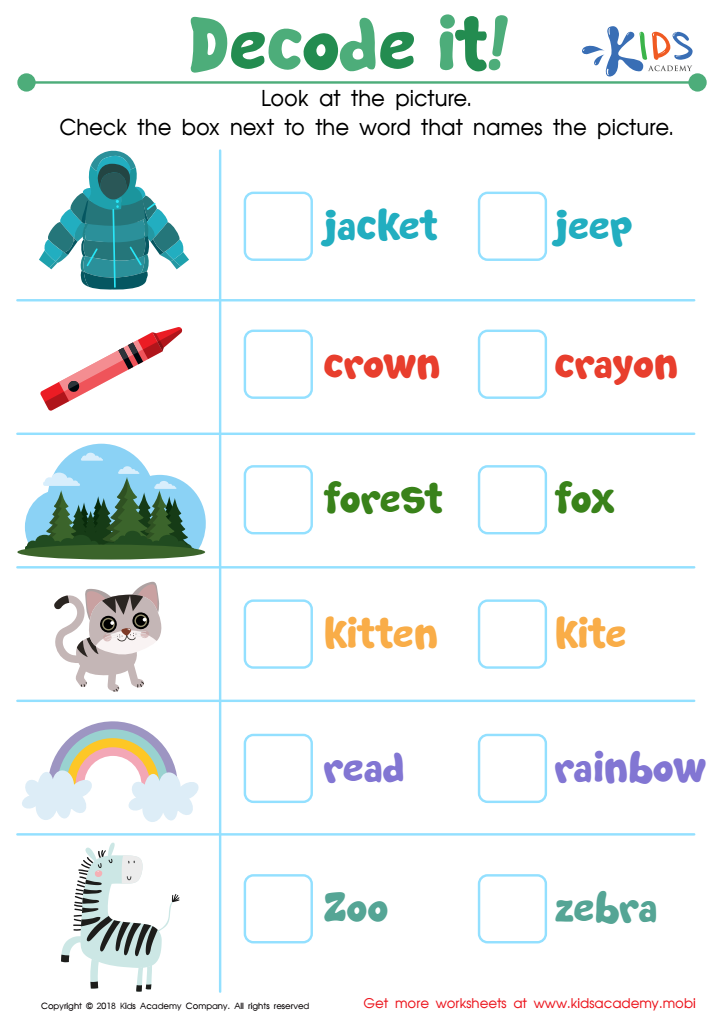
Reading: Decode It Worksheet
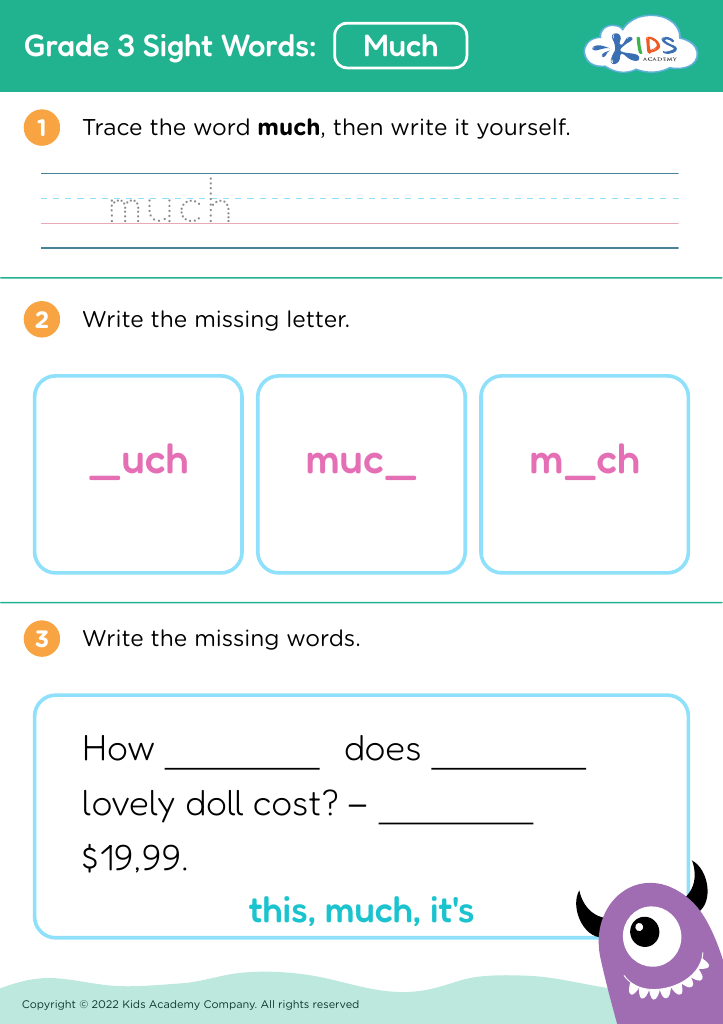
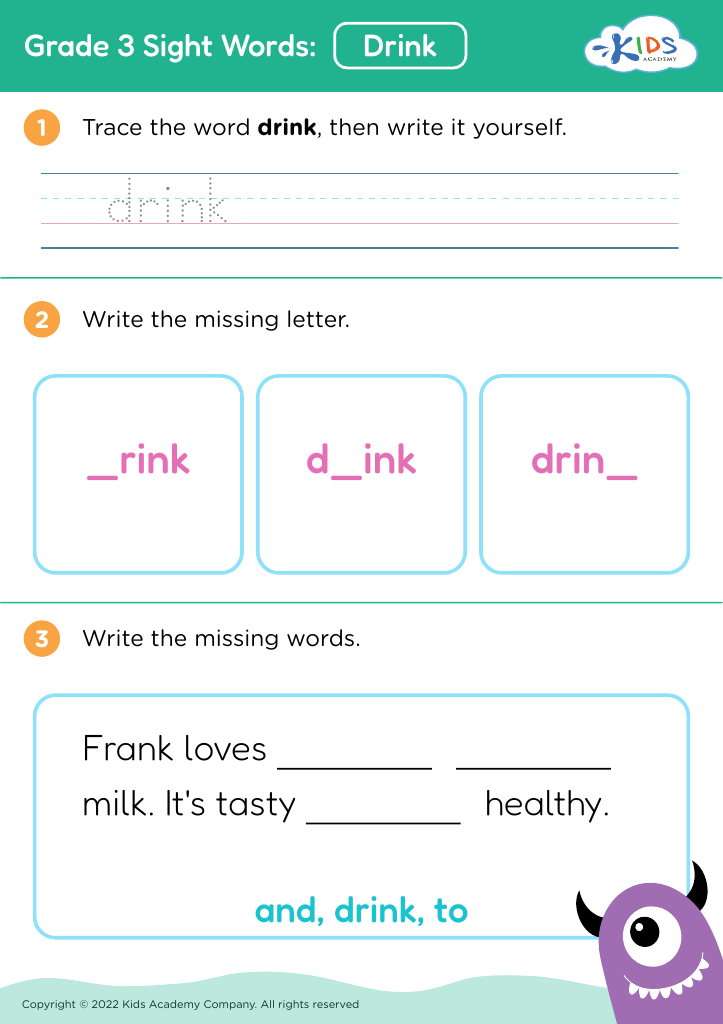






.jpg)

Parents and teachers should place significant emphasis on improving and building vocabulary because it plays a fundamental role in a child's overall academic and personal development. A robust vocabulary enhances reading comprehension and the ability to understand complex texts, which directly influences academic performance in all subjects. When children know more words, they can more accurately express themselves, which boosts their confidence in writing and speaking.
Furthermore, having a rich vocabulary fosters effective communication skills, enabling children to articulate their thoughts, emotions, and needs clearly. This often leads to better social interactions and relationships. Equipping children with a strong vocabulary ultimately helps to nurture critical thinking skills. Knowing more words means children are better able to grasp different concepts and contexts, making it easier for them to draw connections and engage in analytical thinking.
Moreover, early vocabulary development is linked to later success both in school and beyond. Studies consistently show that children with extensive vocabularies tend to perform better academically and are more likely to succeed in higher education and professional careers. Thus, dedicating time and effort to vocabulary building not only sets the stage for immediate educational benefits but also lays a foundation for lifelong learning and success.








