Logical thinking Building Vocabulary Worksheets
5 filtered results
-
From - To
Enhance your child's cognitive and language development with our "Logical Thinking Building Vocabulary Worksheets." Tailored for early learners, these engaging worksheets foster critical thinking skills while expanding vocabulary. Each activity encourages children to categorize words, identify relationships, and make connections between concepts, promoting deeper understanding and retention. Ideal for both classroom and home settings, our worksheets provide a fun way to develop essential skills needed for reading comprehension and effective communication. Whether through matching exercises, puzzles, or word problems, students will build confidence in their language abilities. Unlock your child's potential and support their growth with our thoughtfully designed logical thinking resources!
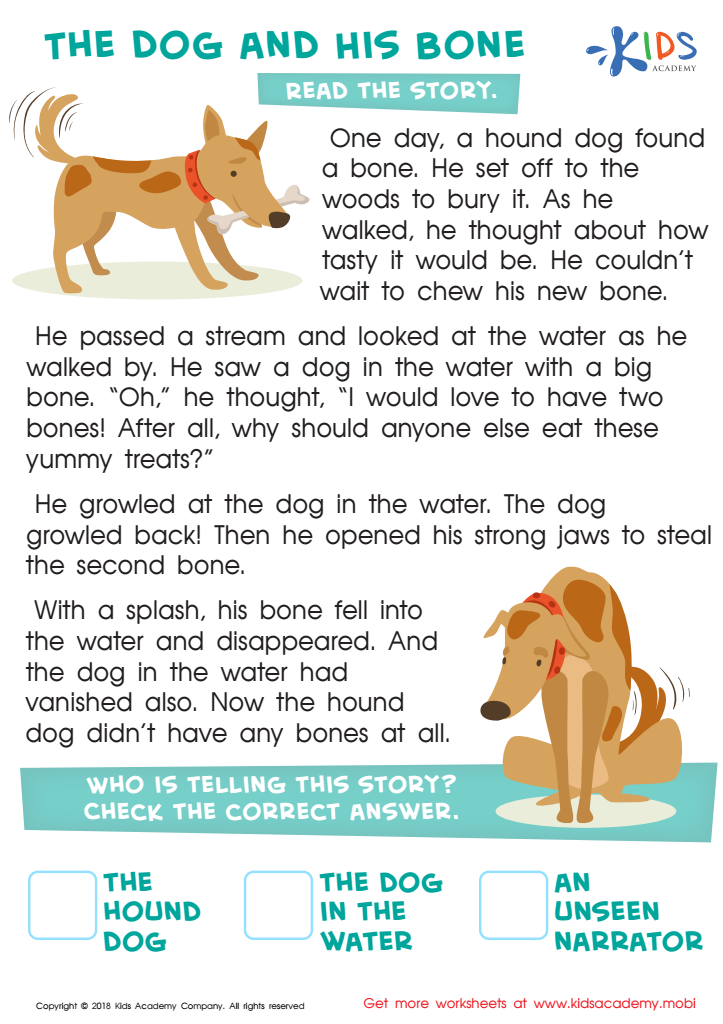
The Dog and His Bone Worksheet
 Assign to My Students











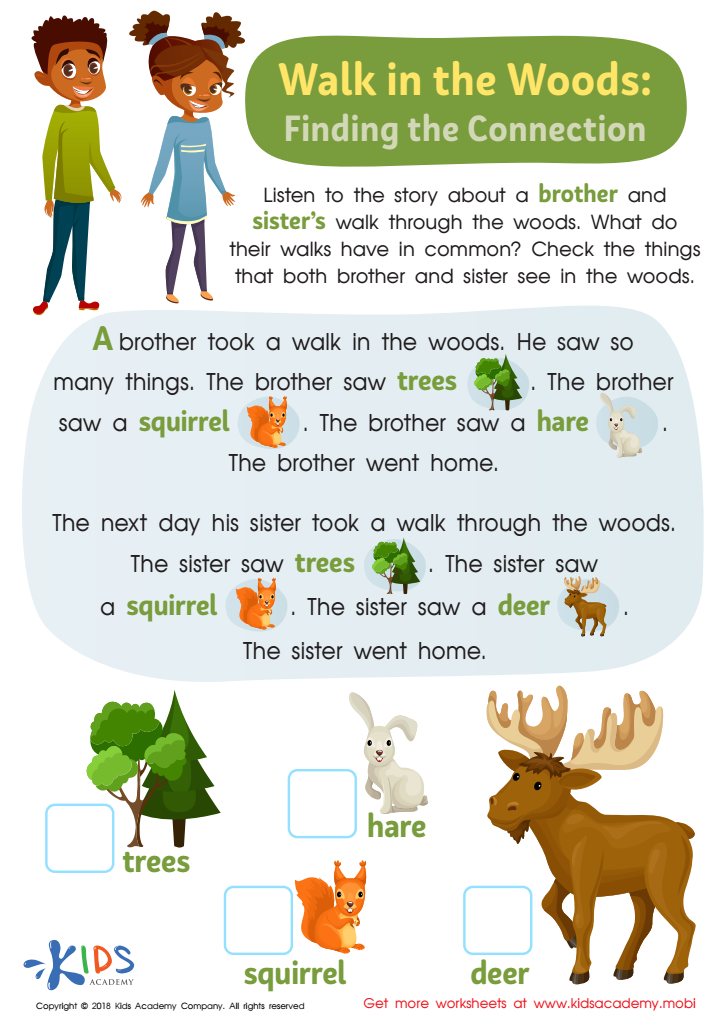
Walk In the Woods: Finding Connections Worksheet
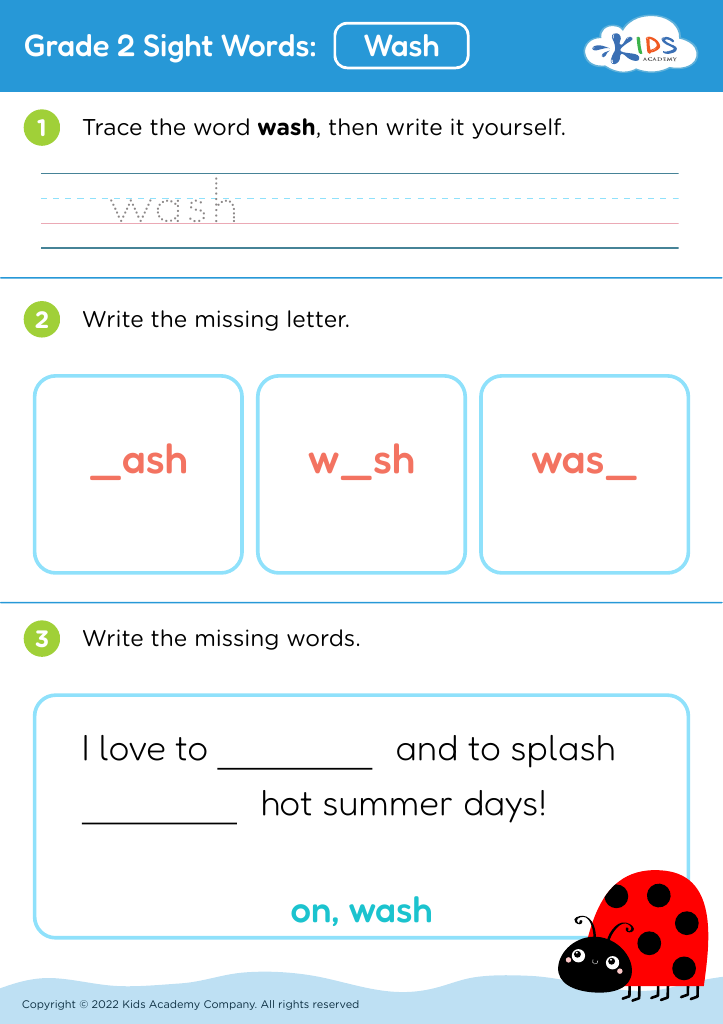
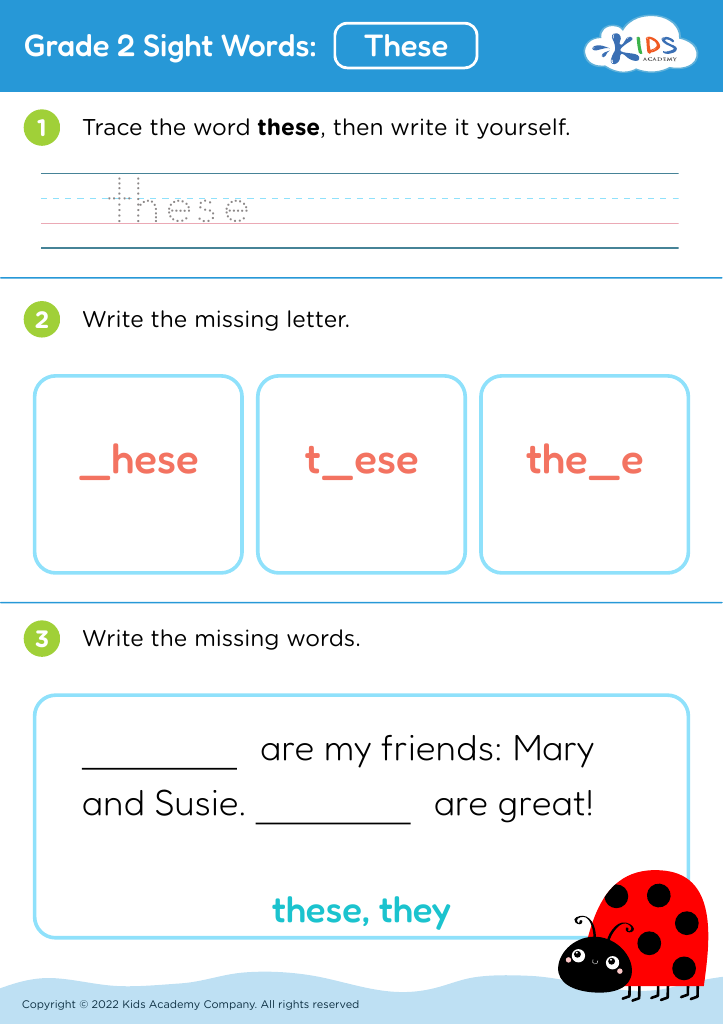
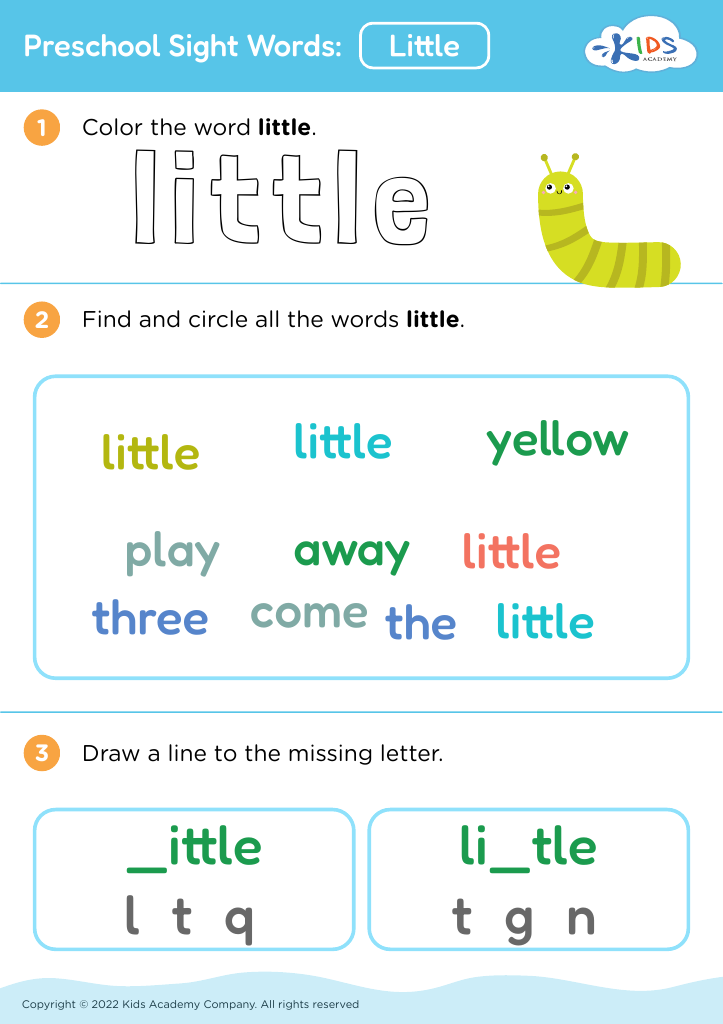








Parents and teachers should prioritize logical thinking and vocabulary building because these skills are foundational for a child's cognitive development and academic success. Logical thinking enables children to process information critically, solve problems effectively, and make informed decisions. As they learn to connect ideas and evaluate arguments, they cultivate analytical skills essential for subjects like math and science.
Building a robust vocabulary, on the other hand, enhances reading comprehension and communication abilities. A rich vocabulary allows children to express themselves clearly and understand complex texts, which is crucial for academic achievement across all disciplines. Strong vocabulary skills also refer to better storytelling and written expression, which are invaluable in fostering creativity and engagement in learning.
Furthermore, both logical thinking and vocabulary are essential for social interaction. Children with advanced reasoning skills and extensive vocabulary are often more confident in discussions and collaborative activities, fostering relationships with peers.
In the long run, prioritizing these skills not only prepares children for immediate educational challenges but also equips them with the tools they need for lifelong learning and success. Thus, parents and teachers have a vested interest in nurturing these abilities in their young learners.








