Motor skills development Building Vocabulary Worksheets
3 filtered results
-
From - To
Enhance your child's motor skills while building their vocabulary with our engaging worksheets! Designed for early learners, these resources promote coordination and fine motor skills as children practice tracing, coloring, and writing. Our worksheets incorporate fun activities that blend learning with play—ensuring kids develop essential skills in a delightful way. Each worksheet is crafted to support language acquisition, introducing new words in captivating contexts. By using our Motor Skills Development Building Vocabulary Worksheets, young learners not only strengthen their linguistic abilities but also improve their hand-eye coordination and dexterity. Unlock the joy of learning today with our thoughtfully designed materials!
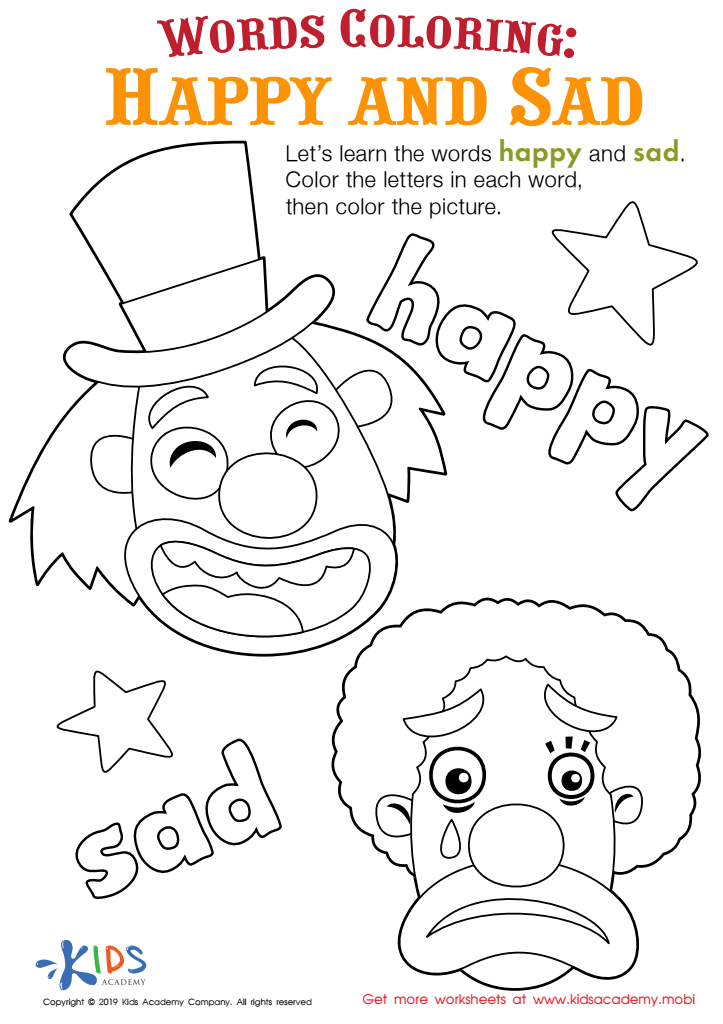
Happy and Sad Words Coloring Worksheet
 Assign to My Students











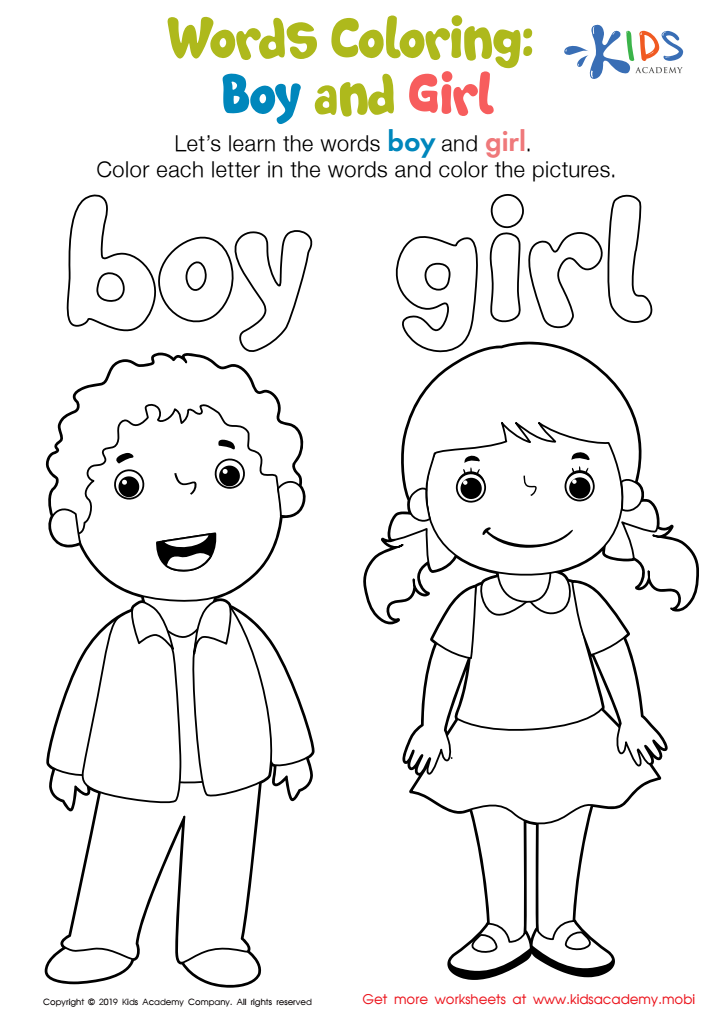
Boy and Girl Words Coloring Worksheet
Assign to My Students
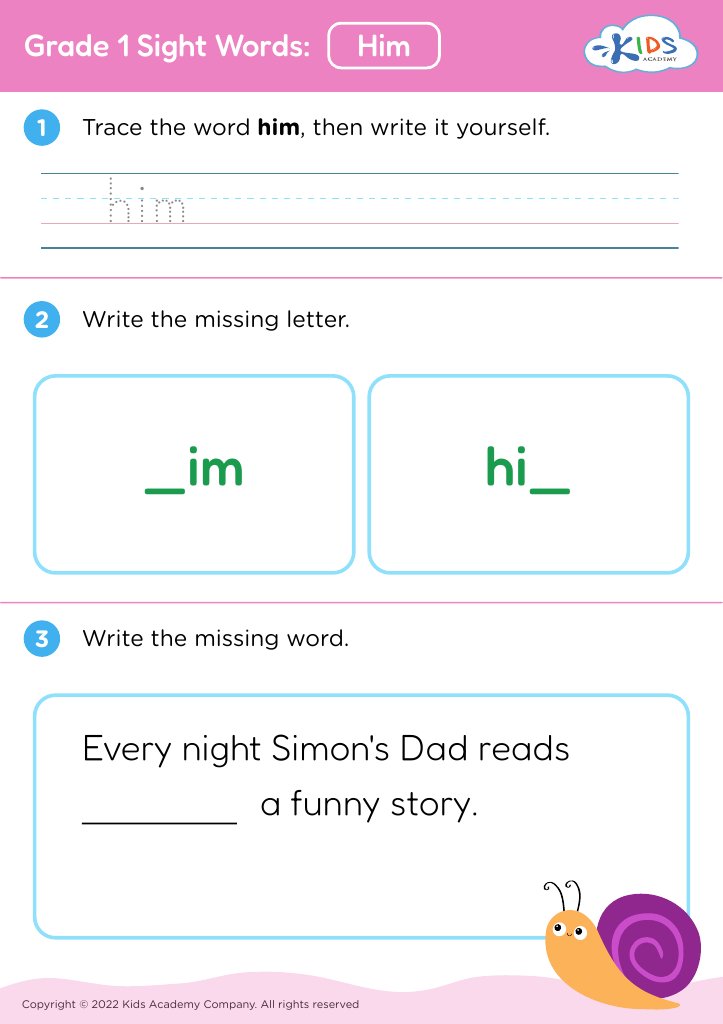








Motor skills development and vocabulary building are crucial aspects of early childhood education that significantly influence a child's overall growth. Parents and teachers should prioritize these areas because they lay the foundation for effective learning and interpersonal skills.
Motor skills, involving both fine (like writing) and gross (like running) movements, are essential for everyday tasks. Developing these skills enhances a child's ability to engage in physical activities, paving the way for healthier lifestyles and improved coordination. Moreover, strong motor skills boost confidence as children learn to navigate their environment independently.
On the other hand, vocabulary development is integral to communication and cognitive abilities. A rich vocabulary enables children to express their thoughts, make sense of their experiences, and interact with others. This not only enhances their academic performance but also fosters emotional intelligence and social skills.
When parents and teachers collaborate to support motor skills and vocabulary development, they create a nurturing environment that promotes learning. These foundational abilities are interlinked, as physical activities can enhance cognitive engagement and vocabulary usage, leading to more effective learning experiences and stronger relationships among peers. Prioritizing these areas ensures that children grow into well-rounded, capable individuals prepared for future challenges.








