Phonics recognition Building Vocabulary Worksheets
5 filtered results
-
From - To
Unlock your child's reading potential with our Phonics Recognition Building Vocabulary Worksheets! Designed for early learners, these engaging resources help children master phonics skills while expanding their vocabulary. Each worksheet focuses on essential phonetic sounds, blending practice, and word recognition activities tailored to young readers. By reinforcing these foundational skills, children gain confidence in their reading abilities and a deeper understanding of language. Ideal for classroom use or at-home learning, our worksheets provide diverse exercises that make mastering phonics fun and interactive. Give your child the tools they need to succeed in reading and foster a lifelong love for learning!
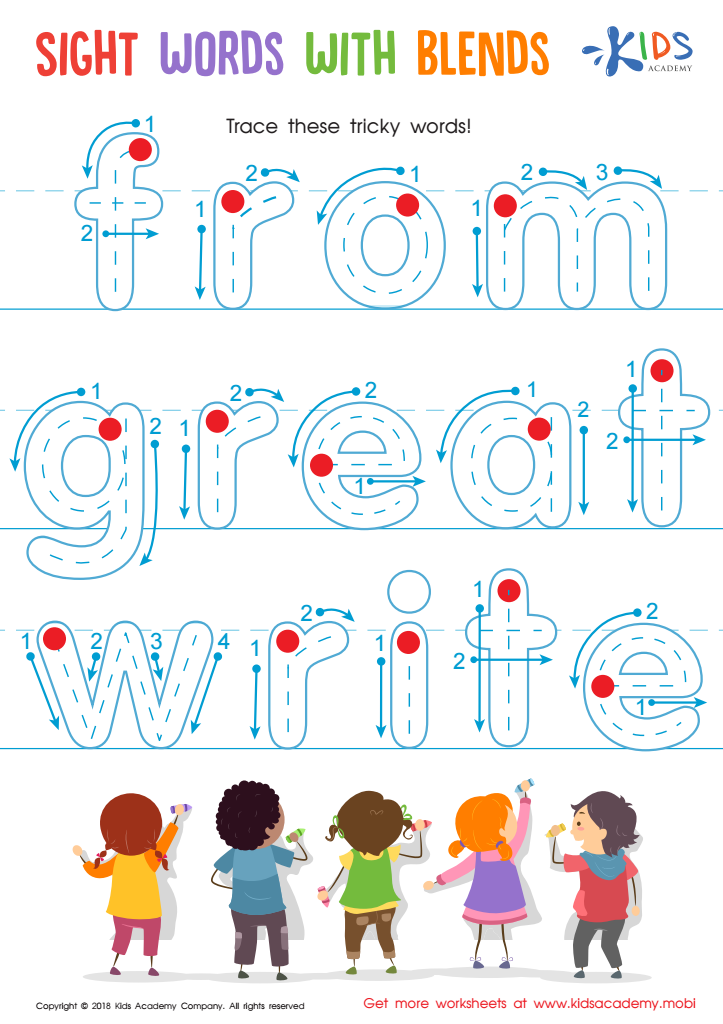
Sight Words with Blends Worksheet
 Assign to My Students











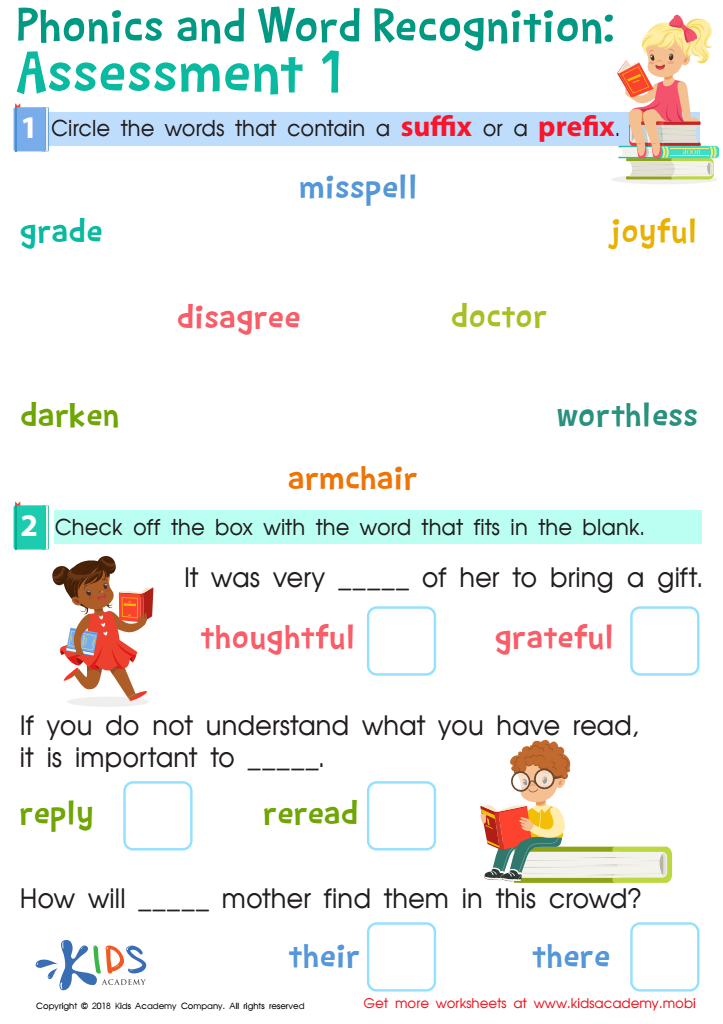
Phonics and Word Recognition: Assessment 1 Worksheet
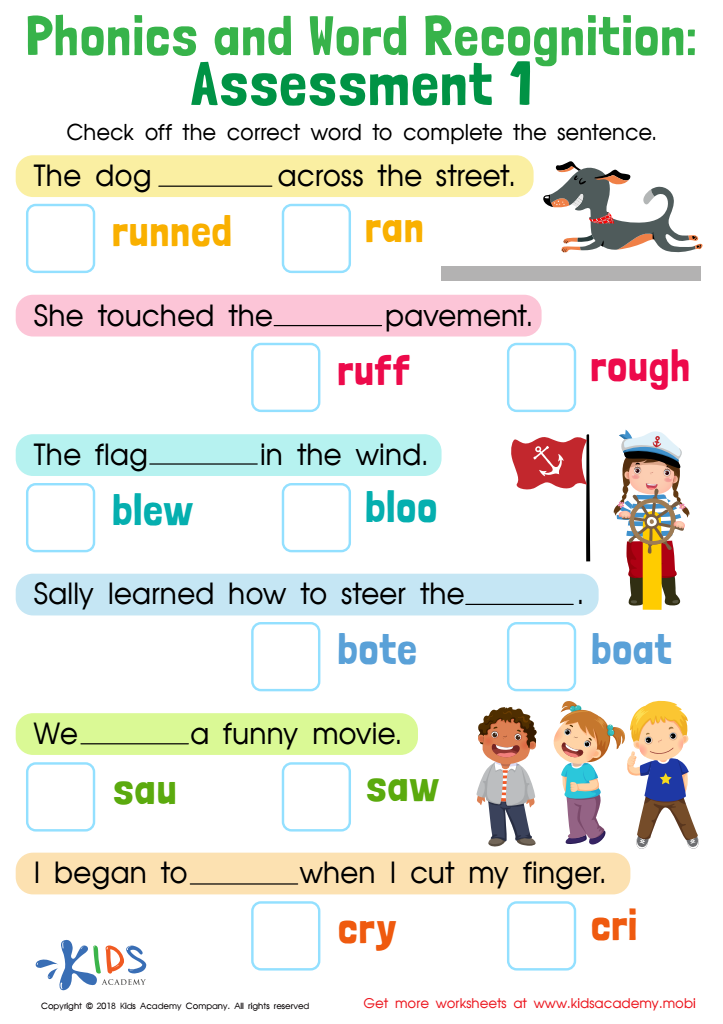
Phonics and Word Recognition: Assessment 1 Worksheet
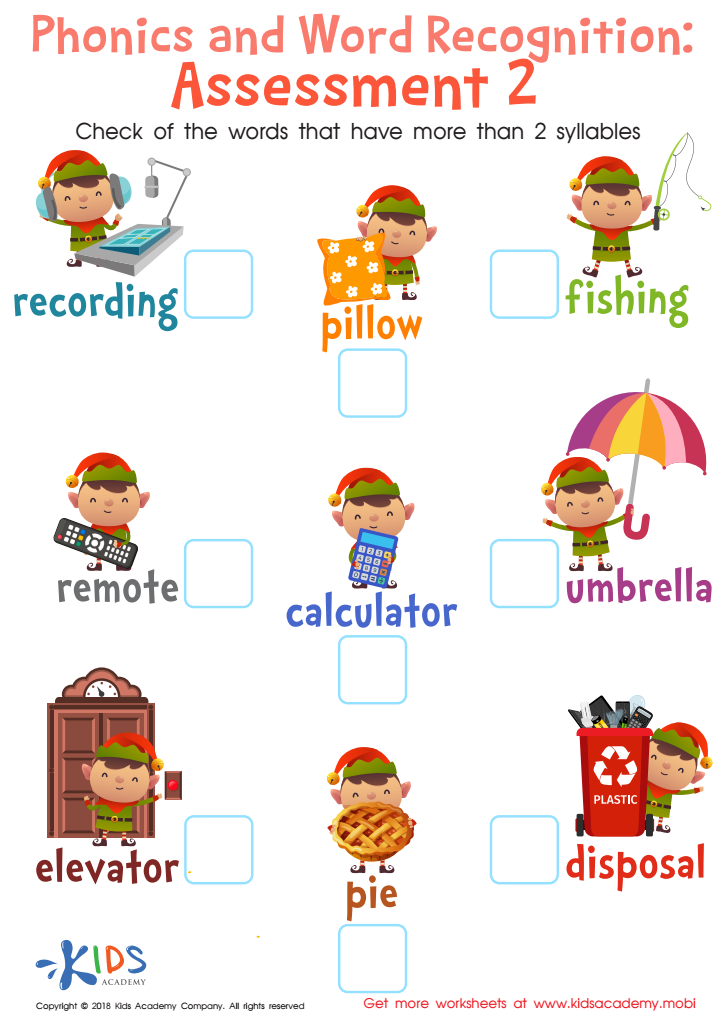
Phonics and Word Recognition: Assessment 2 Worksheet
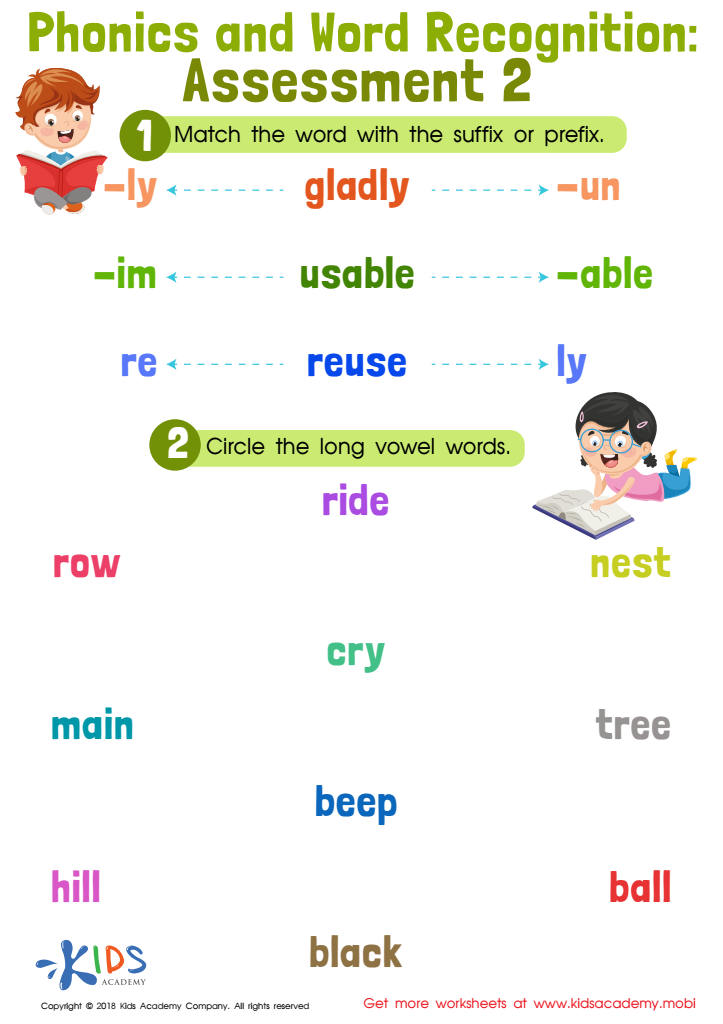
Phonics and Word Recognition: Assessment 2








Phonics recognition and vocabulary building are crucial components of early literacy development, making them vital for both parents and teachers. Phonics recognition involves understanding the relationship between sounds and their corresponding letters, which lays the foundational skills for reading. When children grasp phonics, they can decode words, leading to improved reading fluency and confidence. This skill is particularly important as it helps prevent reading difficulties later on.
Vocabulary building complements phonics by expanding a child's word knowledge, enhancing comprehension, and enabling better communication. A rich vocabulary allows children to express their thoughts clearly and engage with texts more deeply, fostering a love for reading. Parents and teachers play a pivotal role in this development through interactive reading, discussion, and exposure to diverse language experiences.
Investing time in phonics recognition and vocabulary enables children to succeed not just in reading, but also across all academic areas. Moreover, it nurtures critical thinking and creativity, vital skills for lifelong learning. Recognizing the importance of these foundational components ensures children are equipped with the tools they need to thrive academically and socially, ultimately fostering a love for learning that lasts a lifetime.








