Phonics Skills Building Vocabulary Worksheets
7 filtered results
-
From - To
Enhance your child’s reading proficiency with our Phonics Skills Building Vocabulary Worksheets! Designed for early learners, these engaging resources focus on phonics to boost vocabulary development and reading comprehension. Each worksheet features fun activities that encourage children to sound out words, recognize patterns, and connect letters with sounds. By integrating phonics into their learning, kids will build confidence and fluency in reading. Our printable worksheets are perfect for classroom use or at-home practice, catering to various learning styles. Explore our collection to transform your child's reading journey, ensuring a solid foundation for literacy and a lifelong love for reading!
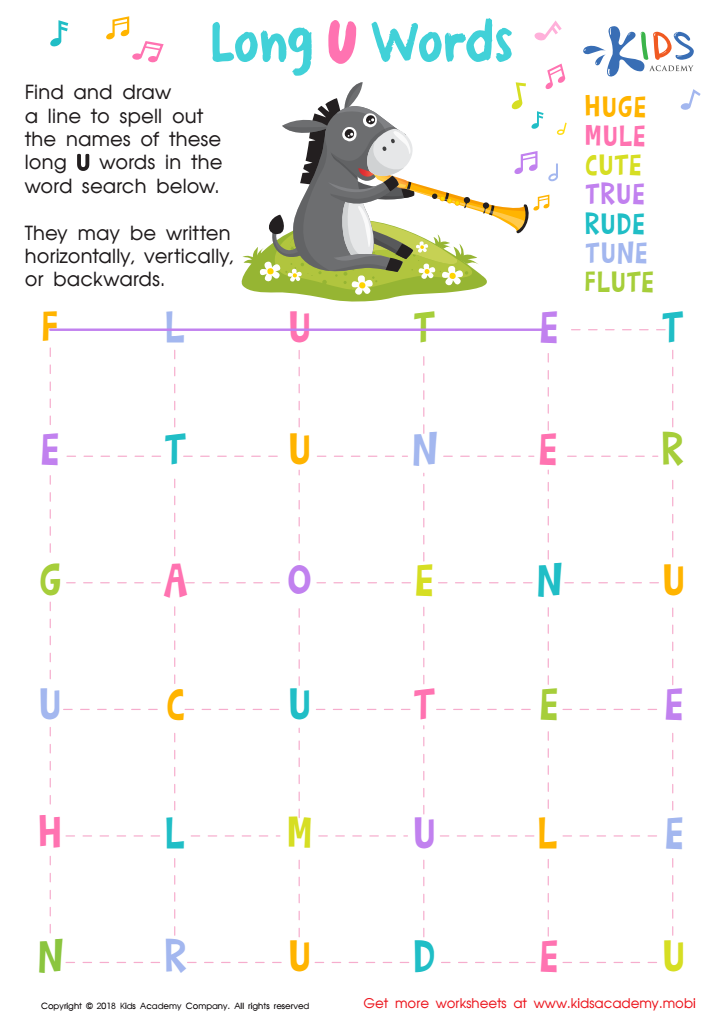
Long /u/ Words Worksheet
 Assign to My Students











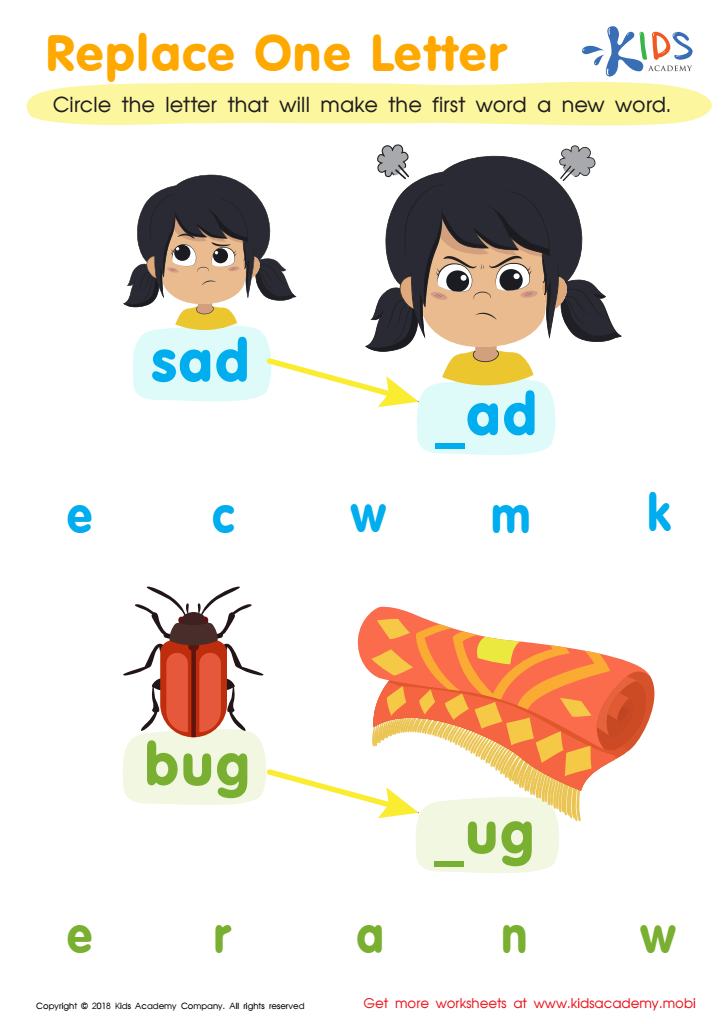
Replace One Letter Worksheet
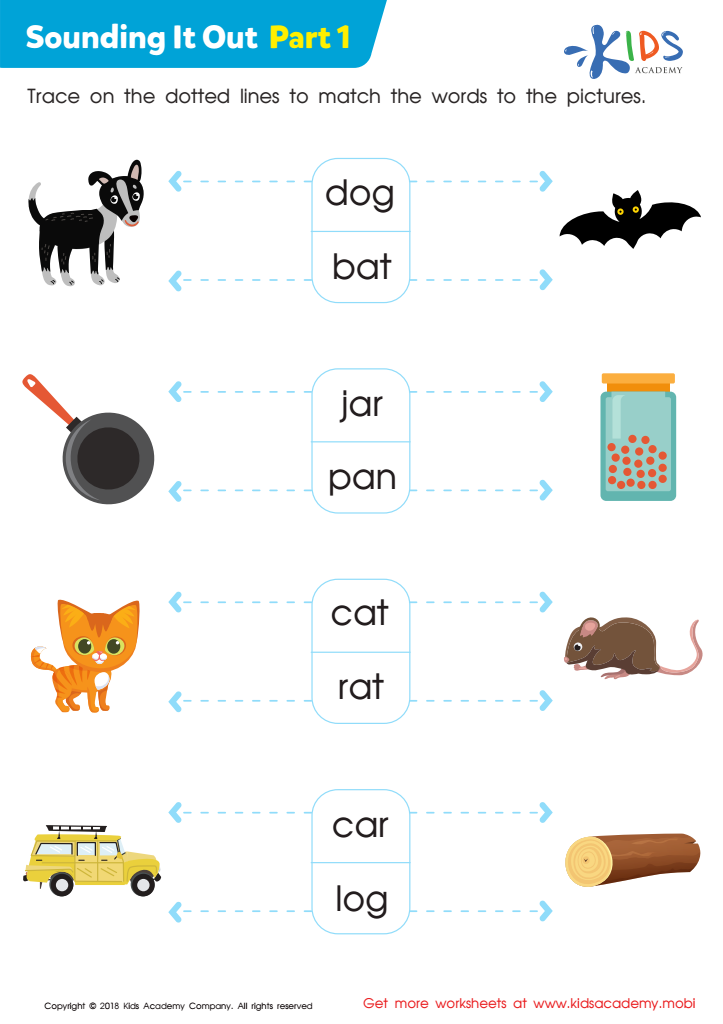
Sounding it Out: Part 1 Worksheet
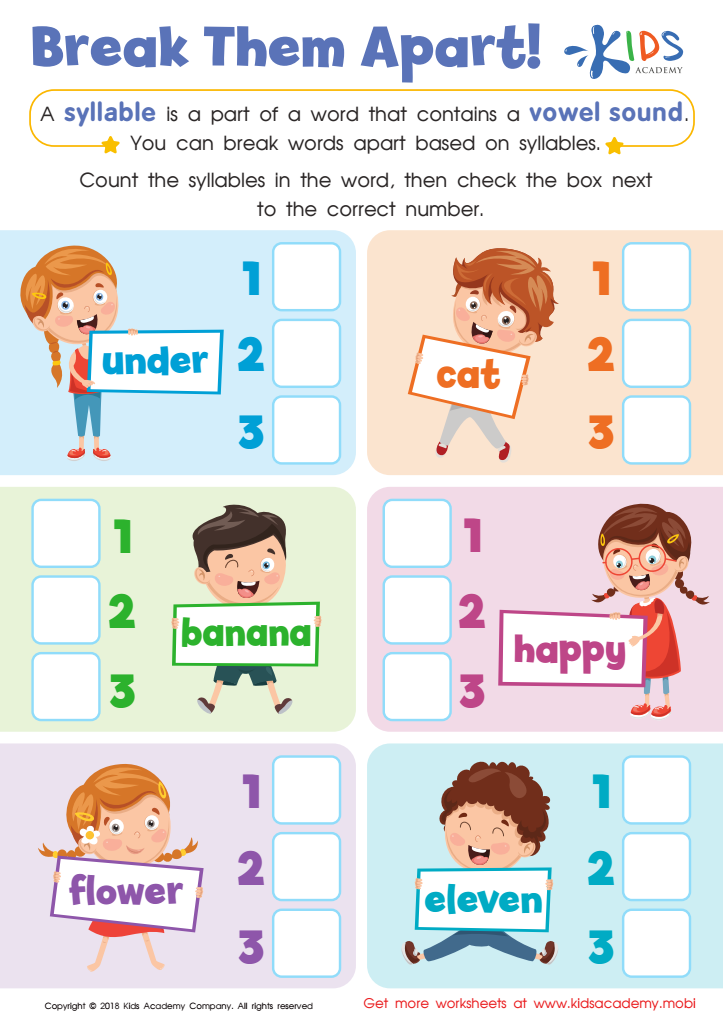
Reading: Break Them Apart Worksheet
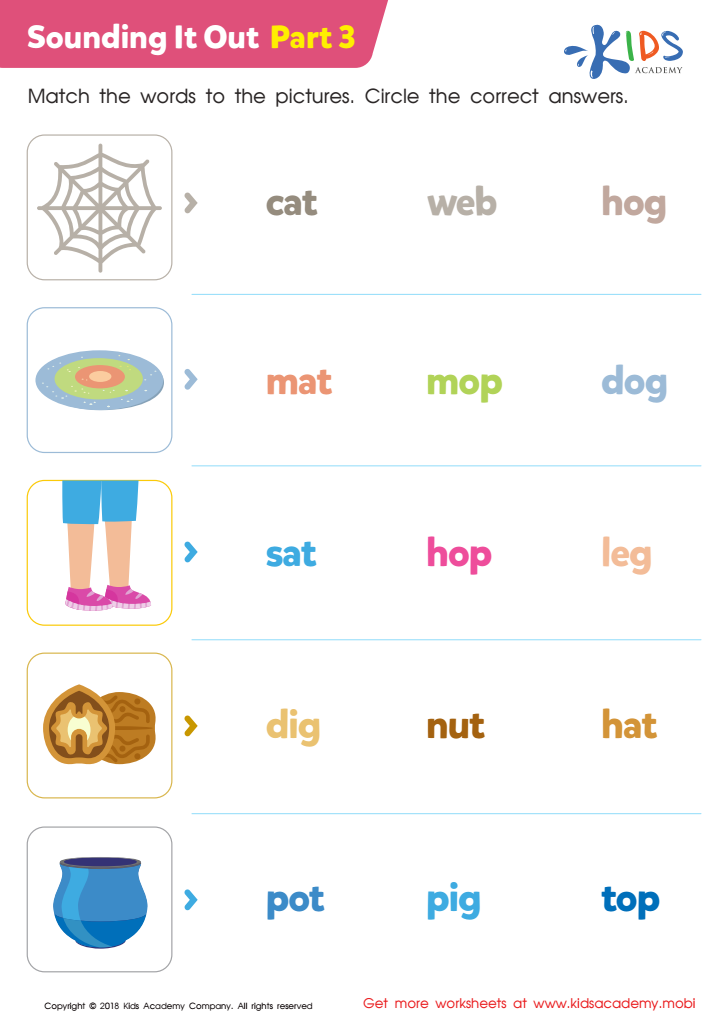
Sounding it Out: Part 3 Worksheet
Long Vowel Sound A Worksheet Worksheet
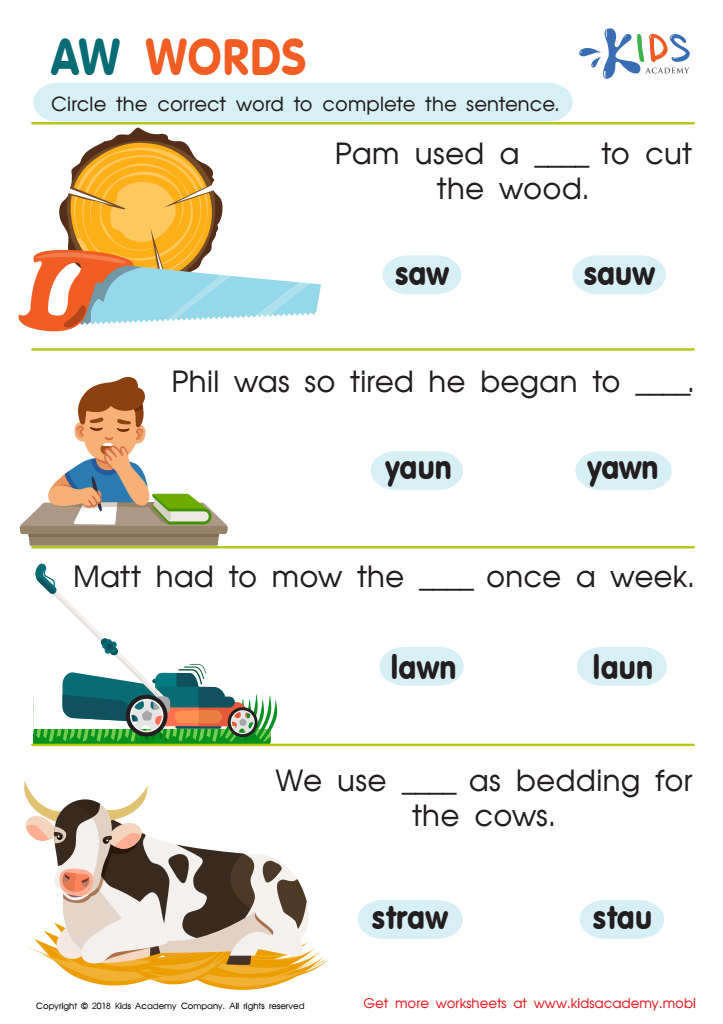
Reading: AW Words Worksheet








Phonics skills play a crucial role in building vocabulary and fostering literacy among early learners, making it a fundamental focus for parents and teachers. At its core, phonics teaches children the relationships between letters and sounds, enabling them to decode words independently. This decoding ability is essential for reading fluency, which directly impacts vocabulary acquisition.
When students can accurately sound out words, they are more likely to explore new texts. This exploration leads to exposure to a broader range of words, enhancing their vocabulary and comprehension. A well-developed vocabulary is vital not only for academic success but also for effective communication in everyday life. Furthermore, phonics instruction provides a strong foundation for understanding the meaning of words, as it often encourages students to analyze word structure, including prefixes and suffixes.
For parents and teachers, nurturing phonics skills is an investment in a child’s educational journey, paving the way for improved reading skills and greater overall confidence. Engaging children in phonics activities—whether through games, songs, or reading—can foster a love for learning that lasts a lifetime. By prioritizing phonics, we empower children to become proficient readers and, ultimately, lifelong learners.








