Word identification Building Vocabulary Worksheets
5 filtered results
-
From - To
Enhance your child's reading and comprehension skills with our "Word Identification Building Vocabulary Worksheets." Designed for early learners, these engaging worksheets focus on identifying words and expanding vocabulary through fun activities. Each worksheet targets crucial reading skills by encouraging children to recognize words in different contexts, improving their fluency and confidence. Perfect for classroom or at-home use, these printable resources offer a variety of exercises that stimulate critical thinking and language development. Dive into our collection today and empower your young learner with the essential tools to master word identification and build a robust vocabulary for lifelong success!
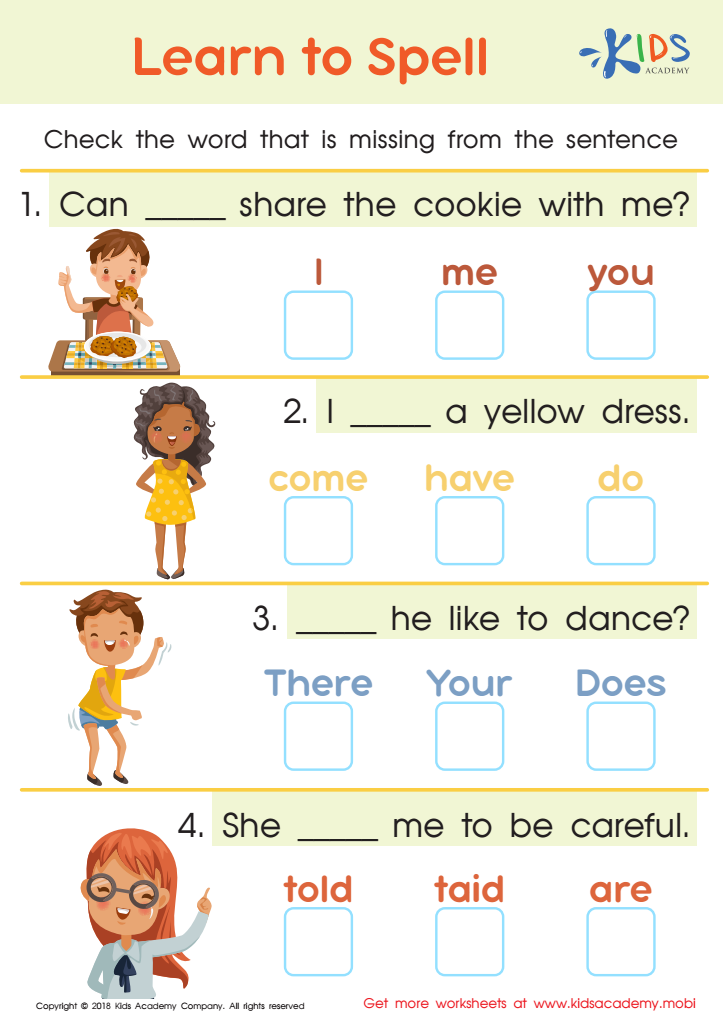
Learn to Spell Worksheet
 Assign to My Students











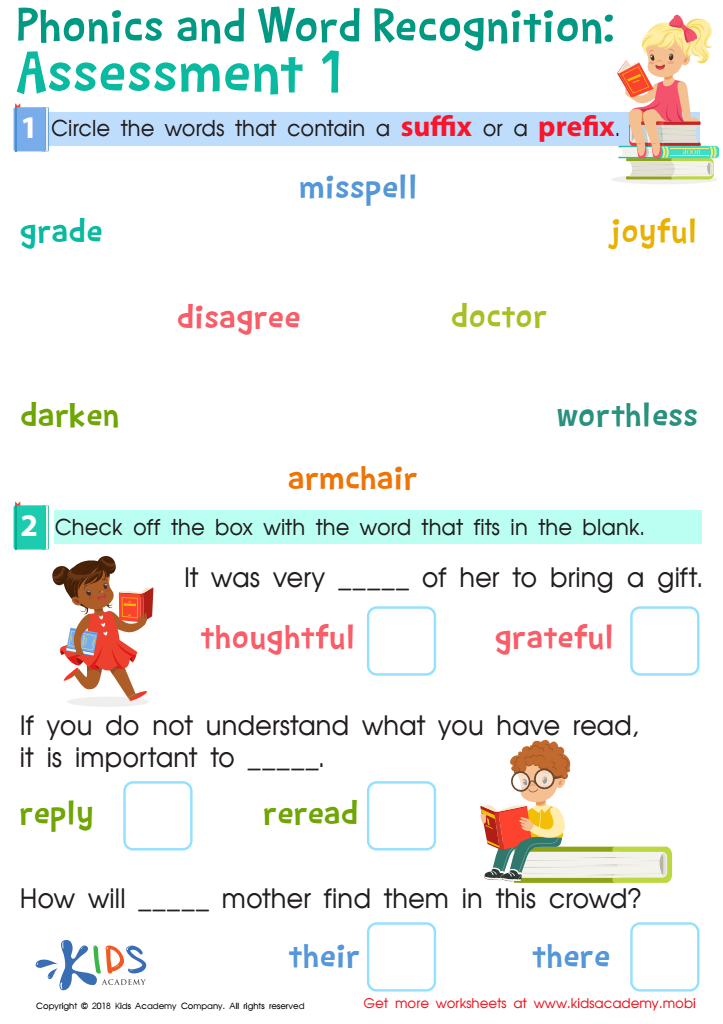
Phonics and Word Recognition: Assessment 1 Worksheet
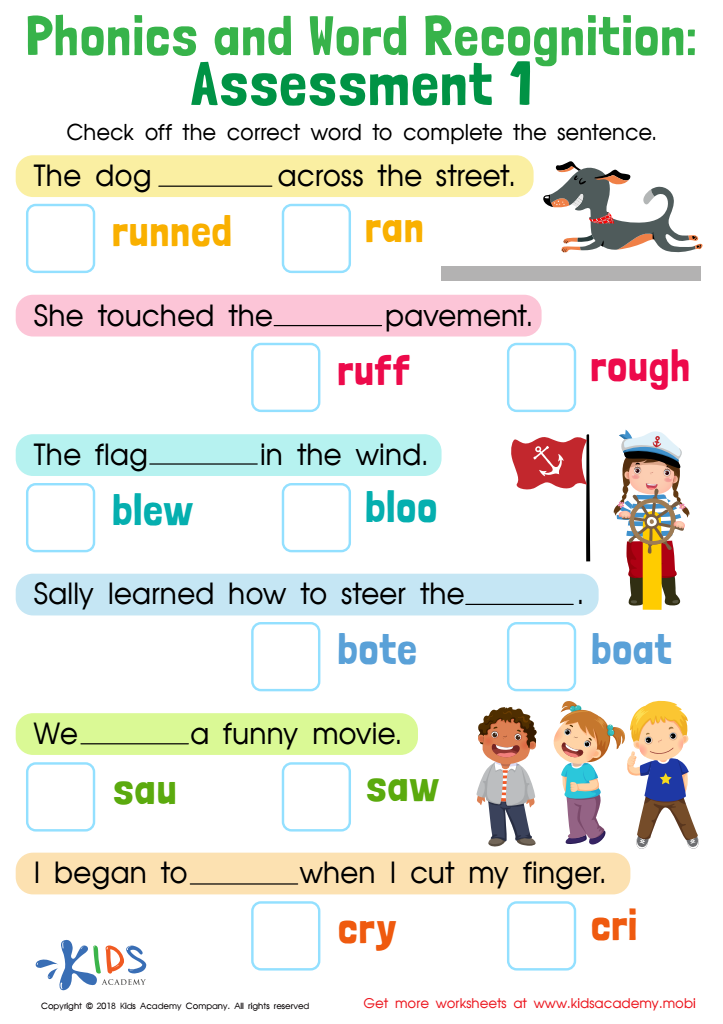
Phonics and Word Recognition: Assessment 1 Worksheet
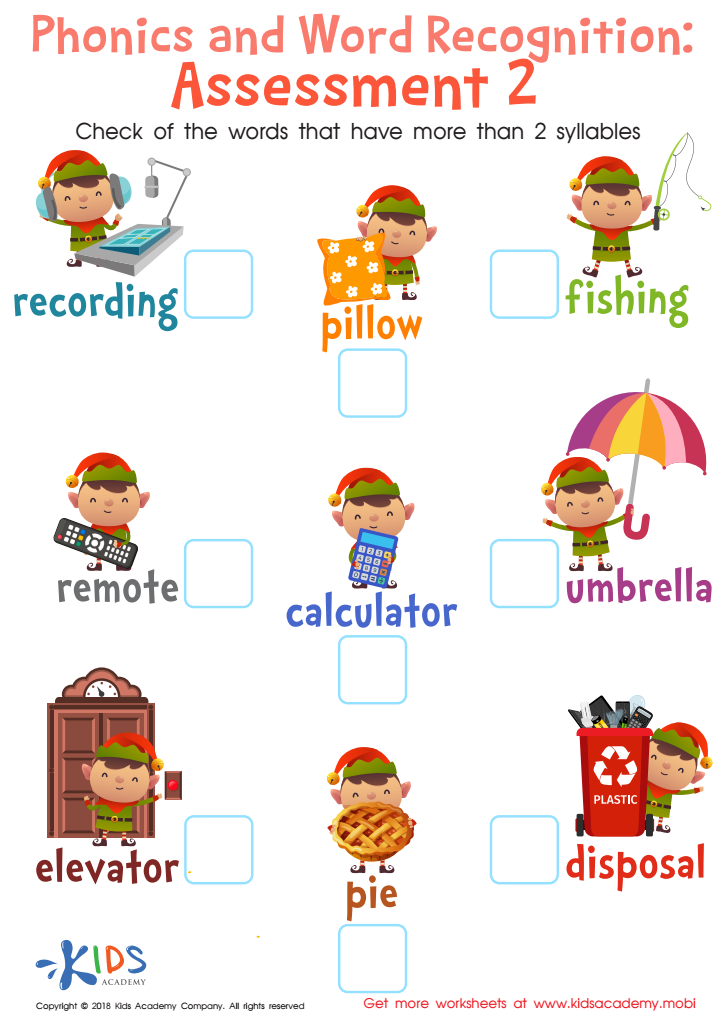
Phonics and Word Recognition: Assessment 2 Worksheet
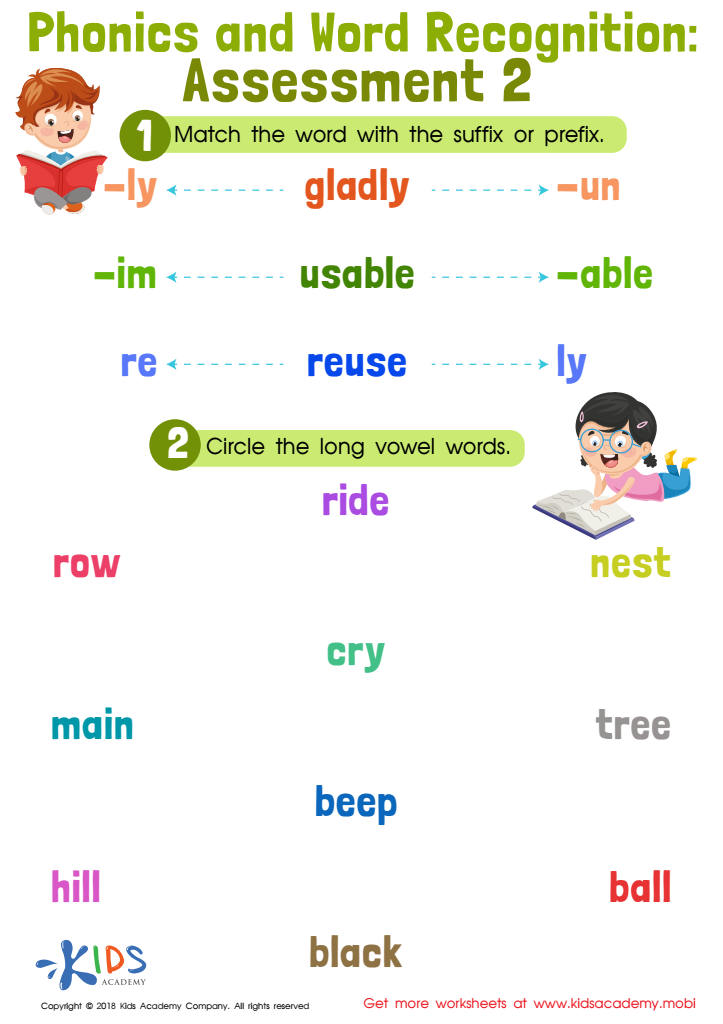
Phonics and Word Recognition: Assessment 2






.jpg)

Word identification and vocabulary building are crucial components of early literacy and language development for children. Parents and teachers should care about these areas because they significantly impact a child's reading comprehension and overall academic success. When children can identify words quickly and accurately, they can focus on understanding the meaning of the text rather than struggling with decoding individual words. This fluency enhances their confidence and enjoyment of reading.
Additionally, a robust vocabulary allows children to express themselves effectively, comprehend complex texts, and engage in meaningful conversations. Research shows that a strong vocabulary is associated with improved reading skills and later academic achievement. By building vocabulary through exposure to rich language experiences and targeted instruction, children are better prepared to tackle diverse subjects and ideas.
Furthermore, fostering these skills aids in closing the achievement gap often seen in socioeconomically disadvantaged children, as richer language environments promote cognitive development. Ultimately, investing time and effort into word identification and vocabulary building is essential for equipping children with the tools they need for lifelong learning and success, making it a clear priority for both parents and teachers.








