Visual Perception Skills Reading Worksheets
4 filtered results
-
From - To
Enhance your child's reading abilities with our Visual Perception Skills Reading Worksheets. Tailored for young learners, these worksheets are designed to strengthen crucial visual processing skills. By engaging in fun, interactive activities, children will improve their ability to recognize patterns, discern differences, and understand visual information efficiently. These skills are essential for early reading development, boosting literacy and confidence. Our comprehensive set of worksheets covers a range of exercises suitable for ages 3-7, ensuring a strong foundation in reading readiness. Visit our website to explore and download these valuable resources, setting the stage for your child's success in reading and beyond.
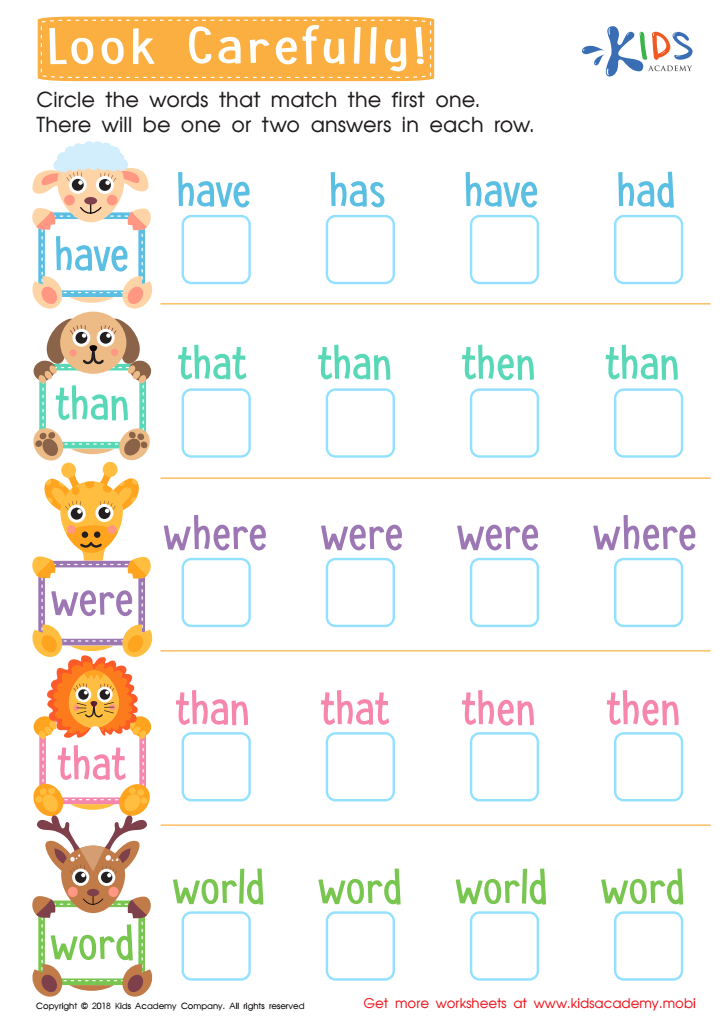
Look Carefully Worksheet
 Assign to My Students
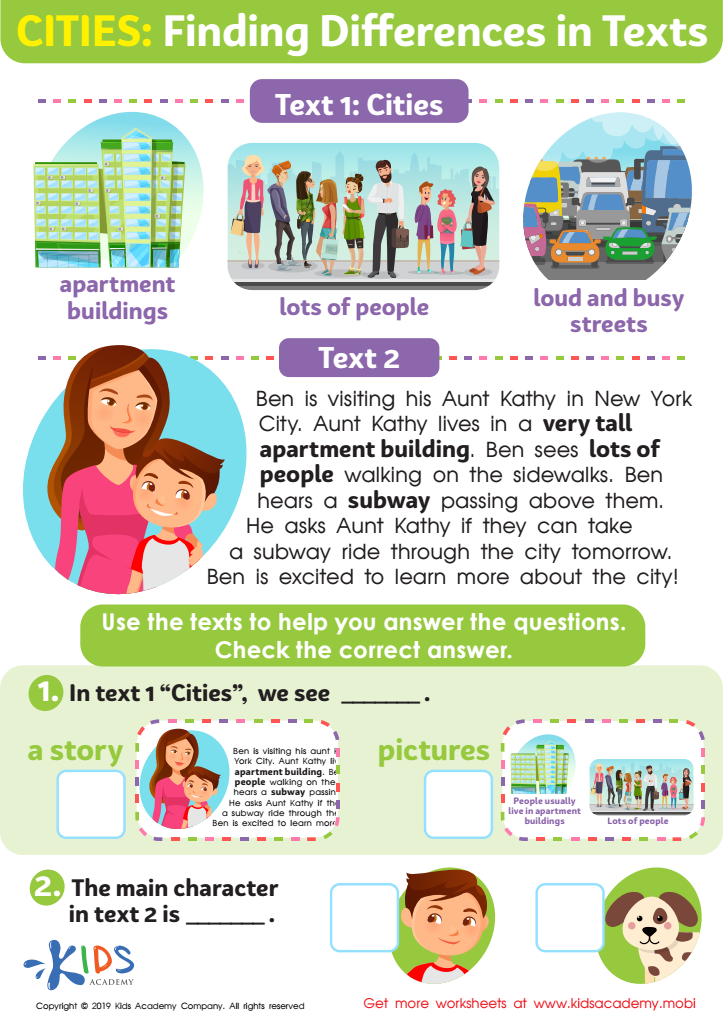
Cities: Finding Differences Worksheet
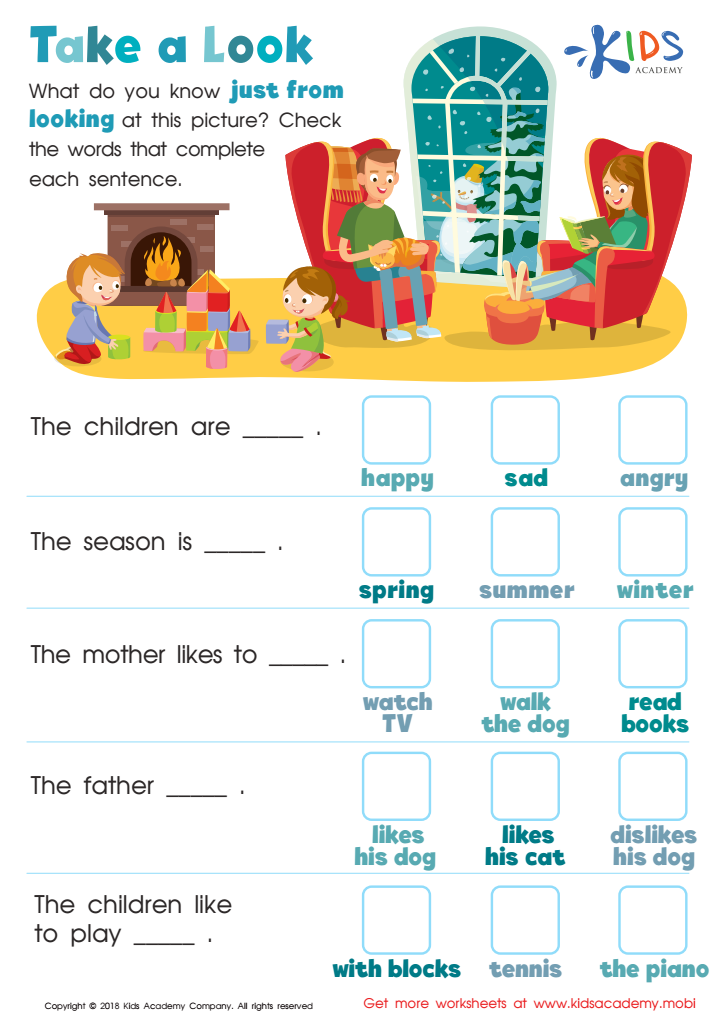
Take a Look - Part 1 Worksheet
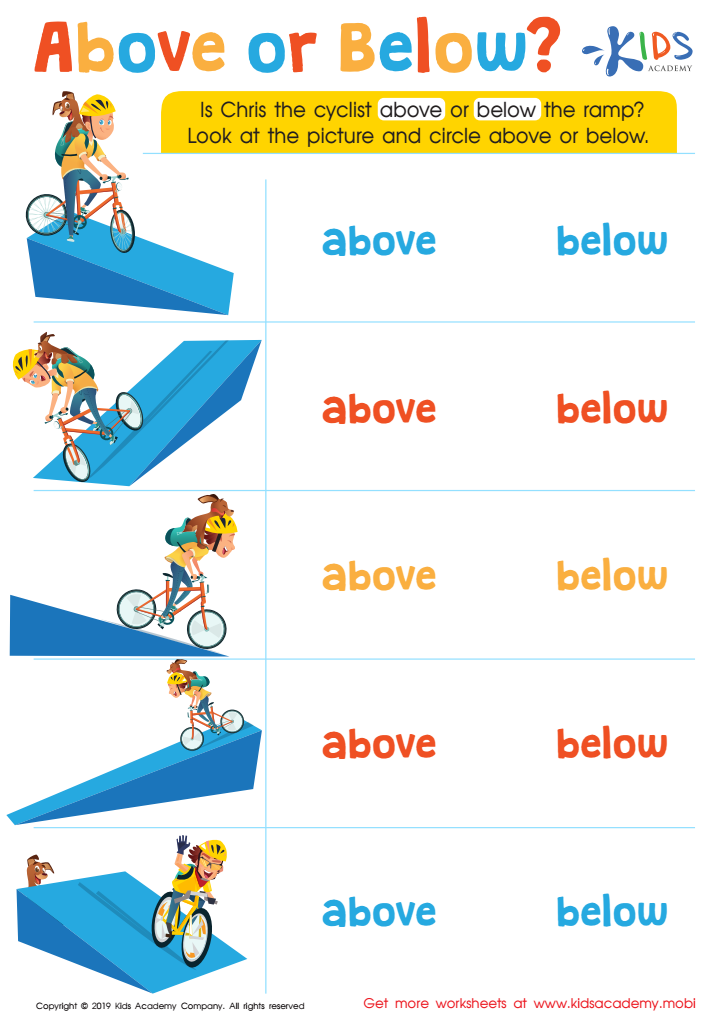
Above or Below? Worksheet








Visual perception skills are fundamental for children’s reading development, and parents and teachers should care about fostering these skills for several compelling reasons. Visual perception involves the brain's ability to interpret and make sense of visual information from the surrounding environment. Key components include visual discrimination, visual memory, and visual sequencing.
Firstly, visual discrimination helps children differentiate between letters and words that appear similar, such as 'b' and 'd' or 'was' and 'saw.' Without strong visual discrimination skills, a child's ability to recognize and read words accurately can be significantly hampered.
Secondly, visual memory plays a crucial role in recognizing and remembering words, letters, and word patterns, which is essential for reading fluency. Children often need to remember the shapes and forms of words to read efficiently, and visual memory aids in this retention process.
Thirdly, visual sequencing enables children to track the order of letters in words and words in sentences. This sequential processing is vital for comprehension and for preventing reading errors that can alter meaning.
In cultivating these skills, children not only become better readers but also experience improved academic performance and greater confidence. Addressing and nurturing visual perception skills early on sets a strong foundation for lifelong learning and literacy. Therefore, both parents and teachers have meaningful roles in supporting the development of these indispensable skills in children.








