
Analytical thinking Reading Fiction Worksheets
4 filtered results
Difficulty Level
Grade
Age
-
From - To
Subject
Activity
Standards
Unlock the power of analytical thinking with our engaging Reading Fiction Worksheets! Perfect for early-grade learners, these worksheets encourage students to deepen their understanding of stories through critical questions and discussions. By exploring characters, plot development, and themes, children will hone their ability to make inferences, draw conclusions, and analyze literary elements. Our thoughtfully designed materials promote active reading and spark curiosity, helping young readers connect with texts on a deeper level. Whether in the classroom or at home, these worksheets are an excellent resource for nurturing strong analytical skills critical for lifelong learning. Get started and transform reading into a vibrant exploration!
Favorites
With answer key
Interactive
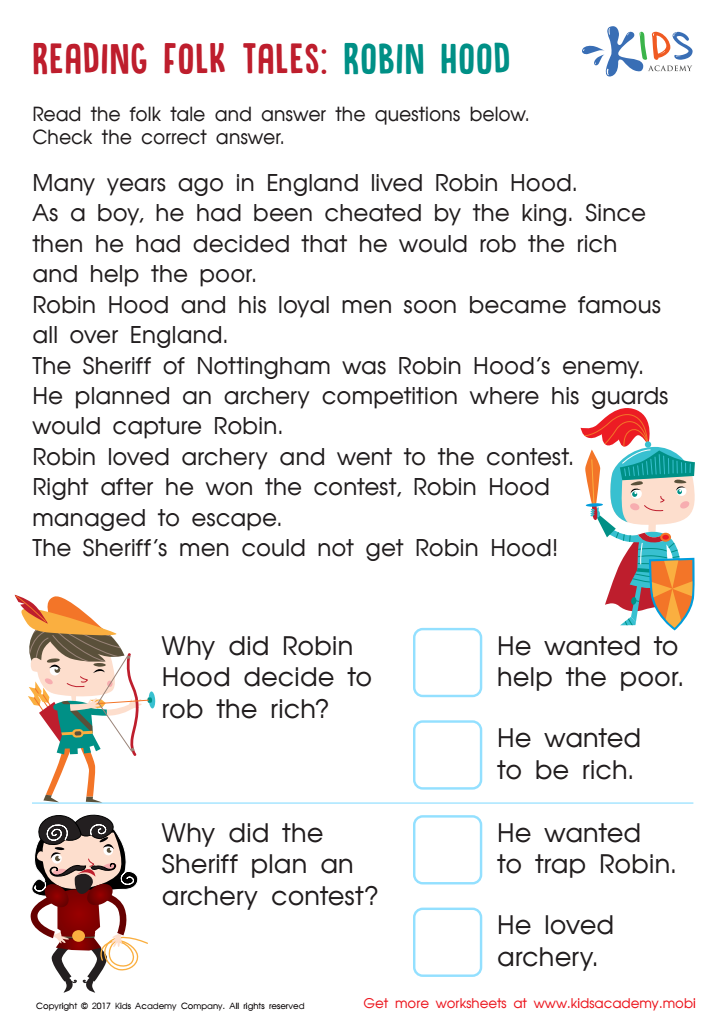
Robin Hood Folktale Worksheet
Have your child practice reading comprehension and inferencing with this Robin Hood folktale worksheet! Get them to read between the lines to find character motivation and answer important questions about the passage. It's a fun way to test their reading skills!
 Assign to My Students
Robin Hood Folktale Worksheet
Worksheet
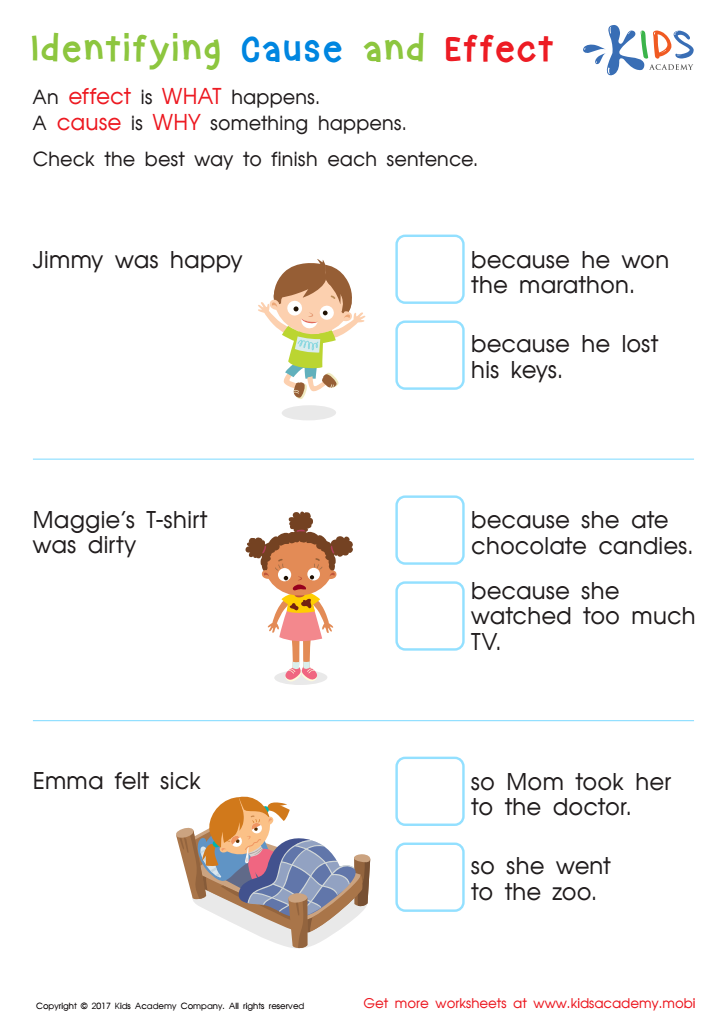
Indentifying Cause and Effect Worksheet
2nd grade cause & effect worksheets give your child practice making connections between events and their results. Fun activities help develop reading and critical thinking skills.
Indentifying Cause and Effect Worksheet
Worksheet
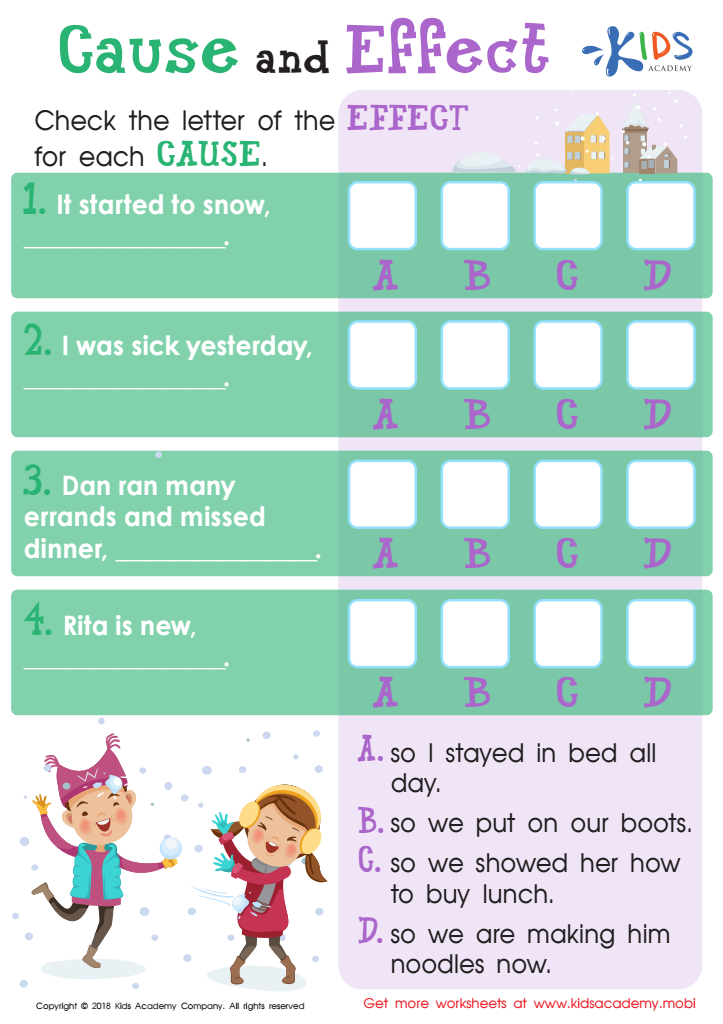
Cause and Effect Worksheet
Help your kids understand the cause-effect relationship of sentences by having them complete this worksheet. There are four incomplete sentences at the top and four options at the bottom. Have them select the appropriate letter for the effect of each cause. This will be the first step to their future of composing grammatically correct and meaningful sentences.
Cause and Effect Worksheet
Worksheet
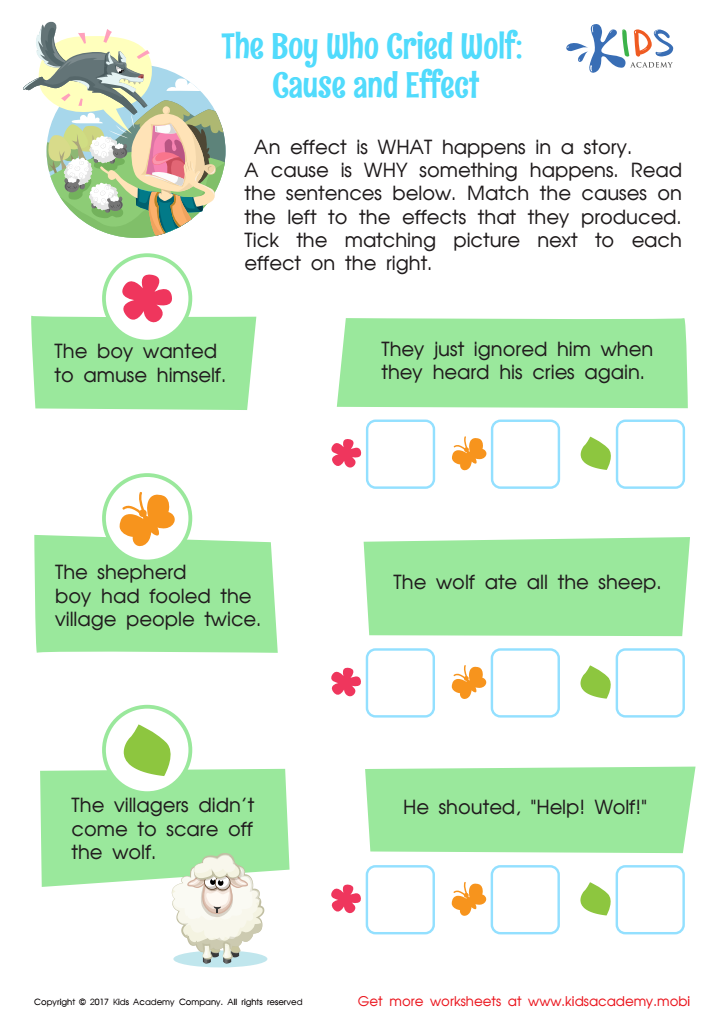
The Boy Who Cried Wolf: Cause and Effect Worksheet
With classic stories and fables, learning reading comprehension is easy - and fun!
The Boy Who Cried Wolf: Cause and Effect Worksheet
Worksheet
Join Kids Academy for Free
Who is primarily going to use this learning content?



.jpg)




Parents and teachers should prioritize analytical thinking when engaging with fiction because it fosters critical skills essential for a child's development. Analytical thinking encourages readers to dissect narratives, evaluate characters’ motivations, and predict outcomes. This deeper engagement not only enhances comprehension but also stimulates creativity and imagination, allowing students to explore possibilities beyond the text.
Fiction often presents complex themes, moral dilemmas, and interpersonal dynamics, making it a rich medium for children to practice interpretation and inference. By analyzing these elements, students develop the ability to think critically about real-world situations, improving their decision-making skills and emotional intelligence.
Moreover, encouraging analytical discussions about stories nurtures communication skills and enables children to articulate their thoughts effectively. It also builds empathy, as they learn to see the world through diverse perspectives, crucial in today's interconnected society.
Overall, emphasizing analytical thinking in reading fiction cultivates a more profound understanding of literature and life, equipping children with tools they will carry into their future academic and personal endeavors. By supporting this approach, parents and teachers contribute to well-rounded individuals who are not just consumers of information but thoughtful, reflective, and engaged members of society.








