Answering questions Reading Fiction Worksheets
3 filtered results
-
From - To
Explore our "Answering Questions Reading Fiction Worksheets" designed to enhance comprehension skills in young readers. These engaging worksheets encourage students to delve into fictional texts, promote critical thinking, and foster a deeper understanding of stories. Through a variety of question types—such as open-ended, multiple choice, and true/false—children will learn to extract key information, infer meanings, and summarize plot points. Ideal for classroom or home use, our worksheets support educators and parents in developing literacy skills in a fun and interactive way. Start your journey towards confident reading with our thoughtfully crafted resources that inspire curiosity and comprehension in every young reader!
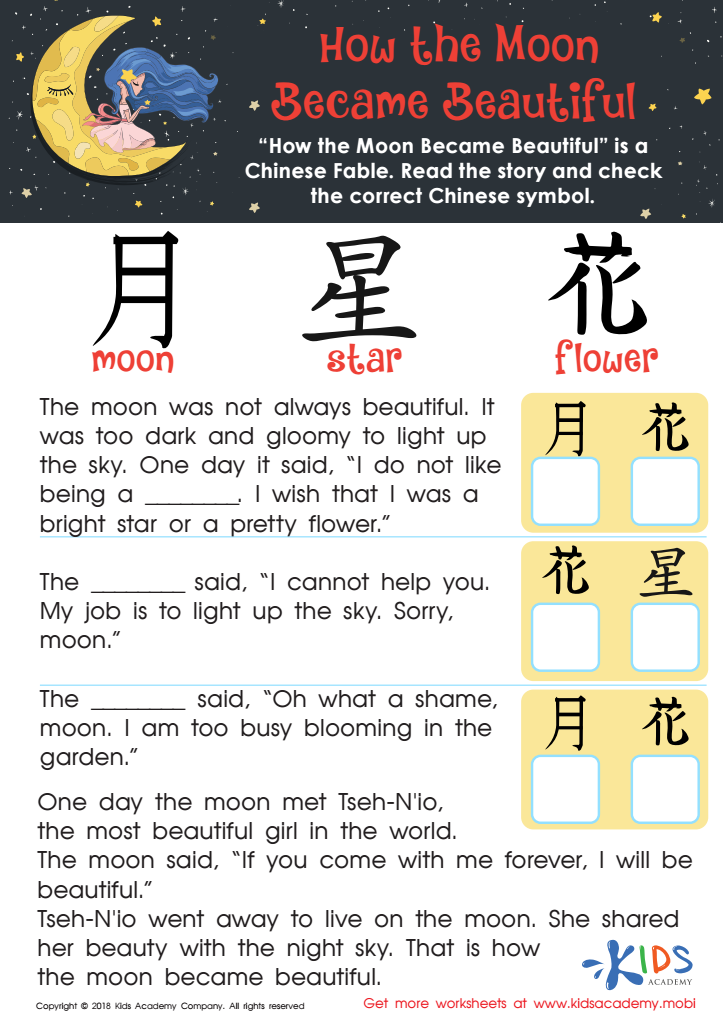
How the Moon Became Beautiful Worksheet
 Assign to My Students
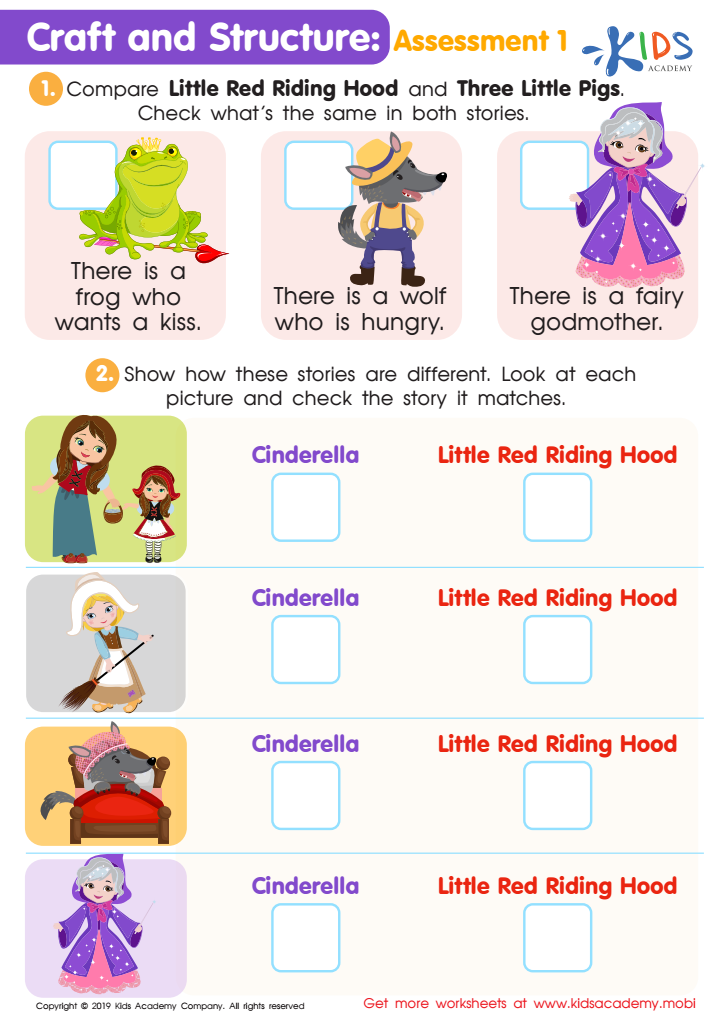
Craft and Structure: Assessment 1 Worksheet
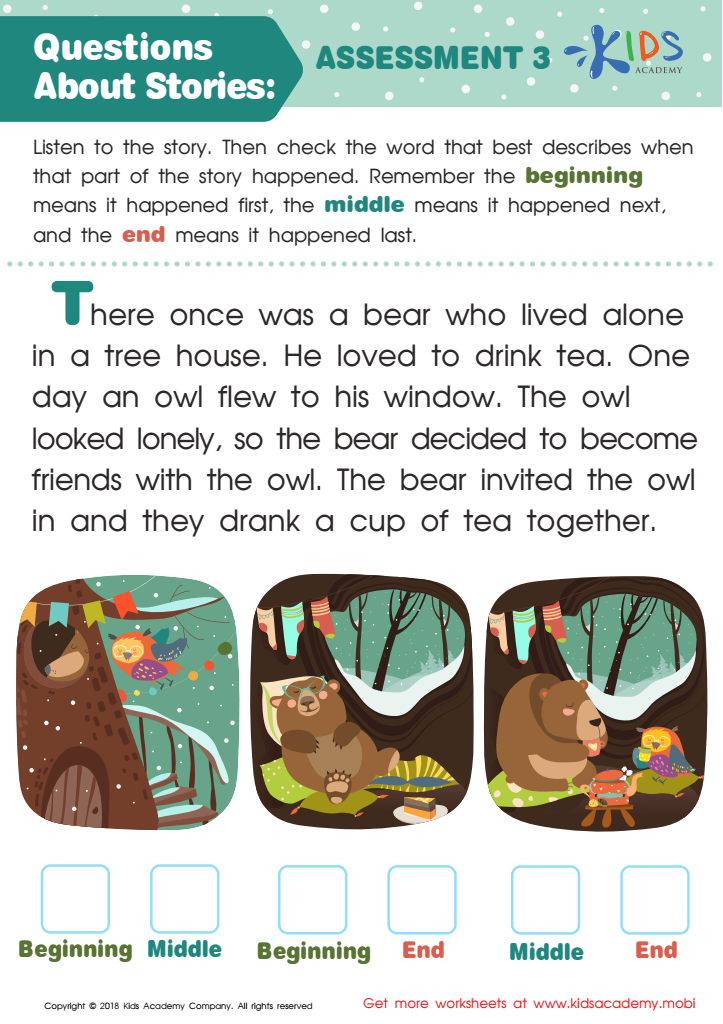
Questions About Stories: Assessment 3 Worksheet








Understanding the importance of answering questions in reading fiction is crucial for both parents and teachers, as it significantly enhances a child's comprehension and critical thinking skills. When children engage with fictional texts, they are not just entertained; they are also exposed to themes, emotions, and social dynamics that foster empathy and cultural awareness. By encouraging children to ask and answer questions about the text, adults can help them delve deeper into the narrative, enhancing their analytical skills.
This practice promotes active reading, allowing children to make predictions, connections, and inferences. When questions arise, it encourages discussion and deeper exploration, stimulating curiosity about language and storytelling. Parents and teachers play a pivotal role in creating an environment where children feel confident to express their thoughts.
Furthermore, discussing questions related to fiction can improve vocabulary, language skills, and overall literacy. It fosters a love for reading and promotes lifelong learning habits. Ultimately, by prioritizing the act of questioning in reading, adults contribute significantly to children's cognitive development, emotional intelligence, and academic success, making them more adept readers and thoughtful individuals in society.








