Rhyme recognition Reading Fiction Worksheets
3 filtered results
-
From - To
Rhyme Recognition Reading Fiction Worksheets from Kids Academy are designed to boost early literacy skills. These engaging, easy-to-understand worksheets help children identify and understand rhyming patterns within fiction stories. Through fun activities, young learners enhance their phonemic awareness, essential for effective reading development. Perfect for pre-kindergarten through first grade, these worksheets make learning rhymes enjoyable with colorful illustrations and interesting exercises. By recognizing rhymes, children improve their reading fluency, vocabulary, and comprehension. Access our expertly crafted teaching tools to support your child’s reading journey and foster a love for fiction. Visit Kids Academy for quality resources that make learning to read a truly pleasurable experience.
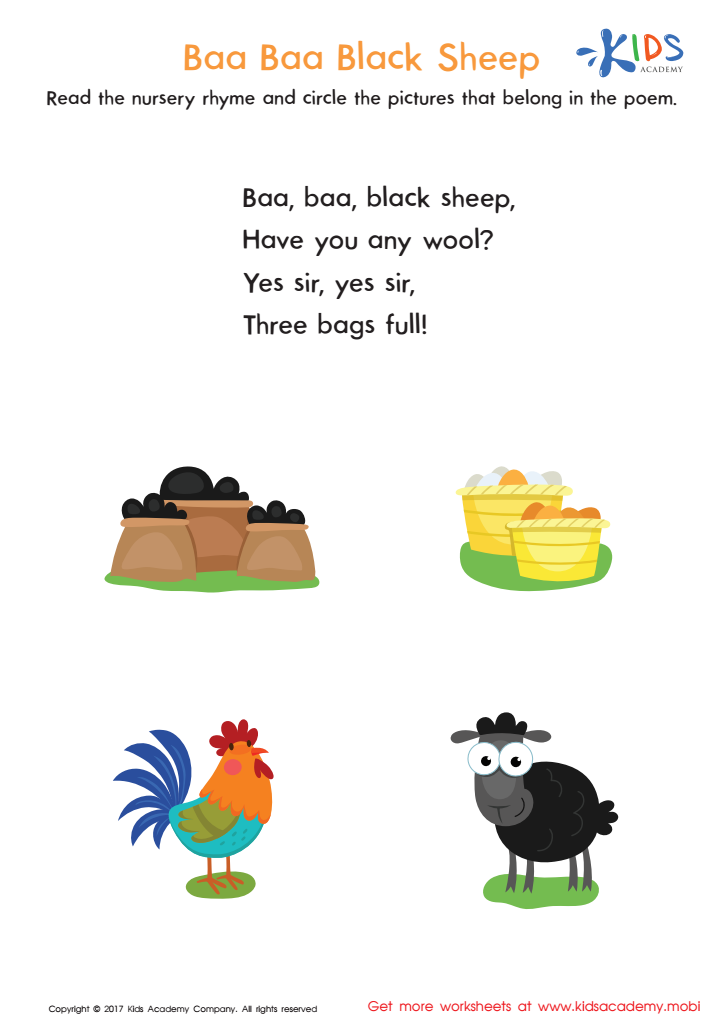
Baa Baa Black Sheep Printable
 Assign to My Students
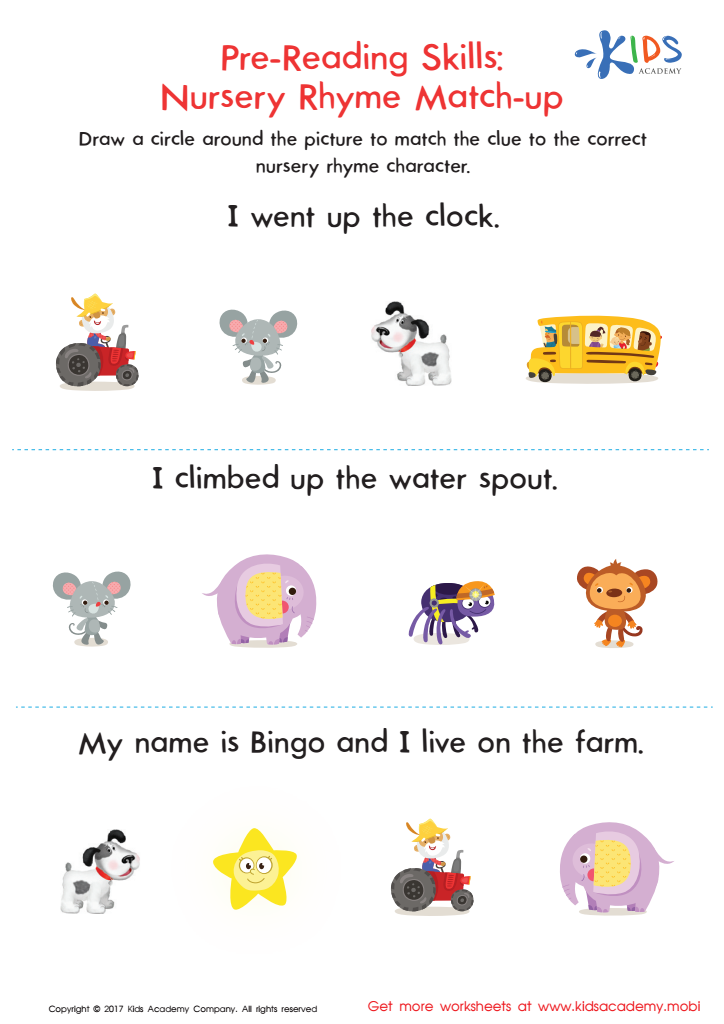
Nursery Rhyme Match–Up Worksheet
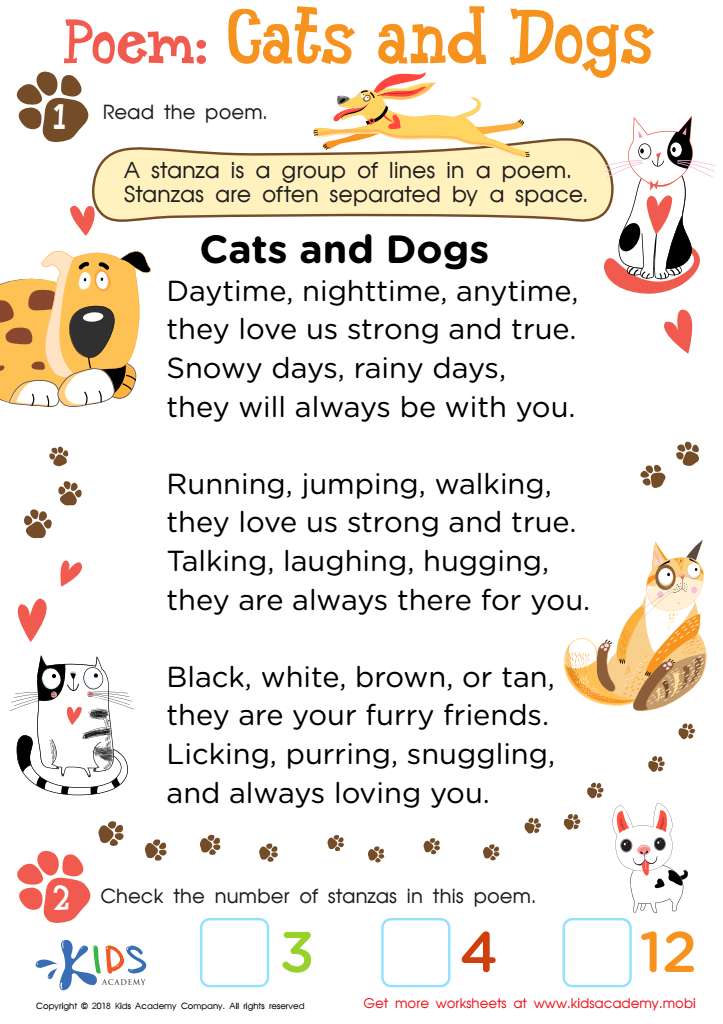
Poem: Cats and Dogs Worksheet







.jpg)
Rhyme recognition and reading fiction play critical roles in early childhood development and should be fundamental components in any child's early education. Rhyme recognition helps young learners develop phonological awareness—a skill essential for successful reading. By recognizing and predicting rhyming patterns, children become more adept at decoding unfamiliar words, enhancing their overall reading fluency. Additionally, encountering rhymes regularly can make learning to read a more enjoyable and engaging experience.
On the other hand, reading fiction exposes children to a rich vocabulary, diverse characters, and various sentence structures. It stimulates children's imaginations, broadens their understanding of the world, and fosters empathy by allowing them to experience different perspectives. Fiction also aids in cognitive development by enhancing childrens' comprehension and critical thinking abilities. When stories include rhyme, these benefits are amplified, making it easier for children to remember content and stay engaged.
For both parents and teachers, encouraging rhyme recognition and reading fiction is a pathway to set children on a successful academic trajectory. It builds a strong foundation for literacy skills, fosters a love of books, and promotes emotional and intellectual growth. Therefore, prioritizing these activities can position children for both immediate learning success and long-term educational achievement.








