Understanding perspectives Reading Fiction Worksheets
3 filtered results
-
From - To
Enhance your student's comprehension skills with our "Understanding Perspectives" Reading Fiction Worksheets! Designed for early grade learners, these engaging resources encourage students to explore multiple viewpoints within literary texts. Each worksheet helps children identify character emotions, motivations, and viewpoints, fostering empathy and critical thinking. By valuing diverse perspectives, students develop a deeper understanding of story dynamics and the intent behind characters’ actions. Ideal for classroom use or at-home practice, our worksheets feature vibrant illustrations and interactive activities that make learning fun. Empower your young readers today and introduce them to the richness of storytelling through this essential skill in literature!
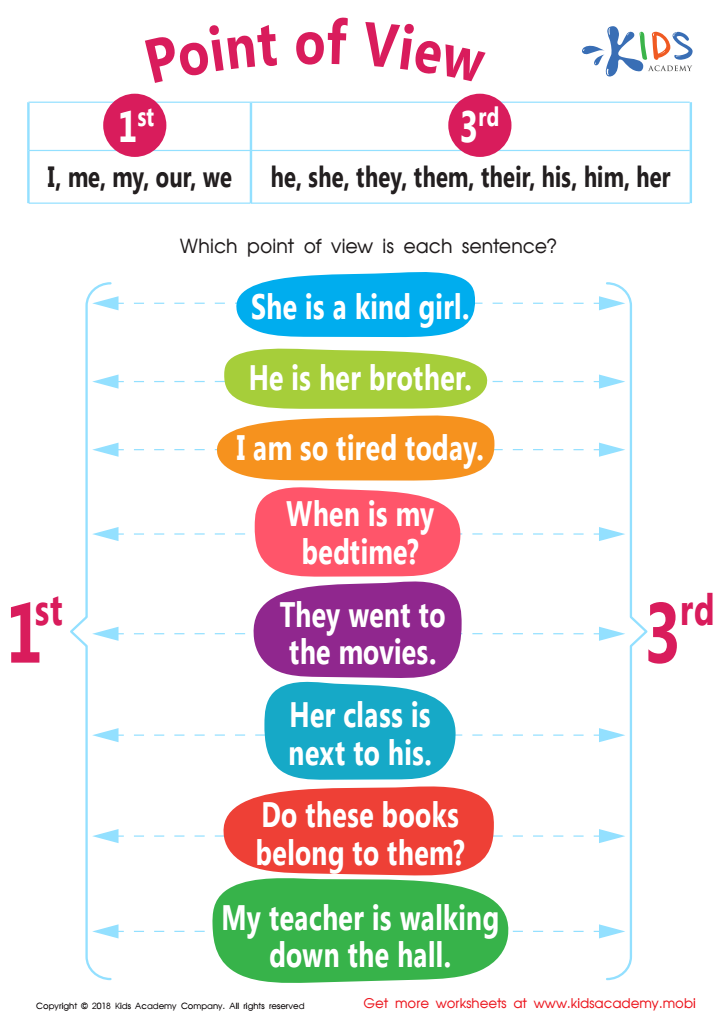
Point of View Worksheet
 Assign to My Students
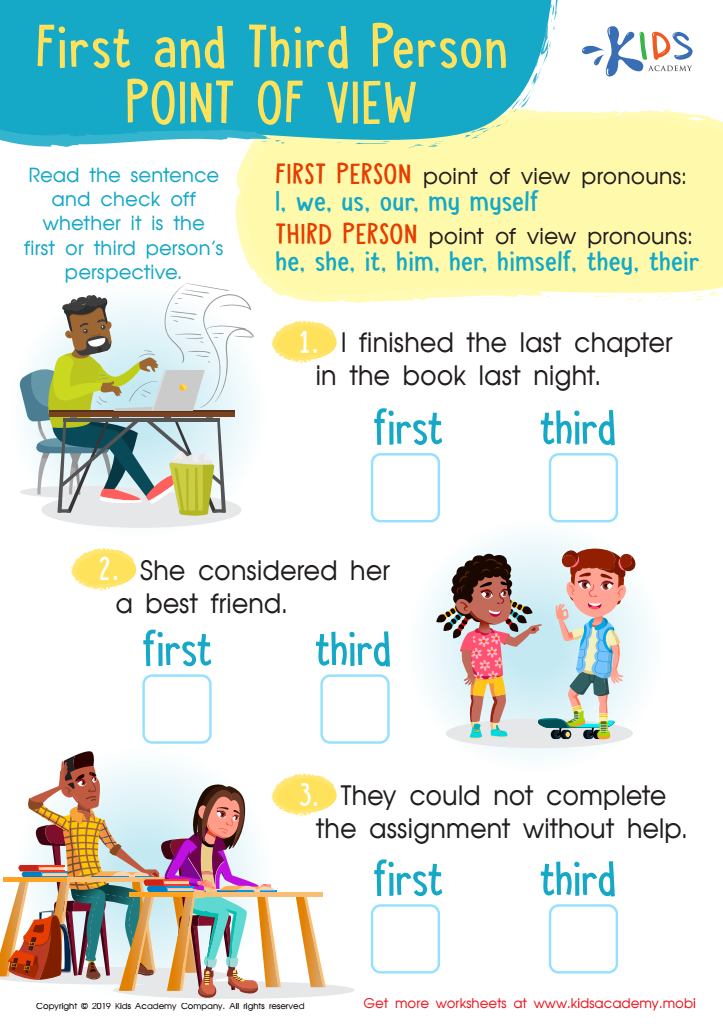
First and Third Person Point of View Worksheet
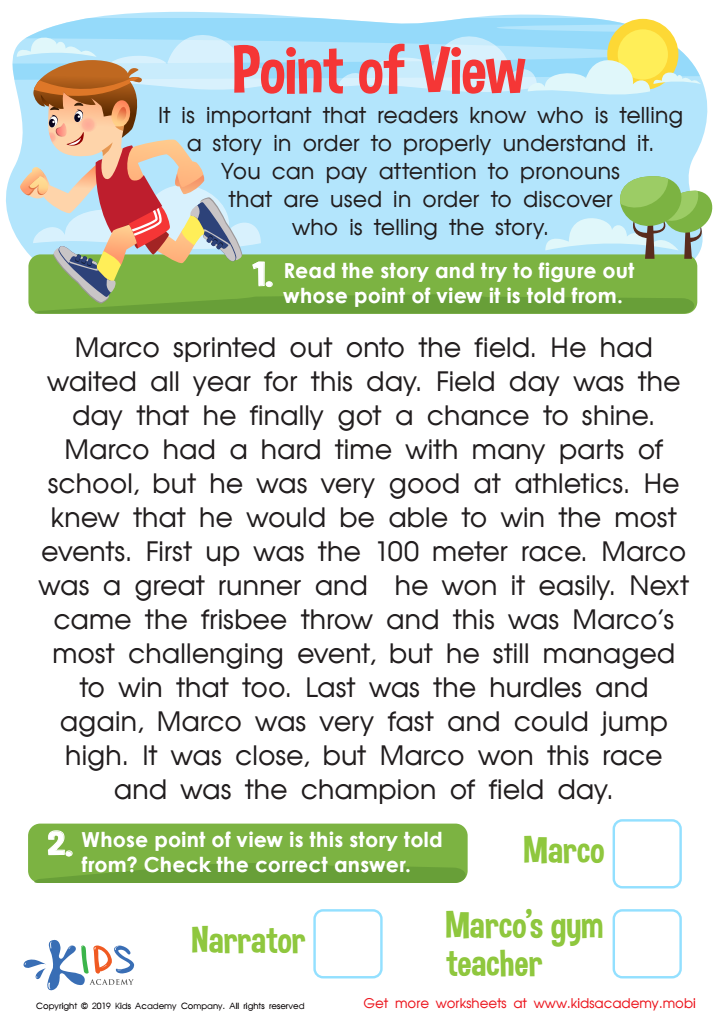
Point of View Worksheet








Understanding perspectives in reading fiction is crucial for both parents and teachers, as it fosters empathy, critical thinking, and emotional intelligence in children. Fiction often presents diverse characters and situations that require readers to step into the shoes of others, enhancing their ability to understand different viewpoints. This skill is essential in today's multicultural world, where social dynamics are complex.
When children grasp various perspectives in literature, they develop the ability to navigate real-life interactions more skillfully. Such skills lead to improved relationships, conflict resolution, and open-mindedness. Furthermore, discussions about character motivations and feelings prompt deeper conversations, nurturing communication skills.
For educators, promoting perspective-taking through fiction aligns well with educational goals, helping students gain insights into human behavior and society. For parents, supporting this understanding can lead to more meaningful discussions at home and can also enhance children's emotional well-being.
Encouraging children to engage with a variety of stories not only enriches their reading experience but also equips them with the necessary tools to thrive socially and emotionally. Therefore, prioritizing perspective comprehension in fiction is a valuable endeavor for both parents and teachers.








