Fine Motor Skills Sight Words Worksheets
11 filtered results
Difficulty Level
Grade
Age
-
From - To
Subject
Activity
Standards
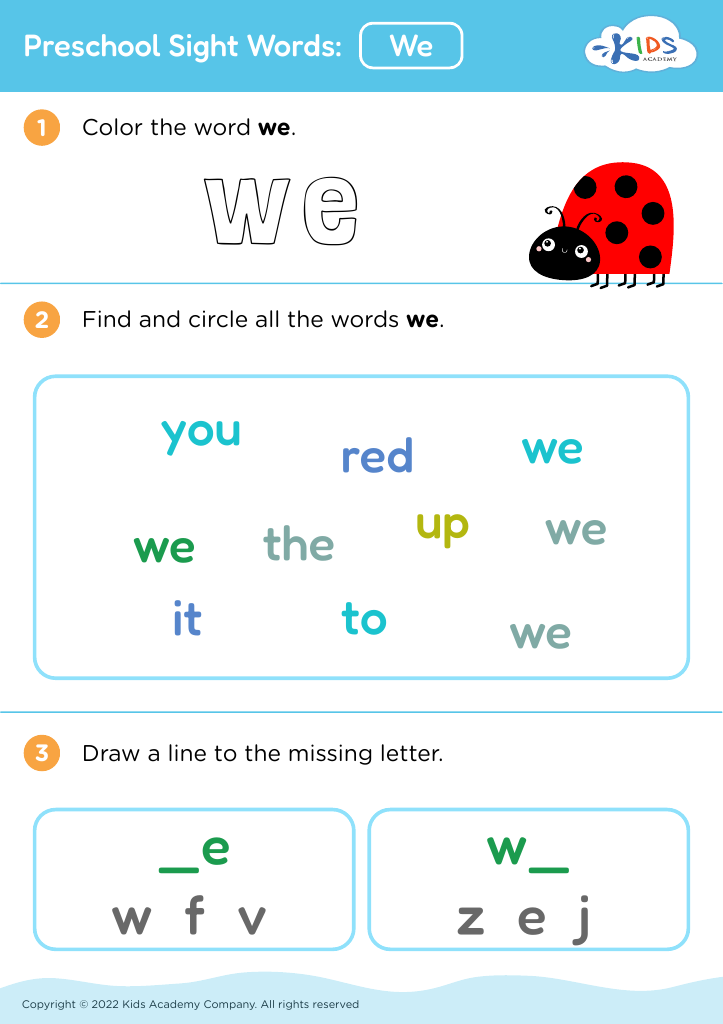
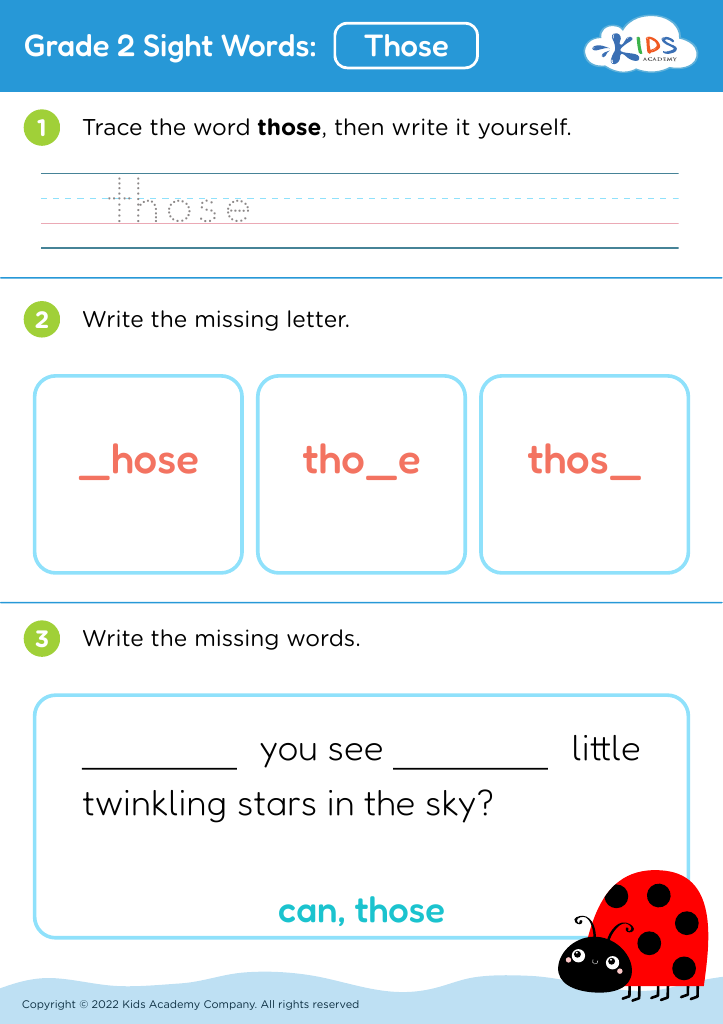
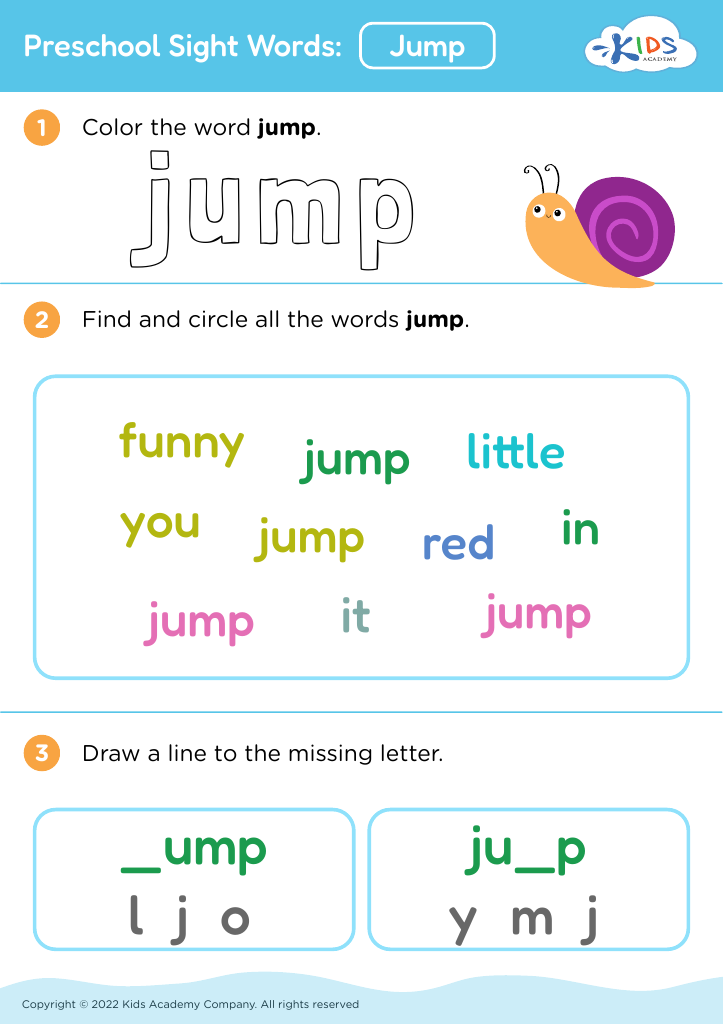
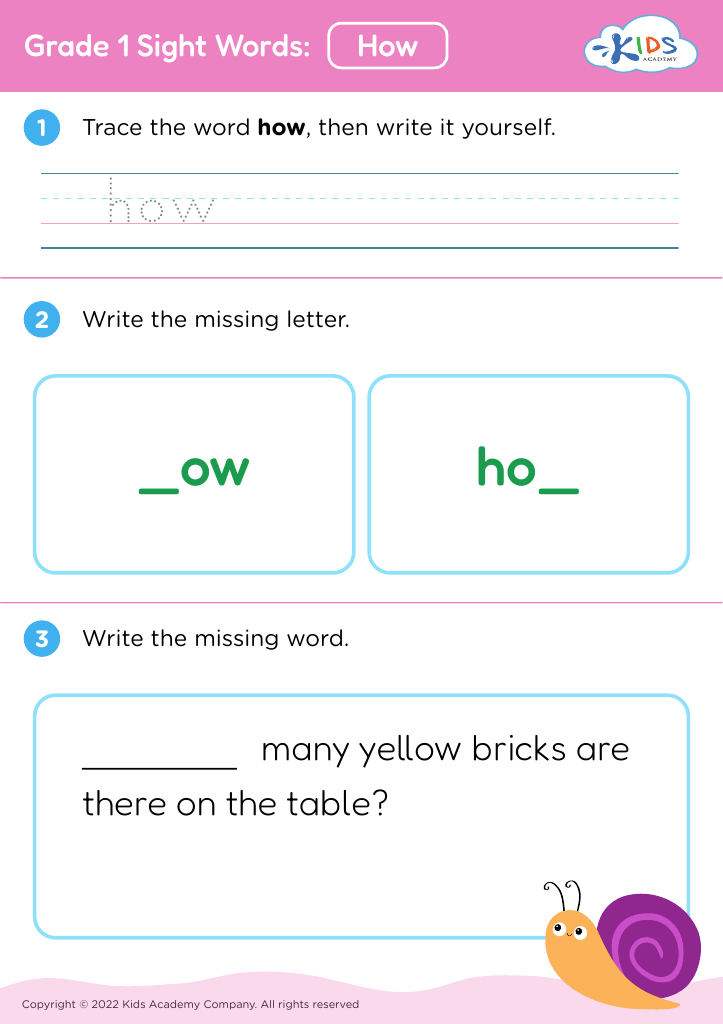
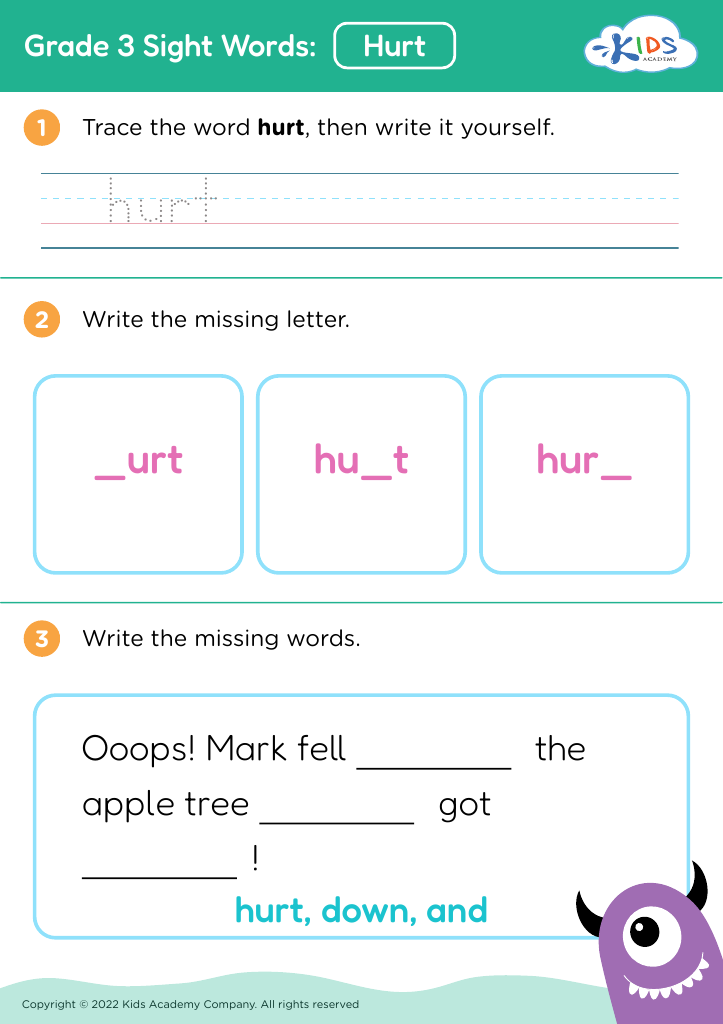
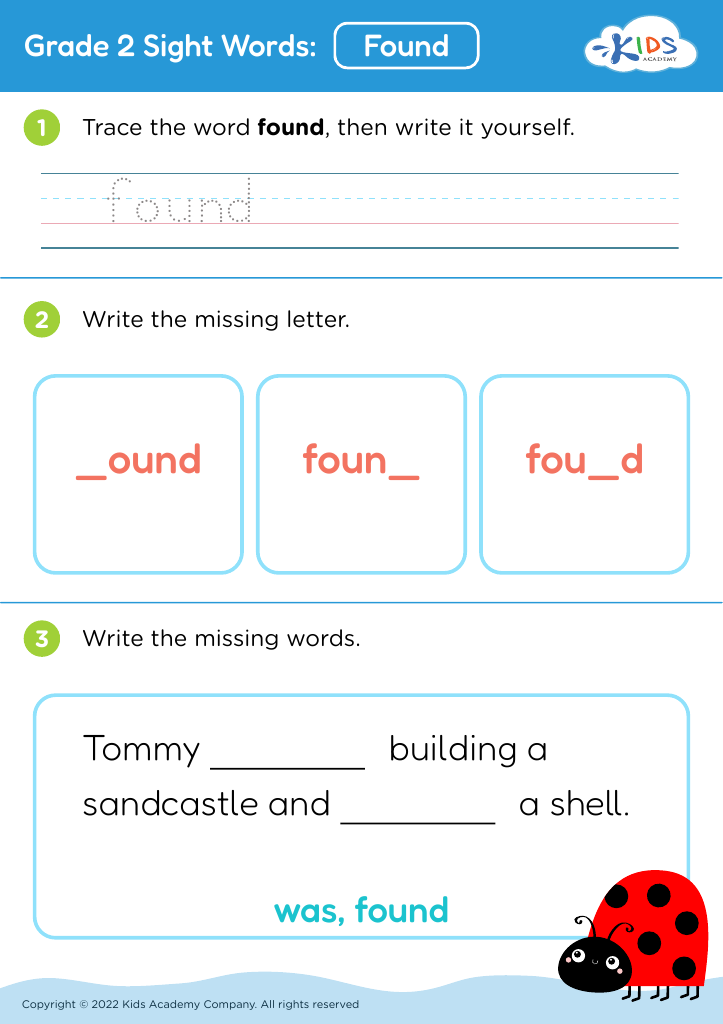
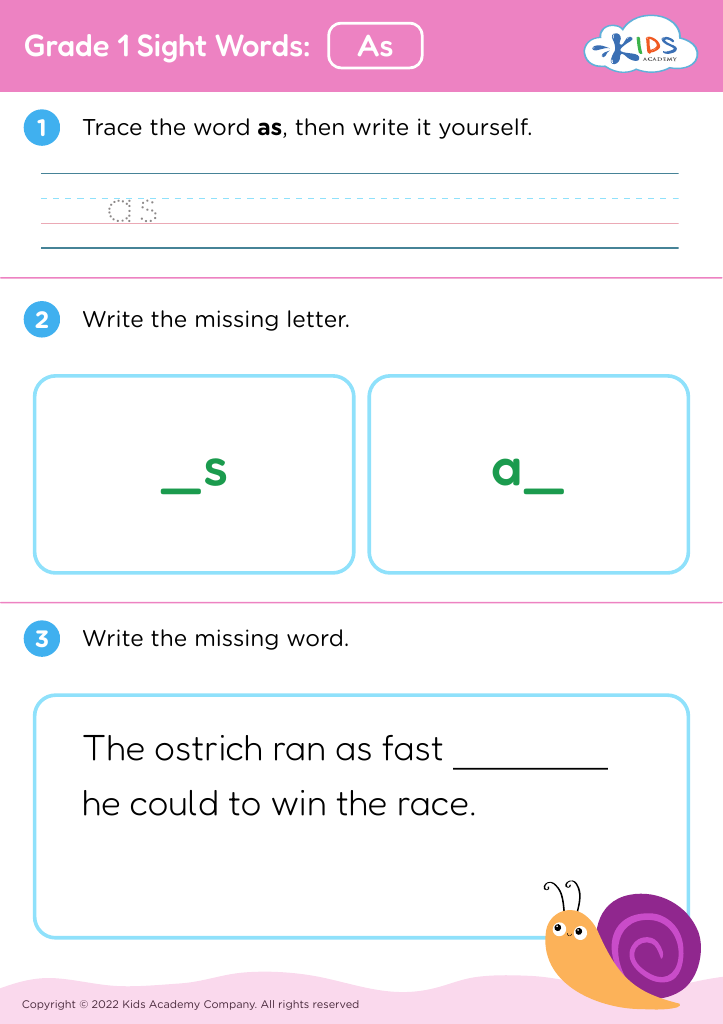
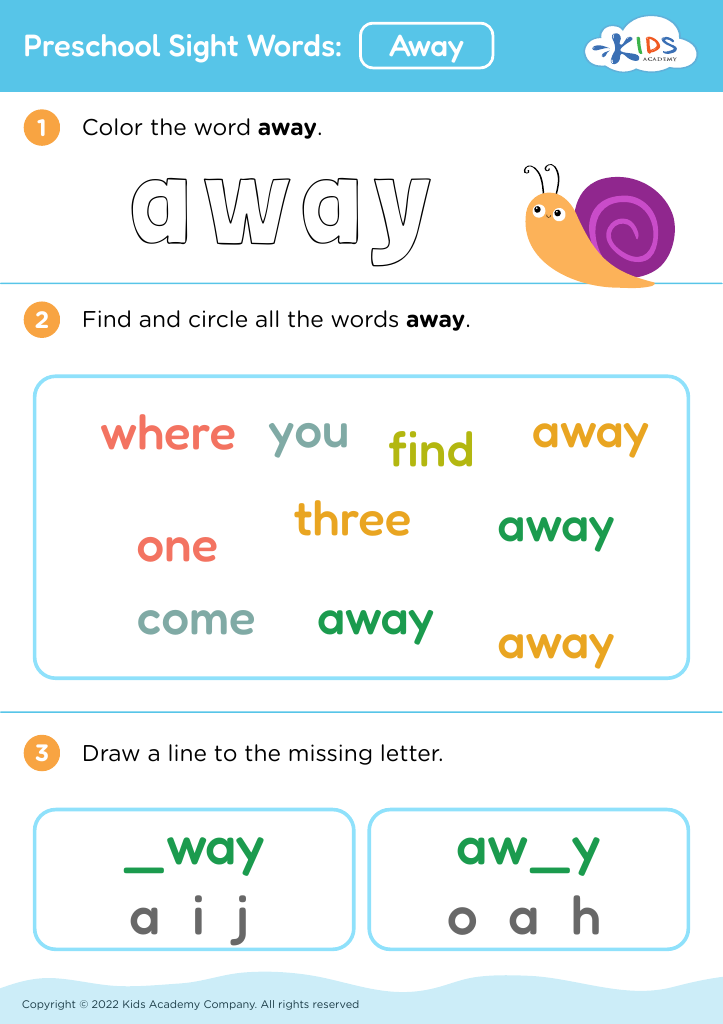
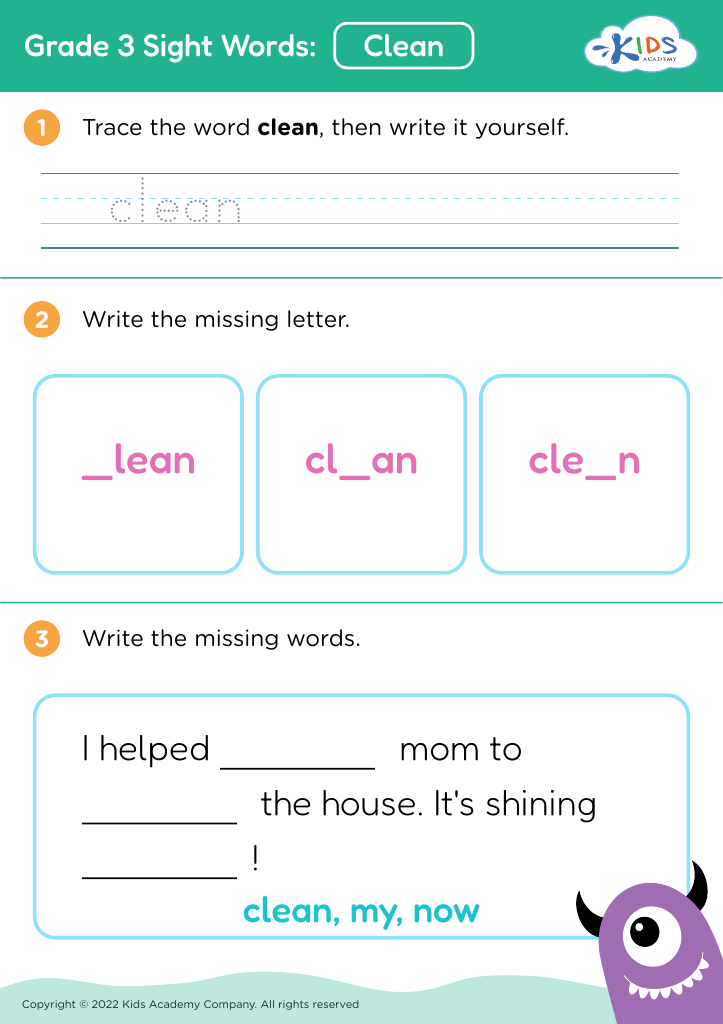
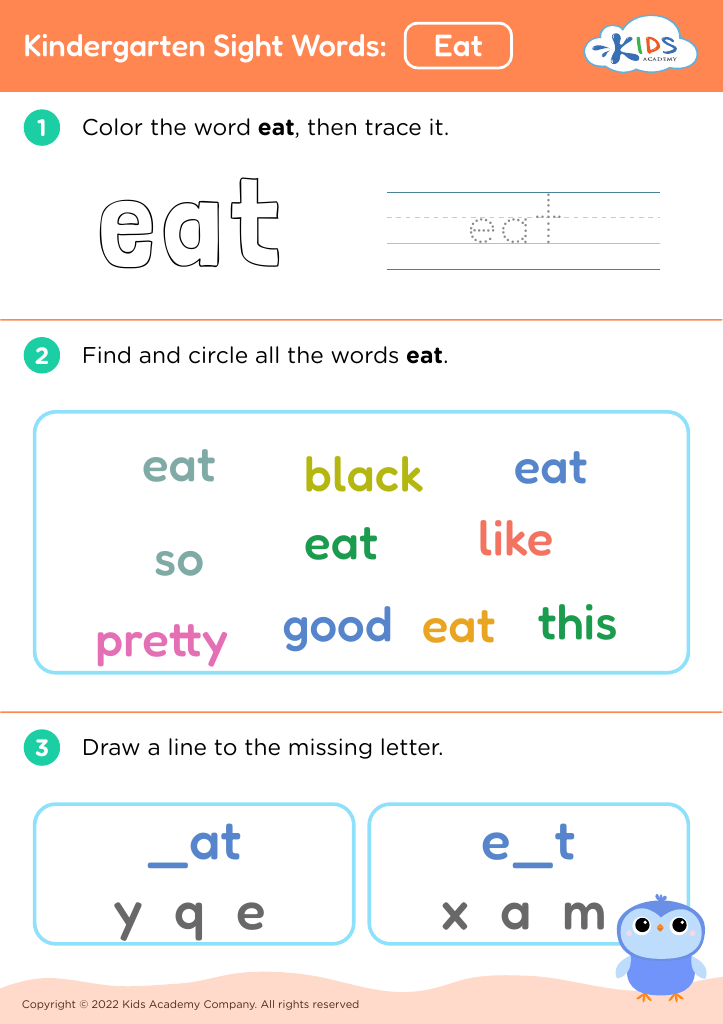
Unlock your child's potential with our Fine Motor Skills Sight Words Worksheets! Designed to enhance early literacy while developing essential fine motor skills, these worksheets provide engaging activities that make learning fun. Each printable is tailored for young learners, helping them recognize sight words through tracing, writing, and interactive exercises. Our resources encourage better hand-eye coordination, pencil grip, and concentration, ensuring a holistic approach to learning. Whether in the classroom or at home, these worksheets are perfect for reinforcing foundational reading skills. Empower your child with the tools they need for academic success and a love for learning!
Favorites
With answer key
Interactive
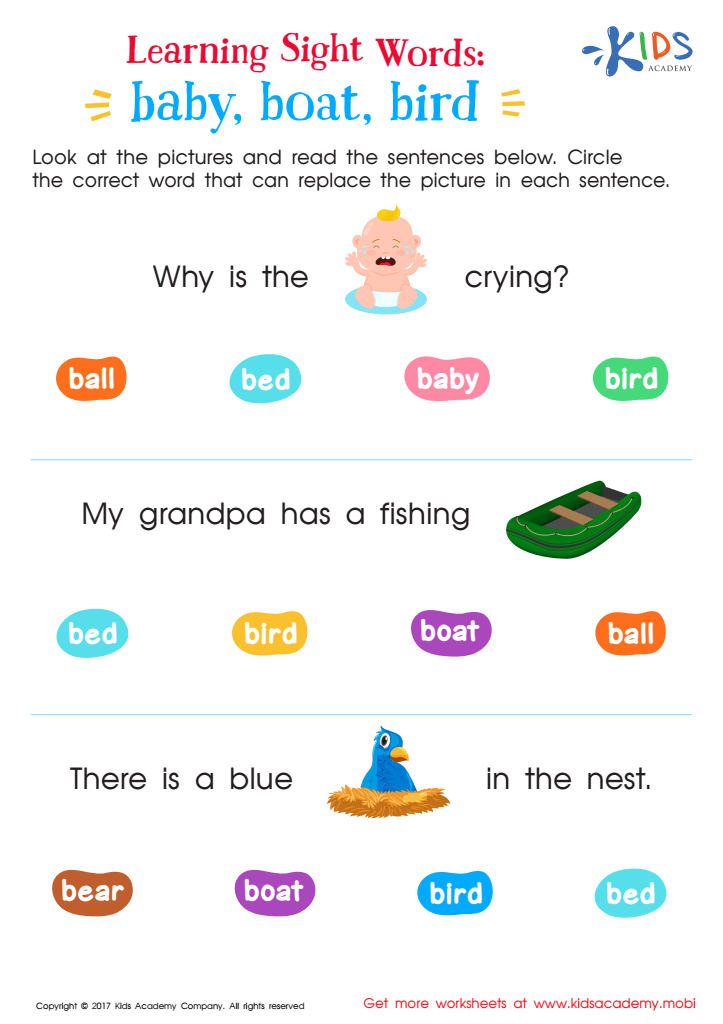
Baby, Boat, Bird Worksheet Sight Words Worksheet
Sight words are an essential part of fluency; help kids build it by writing and reading them. This worksheet is a great way to start.
 Assign to My Students
Baby, Boat, Bird Worksheet Sight Words Worksheet
Worksheet





Join Kids Academy for Free
Who is primarily going to use this learning content?








Fine motor skills and sight words play a crucial role in a child's early development, making them important considerations for both parents and teachers. Fine motor skills involve the coordination of small muscles in hands and fingers, which is essential for a variety of activities, such as writing, drawing, and buttoning clothes. Developing these skills in early childhood leads to greater independence and confidence in daily tasks. They set a foundation for future academic success, especially in literacy and numeracy activities.
Sight words, on the other hand, are frequently used words that children should recognize by sight without needing to decode them. Familiarity with sight words improves reading fluency, comprehension, and confidence. When children can quickly recognize these words, they can focus more on understanding the content, rather than getting bogged down in decoding unfamiliar words.
When parents and teachers prioritize fine motor skill development alongside the recognition of sight words, they create a balanced approach to early learning. Engaging activities like tracing letters, playing with building blocks, or practicing letter formation can enhance both skill sets simultaneously. In turn, this equips children with the necessary tools to thrive in school and fosters a love for learning early on. Hence, promoting both areas is vital to holistic childhood development.