Vocabulary development Animals Worksheets
4 filtered results
-
From - To
Boost your child's vocabulary skills with our engaging "Vocabulary Development Animals Worksheets." Perfect for early learners, these printable activities are designed to introduce and reinforce animal-related terminology in a fun and interactive way. Each worksheet combines vibrant illustrations with engaging exercises to help children identify, spell, and understand various animal names and traits. Tailored to support preschool through elementary-aged children, our worksheets provide an enriching learning experience that enhances reading and comprehension while sparking a love for wildlife. Join us at Kids Academy to make vocabulary exploration an exciting adventure!
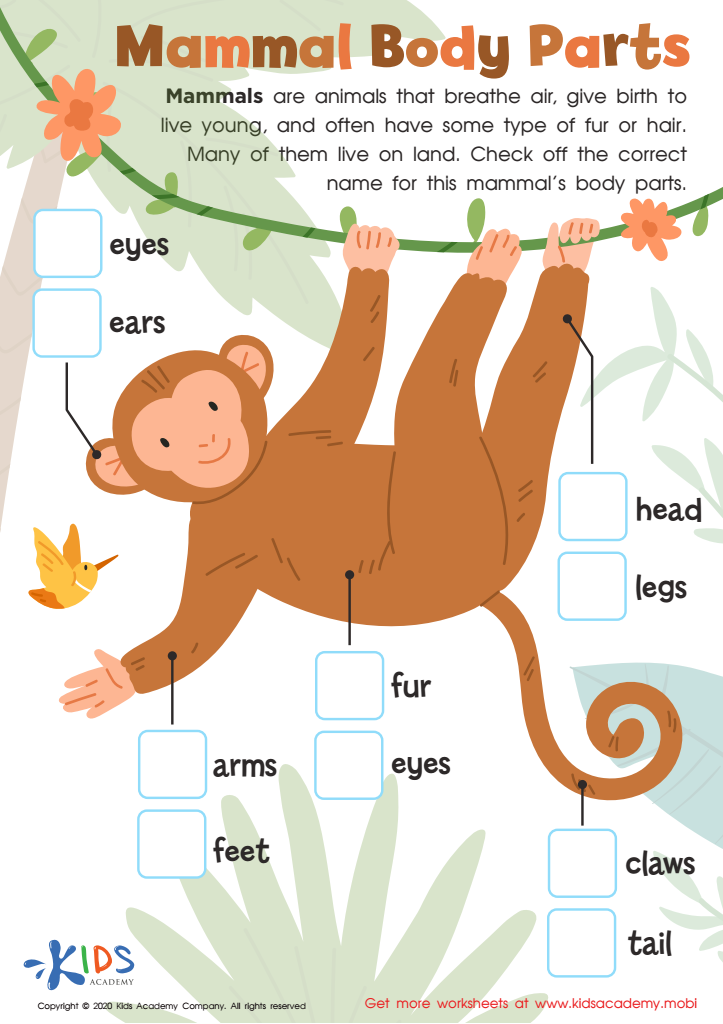
Mammal Body Parts Worksheet
 Assign to My Students
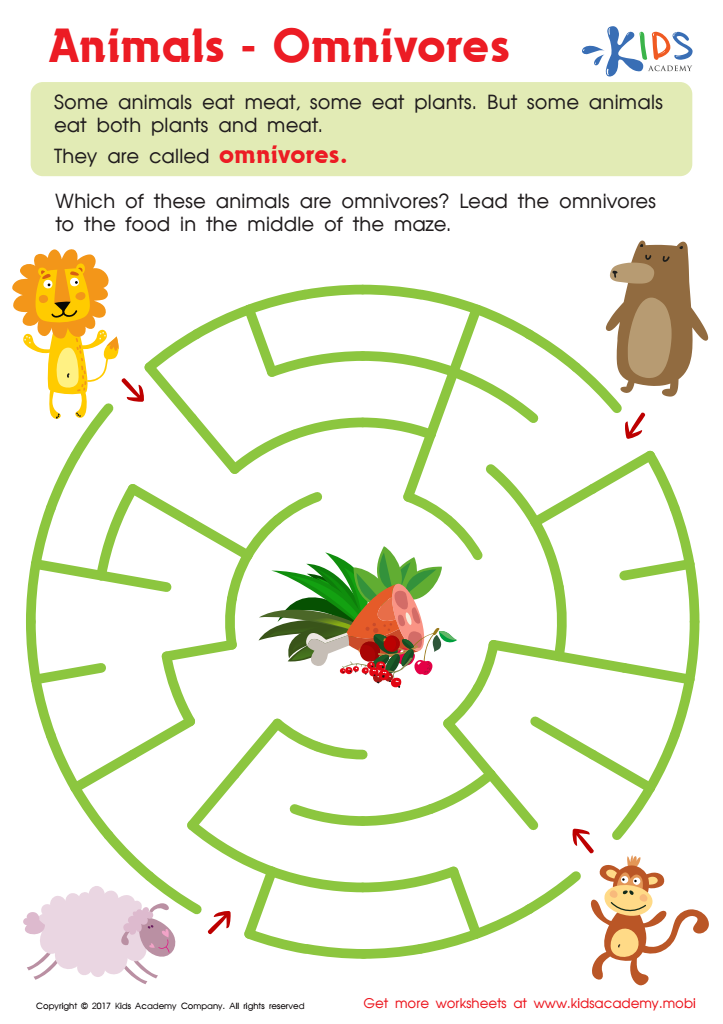
Omnivores Animals Worksheet
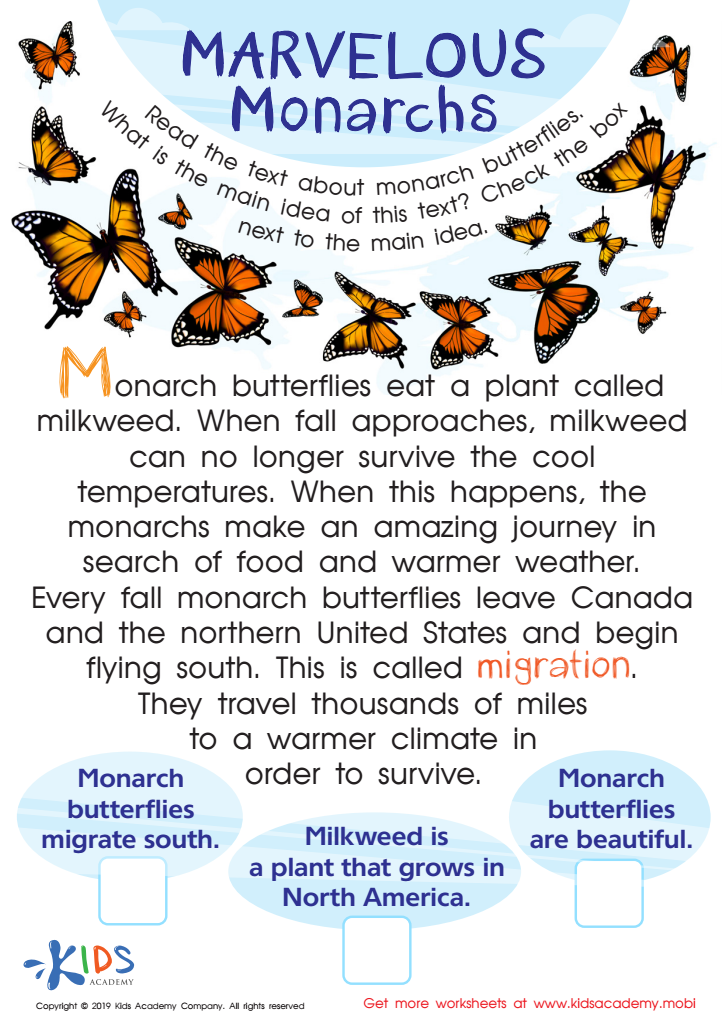
Marvelous Monarchs Worksheet
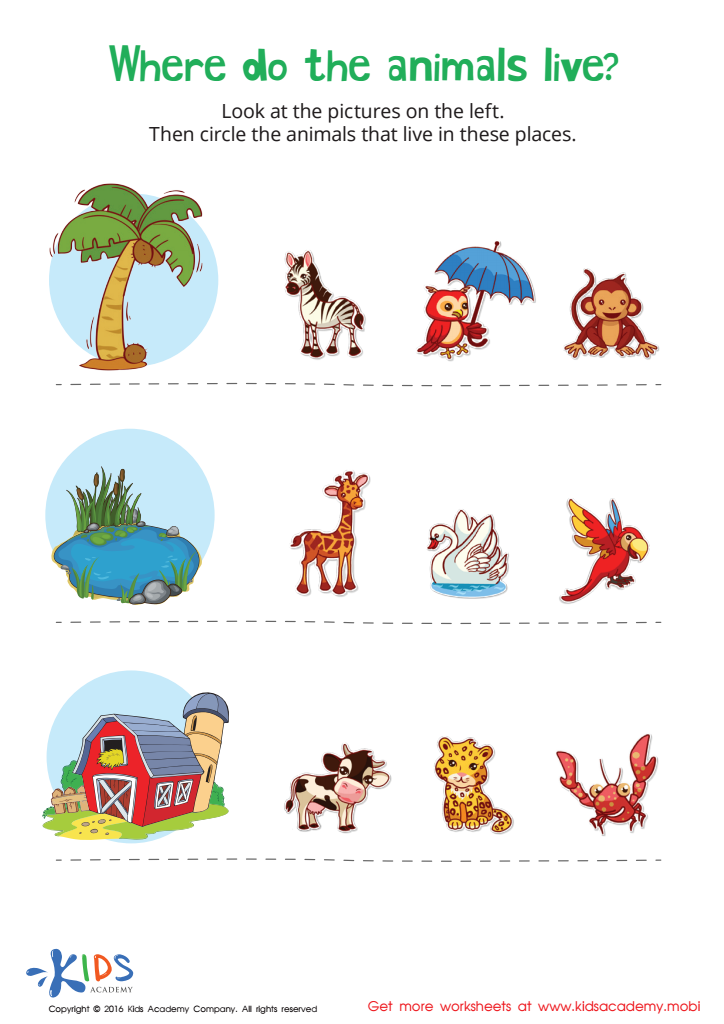
Where Animals Live Worksheet








Vocabulary development in the context of learning about animals is crucial for young children as it enhances their overall language acquisition and cognitive development. Introducing animal-related vocabulary encourages curiosity and engagement, making learning fun and relatable for children. Words like "mammal," "reptile," "habitat," and "nocturnal" broaden their understanding of the world and help them categorize and make sense of their environment.
Engaging with animal vocabulary also fosters critical thinking skills. Children begin to make connections between different animals, their characteristics, and their ecosystems. This kind of learning can stir conversations at home or in the classroom, allowing parents and teachers to encourage analytical thinking and problem-solving.
Moreover, discussing animals and their traits can boost descriptive language skills. Children enhance their ability to express themselves clearly and creatively by mimicking animal sounds, actions, or even storytelling. Reading books, watching documentaries, or visiting zoos can enrich their vocabulary and nurture empathy and care for living creatures.
Ultimately, robust vocabulary development through the lens of animals prepares children for more complex subjects in science and beyond, building a strong foundation for lifelong learning. For these reasons, both parents and teachers should actively engage in expanding children's vocabulary related to animals.








