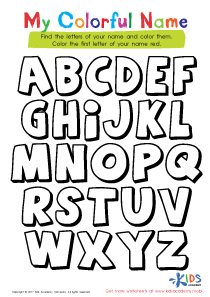
Vowel Recognition Grade 2 Alphabet Worksheets
6 filtered results
-
From - To
Explore our engaging Vowel Recognition Grade 2 Alphabet Worksheets to boost your child's literacy skills! Designed for young learners, these worksheets help students identify and differentiate vowels within words, enhancing their reading and writing abilities. Each worksheet features fun exercises, including vowel coloring, matching activities, and word puzzles that make learning enjoyable. Perfect for classroom use or home practice, our printable resources are aligned with second-grade curriculum standards. Help your child become a confident reader as they practice vowel sounds and recognition. Start fostering their love for learning today with these interactive worksheets that turn education into an exciting adventure!
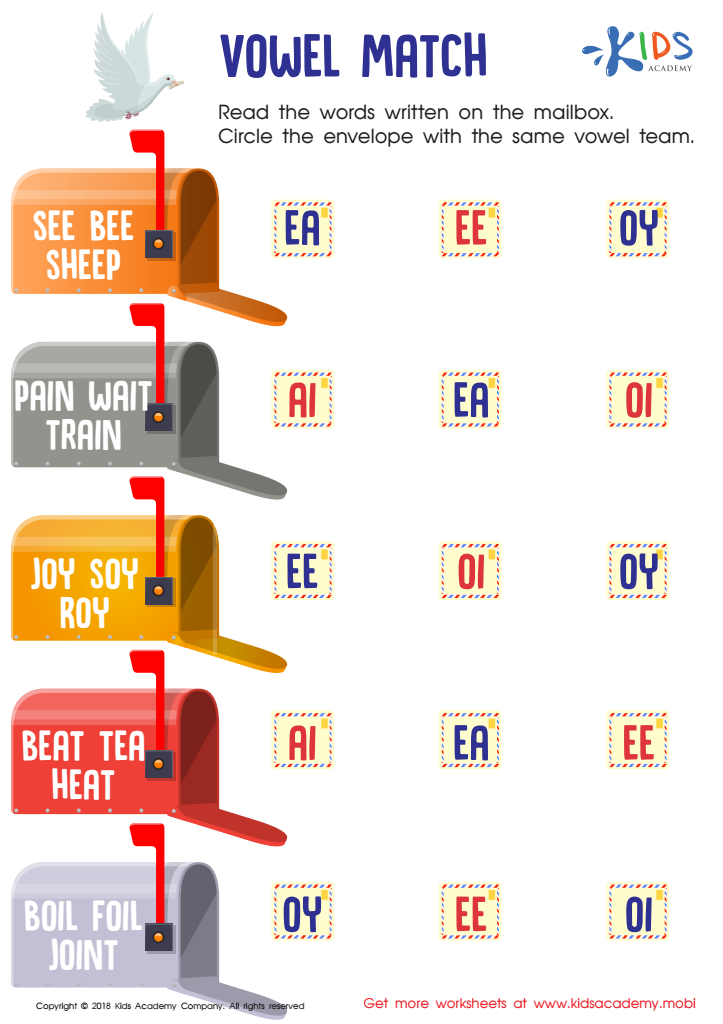
Vowel match Worksheet
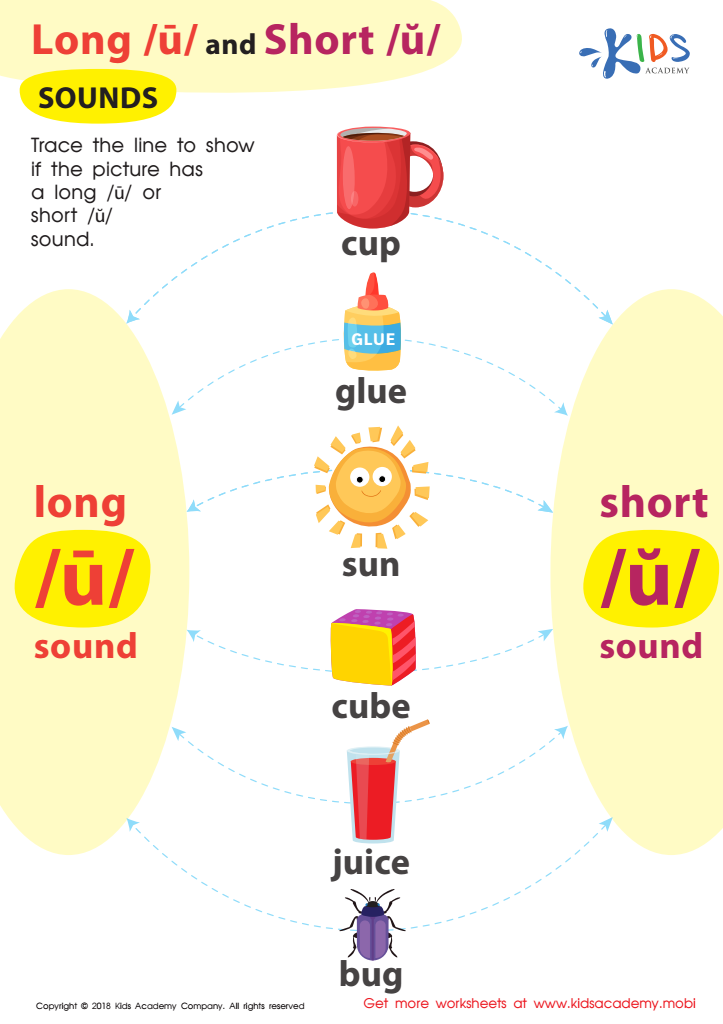
Reading: Long U and Short U Sounds Worksheet
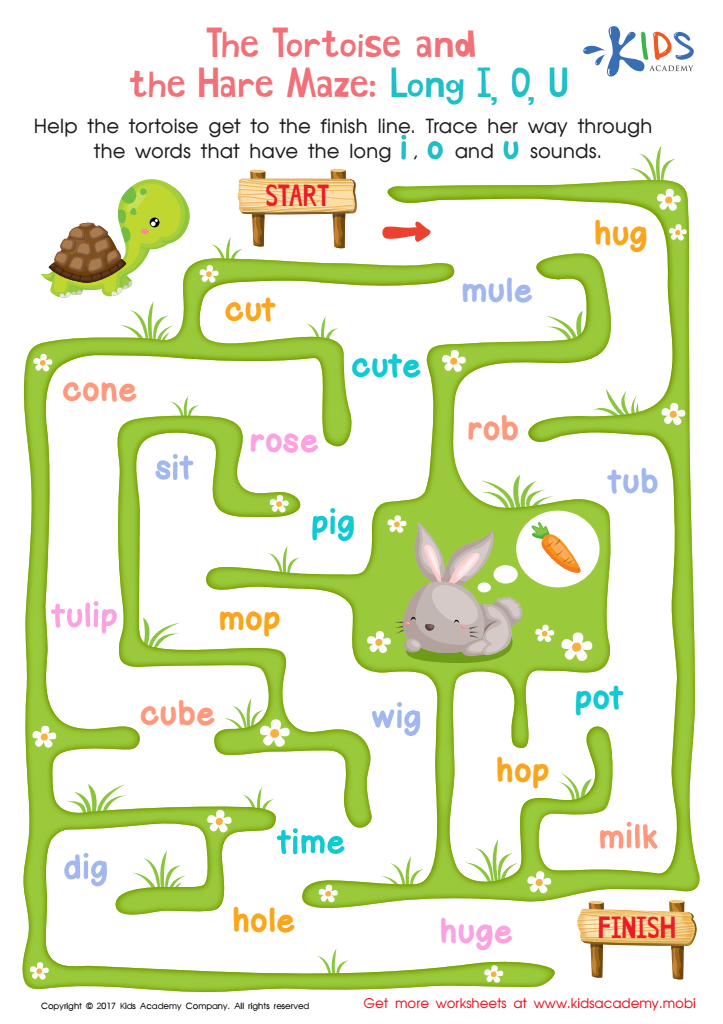
Long I, O, U Words Worksheet
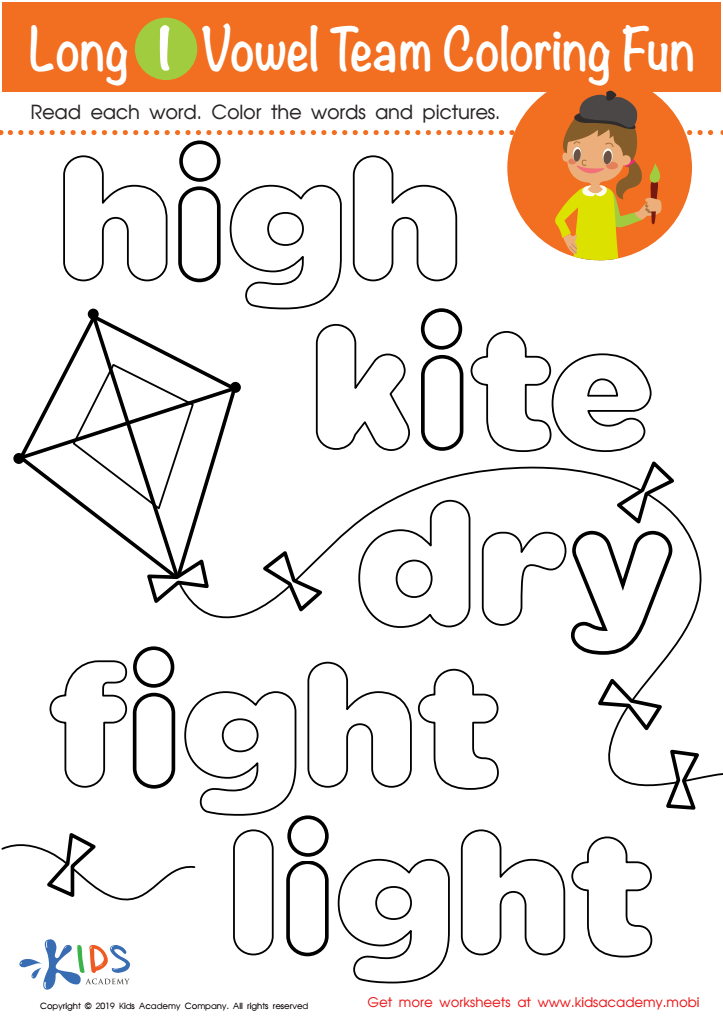
Long I Vowel Team Coloring Worksheet
 Assign to My Students
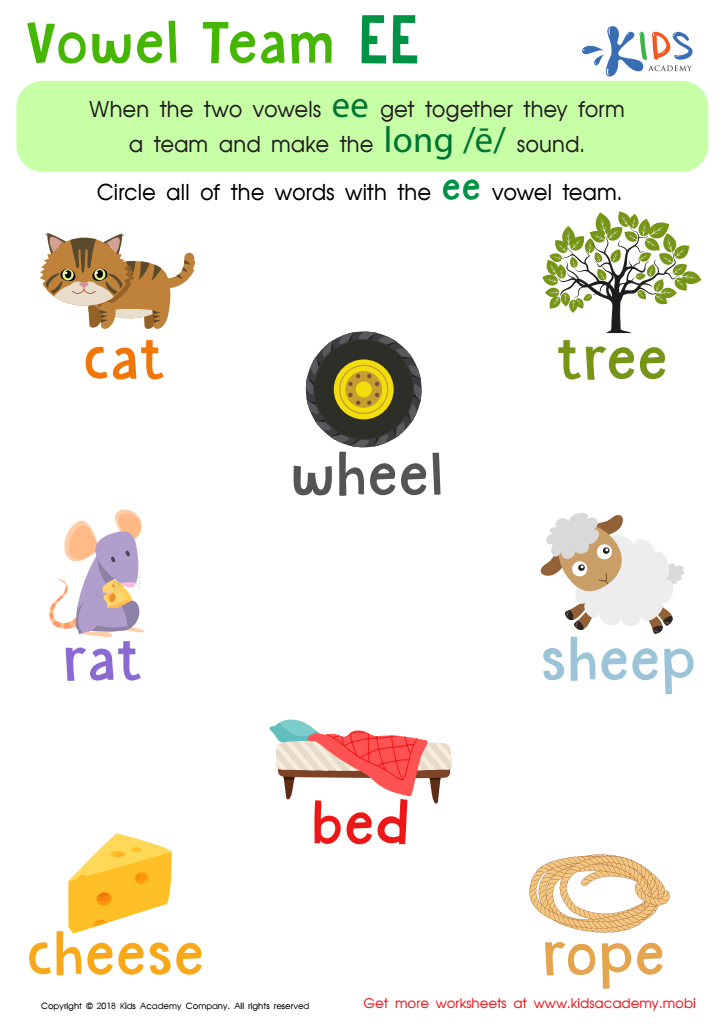
Reading: Vowel Team EE Worksheet
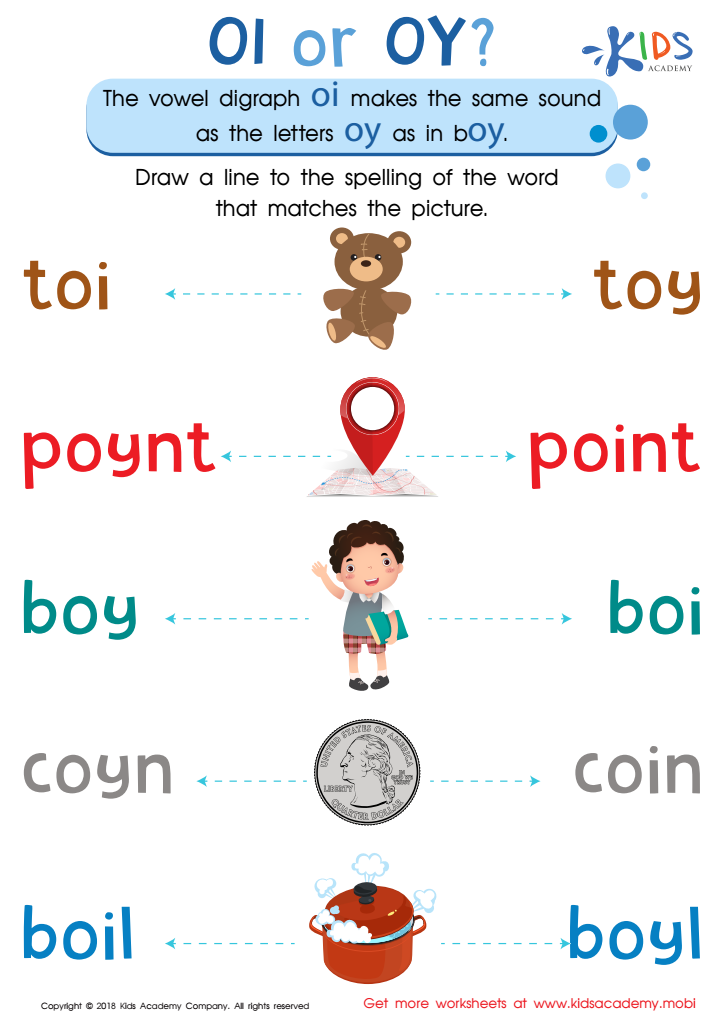
Reading: OI and OY Worksheet








Vowel recognition is a crucial component of early literacy development, particularly for second graders. Understanding vowels—A, E, I, O, U, and their sometimes Y—is fundamental to mastering reading and writing skills. Parents and teachers should care about vowel recognition because it lays the groundwork for stronger phonemic awareness, enabling students to decode words more effectively. This understanding helps children sound out new words, contributing to their overall reading fluency and comprehension.
Additionally, vowel recognition plays a significant role in spelling, as many words rely heavily on vowel patterns. When children grasp the concept of vowels, they are better equipped to tackle phonics and spelling rules, contributing to their narrative and expository writing skills later on.
Moreover, enhanced vowel recognition can boost a child’s confidence in language arts, fostering a love for reading that has lasting benefits. Engaging children in playful vowel games and activities can make learning fun and effective, forging a partnership between parents and teachers in supporting literacy. In a world increasingly reliant on communication skills, investing in vowel recognition at this stage will equip children with tools to succeed academically and socially throughout their educational journey and beyond.