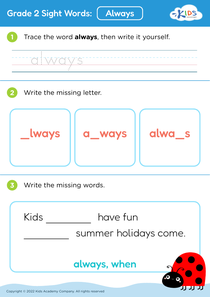
Building vocabulary Grade 2 Worksheets
3 filtered results
-
From - To
Enhance your child's word power with our Grade 2 Building Vocabulary Worksheets! Designed specifically for second graders, these engaging activities help young learners expand their vocabulary through fun and educational exercises. Each worksheet focuses on essential skills such as word recognition, context clues, synonyms, antonyms, and more. With colorful graphics and exciting themes, our resources motivate kids to explore new words and apply them in daily communication. Ideal for both classroom and at-home learning, these vocabulary-building worksheets will set your child on the path to improved language skills and academic success. Start building a robust vocabulary today!
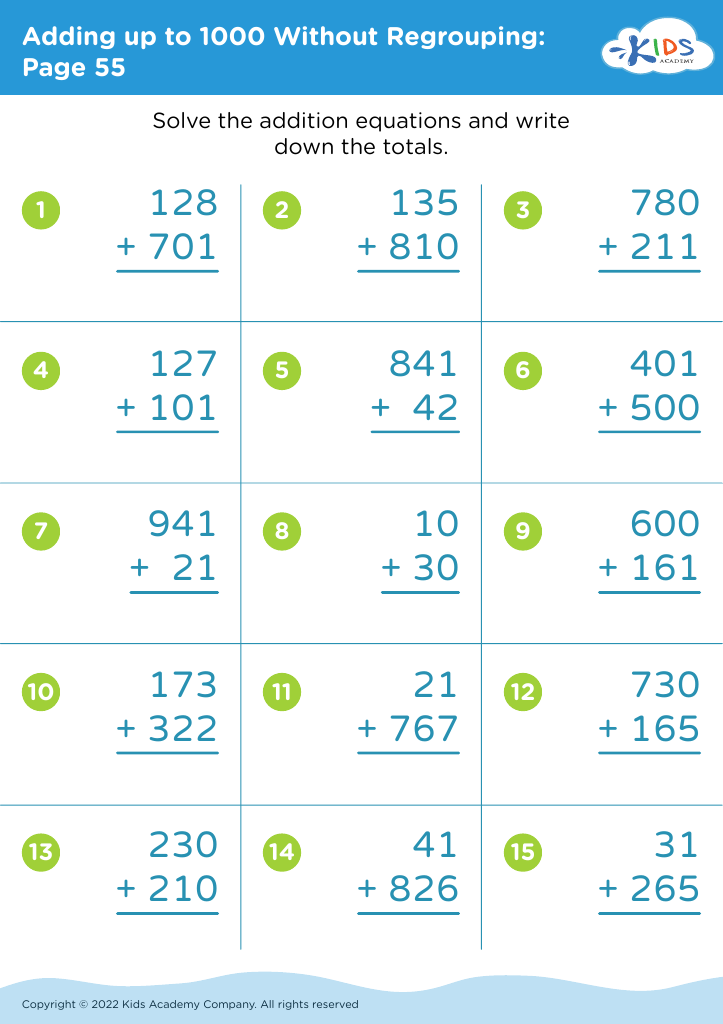
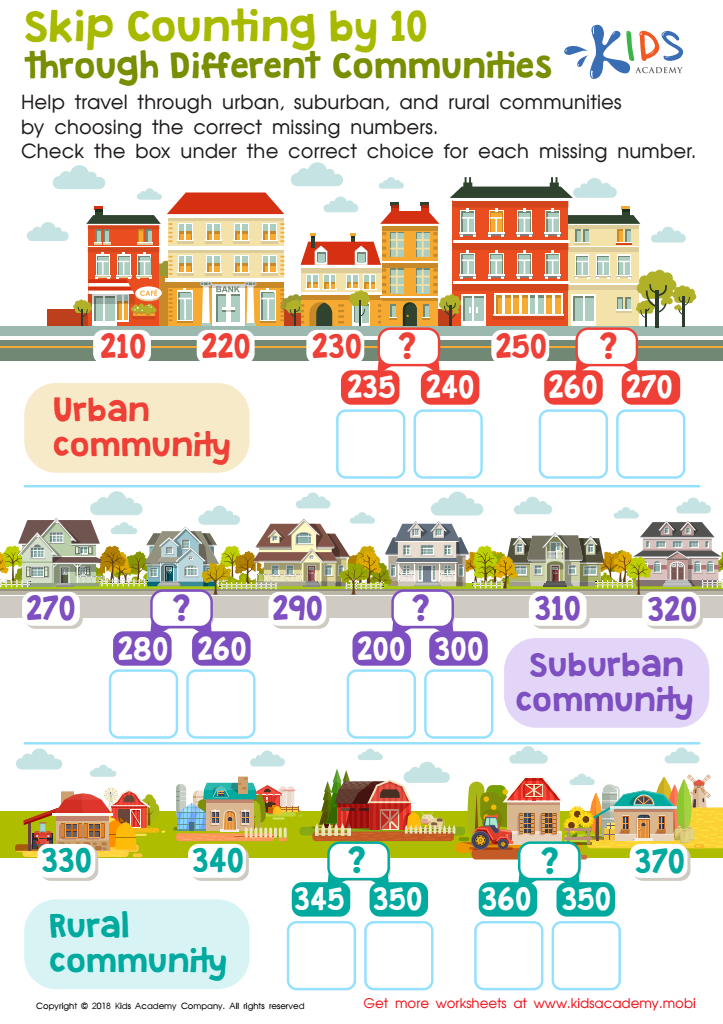
Skip Counting by 10 through Different Communities Worksheet
 Assign to My Students
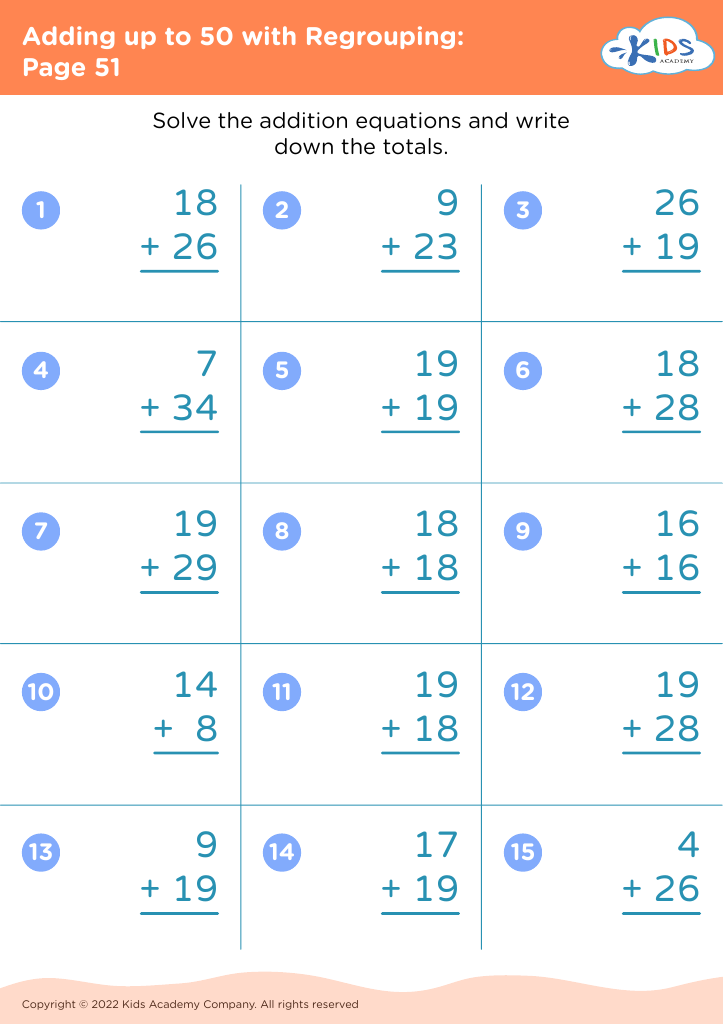





Building vocabulary in Grade 2 is essential for a child's overall academic success and future communication skills. At this stage, children's brains are highly receptive to new information, making it an ideal time to expand their word knowledge. A rich vocabulary improves reading comprehension, enabling young learners to understand and enjoy stories, follow instructions, and grasp complex concepts across different subjects. Enhanced comprehension fosters a love for reading, which in turn further builds vocabulary—a virtuous cycle beneficial for lifelong learning.
Furthermore, a robust vocabulary boosts self-confidence. When children can express themselves clearly and understand others well, they are more likely to participate in discussions and social interactions, making them feel more competent and engaged. This social confidence can extend to academic settings, enhancing participation and learning.
Academically, research has shown a direct correlation between vocabulary skills and critical thinking and problem-solving abilities. These cognitive skills are fundamental for higher-level learning and reasoning, laying a strong foundation for future educational success. In summary, investing time in expanding a Grade 2 student's vocabulary not only enriches language and literacy skills but also nurtures self-confidence and cognitive development, offering lasting benefits.