Counting money Grade 2 Worksheets
3 filtered results
Difficulty Level
Grade
Age
-
From - To
Subject
Activity
Standards
Our Counting Money Grade 2 Worksheets are designed to make learning fun and effective for second graders. These engaging worksheets take students on exciting adventures while helping them grasp essential money counting skills, such as recognizing coins, adding different coin combinations, and solving real-life money problems. Packed with colorful visuals and practical examples, each worksheet aims to build your child's confidence and proficiency in handling money. Ideal for classroom or home use, our resources help young learners develop strong foundational skills crucial for their academic journey ahead. Embrace the joy of learning with our expertly crafted counting money activities!
Favorites
With answer key
Interactive
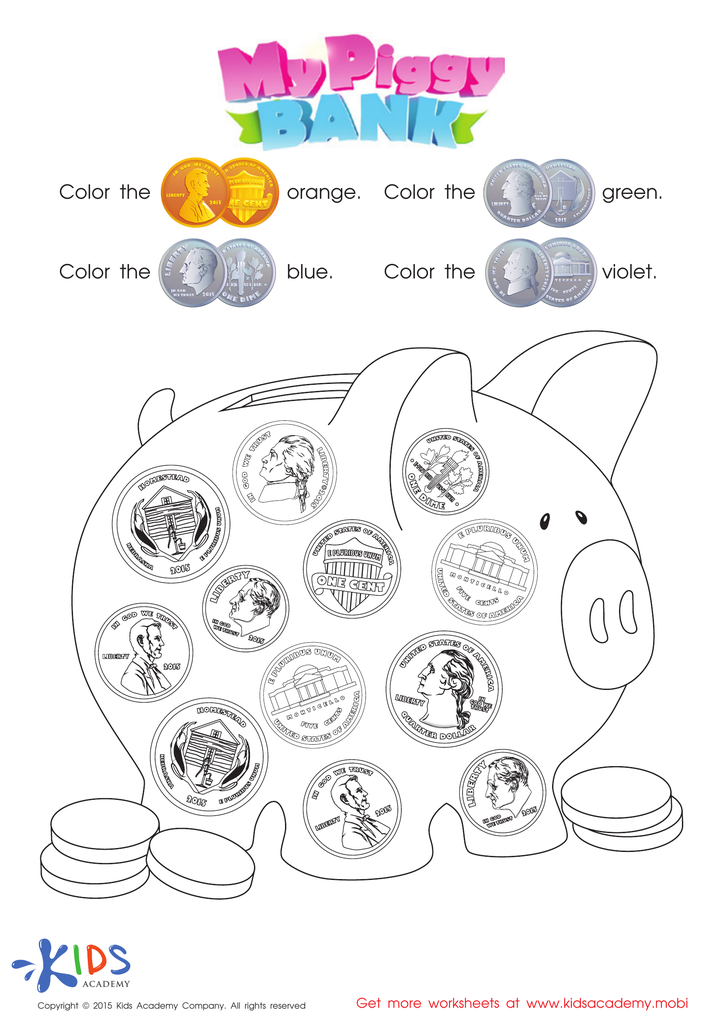
Recognizing Money Money Worksheet
Help the piggy bank by coloring its coins with Kids Academy's free money worksheets! Learn the different coins and their values with your kids. Printable worksheets are available to continue the lesson. Let's learn and have fun!
Recognizing Money Money Worksheet
Worksheet
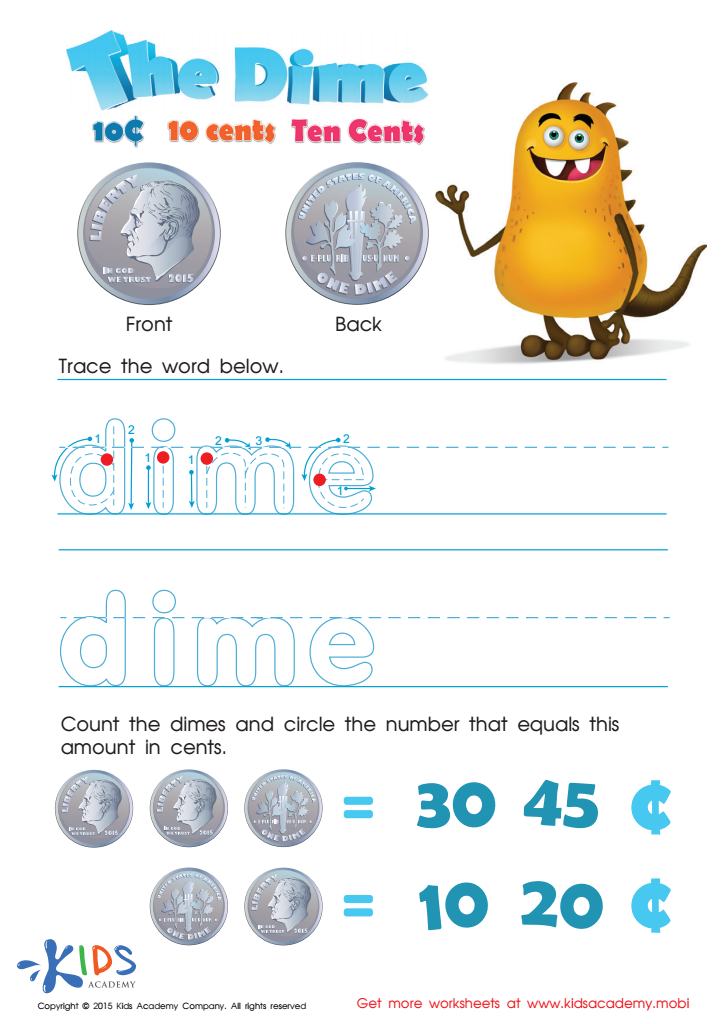
Ten Cents or the Dime Money Worksheet
Introduce your kids to coin games! Start with a dime: trace the word on both sides and count the dimes. Kids Academy has printable worksheets to help your kids learn how to count money.
 Assign to My Students
Ten Cents or the Dime Money Worksheet
Worksheet
Join Kids Academy for Free
Who is primarily going to use this learning content?





Counting money is a crucial skill for second graders because it lays the foundation for both practical life skills and future academic success. When parents and teachers emphasize the importance of counting money, they help children gain confidence and independence in managing everyday tasks. Understanding the value of different coins and bills also enhances their numerical skills, reinforcing concepts like addition, subtraction, and making change.
Moreover, learning to count money teaches children the concept of value and financial responsibility from a young age. It provides them with tangible ways to handle mathematics, illustrating how classroom lessons apply to real-world situations. For instance, counting money can enhance a child’s problem-solving abilities by requiring them to think critically about how to reach a certain amount using different denominations.
Encouraging proficiency in counting money fosters a sense of independence and responsibility in children. It gives them experience in practical decision-making, such as determining how to spend an allowance or save for a desired item. Including parents in this learning process enriches the experience by making it more relevant and engaging for children. Involving real-world scenarios can make learning about money fun and interactive, thereby solidifying these essential skills in a meaningful way.