Develop analytical thinking Grade 2 Worksheets
4 filtered results
Difficulty Level
Grade
Age
-
From - To
Subject
Activity
Standards
Boost your child's analytical skills with our Grade 2 Worksheets, thoughtfully designed to nurture critical thinking and problem-solving abilities. Crafted by educational experts, each worksheet offers engaging and age-appropriate activities that challenge young minds. These resources help students recognize patterns, make logical connections, and develop their reasoning skills in a fun, interactive way. Ideal for home or classroom use, our worksheets make learning enjoyable while laying a strong foundation for academic success. Visit Kids Academy to explore our extensive collection and give your second grader the tools they need to become confident and analytical thinkers.
Favorites
With answer key
Interactive
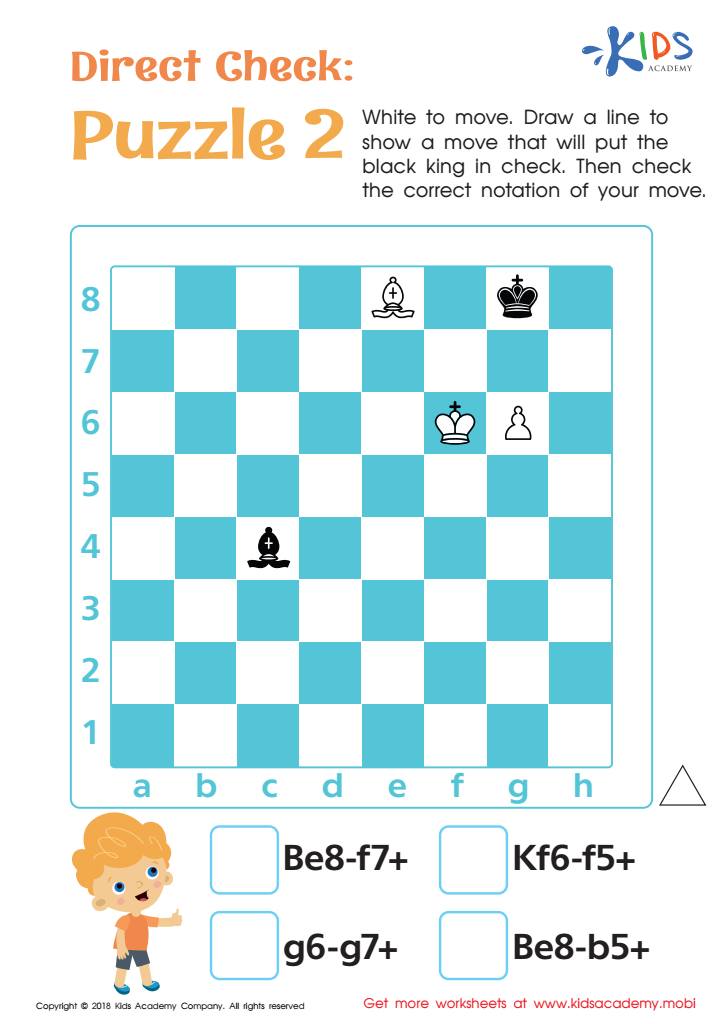
Direct Check: Puzzle 2 Worksheet
Test your kid's chess skills with this worksheet. Help them draw a line to put the black king in checkmate, then check the correct notation from the provided options. This will help them understand the correct notation of each move they make.
 Assign to My Students
Direct Check: Puzzle 2 Worksheet
Worksheet
Join Kids Academy for Free
Who is primarily going to use this learning content?








Developing analytical thinking in second-grade students is crucial for both parents and teachers, as it sets the foundation for lifelong learning and problem-solving abilities. Analytical thinking involves breaking down complex problems into simpler parts, understanding relationships, and making informed decisions—skills that are essential in both academic and everyday contexts.
At this developmental stage, children are naturally curious and eager to explore new ideas. By nurturing their analytical thinking, parents and teachers can help them learn to ask questions, compare information, and draw conclusions. This not only enhances their academic performance across subjects like math, science, and reading but also equips them with the cognitive tools to interpret the world around them.
Moreover, fostering analytical thinking encourages independence and confidence. As children learn to solve problems on their own, they become more self-reliant and less likely to feel overwhelmed by challenges. This self-assuredness can translate into a positive attitude towards learning, making students more resilient and adaptable.
In sum, emphasizing analytical thinking in Grade 2 can significantly enhance a child's intellectual growth and emotional well-being. It prepares them for future educational endeavors and cultivates a mindset that values inquiry, reflection, and reasoned decision-making, which are indispensable skills for success in life.