Developing problem-solving abilities Grade 2 Worksheets
3 filtered results
-
From - To
Enhance your second grader's critical thinking skills with our "Developing Problem-Solving Abilities Grade 2 Worksheets." Designed to engage young minds, these worksheets combine fun and educational activities that challenge students to think logically and creatively. Each worksheet focuses on real-life scenarios, helping kids learn how to identify problems, brainstorm solutions, and apply their knowledge in practical situations. With an array of topics, including math puzzles, scenarios, and logical reasoning exercises, your child will gain confidence in tackling problems independently. Perfect for classroom use or homework, these resources ensure a foundational understanding of problem-solving that is crucial for future success.
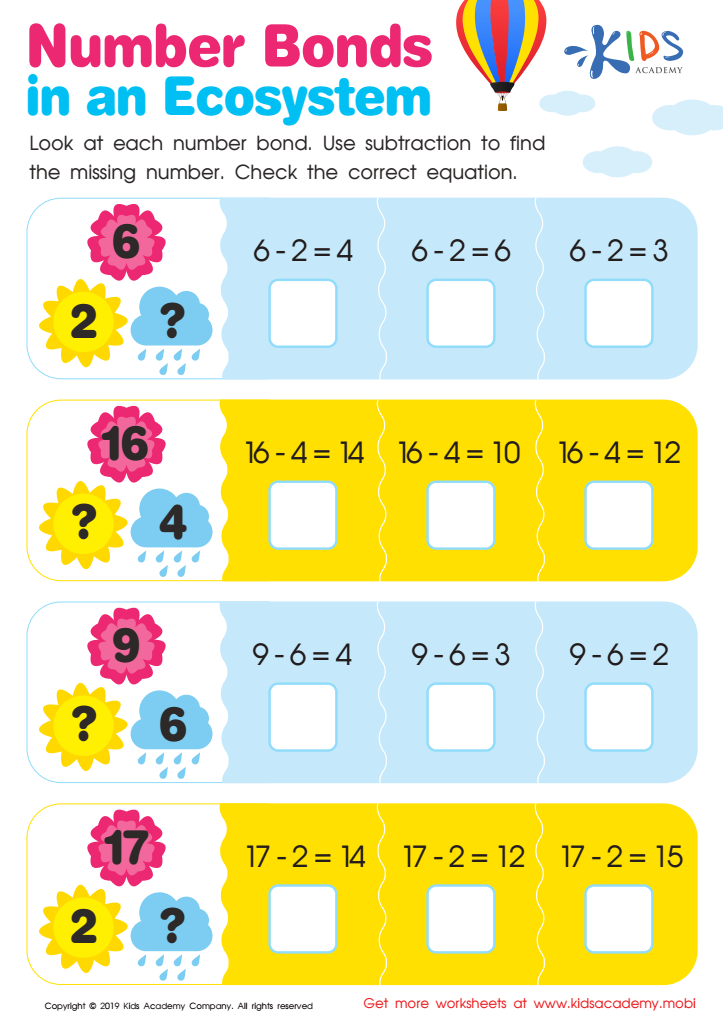
Number Bonds in an Ecosystem Worksheet
 Assign to My Students







Developing problem-solving abilities in Grade 2 is crucial for both parents and teachers as it lays the foundation for a child's future academic success and personal growth. At this stage, children are eager to explore the world around them, and honing their problem-solving skills encourages curiosity and critical thinking. By engaging in problem-solving activities, such as puzzles, math challenges, or real-life scenarios, children learn how to approach challenges logically and creatively.
These skills not only help students in academic contexts but also in everyday life, fostering resilience and perseverance. As they encounter and navigate obstacles—be it social challenges with peers or academic tasks—they build confidence in their abilities to tackle problems independently.
Moreover, the development of problem-solving skills enhances collaboration when children work with others, promoting teamwork and communication. In an increasingly complex world, equipping young learners with these tools prepares them for future challenges, fostering adaptability and innovation.
For teachers and parents, supporting problem-solving abilities also encourages positive self-esteem and a growth mindset in children, ultimately paving the way for lifelong learning and success. Prioritizing problem-solving in early education is a vital investment in a child's future capabilities and overall well-being.