Fraction comparison Grade 2 Worksheets - Page 2
34 filtered results
-
From - To
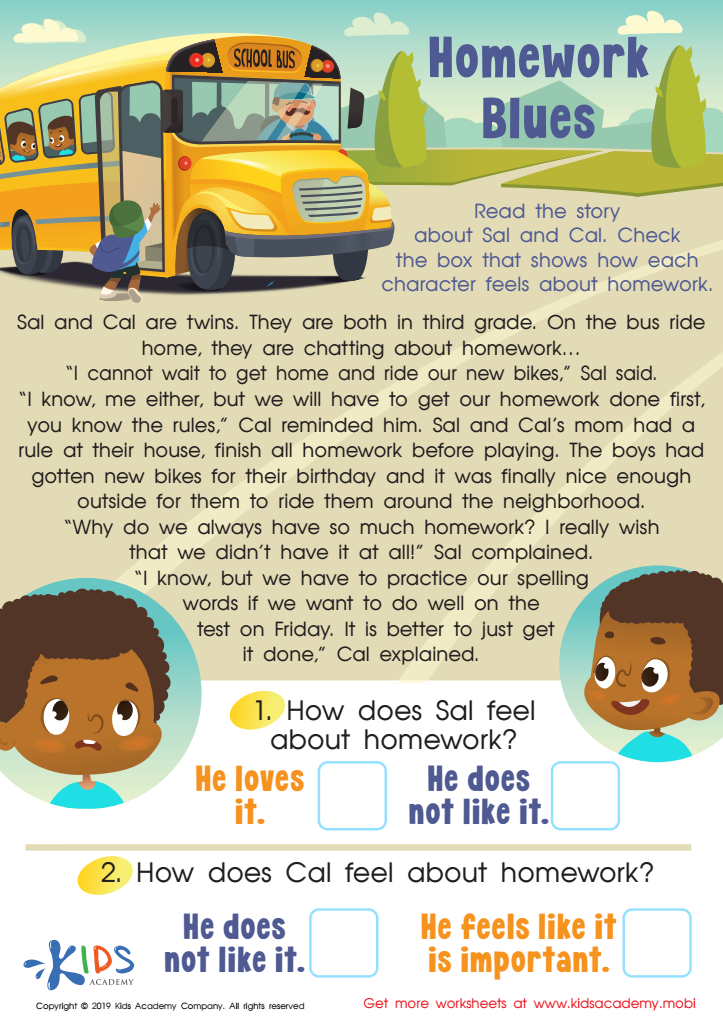
Homework Blues Worksheet
 Assign to My Students






Understanding fraction comparison is essential for Grade 2 students, as it lays the foundation for their future mathematical skills. Parents and teachers should prioritize this topic, as it supports critical thinking and problem-solving abilities. Fractions are a fundamental concept in mathematics, representing parts of a whole, which are encountered in various real-life situations—such as cooking, measuring, and handling money.
When children learn to compare fractions, they enhance their ability to recognize sizes and values, developing a sense of number sense in the process. Mastery of fraction comparison helps students understand patterns, relationships, and the concept of equivalency, crucial skills when advancing in mathematics.
Moreover, this knowledge is integral to their mathematical journey; understanding fractions is essential for grasping more complex topics like percentages and ratios in later grades. Engaging in activities using visuals, manipulatives, or interactive learning can make these concepts more relatable and enjoyable.
Lastly, fostering this understanding at home or in the classroom promotes open communication about math, encouraging children to discuss their thought processes. Thus, prioritizing fraction comparison not only builds essential math skills but also boosts confidence and a positive attitude towards learning.