Fraction representation Grade 2 Worksheets
3 filtered results
-
From - To
Explore our engaging Grade 2 Fractions Representation Worksheets, designed to help young learners grasp the concept of fractions in a fun and interactive way. These worksheets offer a variety of activities such as identifying, drawing, and comparing fractions, ensuring students build a solid foundation in their understanding. Perfectly aligned with Grade 2 math standards, our resources allow children to visualize and represent fractions, fostering critical thinking skills. With colorful illustrations and clear instructions, these worksheets make learning about fractions enjoyable and effective. Enhance your classroom or homeschool experience with our comprehensive fraction representation resources today!
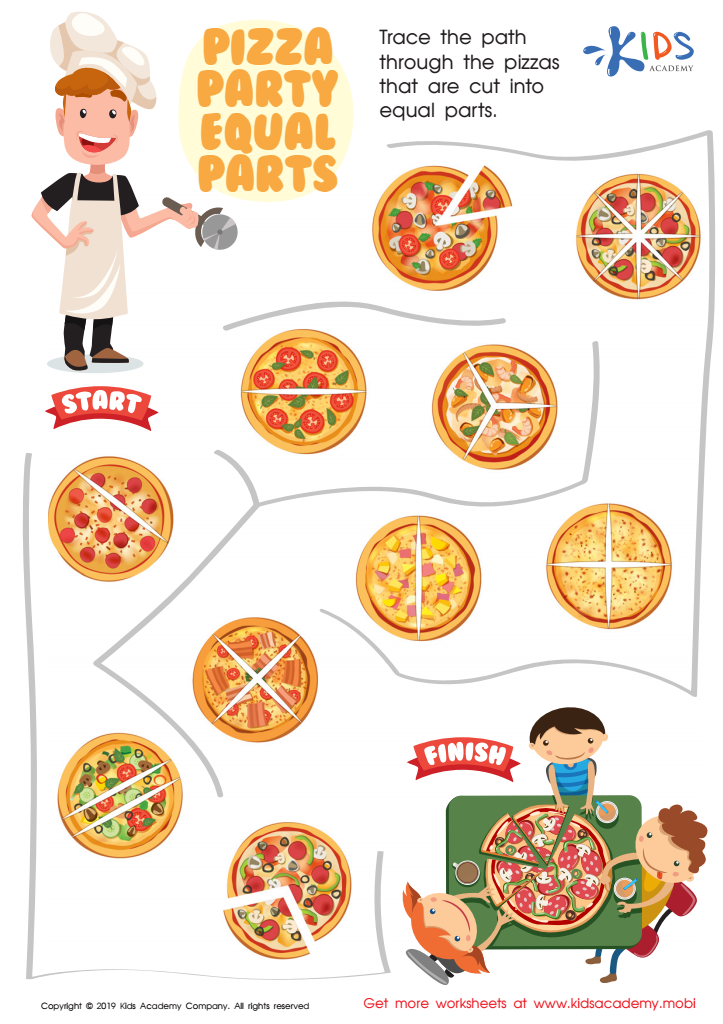
Pizza Party Equal Parts Worksheet
 Assign to My Students
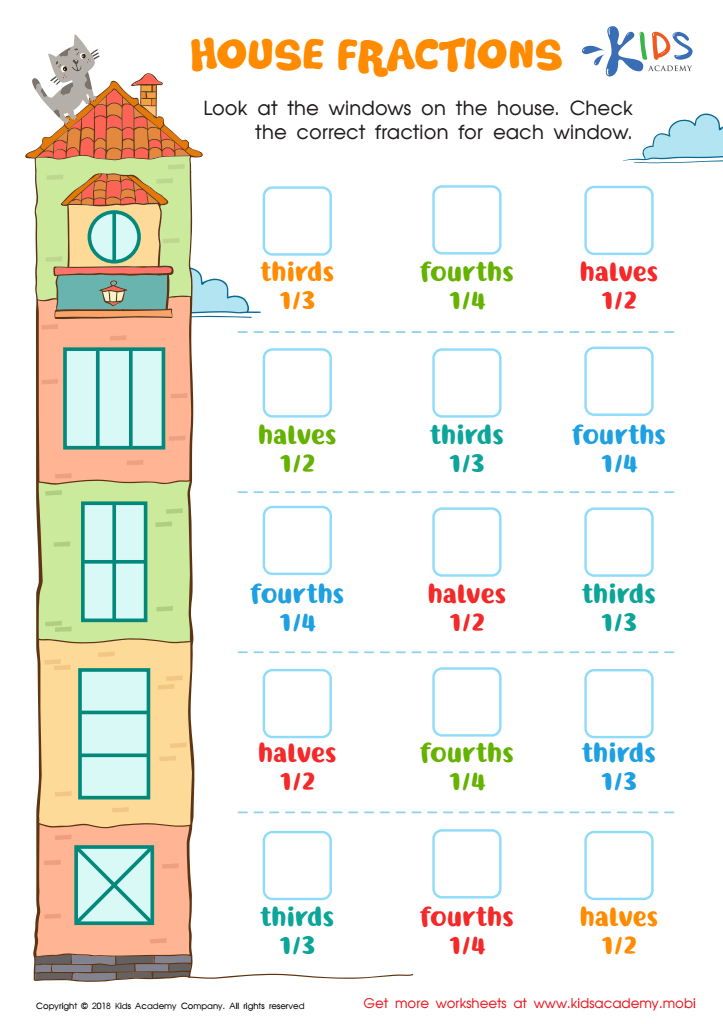
House Fractions Worksheet








Understanding fraction representation in Grade 2 is crucial for both parents and teachers because it lays the groundwork for more complex mathematical concepts that children will encounter in higher grades. At this stage, children begin to grasp the idea of parts of a whole, which promotes critical thinking and problem-solving skills. By using visuals, such as pie charts or fraction bars, they can see how wholes can be divided, which not only helps in understanding fractions but also enhances their ability to work with numbers in general.
Moreover, introducing fractions in a concrete manner fosters a positive attitude toward math. Children learn to relate lessons to real-life situations, such as sharing food or dividing toys, making the concept relevant and engaging. This relevance also helps eliminate math anxiety, promoting a growth mindset where mistakes are seen as part of the learning process.
For parents, being involved in their child's math education – by discussing fractions at home – reinforces learning and builds confidence. For teachers, employing diverse fraction representations in their lessons can address varied learning styles, ensuring all students have a chance to succeed. Ultimately, a strong foundation in fractions aids in better performance in future math topics, which is vital for academic success.