Letter tracing skills Grade 2 Worksheets
3 filtered results
Difficulty Level
Grade
Age
-
From - To
Subject
Activity
Standards
Enhance your Grade 2 student's writing abilities with our engaging Letter Tracing Skills worksheets! Designed to foster early literacy, these worksheets help children practice letter formation through fun and interactive exercises. Each sheet provides ample space for tracing and writing letters, promoting proper handwriting techniques. The colorful and appealing designs captivate young learners, making the practice enjoyable and effective. With consistent use, students will gain confidence in their writing while developing fine motor skills. Download our Letter Tracing Skills worksheets today and watch your child's printing and penmanship flourish as they master each letter with ease!
Favorites
With answer key
Interactive
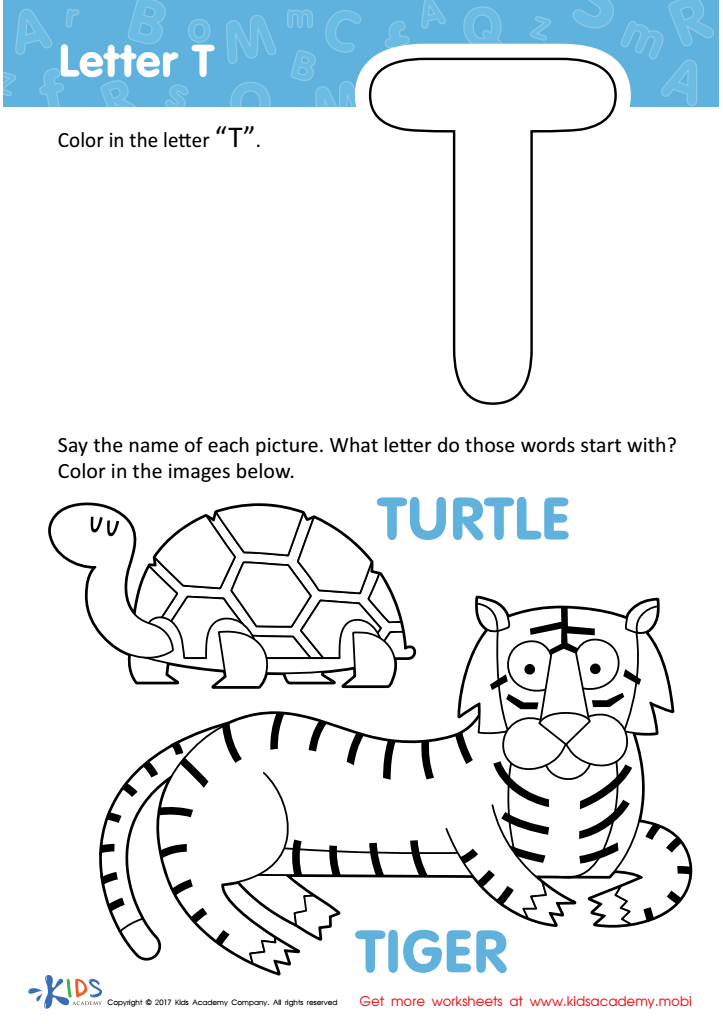
Letter T Coloring Sheet
Introduce your child to the letter "T" and its animals – turtles and tigers! With this coloring page, you can stimulate your child's imagination and creativity, while helping them recognize the letter "T". Have fun with your child and get coloring!
Download (PDF)
 Assign to My Students
Assign to My Students
Letter T Coloring Sheet
Worksheet
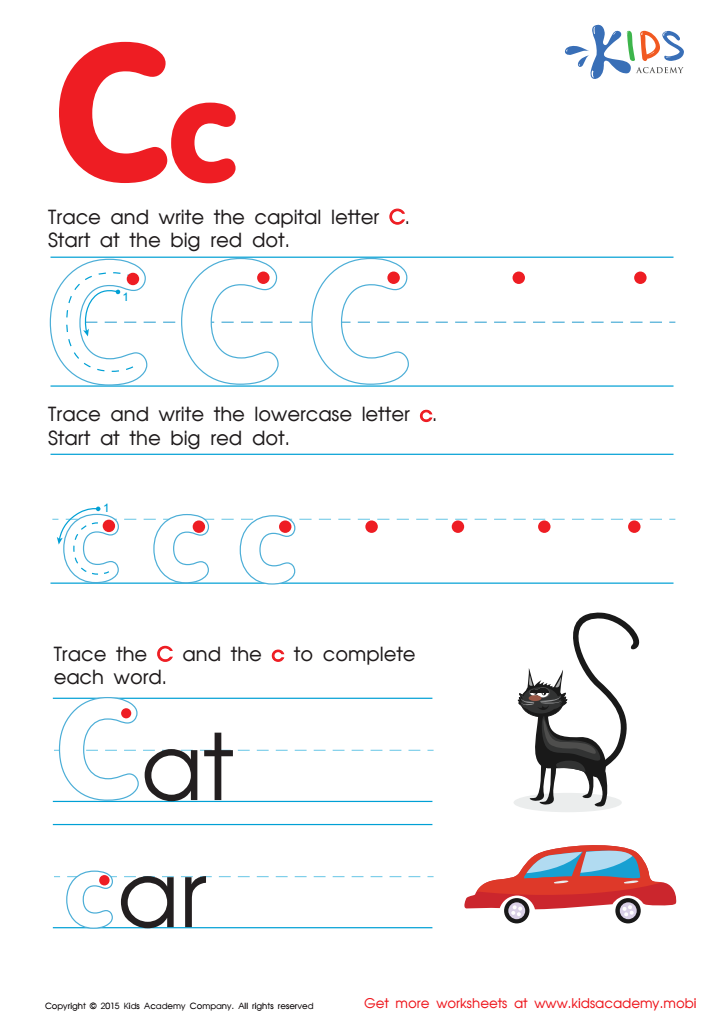
Letter C Tracing Page
Trace and write the letter 'C'! Put the pencil at the red dot then follow the lines – the capital letter first then the lowercase one. Cats love it and so will you! Get more free printables to practice tracing and writing.
Letter C Tracing Page
Worksheet
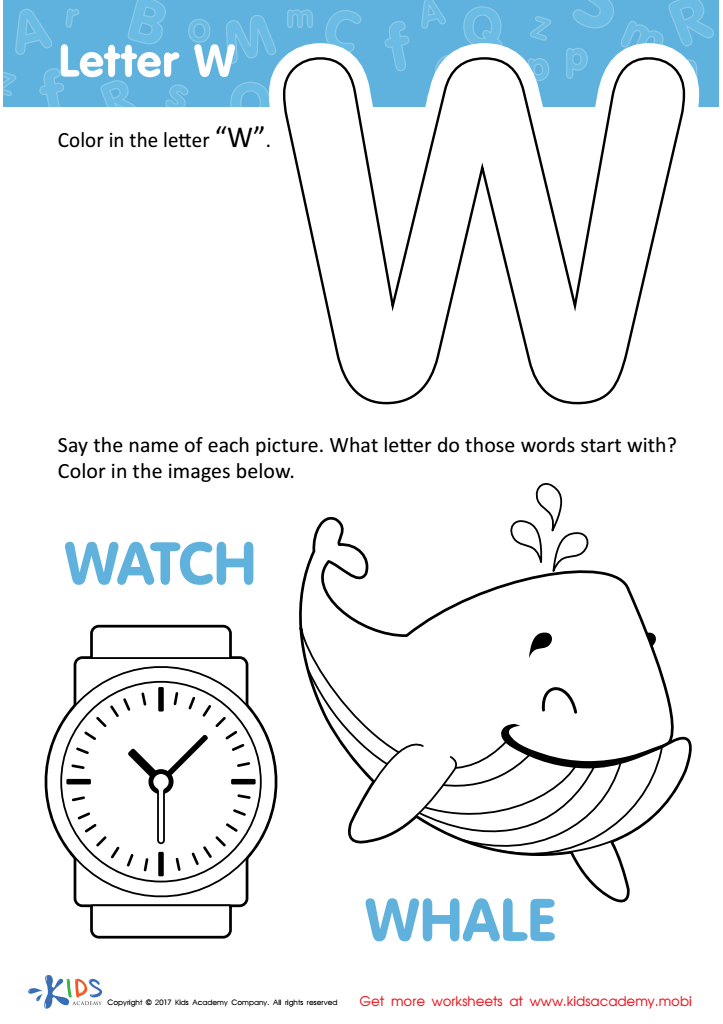
Letter W Coloring Sheet
Let your child have fun with this letter "W" coloring page! They can use their imagination to color the whale and discover the letter and its sound. Give them a helping hand to make it a whale of a time!
Download (PDF)
Assign to My Students
Assign to My Students
Letter W Coloring Sheet
Worksheet
Join Kids Academy for Free
Who is primarily going to use this learning content?








Letter tracing skills are essential for second graders as they lay the groundwork for writing, reading, and overall literacy development. Mastering these skills enhances fine motor coordination, which is vital for holding a pencil correctly and forming letters legibly. When students practice tracing letters, they engage in repetition, helping them internalize letter shapes and familiarize themselves with their proper formation.
Furthermore, tracing activities encourage cognitive development by reinforcing letter-sound associations. As students trace letters, they often say the letter names and sounds aloud, promoting phonemic awareness—a key skill for successful reading. This multi-sensory approach creates a stronger neural connection between letters and pronunciations, making it easier for students to retrieve this information when writing or reading independently.
Moreover, developing letter tracing skills boosts students' confidence. As they see improvement in their handwriting and literacy abilities, they are more likely to engage positively with their learning. Additionally, teachers and parents can use tracing skills as a foundation for more complex writing tasks, such as sentence formation and creative writing. Therefore, fostering letter tracing skills is crucial for building the literacy and writing proficiency that will benefit students throughout their academic journey and beyond.