Phonics recognition Grade 2 Worksheets
4 filtered results
Difficulty Level
Grade
Age
-
From - To
Subject
Activity
Standards
Empower second graders to master phonics with our engaging, expertly designed Phonics Recognition Grade 2 Worksheets. At Kids Academy, we focus on optimizing phonics skills through interactive activities that foster phonemic awareness and reading proficiency. Each worksheet offers unique exercises to solidify understanding of letter-sound relationships, blends, digraphs, and vowel patterns. Tailored for young learners, our resources ensure a fun and educational experience that enhances literacy foundations. Ideal for classroom or at-home learning, these worksheets support diverse learning styles, building confidence and fluency in reading. Visit our site to unlock your child's potential in reading!
Favorites
With answer key
Interactive
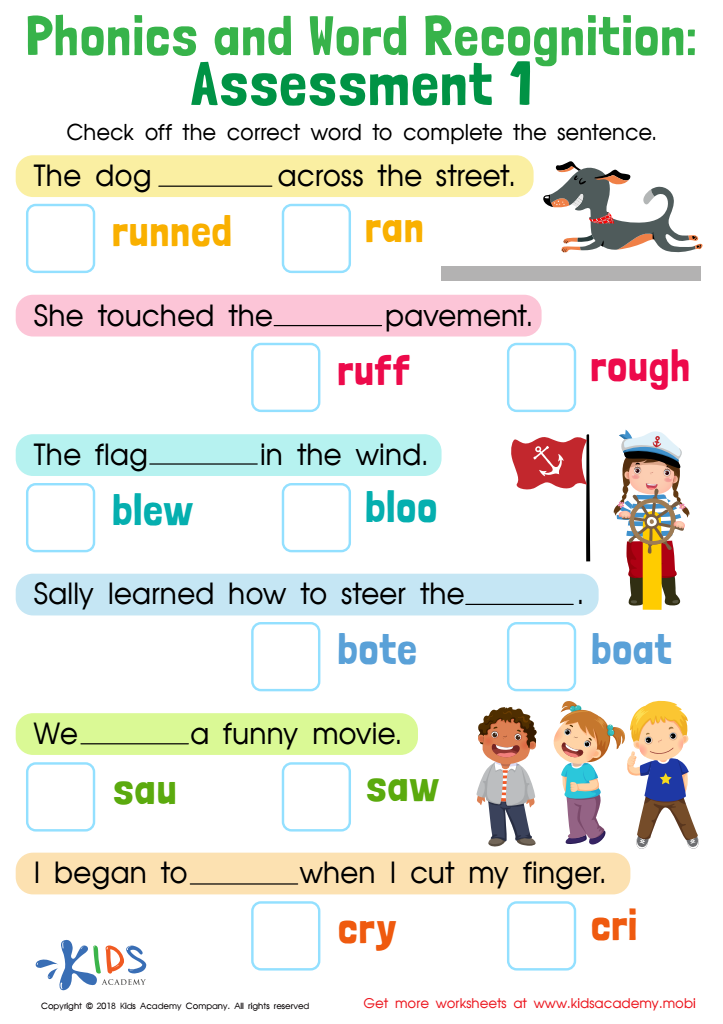
Phonics and Word Recognition: Assessment 1 Worksheet
This worksheet tests phonetics and word recognition. Students should be familiar with past tense verbs. Read incomplete sentences, then read multiple options and help students select the correct one.
 Assign to My Students
Phonics and Word Recognition: Assessment 1 Worksheet
Worksheet
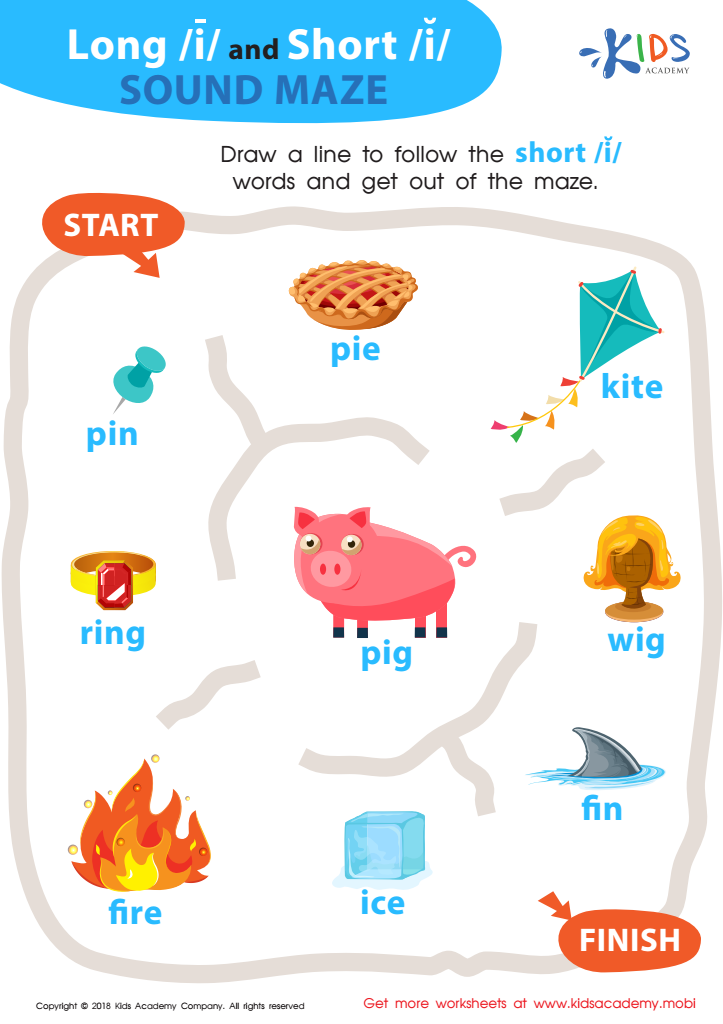
Reading: Long I and Short I Sound Maze Worksheet
Question your students if the worksheet is entertaining. They may respond negatively! Nonetheless, this activity will bring satisfaction while learning the distinction between a long and short I sound. Students read the words in the maze and only follow the words with the short I sound to finish the exercise. Grasping the difference between long and short vowels is demanding, but this worksheet helps students understand this reading skill.
Reading: Long I and Short I Sound Maze Worksheet
Worksheet
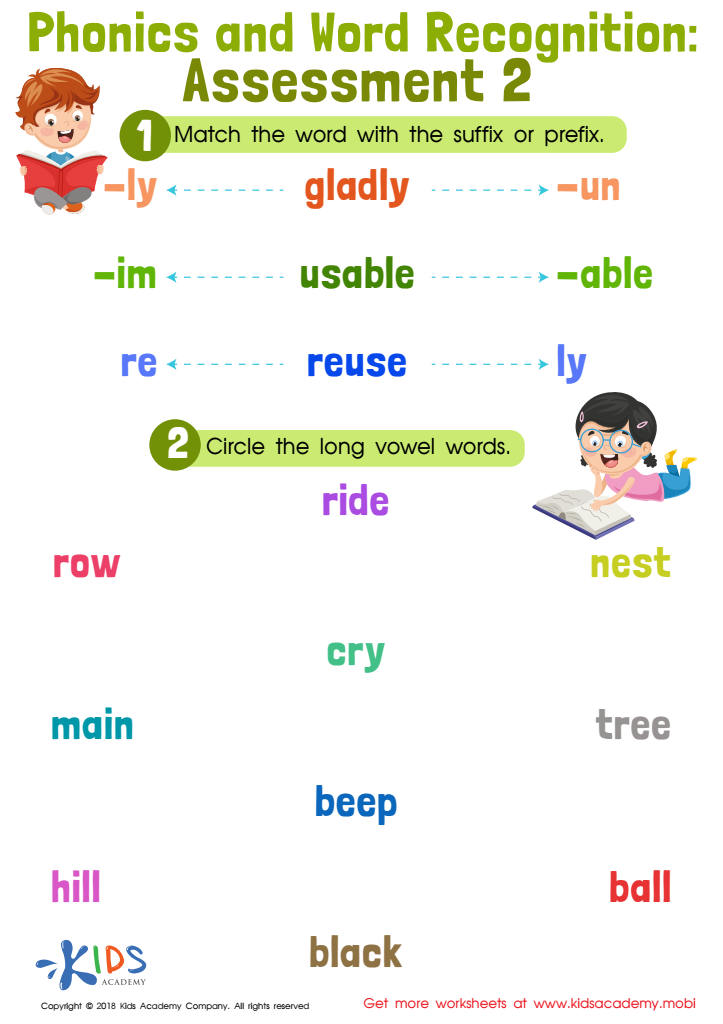
Phonics and Word Recognition: Assessment 2
Give kids common examples of suffixes and prefixes, such as "un-," "unhappy," "ness," "happyness." Ask them to match each word in the word recognition exercise to the correct suffix or prefix. Test phonetic understanding by having them circle the long vowel sounds.
Phonics and Word Recognition: Assessment 2
Worksheet
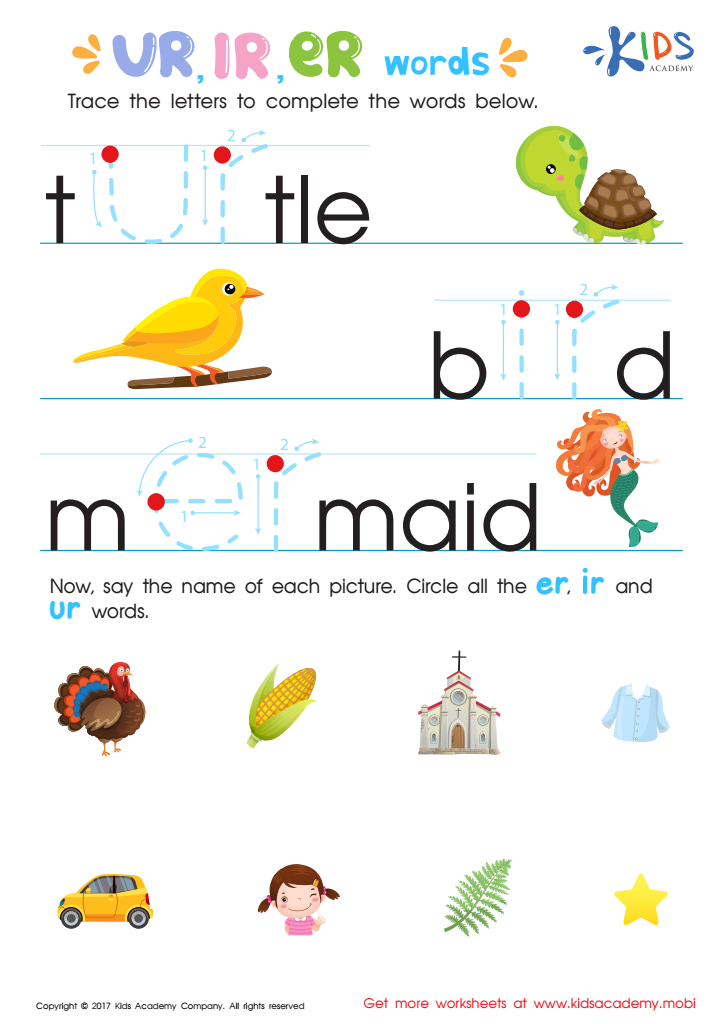
IR UR ER Words Worksheet
Trouble spelling words with the same initial vowel sound? Our worksheet is here to help! With its exercises to help your child learn to read and spell turtle, bird, and mermaid, it'll make differentiating these tricky digraphs a snap.
IR UR ER Words Worksheet
Worksheet
Join Kids Academy for Free
Who is primarily going to use this learning content?






Phonics recognition in Grade 2 is crucial for a child’s reading and language development. During this stage, students transition from learning to read to reading to learn. Strong phonics skills enable children to decode new words, an essential ability for reading fluently and for comprehending texts across various subjects. This profoundly impacts their academic success and fosters a love for reading.
Parents and teachers should care because phonics is a foundational block for literacy. Children who lack strong phonics skills often struggle with reading comprehension, which can affect their overall academic performance. Phonics teaches the relationship between letters and sounds, helping children to pronounce words correctly and understand meaning. Early intervention through phonics education prevents future learning difficulties and builds confidence.
Furthermore, early mastery of phonics aids in developing vocabulary, spelling, and writing skills. Teachers, by incorporating phonics in lesson plans, ensure that students gain the necessary skills to succeed in more advanced literacy tasks. For parents, supporting phonics at home can provide additional reinforcement, making learning a shared and more enjoyable experience. Thus, investing in phonics greatly contributes to a child’s lifelong learning journey, building a strong educational foundation.