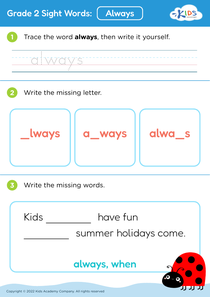
Phonics understanding Grade 2 Worksheets
4 filtered results
-
From - To
Explore our engaging Grade 2 Phonics Understanding Worksheets designed to enhance your child's decoding and reading skills! Our printable resources focus on essential phonics concepts, including letter-sound recognition, word Families, and blending sounds to form words. Each worksheet promotes critical thinking and problem-solving, making learning fun and effective. Help your second grader build a strong phonics foundation with exercises that encourage active participation. Ideal for classroom or at-home learning, these worksheets provide both structured practice and creative activities, fostering a love for reading and a greater understanding of language. Get started today to support your child's literacy journey!
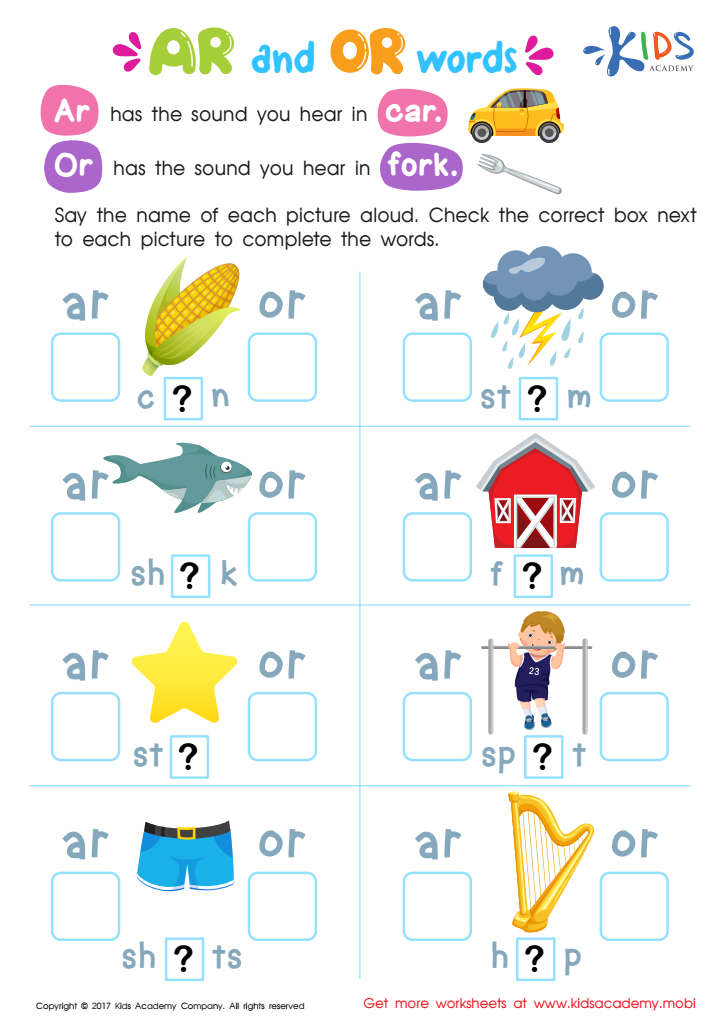
Ar and Or Words Phonics Worksheet
 Assign to My Students
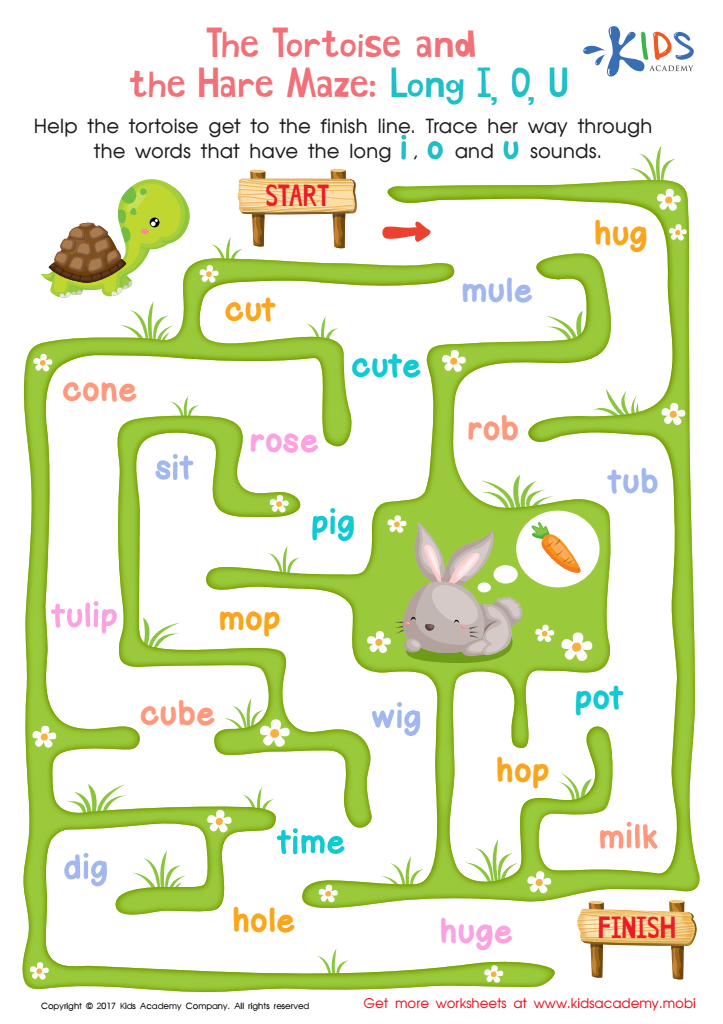
Long I, O, U Words Worksheet






Phonics understanding in Grade 2 is crucial for several reasons, and parents and teachers play an essential role in fostering this skill. Firstly, phonics lays the foundation for reading proficiency. At this age, children transition from learning to read to reading to learn. A solid grasp of phonics enables students to decode words independently, promoting fluency and comprehension.
Moreover, strong phonics skills foster greater confidence in young readers. When children feel comfortable tackling new words, they are more likely to engage with diverse texts, enhancing their vocabulary and overall literacy skills. This engagement is vital in preventing reading difficulties and ensuring they stay on track with grade-level expectations.
Additionally, phonics is connected to future academic success. Early readers who struggle with phonics often face ongoing challenges in literacy, impacting their performance across subjects. By promoting phonics understanding, parents and teachers can help build a resilient foundation for future learning.
Lastly, supportive interventions at home and in the classroom can create a positive reading environment. Engaging activities that focus on phonics, like games and reading together, not only improve skills but also foster a love for reading, making it a lifelong pursuit. Thus, prioritizing phonics is an investment in a child's overall educational journey.