Recognizing number patterns Grade 2 Worksheets
4 filtered results
-
From - To
Enhance your child's math skills with our "Recognizing Number Patterns Grade 2 Worksheets." Designed to build a strong foundation in number sequence recognition, these engaging worksheets help second graders identify and complete various patterns such as skip counting, repeated additions, and more. With colorful illustrations and diverse exercises, kids stay motivated while mastering essential concepts. These printable activities not only make learning fun but also reinforce classroom lessons, ensuring your child becomes more confident in their math abilities. Perfect for home or school use, our worksheets are a valuable resource for parents and teachers alike.
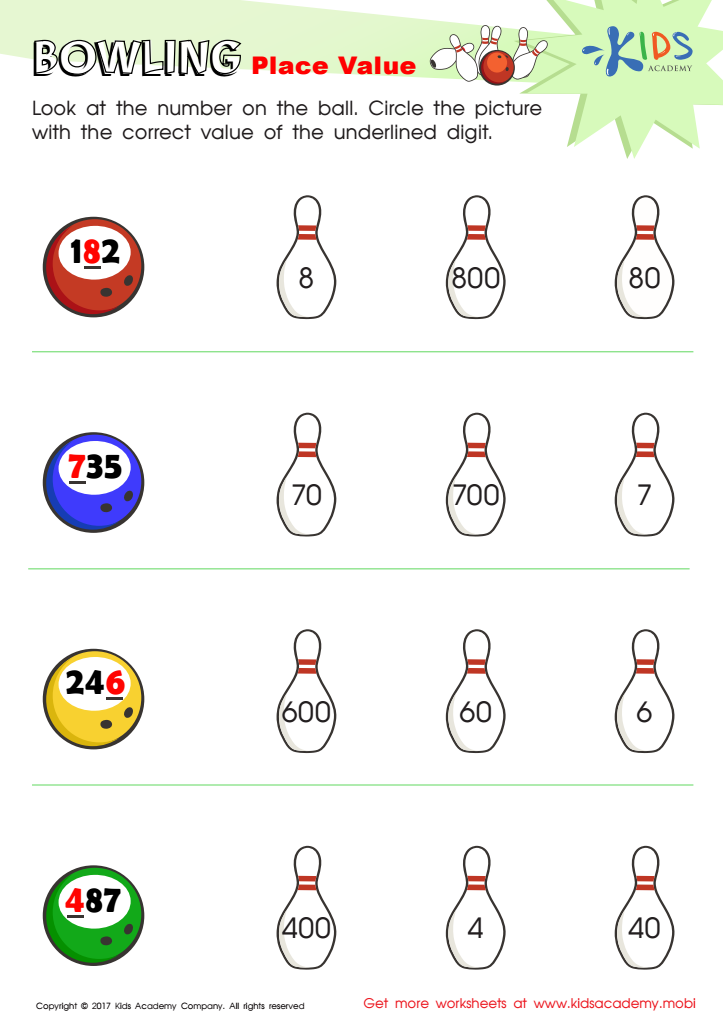
Place Value Worksheet
 Assign to My Students
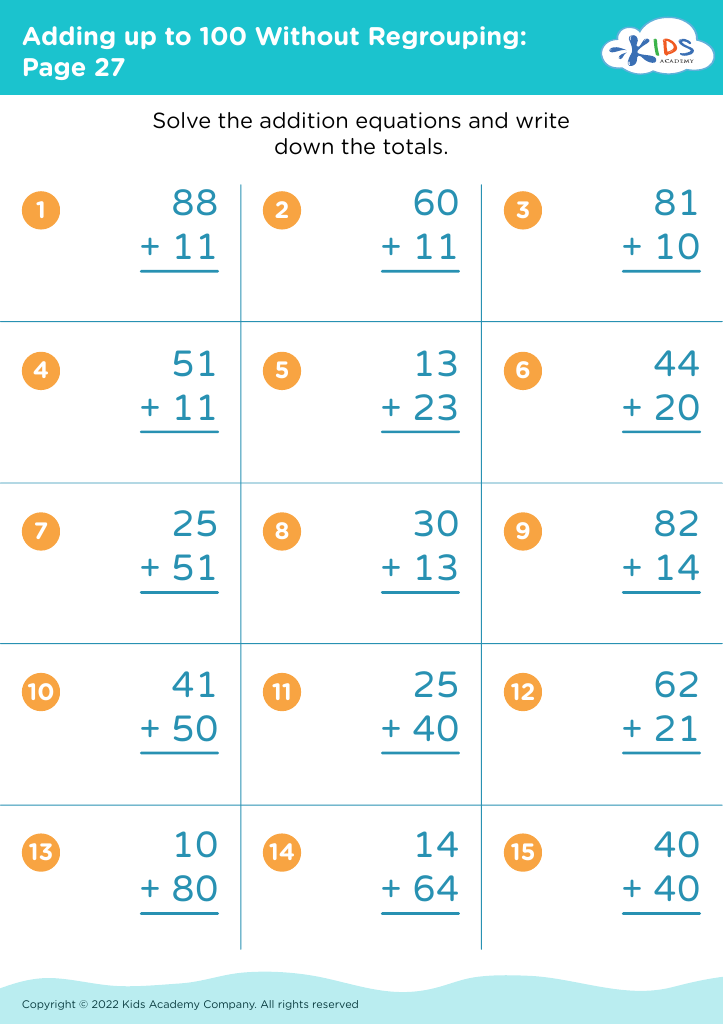
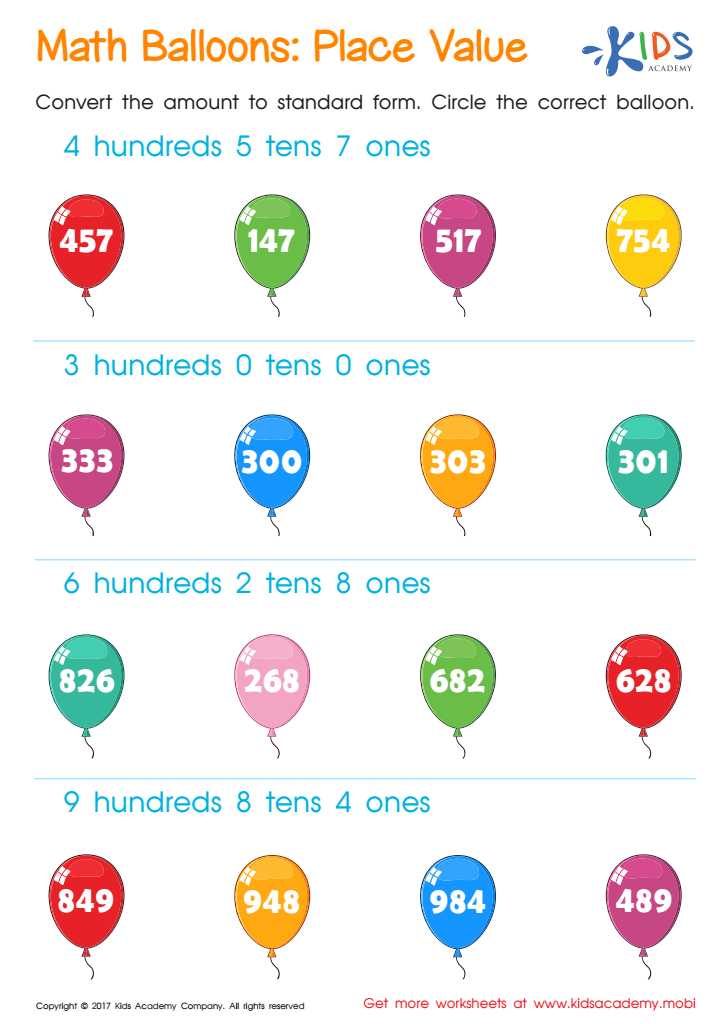
Place Value Printable Worksheet
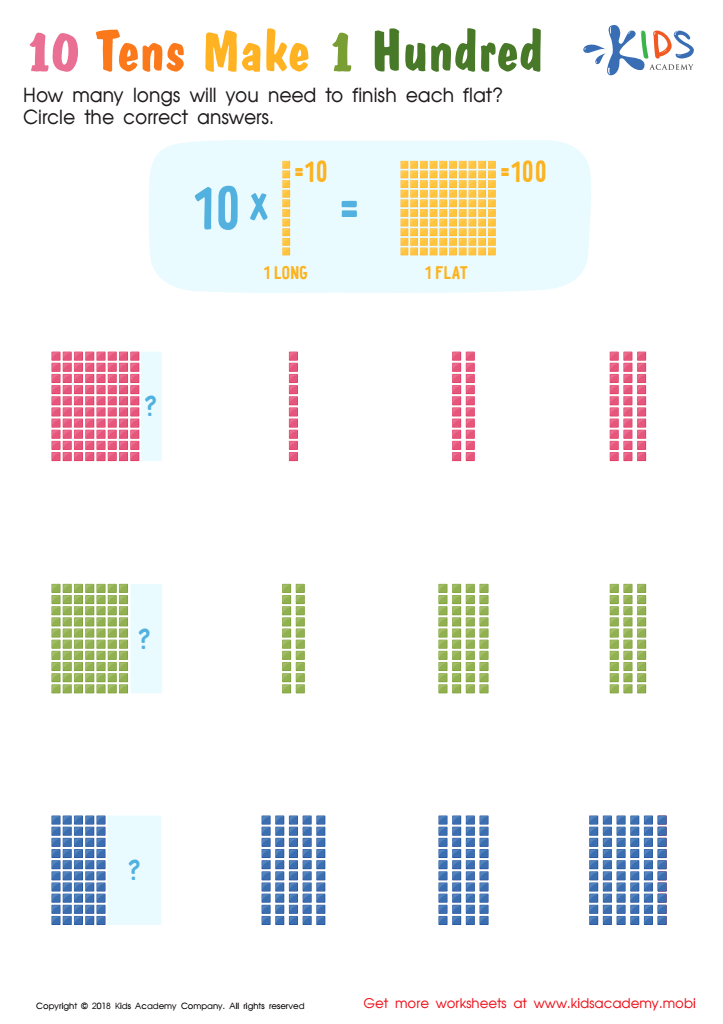
10 Tens Make 1 Hundred Worksheet







Recognizing number patterns is fundamental for Grade 2 students as it establishes a critical foundation for mathematical understanding and problem-solving skills. Parents and teachers should care about this because it facilitates children's ability to make sense of numbers and their relationships, which is essential for both arithmetic operations and advanced mathematics in the future.
When students understand patterns, they learn to predict numerical trends and sequences, which aids in their comprehension of multiplication, division, addition, and subtraction. This skill supports their ability to solve word problems and warrants logical thinking and reasoning. Moreover, recognizing patterns is closely connected with developing cognitive abilities, such as memory and attention to detail.
Teachers using patterns can create engaging and interactive lessons that make learning math fun and meaningful, thereby fostering a positive attitude toward the subject. For parents, encouraging pattern recognition at home through everyday activities, like sorting and skip-counting, can significantly reinforce what is taught in the classroom.
In summary, emphasizing number patterns equips Grade 2 students with essential skills for their academic journey, bolsters their confidence in handling math-related tasks, and lays the groundwork for more complex mathematical concepts they will encounter later. Parents and teachers working together can provide a consistent and supportive environment that nurtures these early mathematical skills.