Understand sequencing Grade 2 Worksheets
3 filtered results
-
From - To
Enhance your child's comprehension and narrative skills with our "Understand Sequencing Grade 2 Worksheets." Specifically designed for second graders, these engaging worksheets guide students through the process of recognizing and arranging events in a logical order. Through colorful illustrations and age-appropriate passages, children will practice critical thinking and bolster their understanding of sequencing, a foundational skill in storytelling and reading comprehension. Empower your young learner to master the flow of events and improve their reading confidence with our easy-to-use, fun sequencing worksheets! Ideal for both classroom environments and at-home practice.
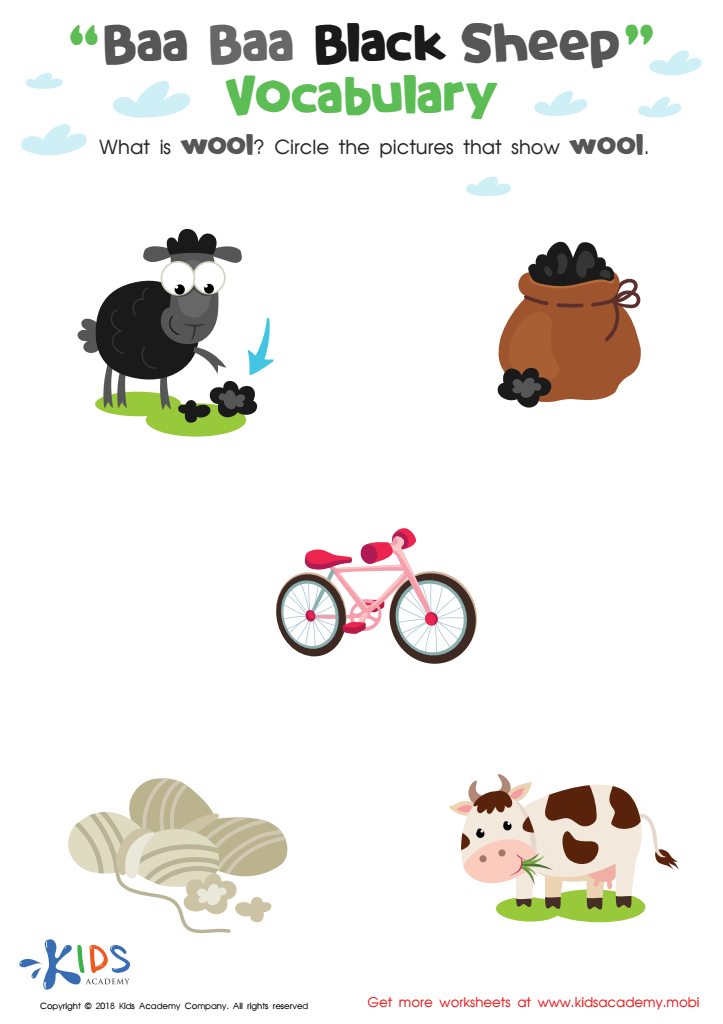
Baa Baa Black Sheep: Vocabulary Worksheet
 Assign to My Students







Understanding sequencing is a crucial developmental skill for second graders because it lays the foundation for critical thinking, comprehension, and problem-solving across all areas of learning. By grasping sequencing, children learn to recognize and predict patterns, which is essential for subjects like mathematics, where steps in operations need to be done in order, and for science experiments, where processes must be followed systematically.
For reading and writing, sequencing helps children understand the beginning, middle, and end of stories, improving their narrative skills and comprehension. They can retell stories with accuracy and clarity, which deepens their interaction with the text. This becomes pivotal not just for academics but also for effective communication.
In daily life, sequencing aids in following instructions, completing tasks, and organizing thoughts. A child who understands sequencing can better manage routines, enhance time management skills, and handle complex tasks by breaking them into digestible steps.
Teachers and parents caring about sequencing help support a child’s cognitive development and equip them with tools for success. They can foster these skills through engaging activities like storytelling, interactive games, and step-by-step projects. Emphasizing sequencing from an early age ensures that children build a solid foundation for lifelong learning and critical thinking.