Understanding equality Grade 2 Worksheets
3 filtered results
-
From - To
Discover a comprehensive collection of "Understanding Equality" worksheets designed specifically for Grade 2 students! Our printable resources engage young learners in exploring concepts of equality through various entertaining and educational activities. Each worksheet is expertly crafted to reinforce critical thinking skills and promote mathematical understanding, making the idea of equality accessible and fun. Students will solve equations, complete number sentences, and practice comparing values in interactive ways. Perfect for classroom use or at-home learning, these worksheets will ensure that your child develops a strong foundational grasp of equality, paving the way for future mathematical success. Dive in and watch their skills soar!
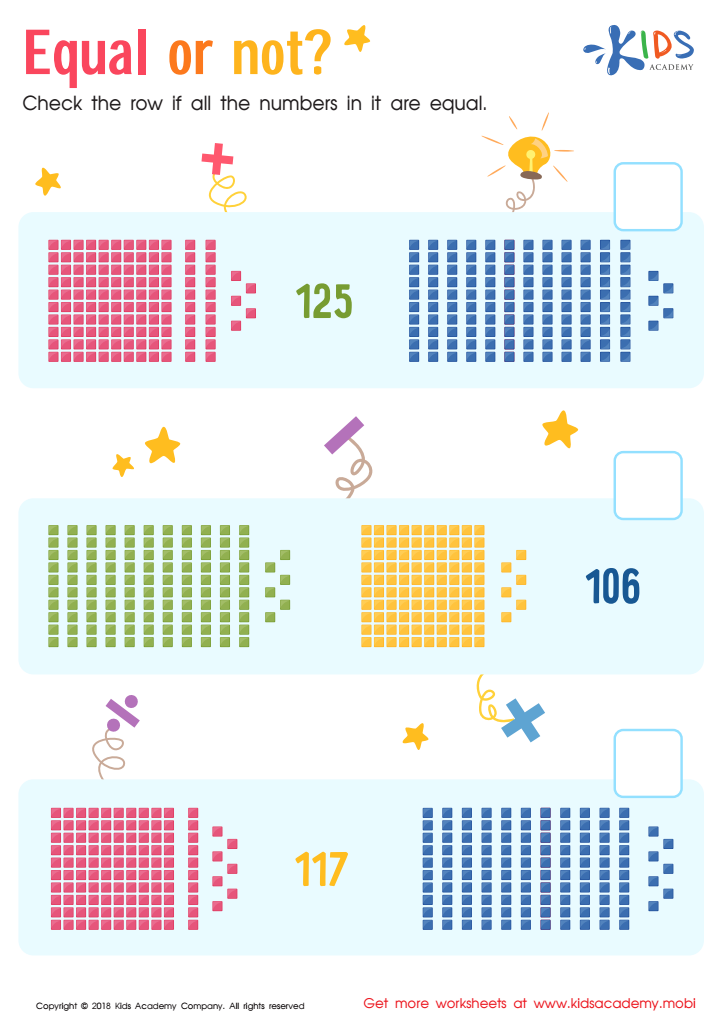
Equal or not Worksheet
 Assign to My Students
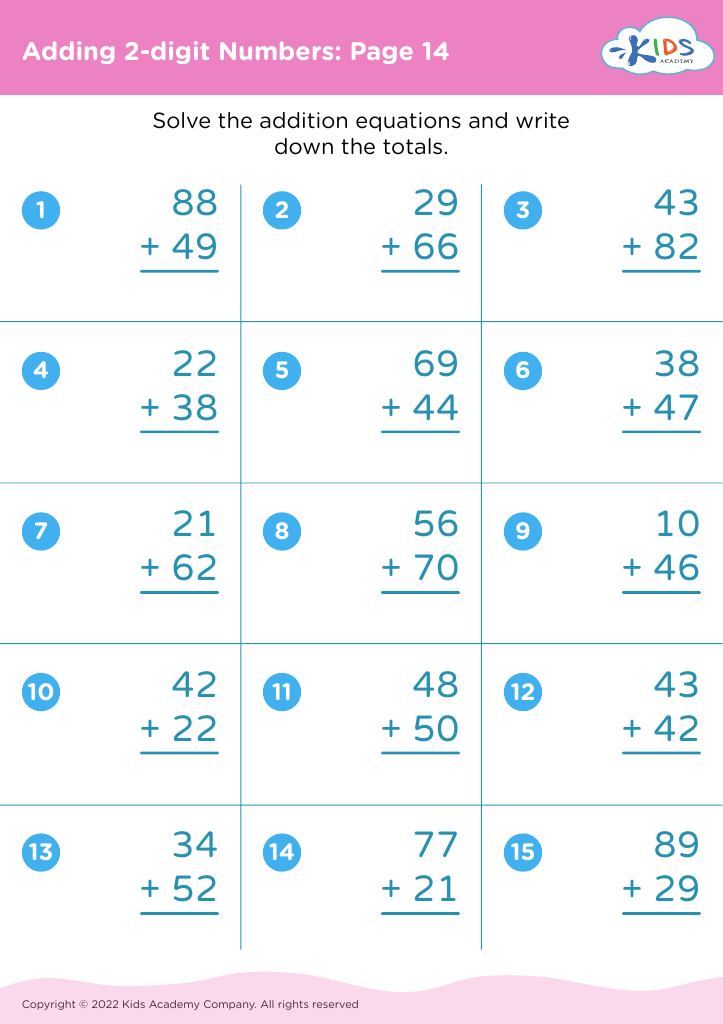
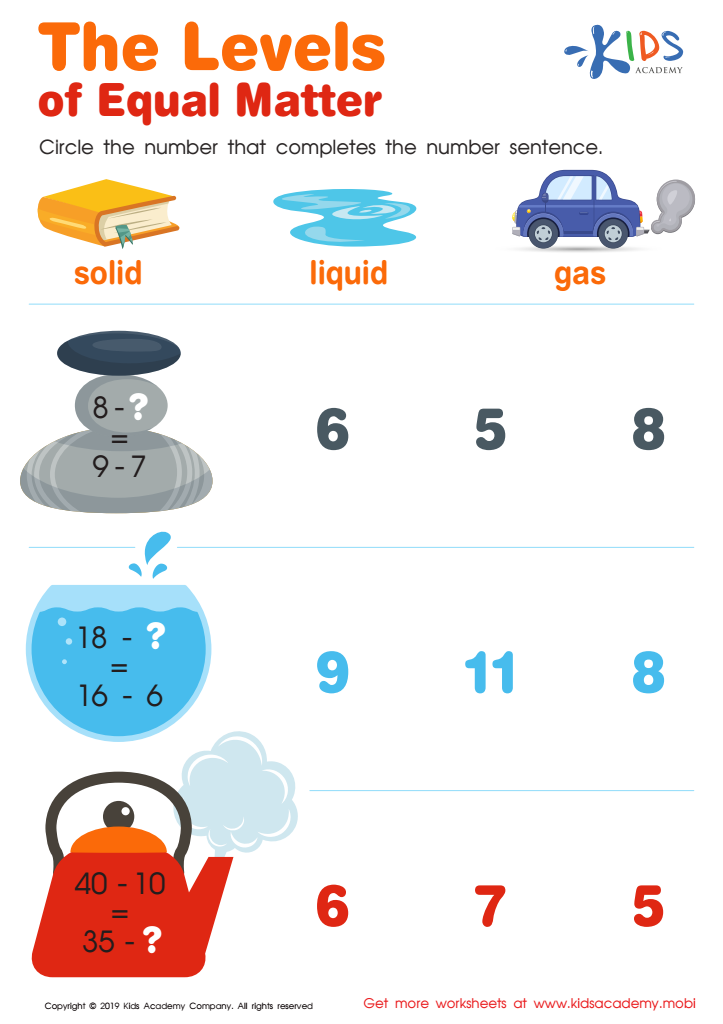
The Levels of Equal Matter Worksheet







Understanding equality in Grade 2 is crucial for both parents and teachers as it lays the foundational skills for critical thinking and social awareness in young learners. At this stage, students begin to grasp the concept of equality in terms of numbers, shapes, and eventually in social interactions. Recognizing and understanding equality in mathematics enhances their problem-solving abilities, enabling them to compare and evaluate numbers effectively.
Moreover, instilling principles of equality promotes fairness and respect among peers. Lessons on equality can help children appreciate diversity and develop empathy towards others, cultivating a positive classroom environment. Teachers and parents play a vital role in modeling these values, encouraging children to treat their peers with kindness regardless of differences.
By prioritizing understanding equality, parents and teachers support a holistic educational experience that equips students with the skills they need for future academic success and social relationships. Furthermore, fostering a culture of equality enables children to recognize the importance of inclusivity and fairness, beneficial traits that will guide them in their global society. Thus, caring about understanding equality sets the stage for well-rounded, conscientious individuals who contribute positively to their communities and schools.