Understanding timelines Grade 2 Worksheets
3 filtered results
-
From - To
Our "Understanding Timelines Grade 2 Worksheets" provide young learners with engaging and educational resources to develop their comprehension of timelines. These printable worksheets guide second graders through the concepts of chronological order, historical sequencing, and the importance of events in time. Each worksheet features captivating activities, such as filling in blanks, drawing events, and reading exercises to bolster their understanding of history and the progression of time. Ideal for classroom or home use, these worksheets enhance critical thinking, improve reading skills, and enrich students' grasp of temporal concepts in an interactive and enjoyable manner.
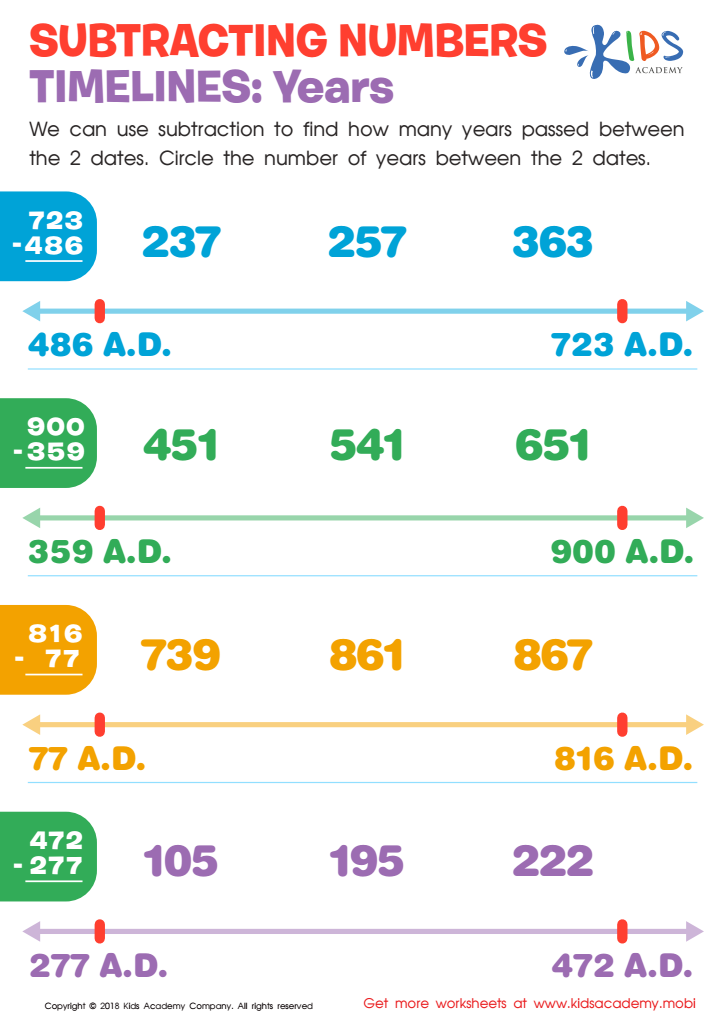
Subtracting Numbers Timelines: Years Worksheet
 Assign to My Students
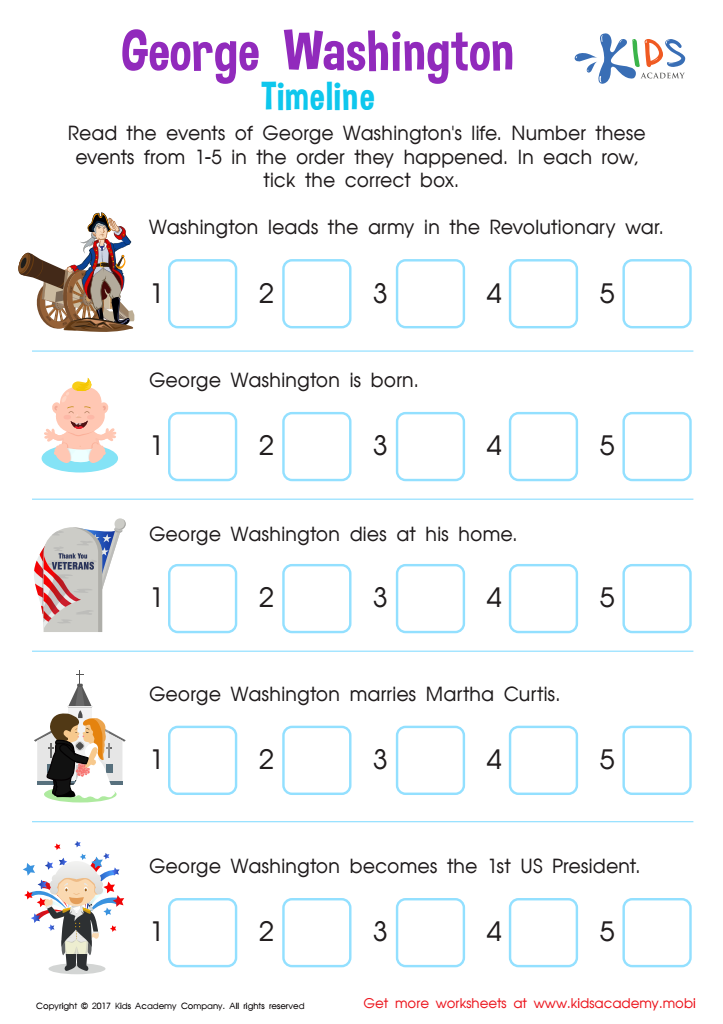
George Washington Timeline Worksheet





Understanding timelines is a critical skill for second graders as it builds a foundation for various academic and life skills. Timelines help children grasp the concept of time, an abstract idea that provides context and continuity to historical events and personal experiences. This understanding is pivotal as it aids in sequencing events logically, which is particularly important in subjects like history and reading comprehension. For instance, knowing the order of historical events helps children understand cause and effect, fostering critical thinking.
Moreover, timelines bolster mathematical skills by familiarizing students with units of time—days, weeks, months, and years. This knowledge supports their ability to understand and manage chronological data effectively, which is not only essential for academics but also for daily life routines.
From a developmental perspective, understanding timelines enhances organizational skills. It aids children in planning and managing tasks, recognizing deadlines, and setting goals. This early ability to perceive and manage time also cultivates punctuality and responsibility—attributes that benefit lifelong learning and personal development.
Therefore, parents and teachers should emphasize timelines to aid their children’s cognitive and practical skills, ensuring a well-rounded approach to learning that prepares them for future educational milestones and daily life management.