Filters

108 filtered results

Clear all filters
Favorites
With answer key
Interactive

108 filtered results

Difficulty Level

Grade


Check out this FREE Grade 2 Trial Lesson on Addition & Subtraction!

Odd or Even

Favorites
With answer key
Interactive
  • Grade 2
  • Counting skills
  • Addition & Subtraction
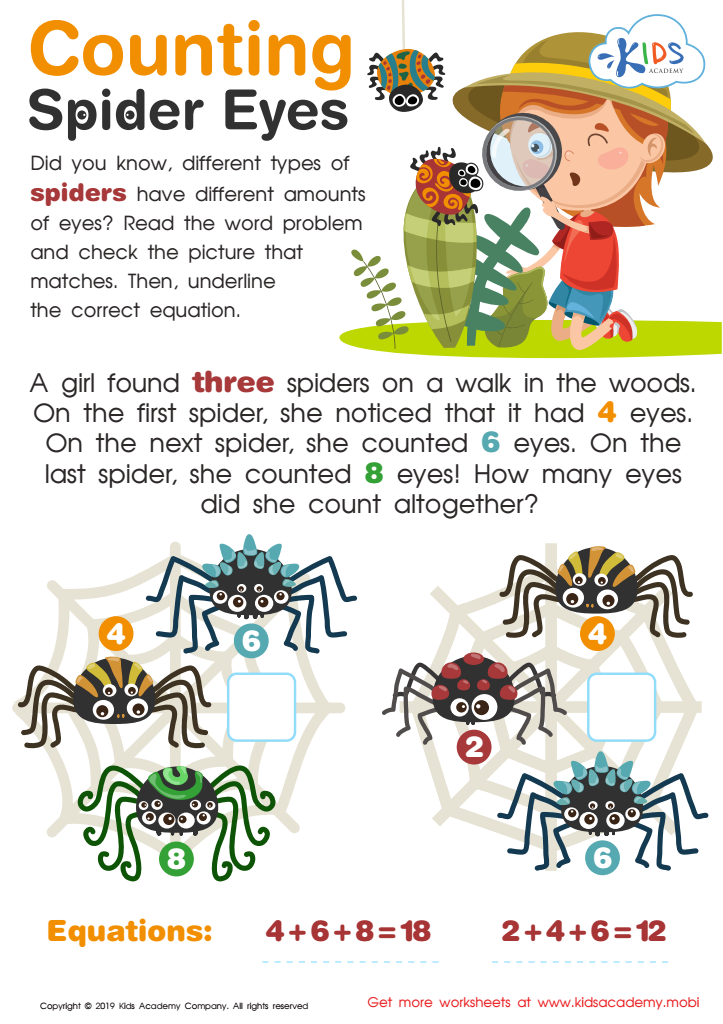
Counting Spider Eyes Worksheet

Counting Spider Eyes Worksheet

Did you know different spiders have different eye numbers? Kids will love learning this fact and solving the spider word problems on this free worksheet! Word problems promote a deeper understanding of the concept, plus they get to add up the spiders’ eyes while solving addition problems with more than one addend. Fun and math all in one!
Counting Spider Eyes Worksheet
Worksheet
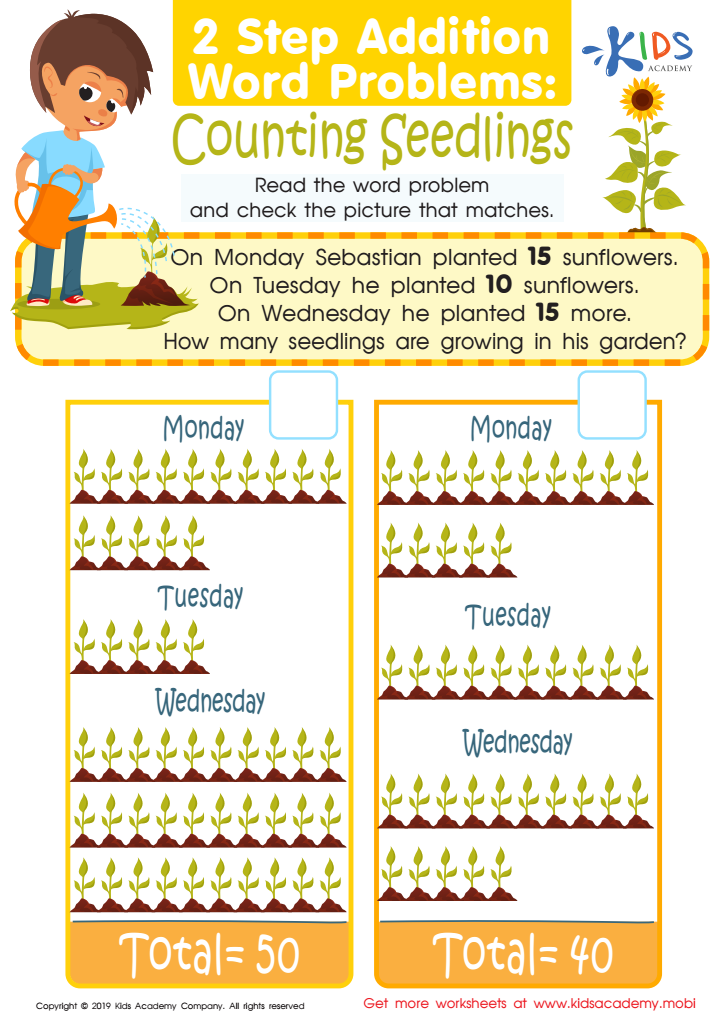
Counting Seedlings Worksheet

Counting Seedlings Worksheet

Understanding math word problems is key. Multiple steps can prove challenging - this free worksheet provides one-to-one picture representation to help kids solve multi-step addition word problems. Strengthen addition skills by choosing the matching picture to the answer.
Counting Seedlings Worksheet
Worksheet
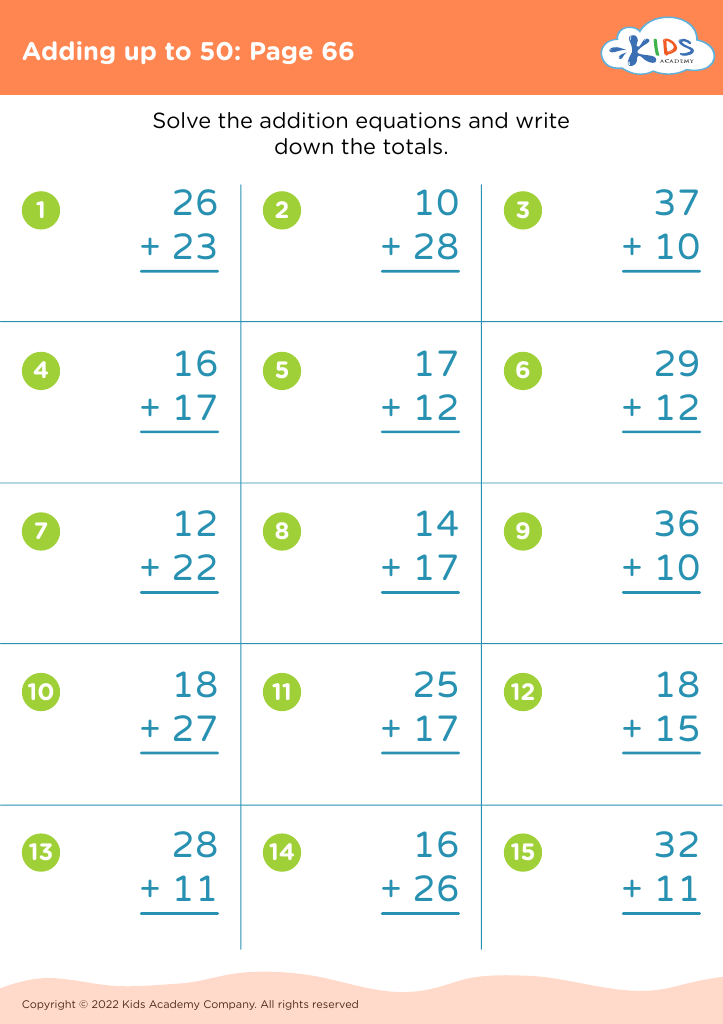
Adding up to 50: Page 66

Adding up to 50: Page 66

Adding up to 50: Page 66
Worksheet
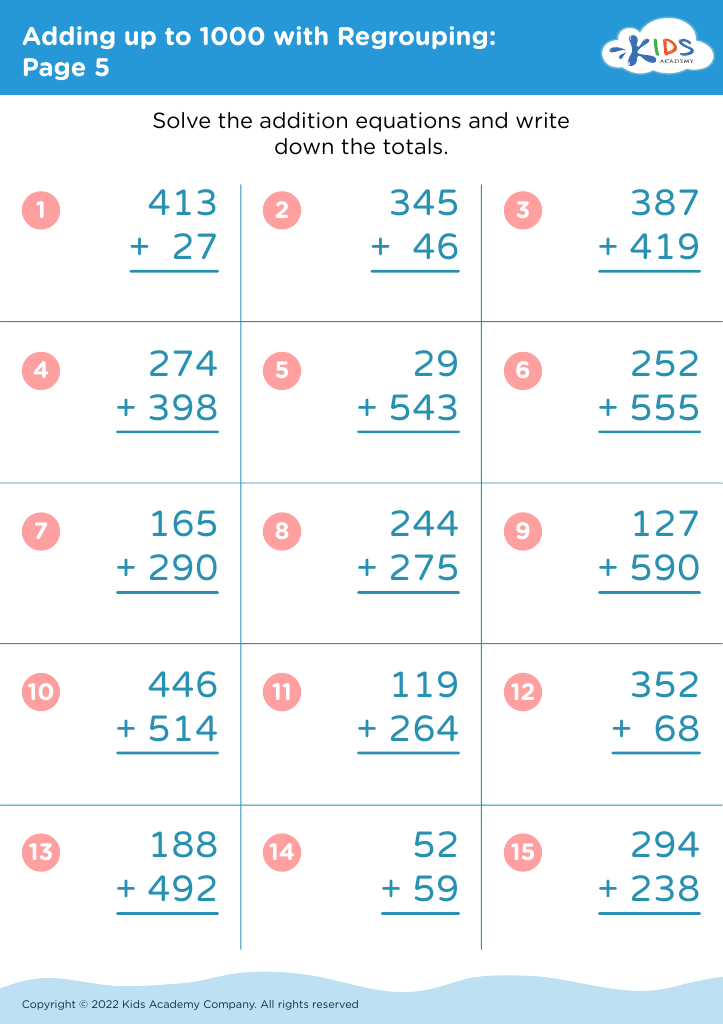
Adding up to 1000 with Regrouping: Page 5
Worksheet
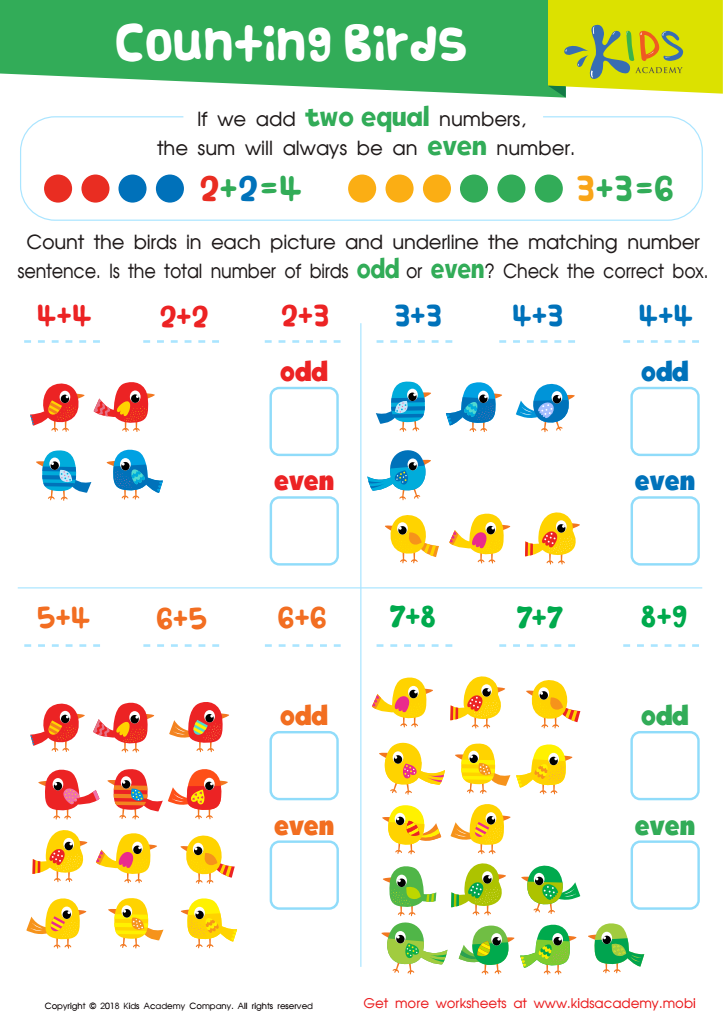
Counting Birds Worksheet
Counting Birds Worksheet
Help your child count and underline the matching number sentence in the worksheet. Ask them if the total number of birds in each picture is odd or even, then check the correct box. When two equal numbers are added, the sum is always an even number (e.g. 2+2=4, 4+4=8, both divisible by 2).
Counting Birds Worksheet
Worksheet
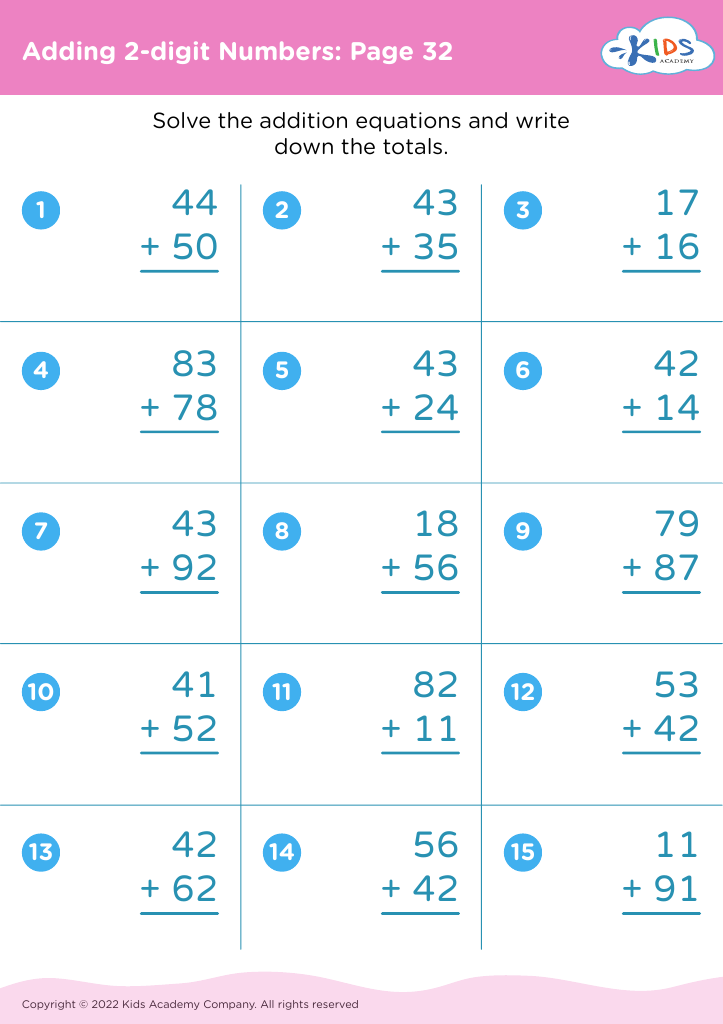
Adding 2-digit Numbers: Page 32

Adding 2-digit Numbers: Page 32

Adding 2-digit Numbers: Page 32
Worksheet
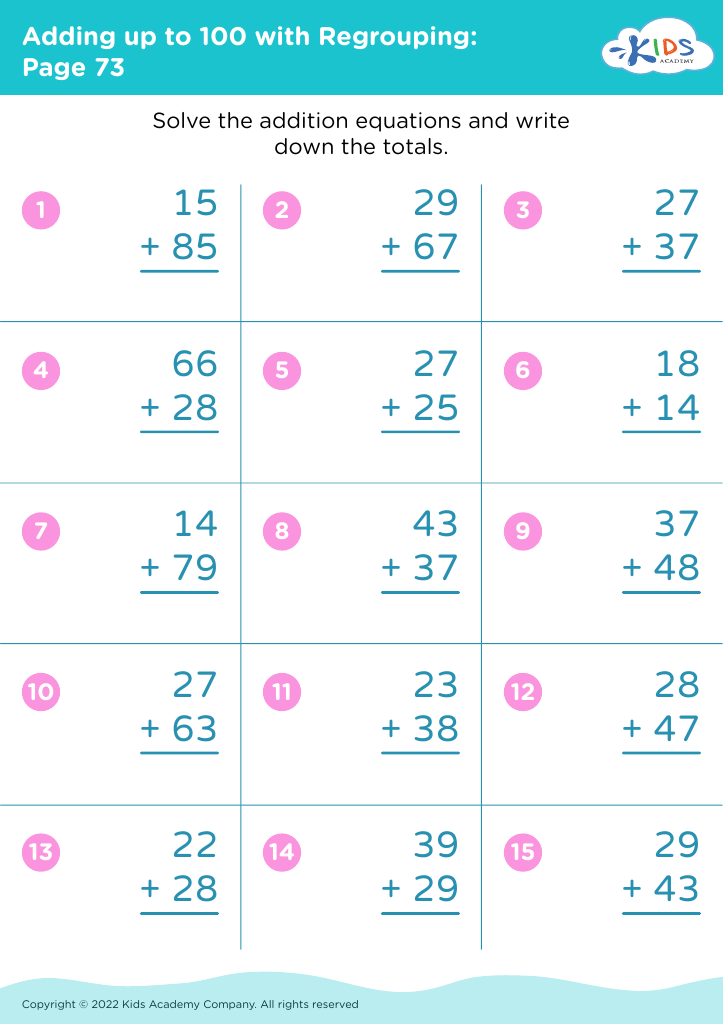
Adding up to 100 with Regrouping: Page 73
Worksheet
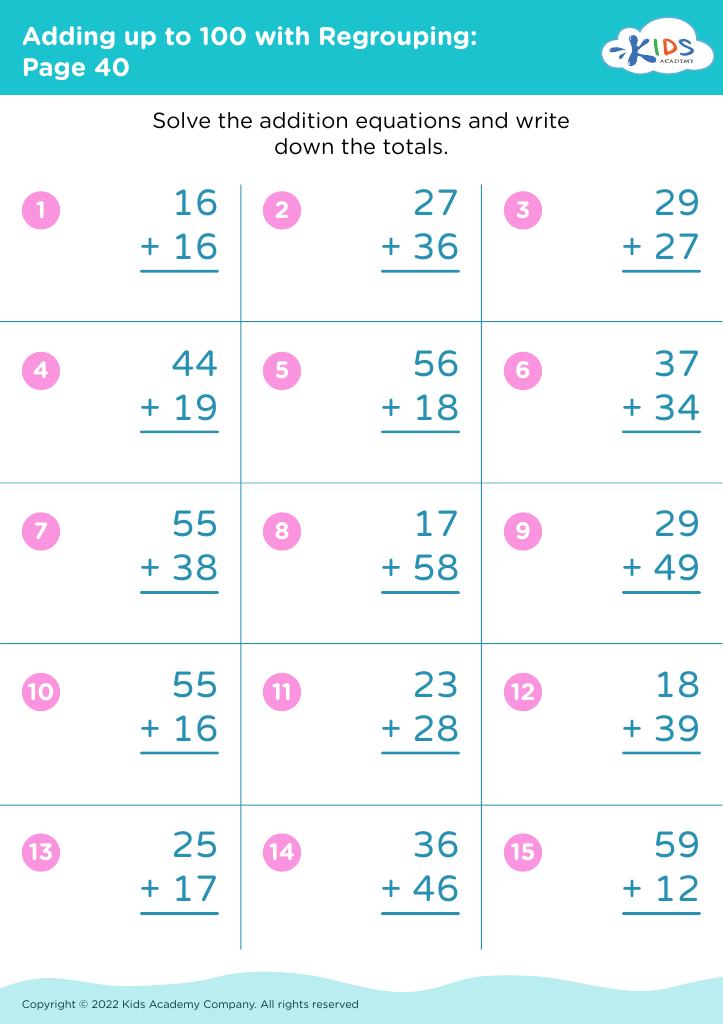
Adding up to 100 with Regrouping: Page 40
Worksheet
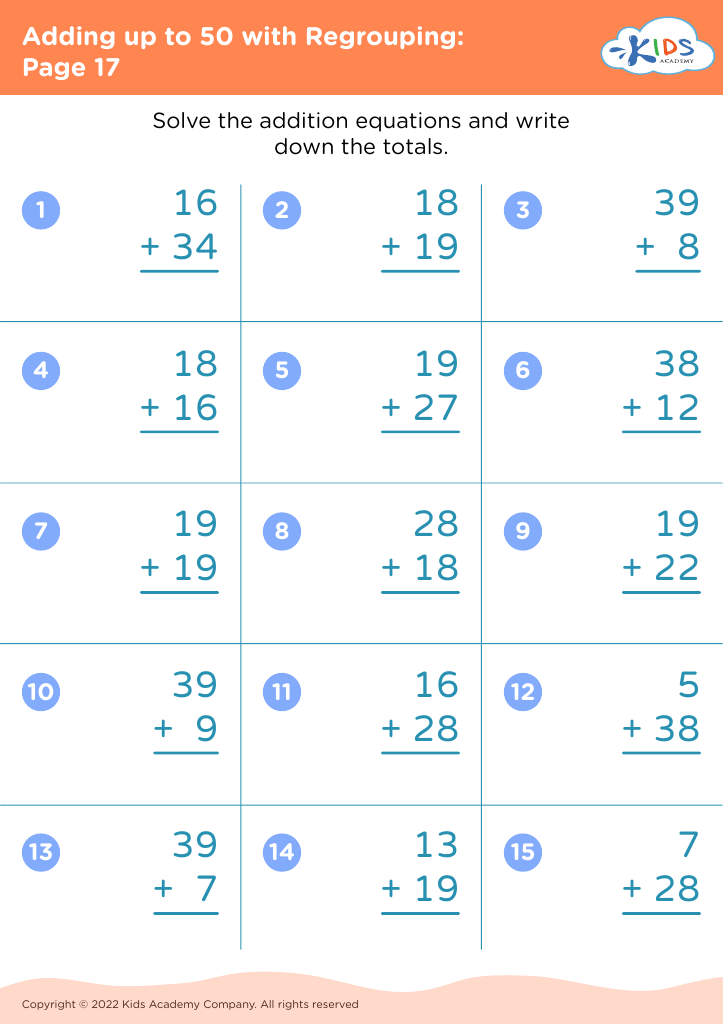
Adding up to 50 with Regrouping: Page 17
Worksheet
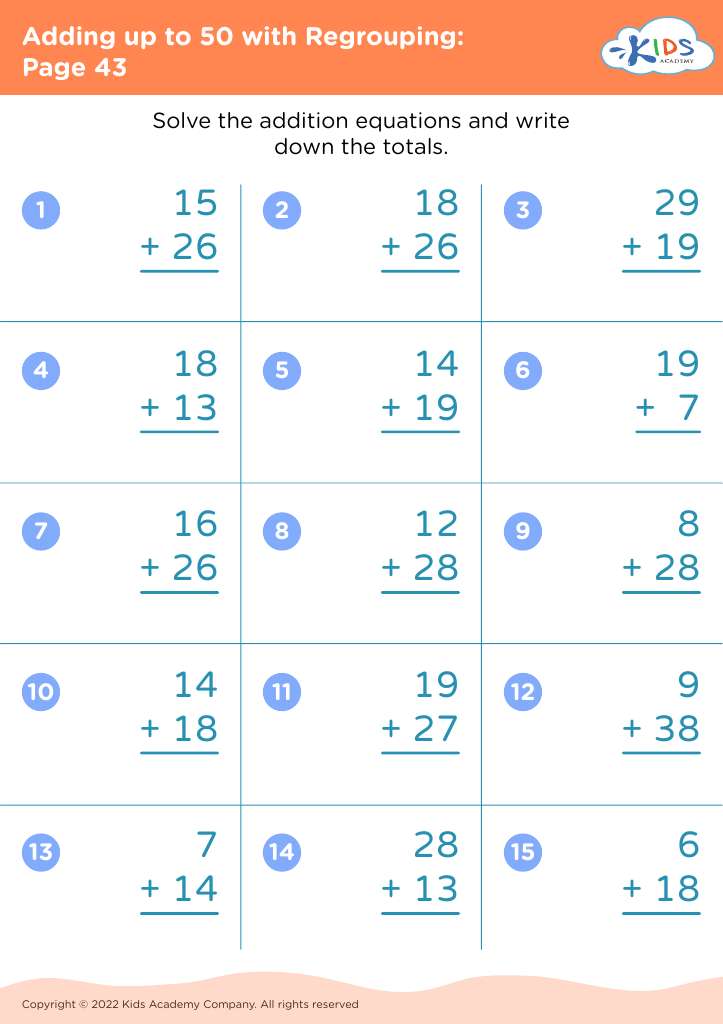
Adding up to 50 with Regrouping: Page 43
Worksheet
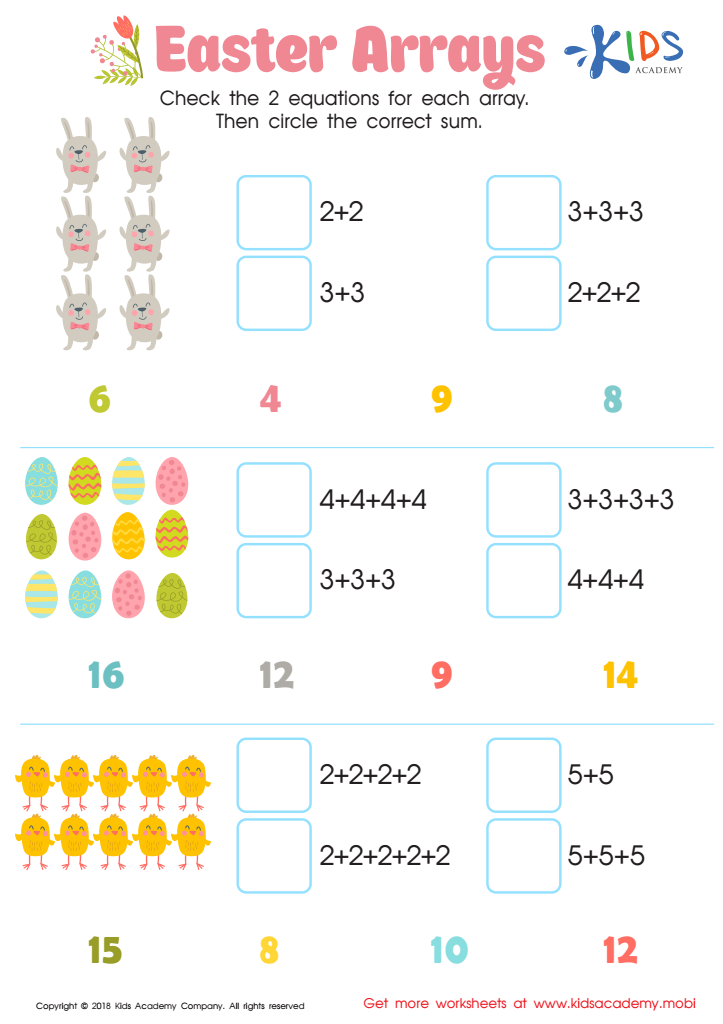
Easter Arrays Worksheet
Easter Arrays Worksheet

Does your child love Easter? Do they adore the Easter bunny and egg hunts? Help them have fun with this worksheet! Go through it with them and check the equations for each array. Then, have them circle the correct sum. It's a great way to make the holiday extra exciting!
Easter Arrays Worksheet
Worksheet
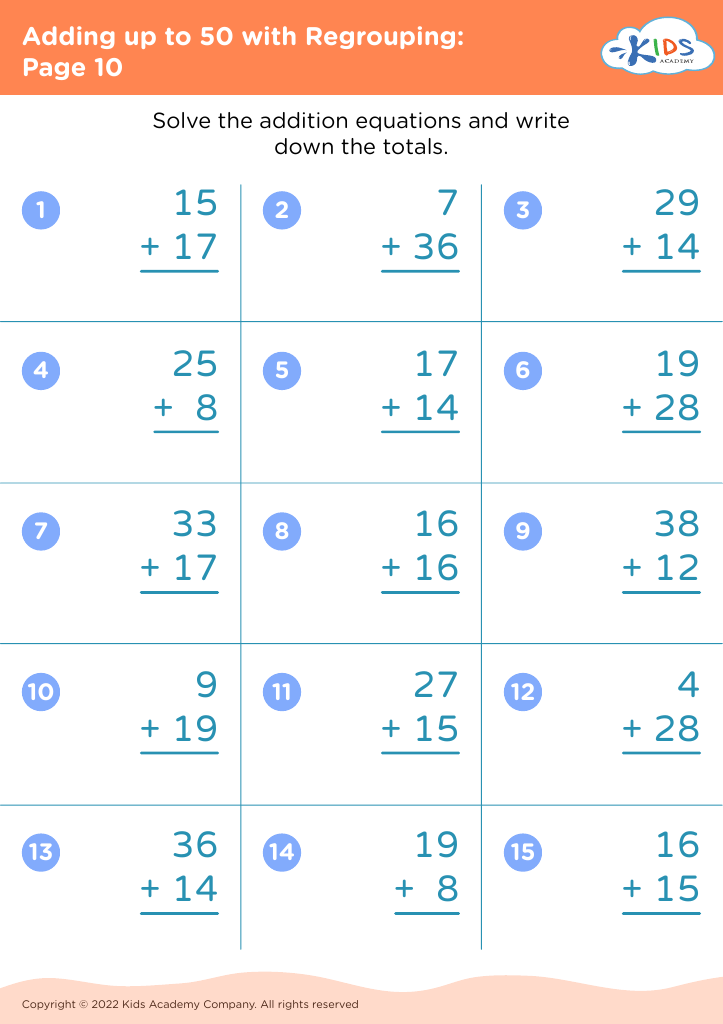
Adding up to 50 with Regrouping: Page 10
Worksheet
Adding Flower Petals Worksheet
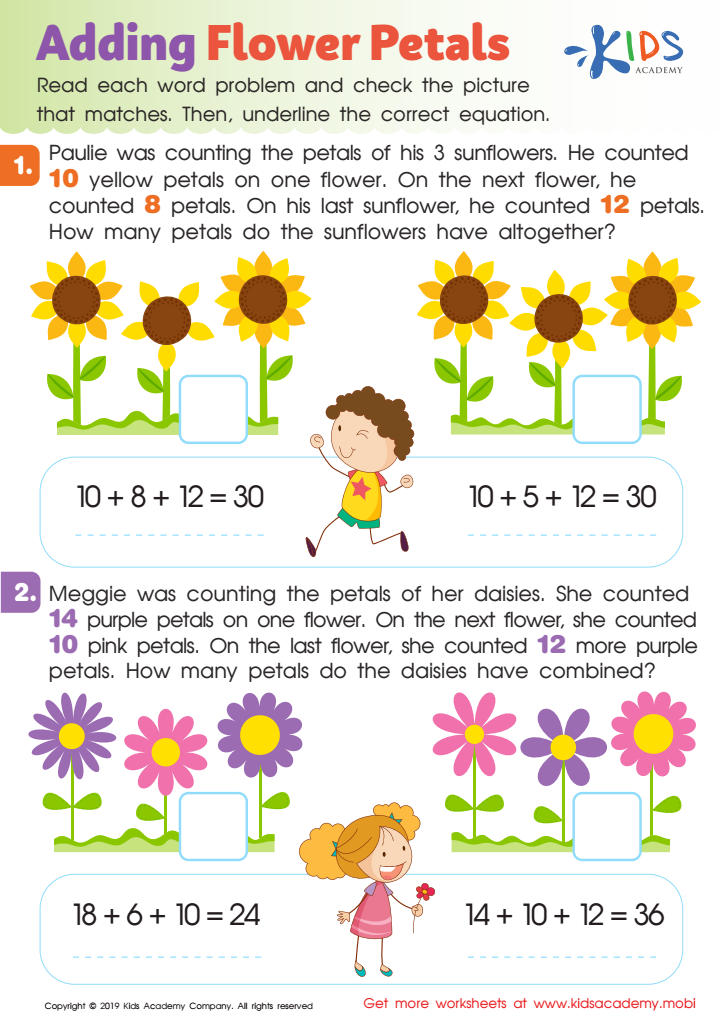
Adding Flower Petals Worksheet
This free worksheet helps little mathematicians learn to understand word problems. They'll read each one and match it to the corresponding picture. Important info is highlighted, teaching kids to look for key info when solving problems. Then they'll underline the correct number equation that matches the picture. A great way to practice problem-solving skills!
Adding Flower Petals Worksheet
Worksheet
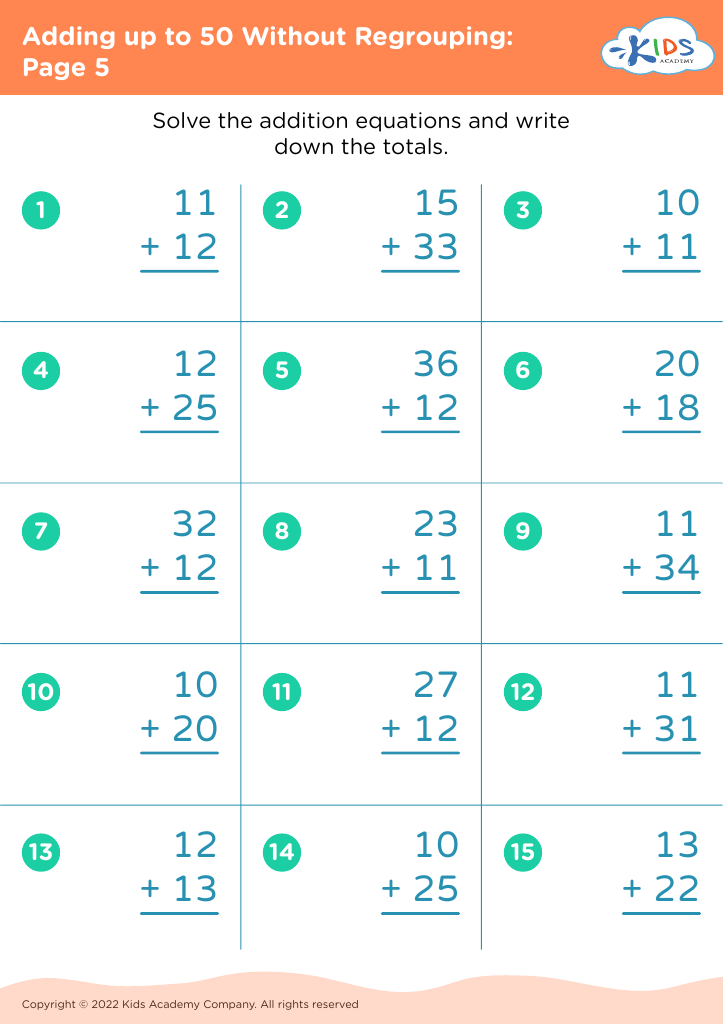
Adding up to 50 Without Regrouping: Page 5
Worksheet
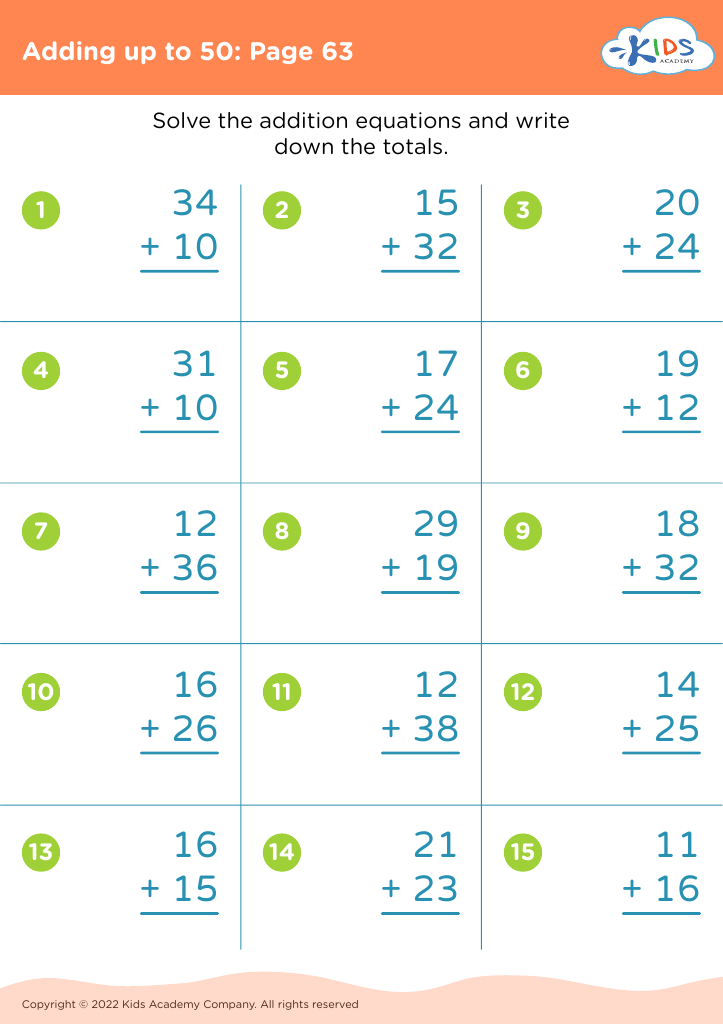
Adding up to 50: Page 63

Adding up to 50: Page 63

Adding up to 50: Page 63
Worksheet
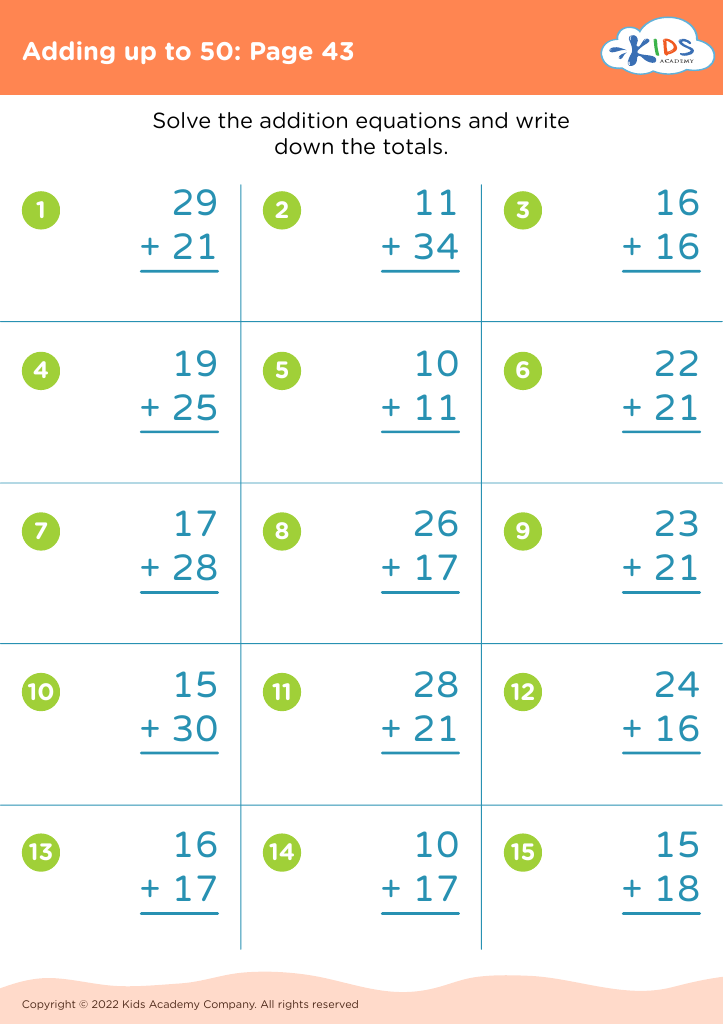
Adding up to 50: Page 43

Adding up to 50: Page 43

Adding up to 50: Page 43
Worksheet
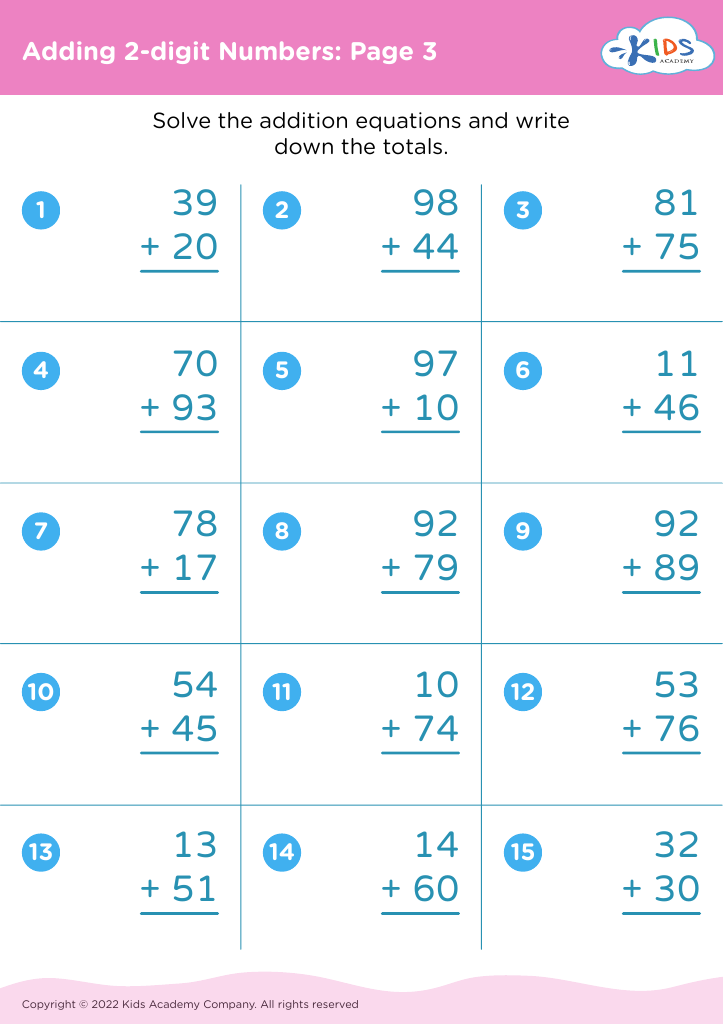
Adding 2-digit Numbers: Page 3

Adding 2-digit Numbers: Page 3

Adding 2-digit Numbers: Page 3
Worksheet
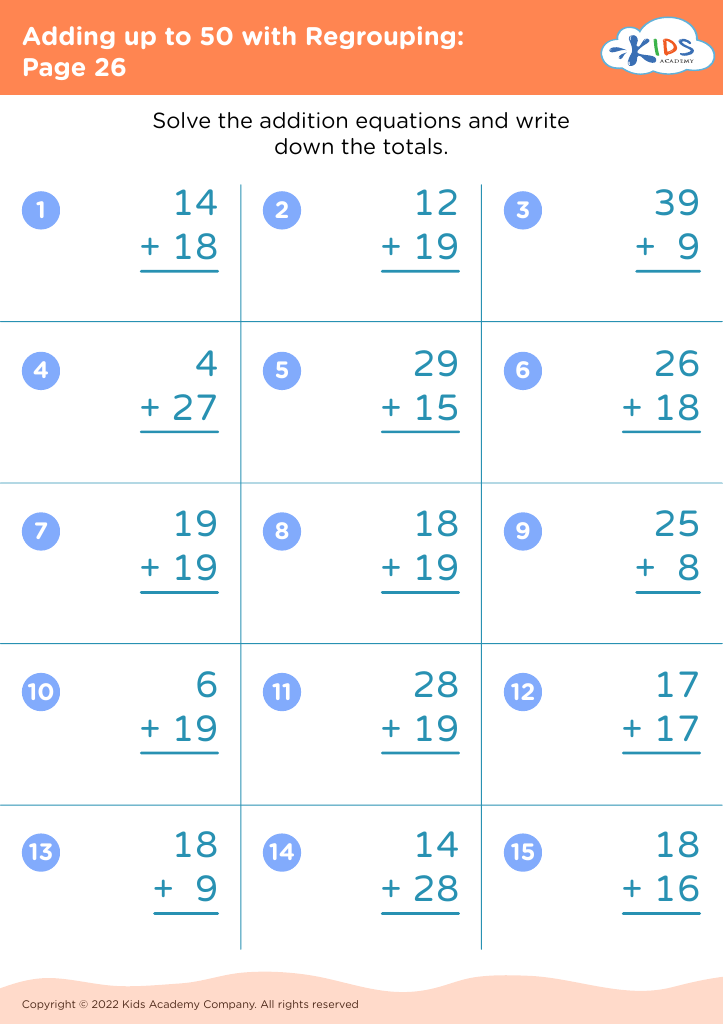
Adding up to 50 with Regrouping: Page 26
Worksheet
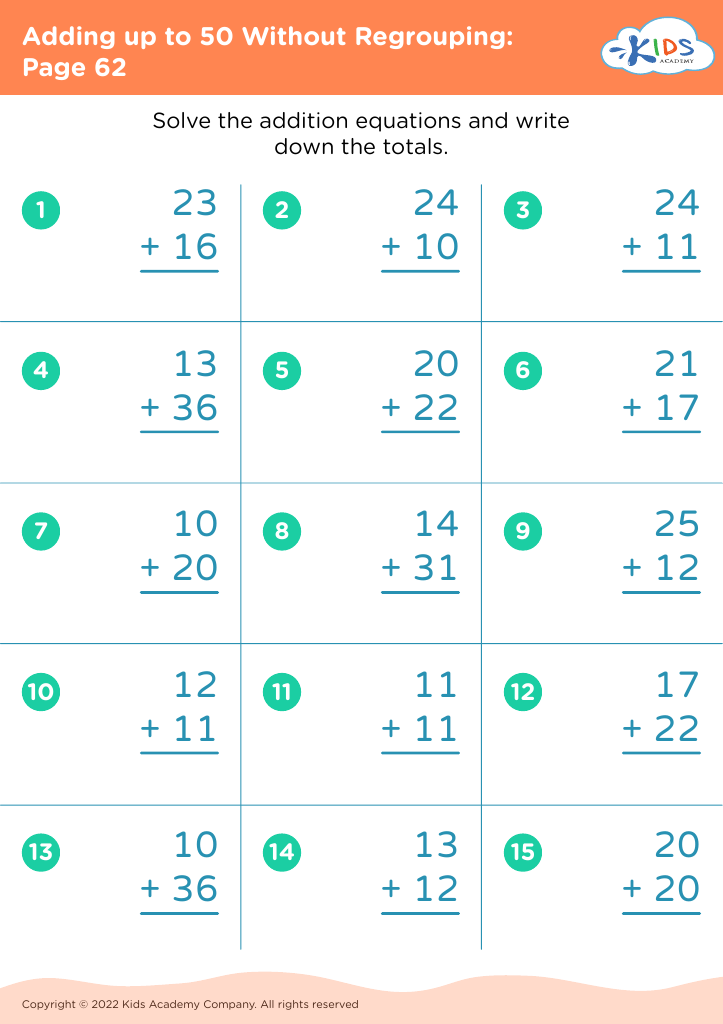
Adding up to 50 Without Regrouping: Page 62
Worksheet
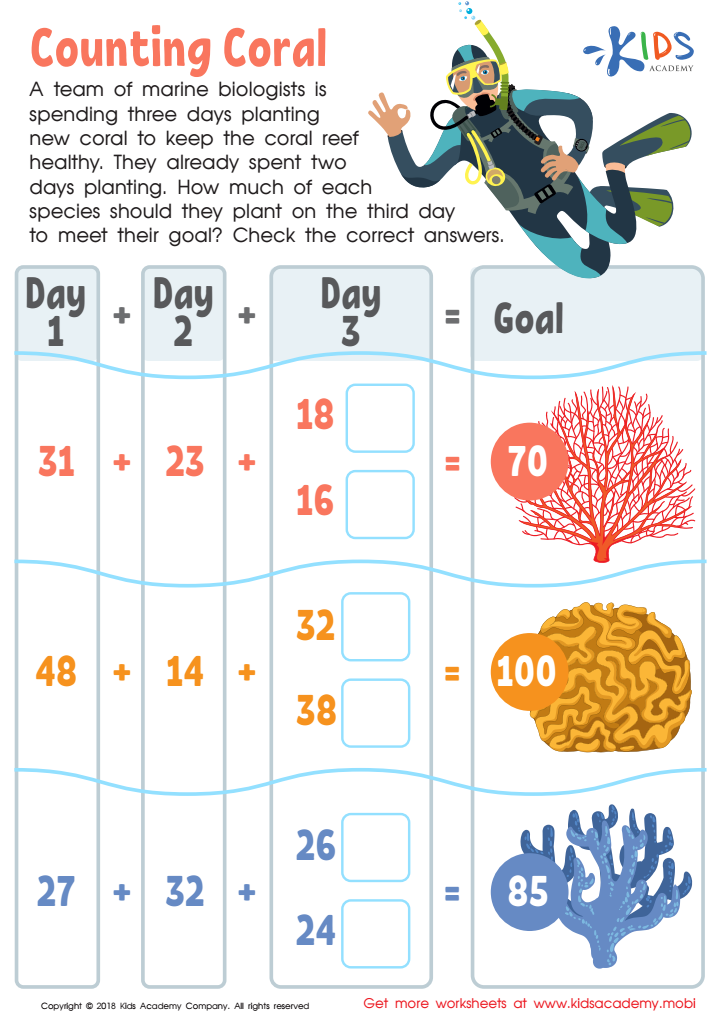
Counting Coral Worksheet
Counting Coral Worksheet
Introduce your child to the team of marine biologists planting coral to keep a reef healthy. They've planted for two days and need to figure out how much of each specie to plant on the third day to reach their goal. Help your child answer the questions on the printout and learn what it takes to be a marine biologist.
Counting Coral Worksheet

Worksheet
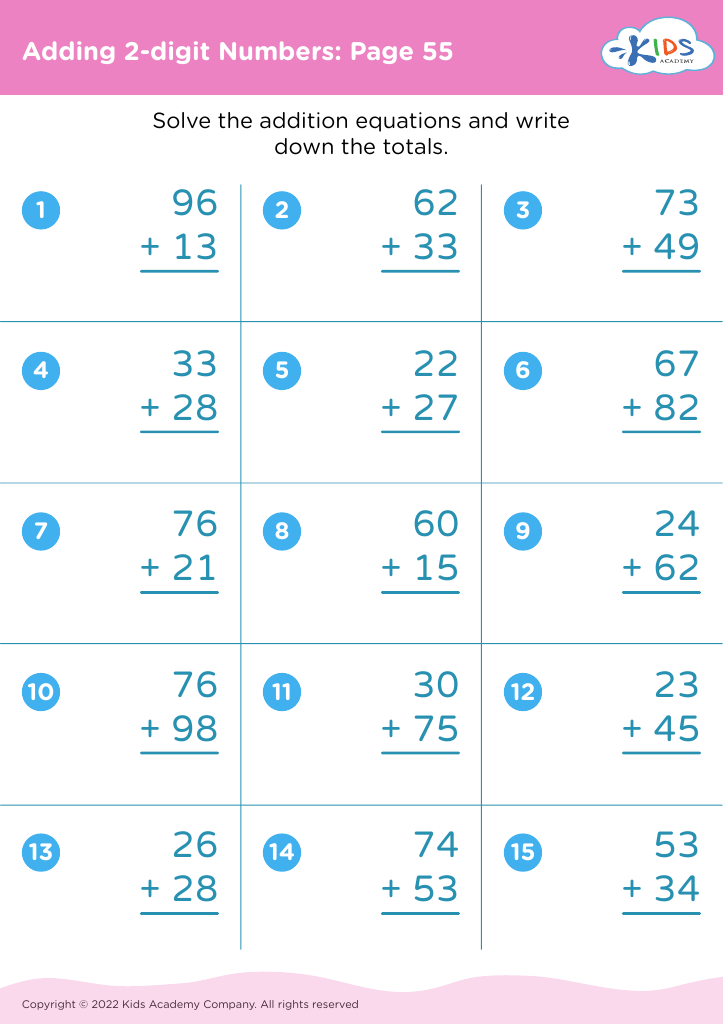
Adding 2-digit Numbers: Page 55

Adding 2-digit Numbers: Page 55

Adding 2-digit Numbers: Page 55
Worksheet
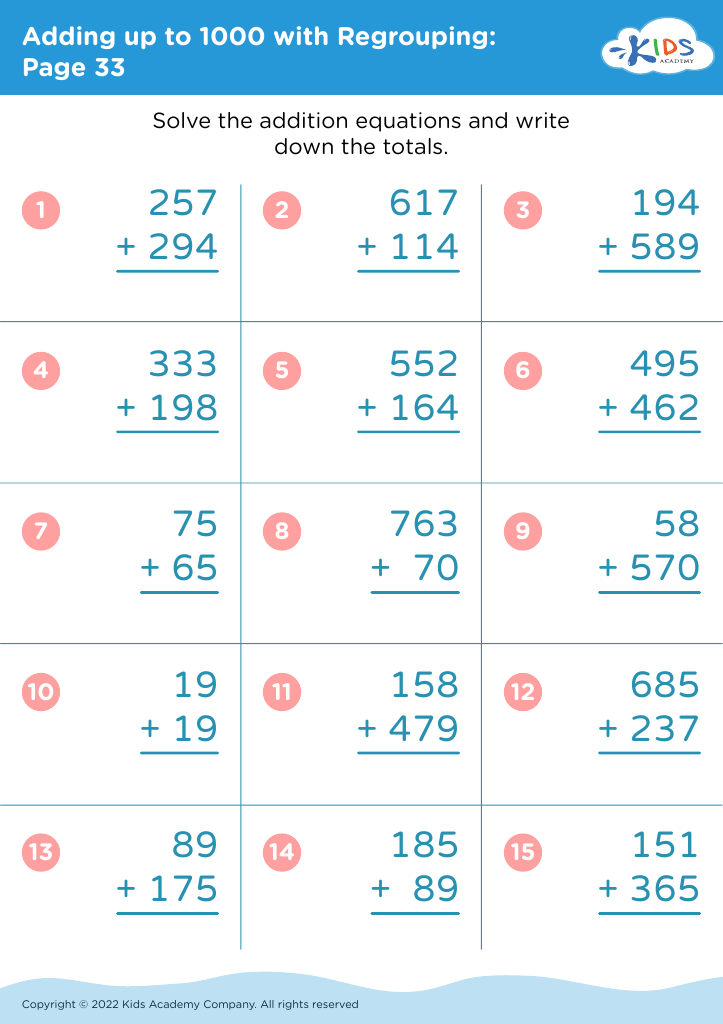
Adding up to 1000 with Regrouping: Page 33
Worksheet
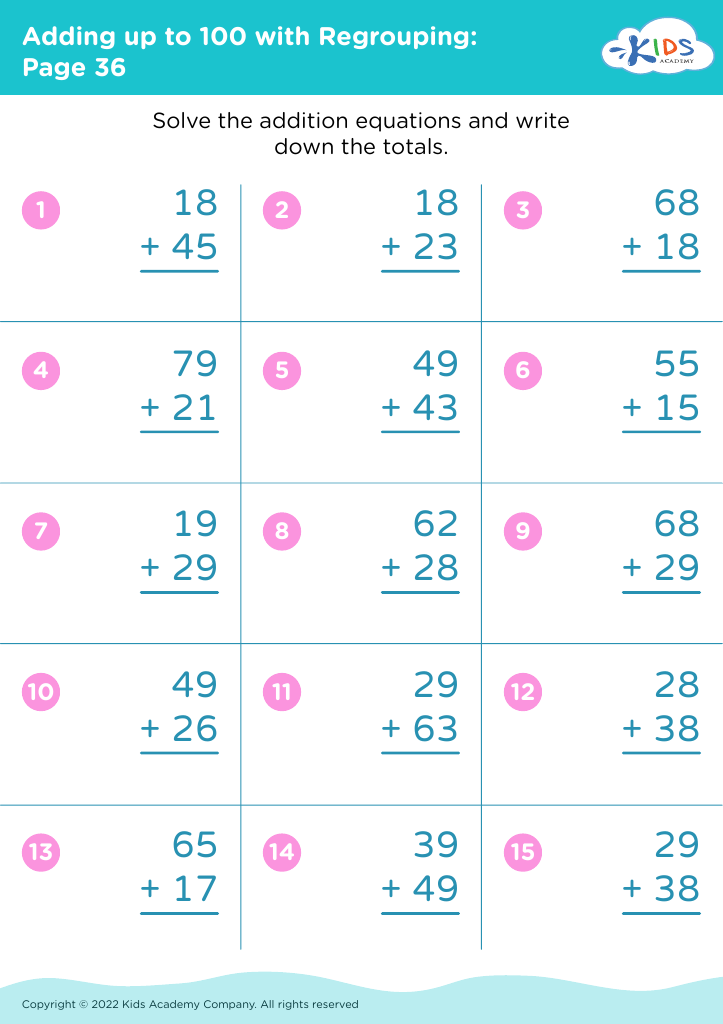
Adding up to 100 with Regrouping: Page 36
Worksheet
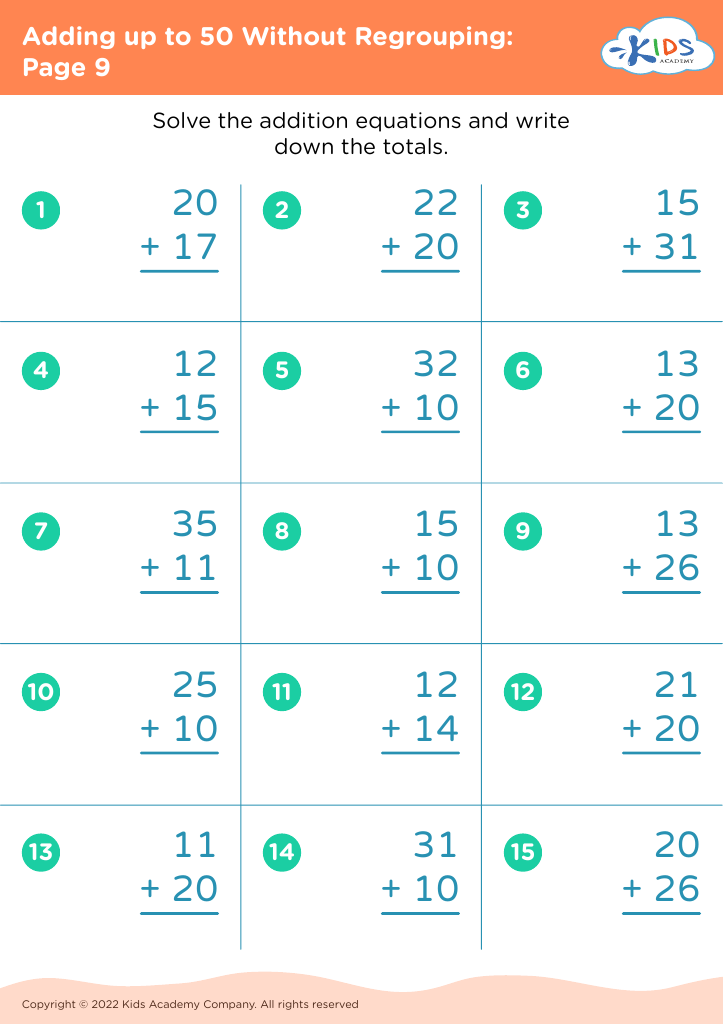
Adding up to 50 Without Regrouping: Page 9
Worksheet


Counting skills, particularly in Grade 2, play a foundational role in a child's mathematical development and overall academic success. At this stage, children typically transition from simple number recognition to more complex addition and subtraction processes. It's vital for both parents and teachers to understand the importance of these basics for several reasons.

Firstly, addition and subtraction are fundamental arithmetic operations that form the basis for learning more complex math skills like multiplication, division, and fractions. Mastery of these skills enables students to handle advanced mathematical concepts in later grades smoothly and confidently.

Secondly, strong counting abilities bolster critical thinking and problem-solving skills. As children learn to manipulate numbers through addition and subtraction, they enhance their capacity to analyze situations, determine solutions, and understand patterns. This cognitive flexibility is not limited to math but can apply to various real-life scenarios.

Thirdly, early success in math builds confidence and a positive attitude toward the subject. When children gain competence in addition and subtraction, they are more likely to participate actively and enjoy learning. Conversely, struggling with these basics can lead to math anxiety and a diminishing interest in the subject, impacting their overall academic performance.

Thus, by prioritizing counting skills at an early age, parents and teachers lay a crucial foundation for future academic success and beyond.