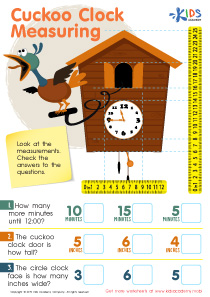
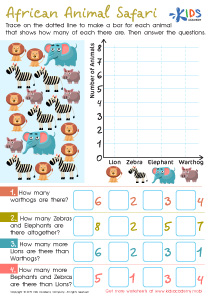
Boost your child's math skills with our Grade 2 Addition & Subtraction Worksheets. Designed to enhance comprehension, these engaging worksheets help second graders master essential concepts through fun and interactive exercises. The worksheets cover a variety of addition and subtraction problems, aiding children in developing confidence and accuracy in their calculations. With colorful activities and strategic challenges, our resources ensure that learning math remains enjoyable and effective. Whether used in the classroom or at home, these worksheets provide an excellent foundation for building strong arithmetic skills necessary for future math success. Empower your child’s learning journey with these excellent educational tools!
Check out this FREE Grade 2 Trial Lesson on Addition & Subtraction!

Irregular Past Tense Verbs

Favorites
With answer key
Interactive
  • Grade 2
  • Enhance comprehension
  • Addition & Subtraction
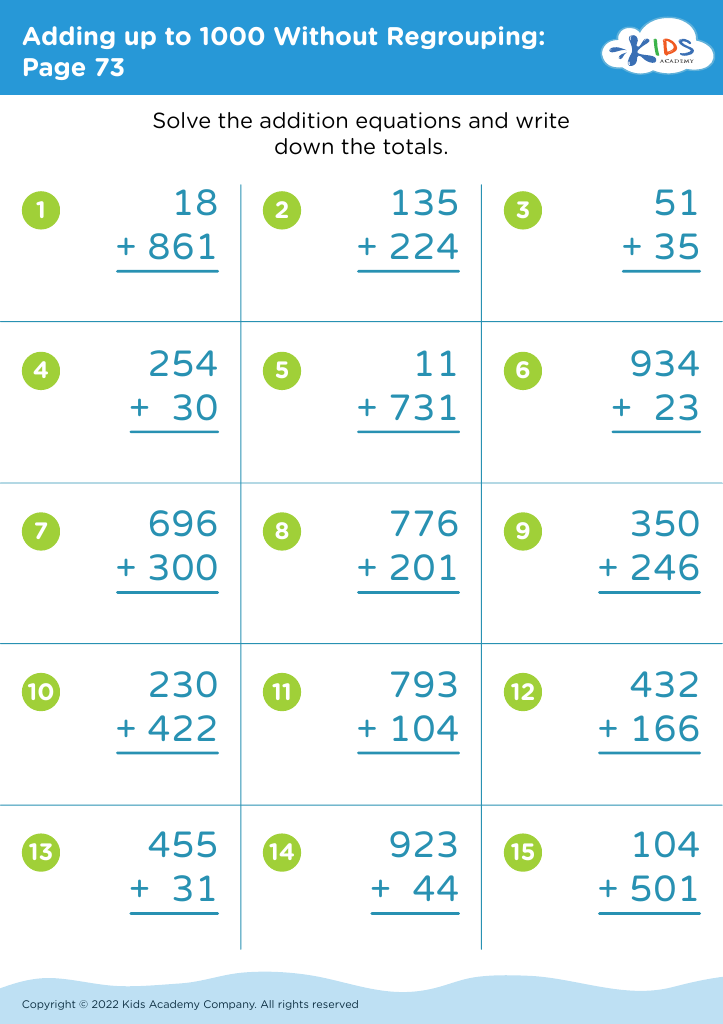
Adding up to 1000 Without Regrouping: Page 73
Worksheet
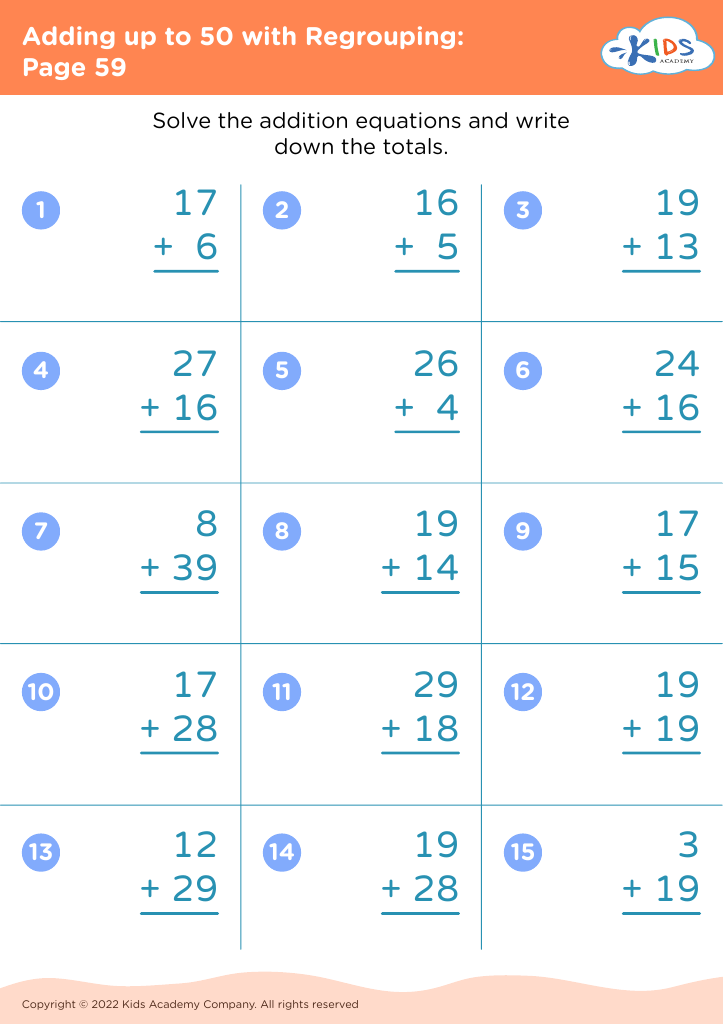
Adding up to 50 with Regrouping: Page 59
Worksheet
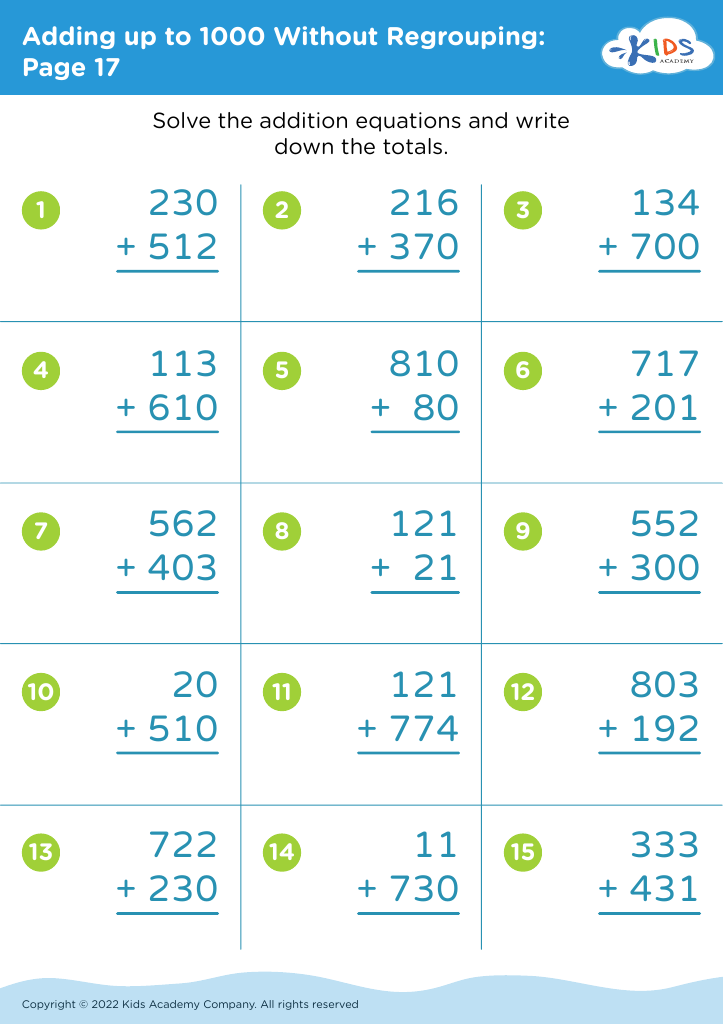
Adding up to 1000 Without Regrouping: Page 17
Worksheet
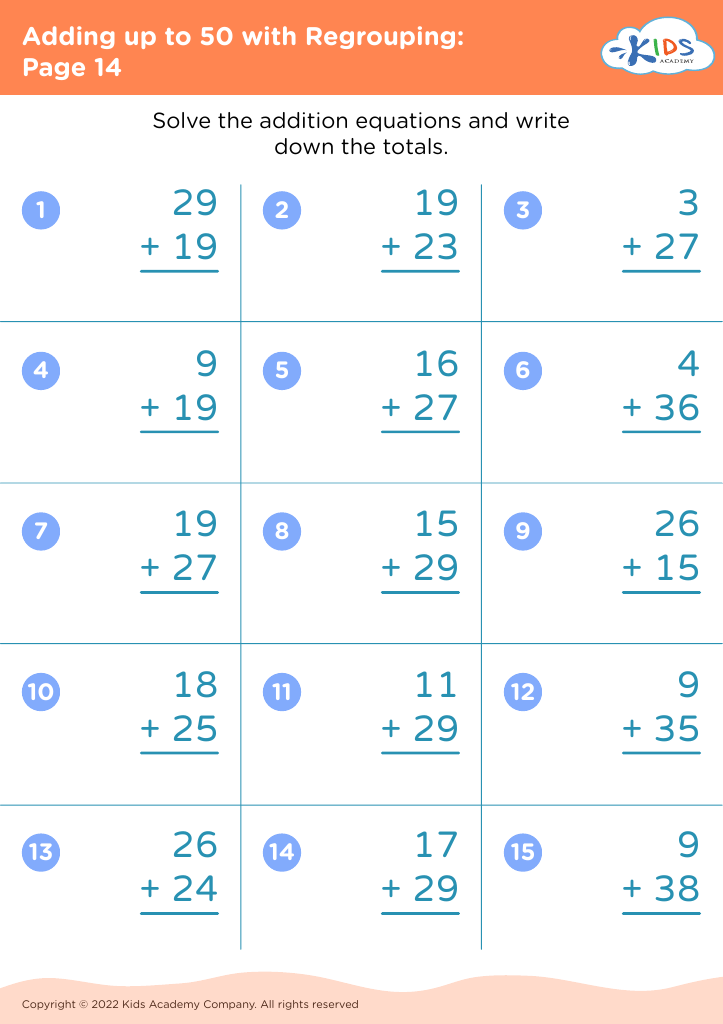
Adding up to 50 with Regrouping: Page 14
Worksheet
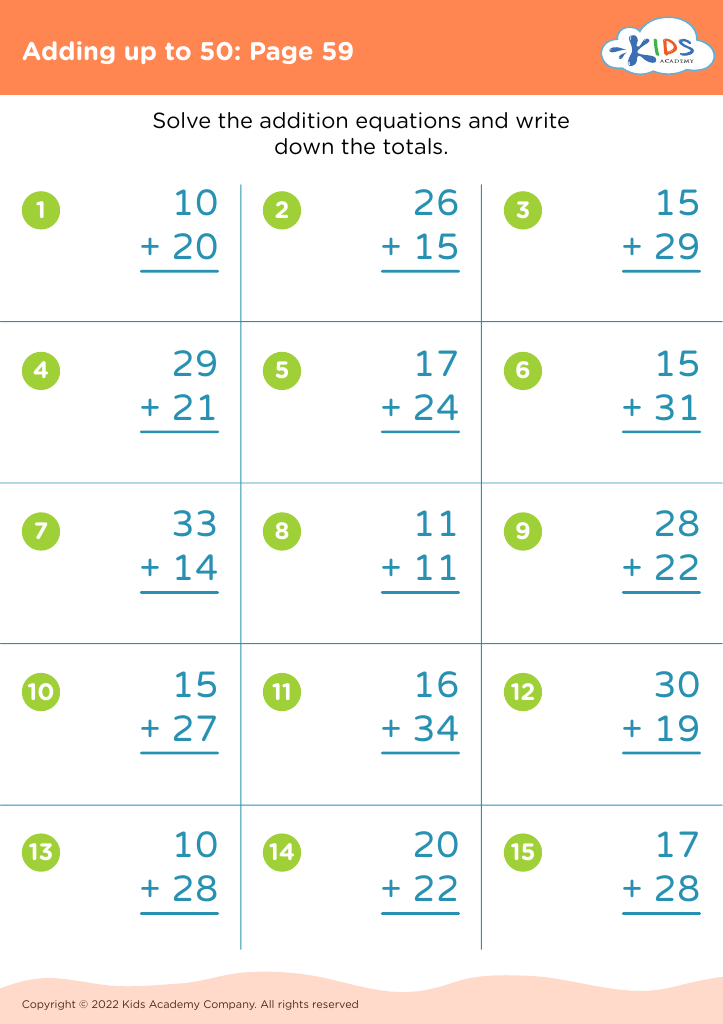
Adding up to 50: Page 59

Adding up to 50: Page 59

Adding up to 50: Page 59
Worksheet
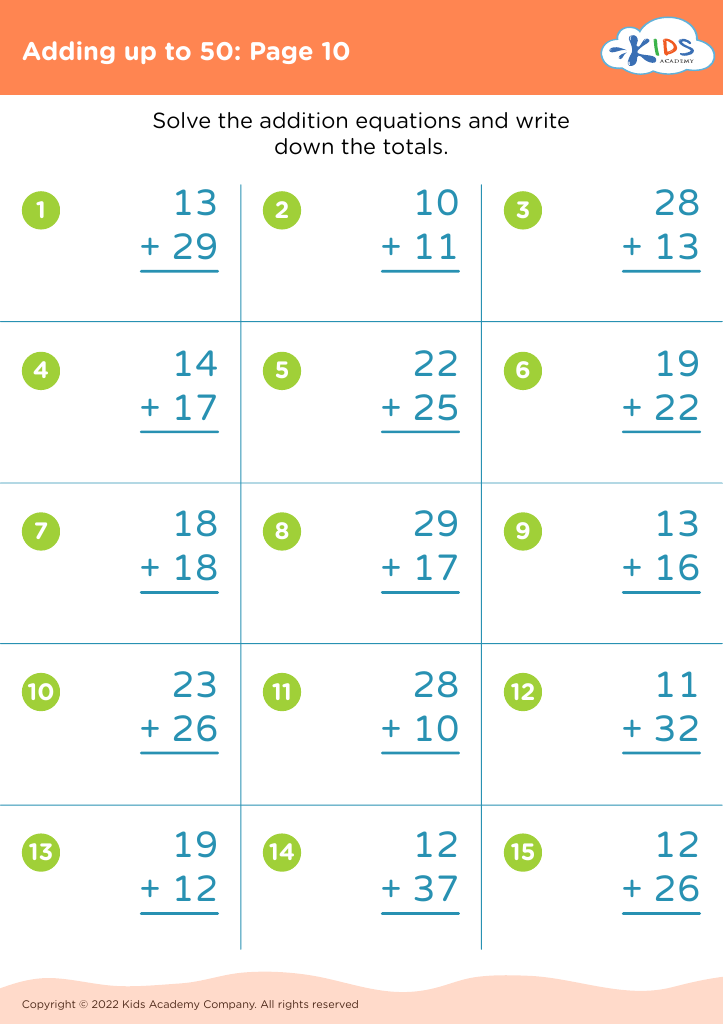
Adding up to 50: Page 10

Adding up to 50: Page 10

Adding up to 50: Page 10
Worksheet
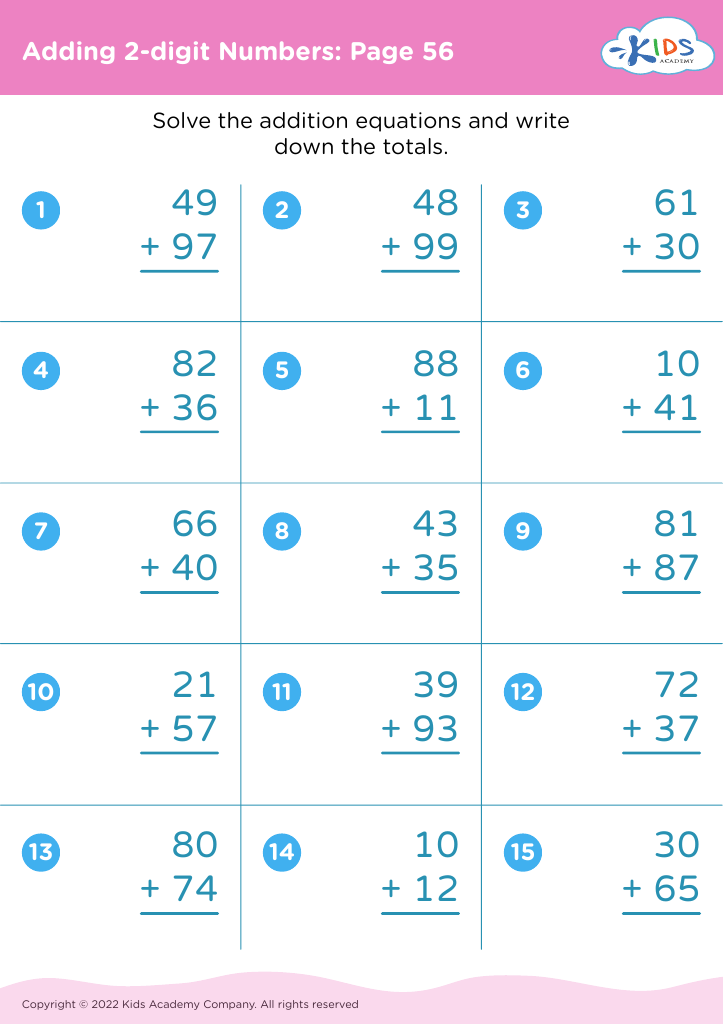
Adding 2-digit Numbers: Page 56

Adding 2-digit Numbers: Page 56

Adding 2-digit Numbers: Page 56
Worksheet
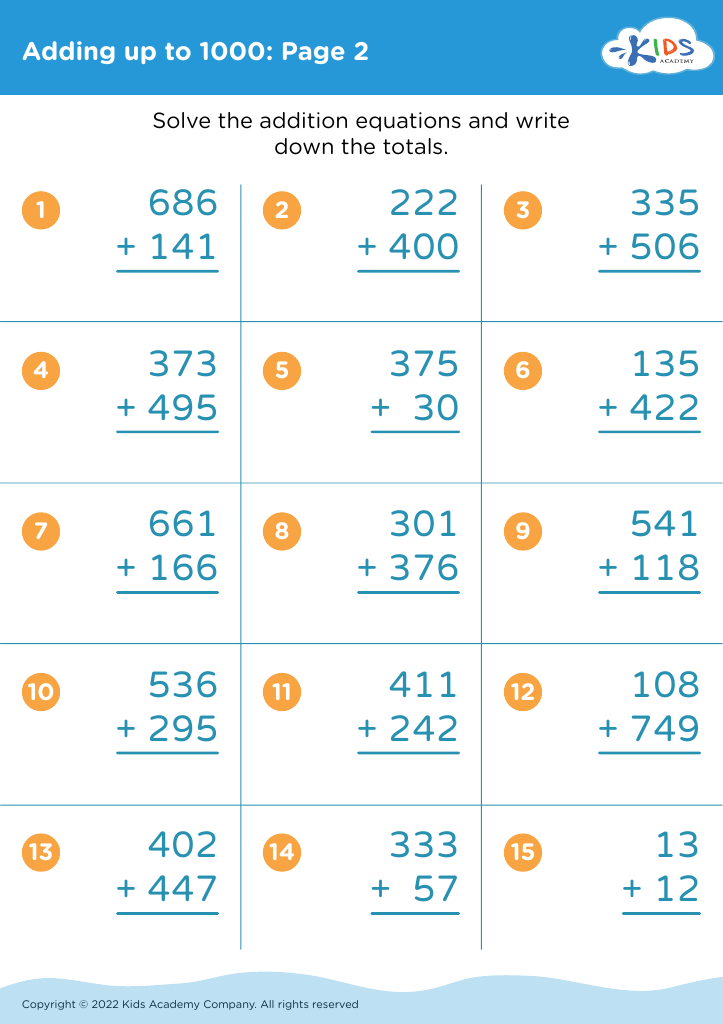
Adding up to 1000: Page 2

Adding up to 1000: Page 2

Adding up to 1000: Page 2
Worksheet
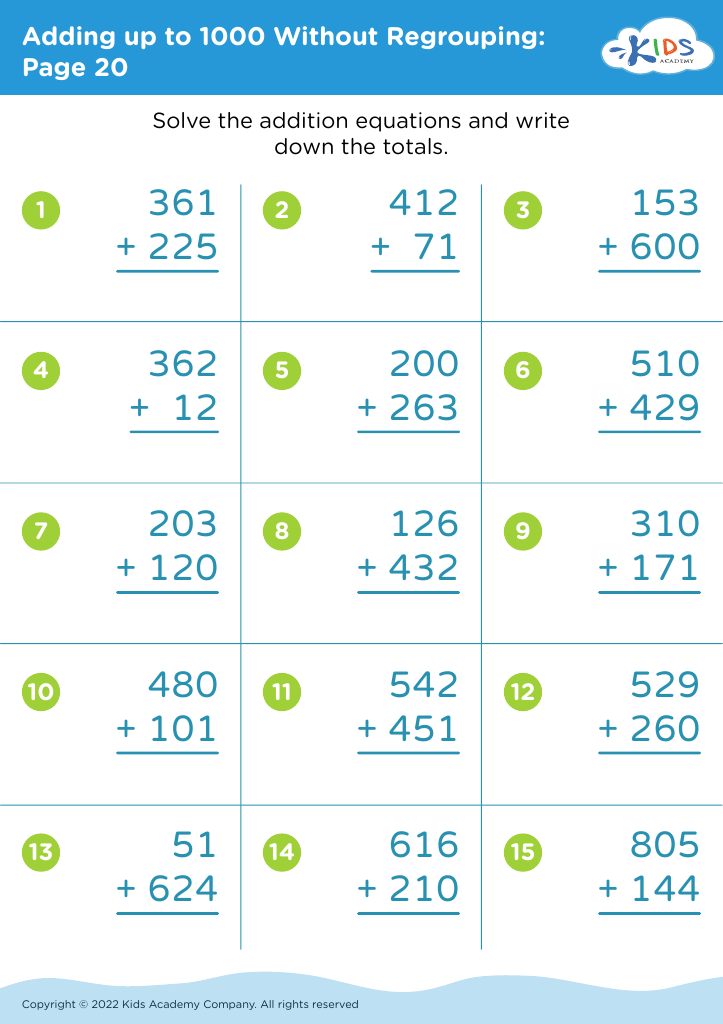
Adding up to 1000 Without Regrouping: Page 20
Worksheet
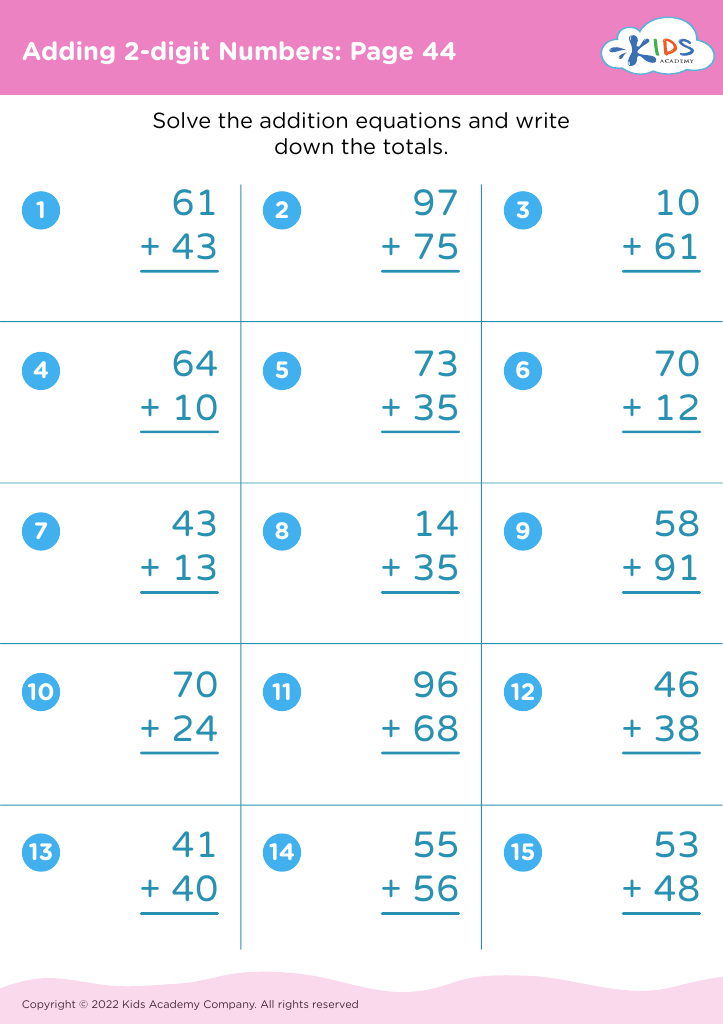
Adding 2-digit Numbers: Page 44

Adding 2-digit Numbers: Page 44

Adding 2-digit Numbers: Page 44
Worksheet
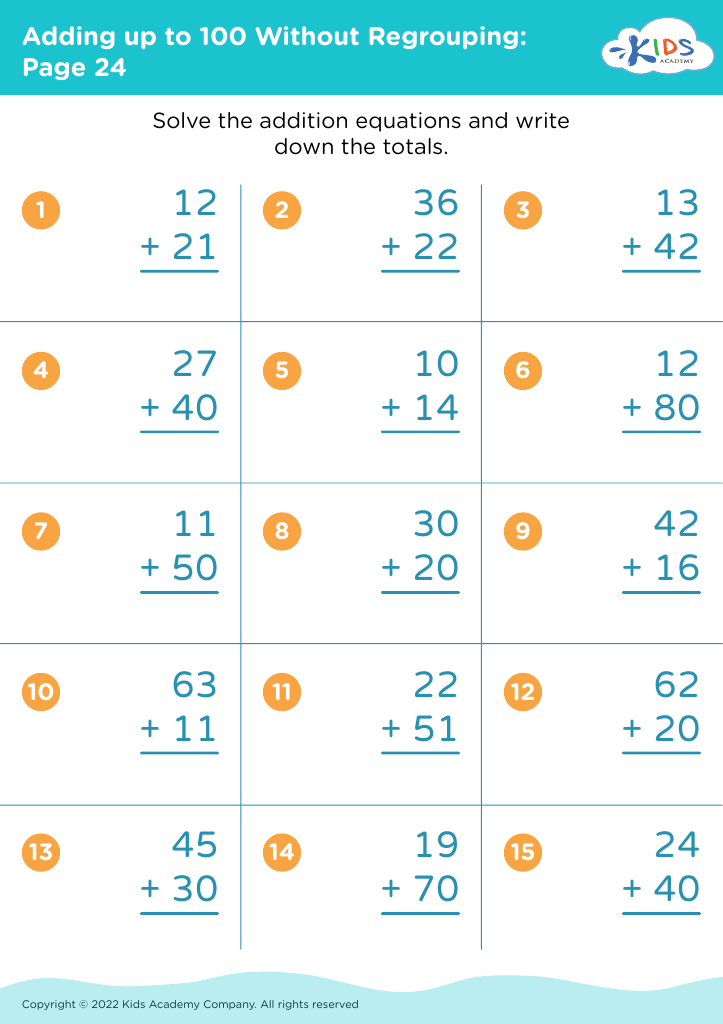
Adding up to 100 Without Regrouping: Page 24
Worksheet
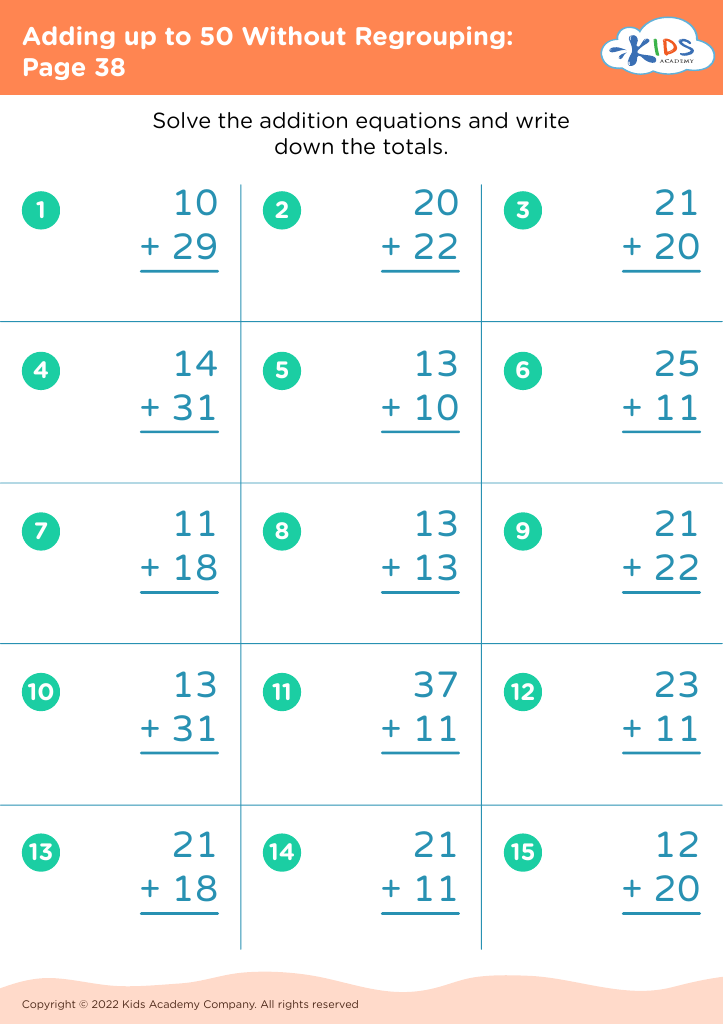
Adding up to 50 Without Regrouping: Page 38
Worksheet
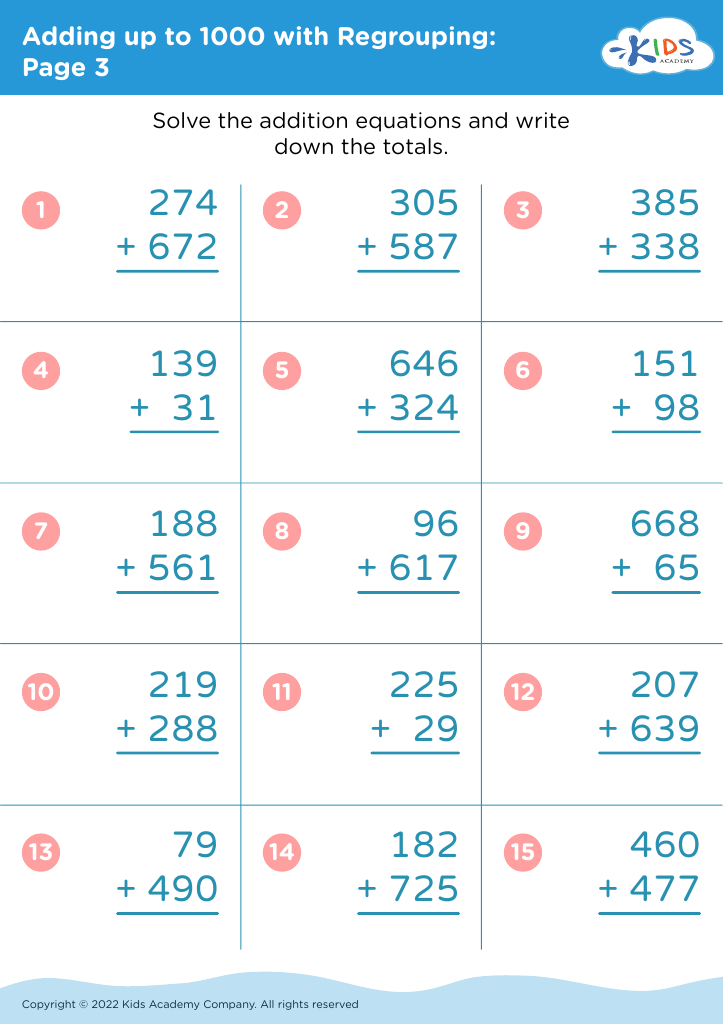
Adding up to 1000 with Regrouping: Page 3
Worksheet
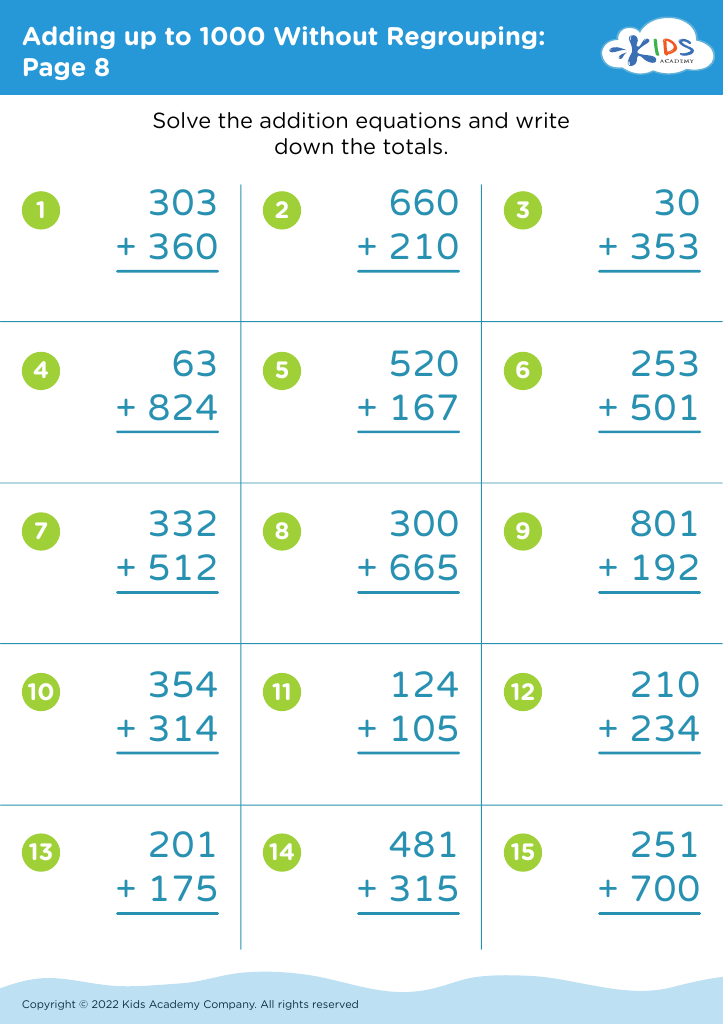
Adding up to 1000 Without Regrouping: Page 8
Worksheet
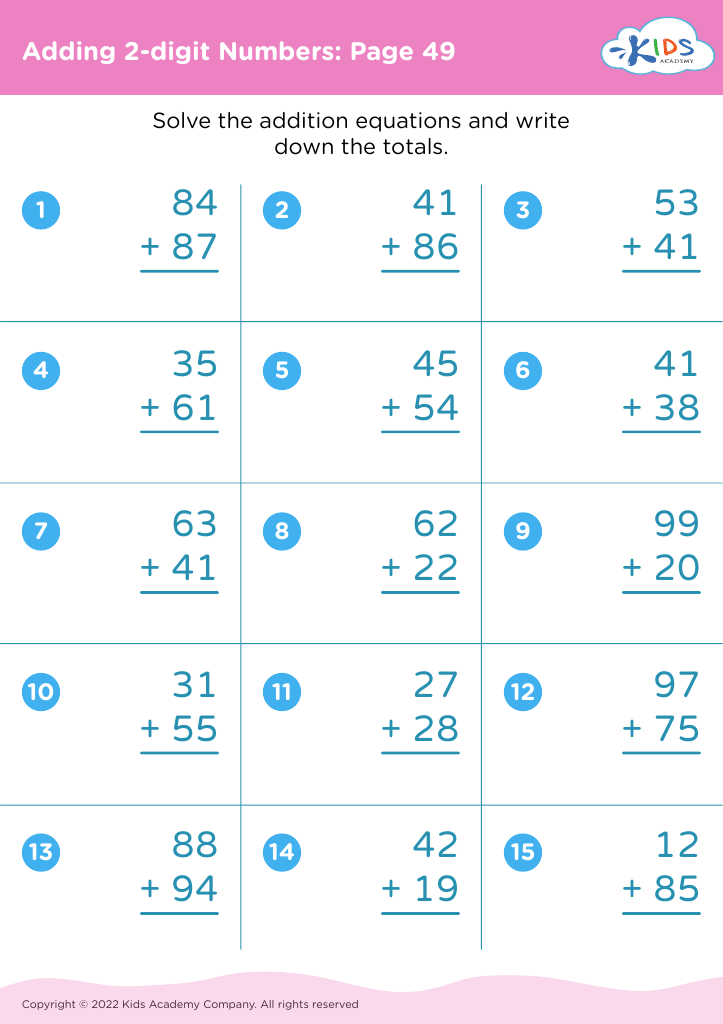
Adding 2-digit Numbers: Page 49

Adding 2-digit Numbers: Page 49

Adding 2-digit Numbers: Page 49
Worksheet
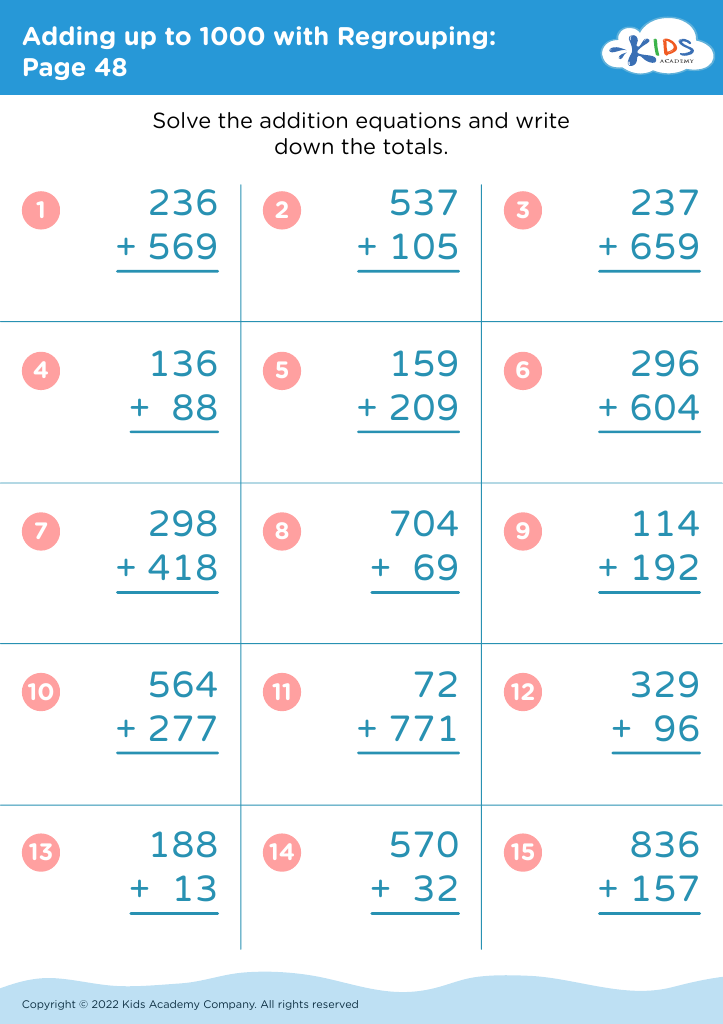
Adding up to 1000 with Regrouping: Page 48
Worksheet
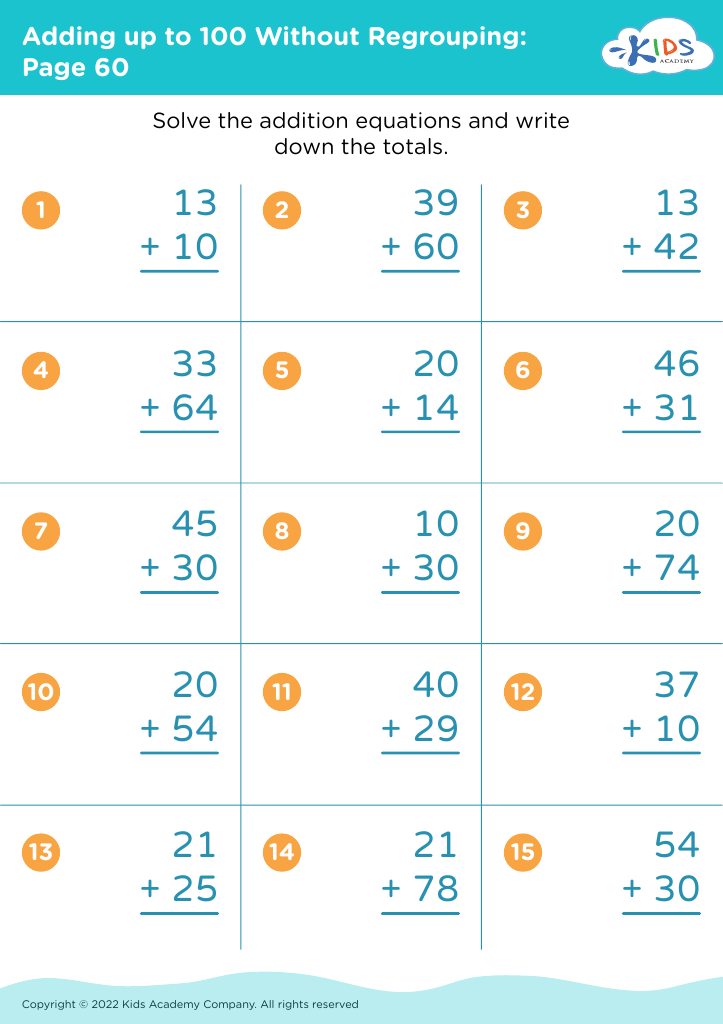
Adding up to 100 Without Regrouping: Page 60
Worksheet


Understanding elementary concepts in mathematics, particularly addition and subtraction, is crucial as they form the foundation for more advanced arithmetic skills and problem-solving abilities. For parents and teachers, enhancing Grade 2 comprehension in these areas is essential for several reasons.

Firstly, a strong grasp of basic addition and subtraction boosts a child's confidence in math, fostering a positive attitude toward learning. This self-assurance helps students tackle more complex topics with less anxiety in later grades.

Secondly, comprehension in these fundamental math operations supports other academic areas. Skills like counting, recognizing patterns, and logical thinking are interconnected with understanding addition and subtraction. These competencies are also vital in everyday activities, such as counting money, measuring ingredients, and planning time.

Furthermore, research indicates that early proficiency in basic math is a strong predictor of future academic success. Children who excel in basic arithmetic often perform better in higher-level math and sciences, leading to a broader range of career opportunities.

Lastly, when parents and teachers work together to reinforce these skills, it creates a supportive learning environment. At home, practical exercises and games can complement schoolwork, while teachers can provide targeted interventions if difficulties arise. Early, consistent focus on these basic math skills sets the stage for long-term educational and personal success.