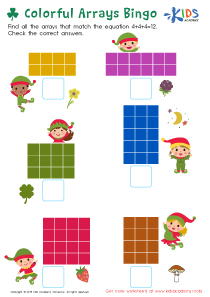
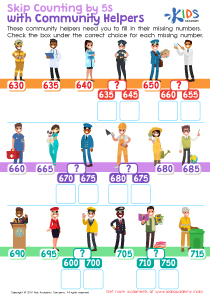
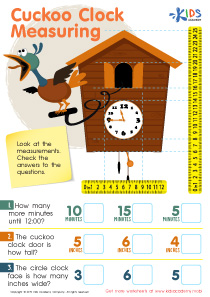
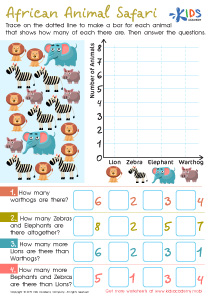
Looking to help your second grader master fractions? Our "Understand Fractions Grade 2 Addition & Subtraction Worksheets" are designed to build fundamental math skills. These engaging worksheets make learning fun with colorful visuals and relatable examples. Students will explore adding and subtracting fractions, enhancing their understanding through practice and repetition. Ideal for homeschooling or supplementary education, our resources strengthen crucial problem-solving abilities. Dive into a world of fractions where your child can develop confidence and excel in math with our well-structured worksheets. Take the next step in your child’s learning journey by downloading today from Kids Academy!
Check out this FREE Grade 2 Trial Lesson on Addition & Subtraction!

Suffixes

Favorites
With answer key
Interactive
  • Grade 2
  • Understand fractions
  • Addition & Subtraction
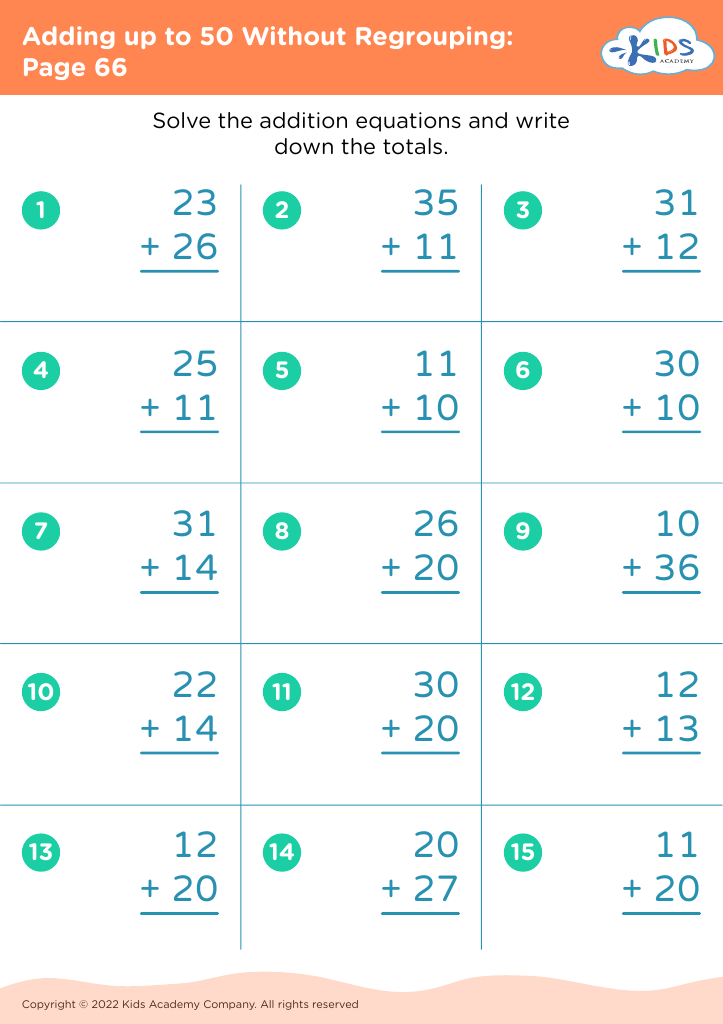
Adding up to 50 Without Regrouping: Page 66
Worksheet
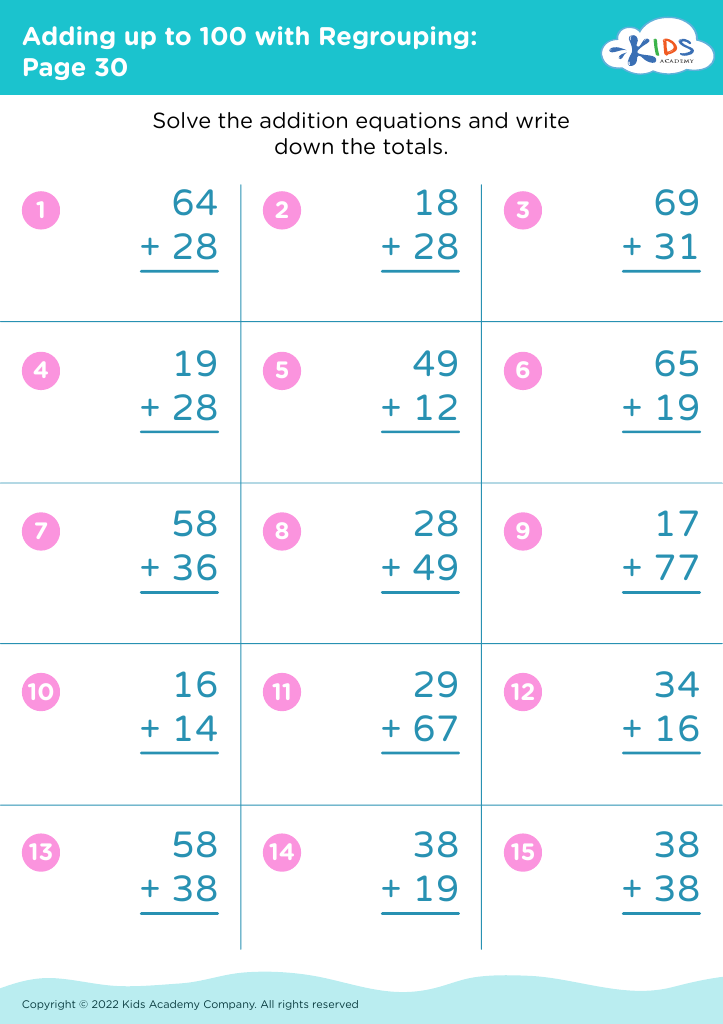
Adding up to 100 with Regrouping: Page 30
Worksheet
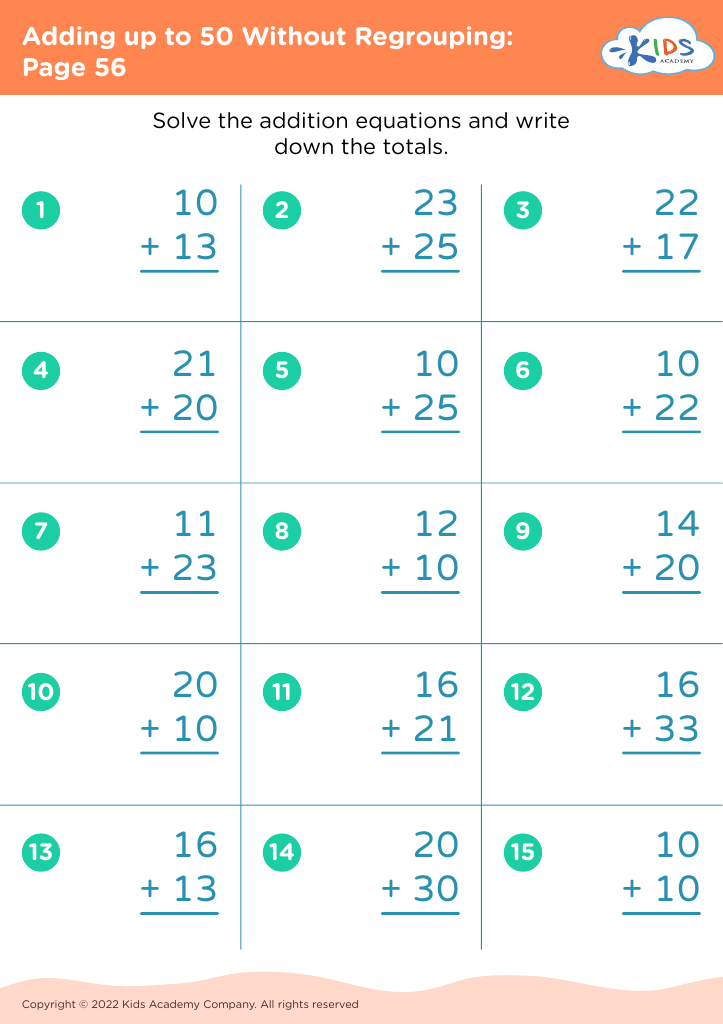
Adding up to 50 Without Regrouping: Page 56
Worksheet
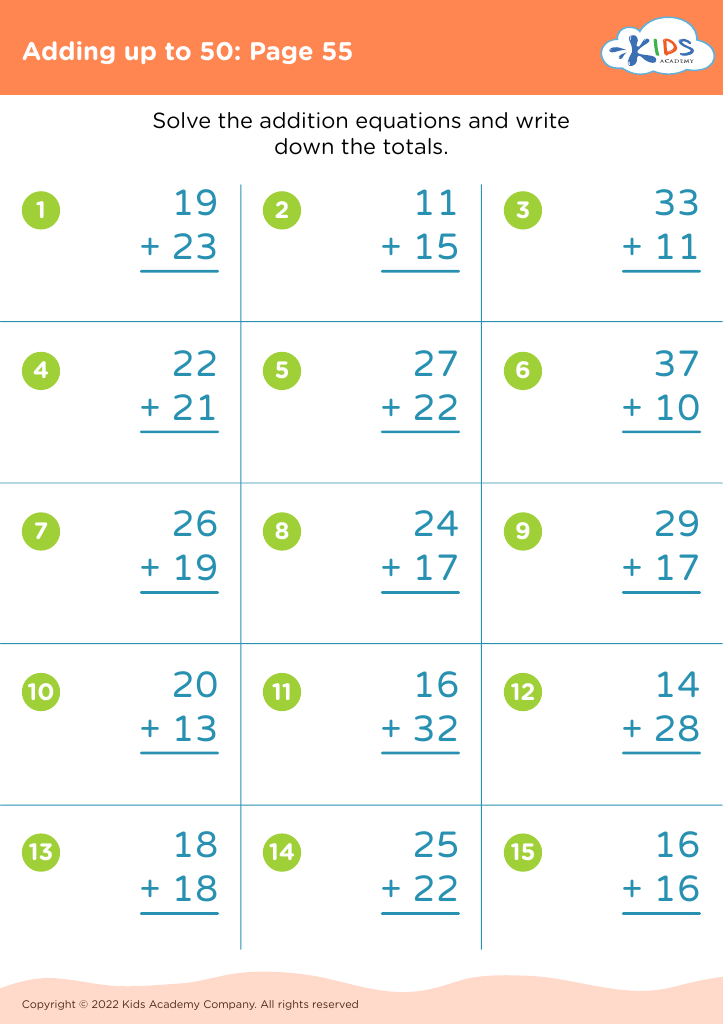
Adding up to 50: Page 55

Adding up to 50: Page 55

Adding up to 50: Page 55
Worksheet
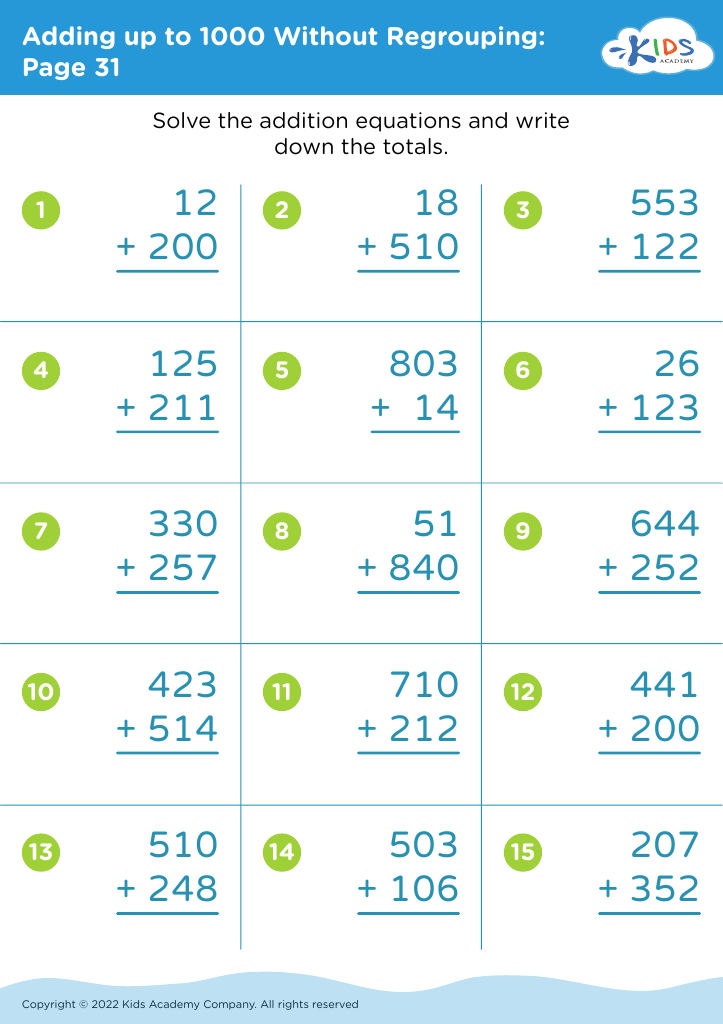
Adding up to 1000 Without Regrouping: Page 31
Worksheet
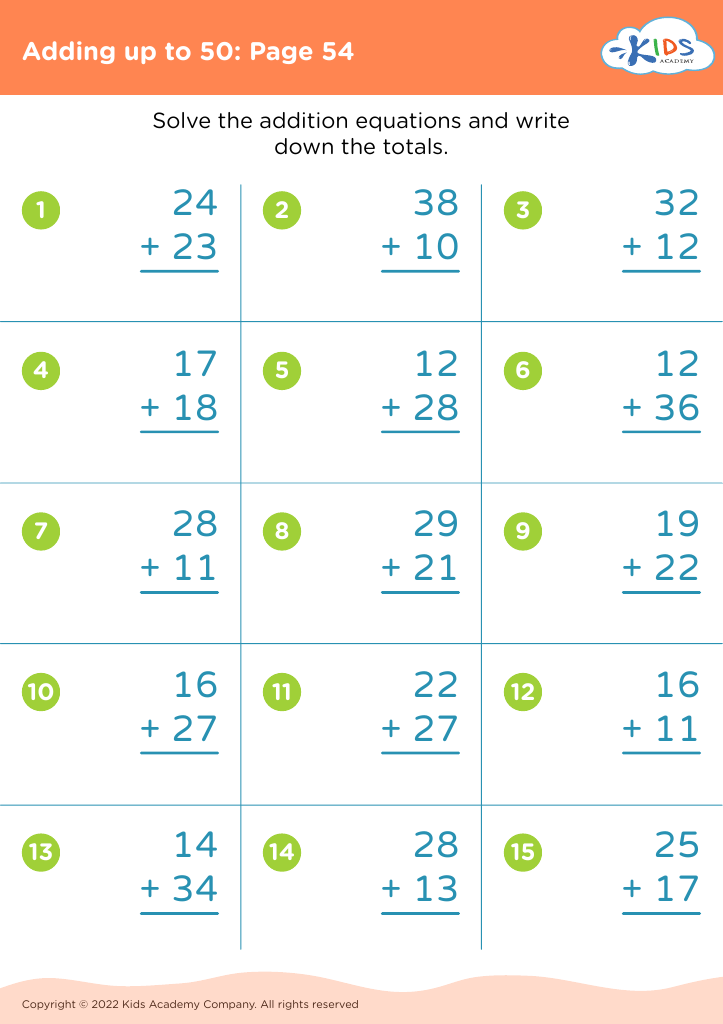
Adding up to 50: Page 54

Adding up to 50: Page 54

Adding up to 50: Page 54
Worksheet
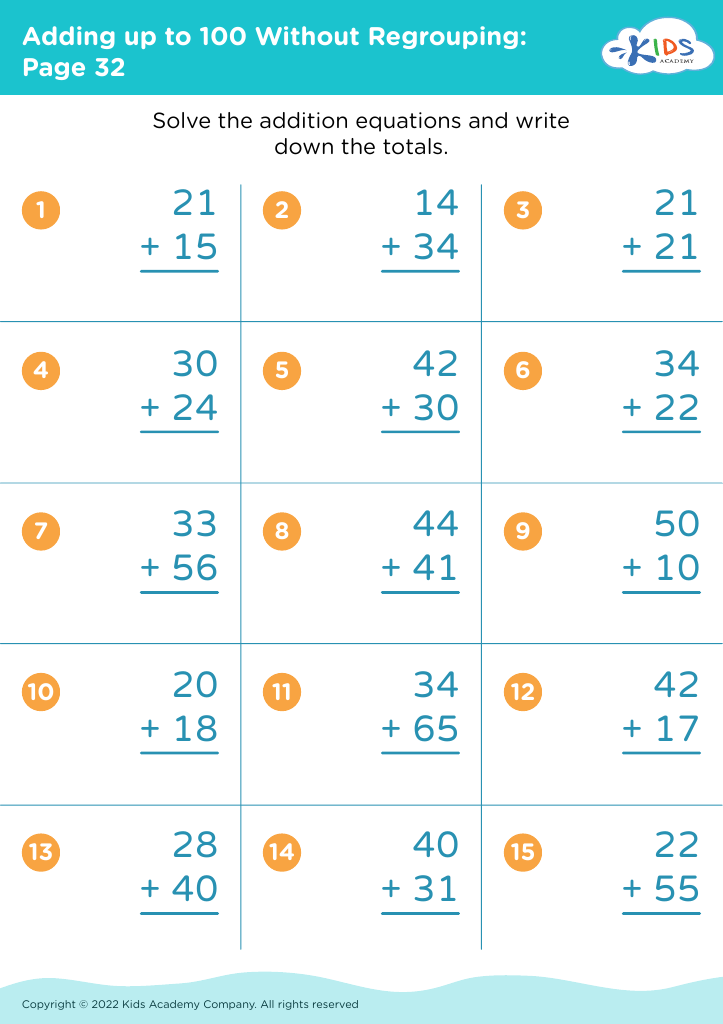
Adding up to 100 Without Regrouping: Page 32
Worksheet
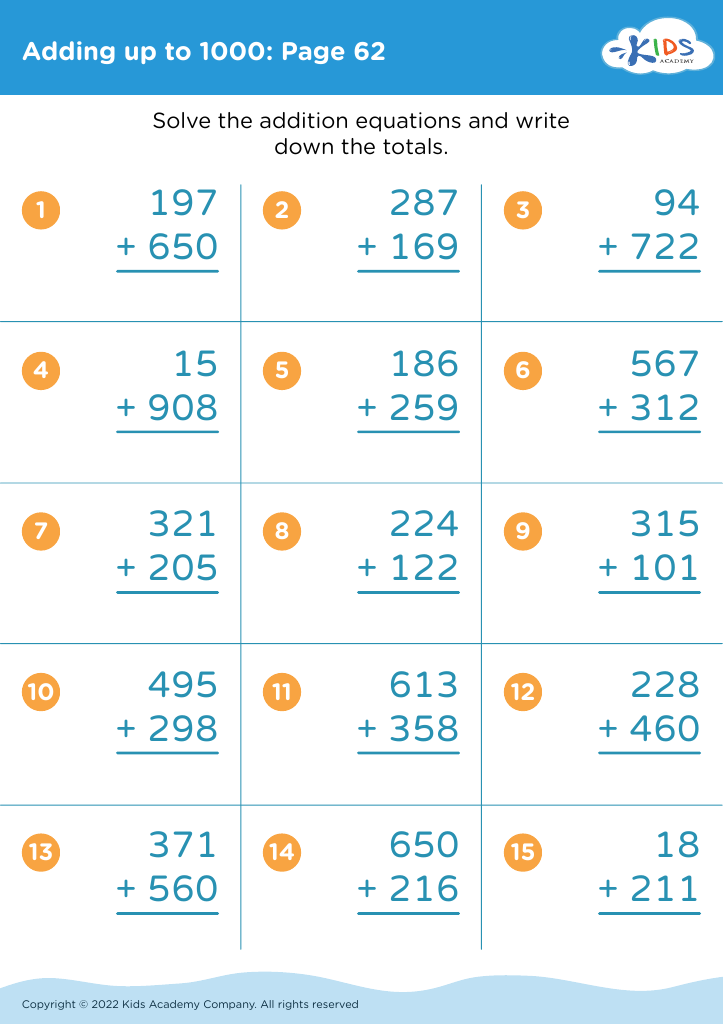
Adding up to 1000: Page 62

Adding up to 1000: Page 62

Adding up to 1000: Page 62
Worksheet
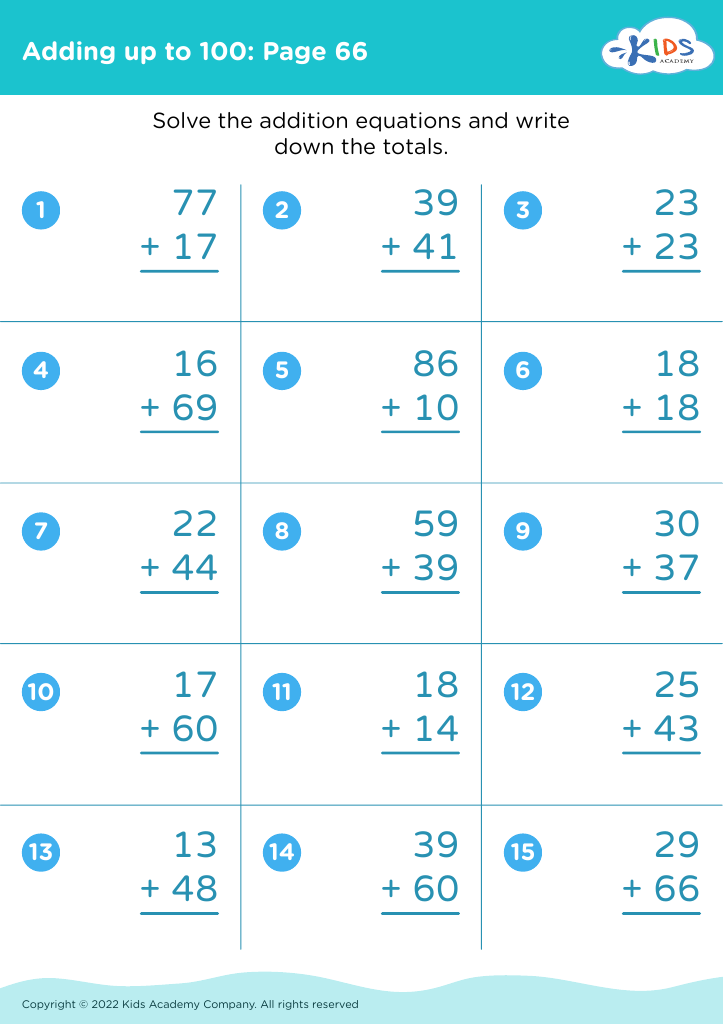
Adding up to 100: Page 66

Adding up to 100: Page 66

Adding up to 100: Page 66
Worksheet
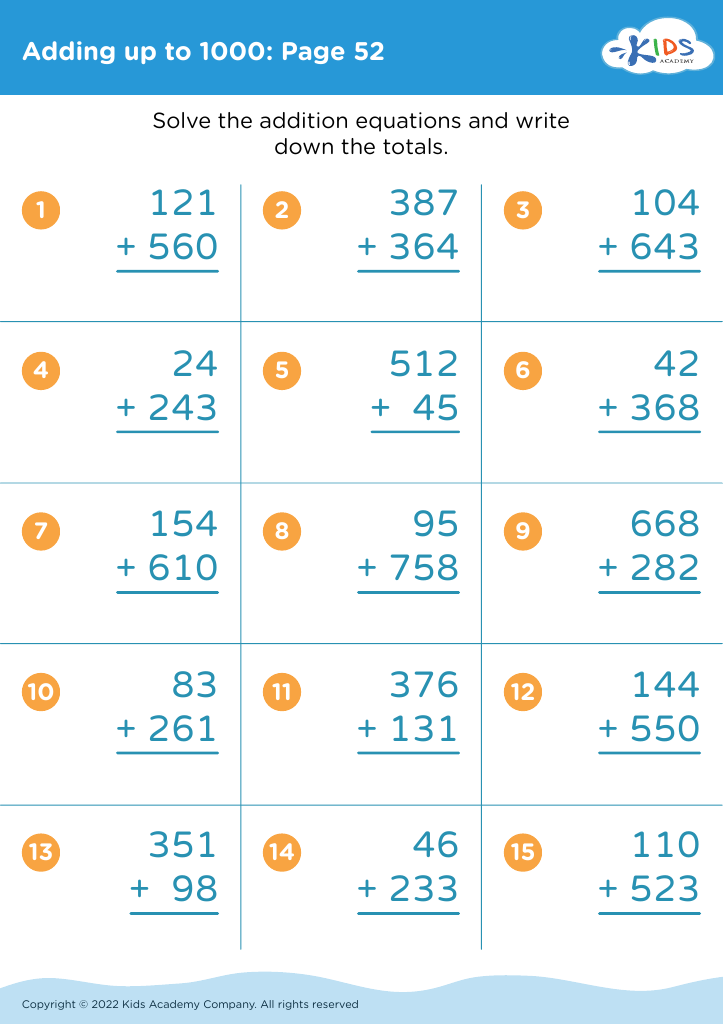
Adding up to 1000: Page 52

Adding up to 1000: Page 52

Adding up to 1000: Page 52
Worksheet
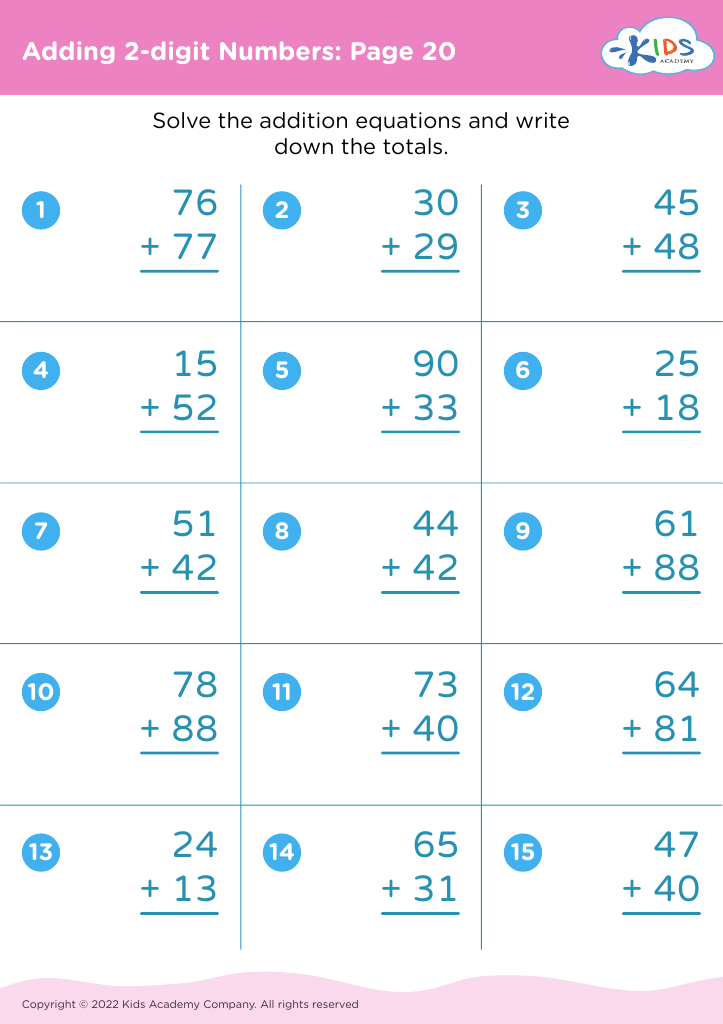
Adding 2-digit Numbers: Page 20

Adding 2-digit Numbers: Page 20

Adding 2-digit Numbers: Page 20
Worksheet
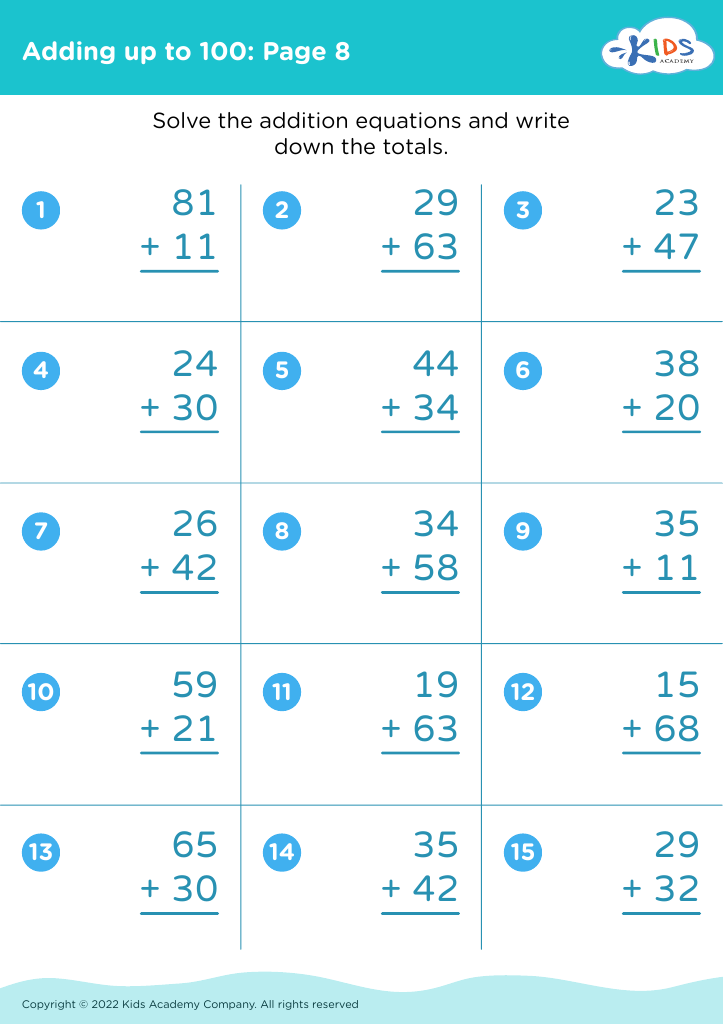
Adding up to 100: Page 8

Adding up to 100: Page 8

Adding up to 100: Page 8
Worksheet
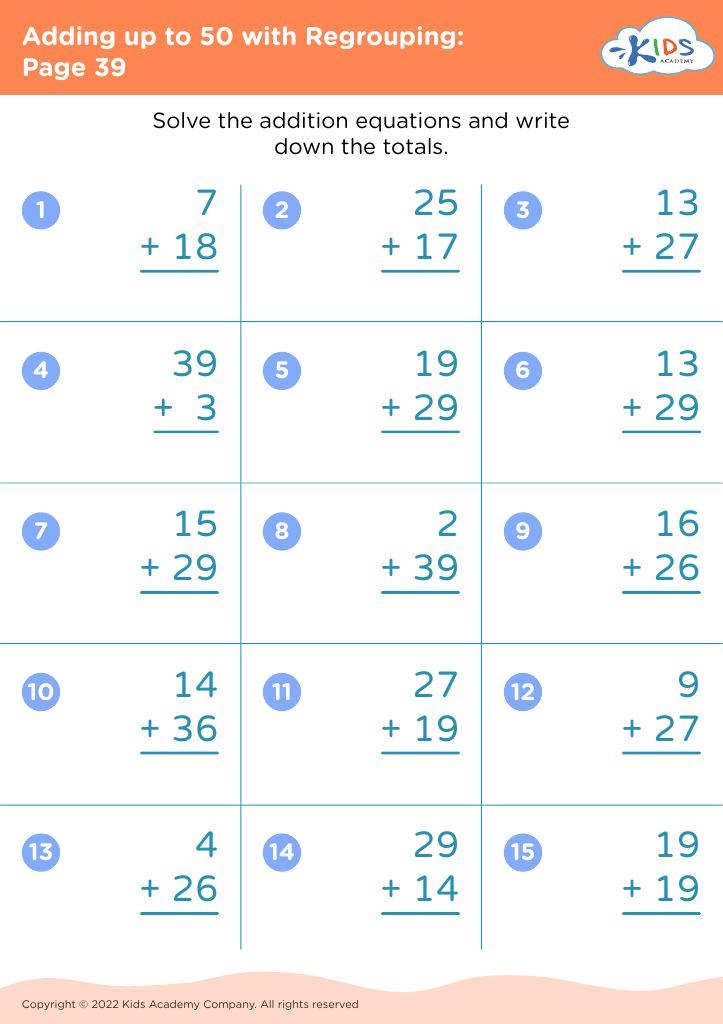
Adding up to 50 with Regrouping: Page 39
Worksheet
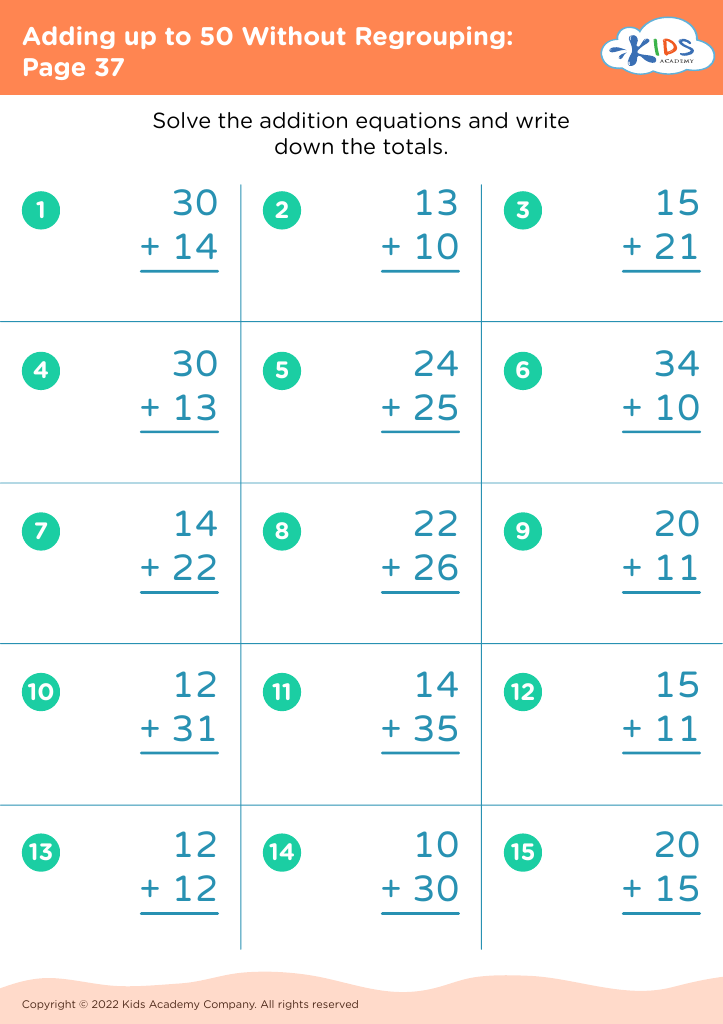
Adding up to 50 Without Regrouping: Page 37
Worksheet
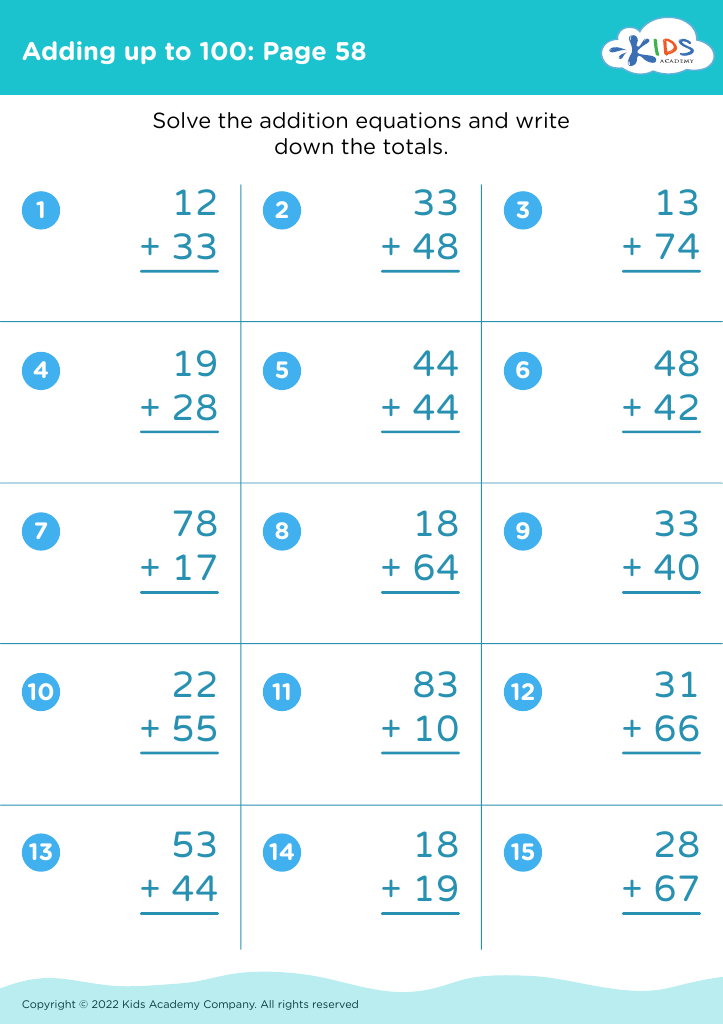
Adding up to 100: Page 58

Adding up to 100: Page 58

Adding up to 100: Page 58
Worksheet
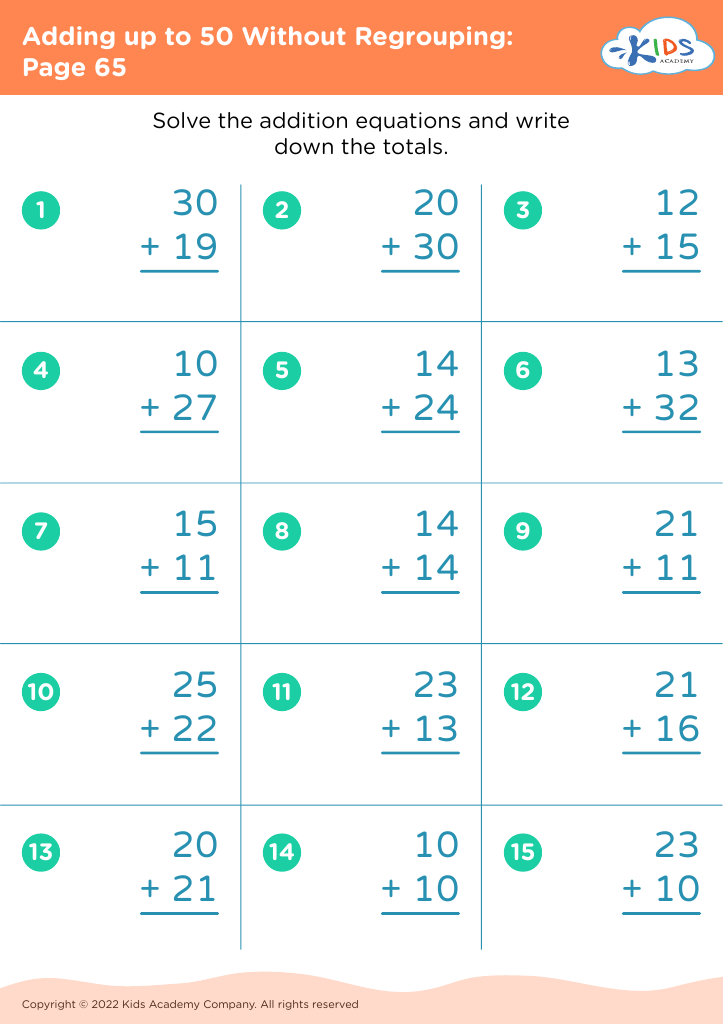
Adding up to 50 Without Regrouping: Page 65
Worksheet
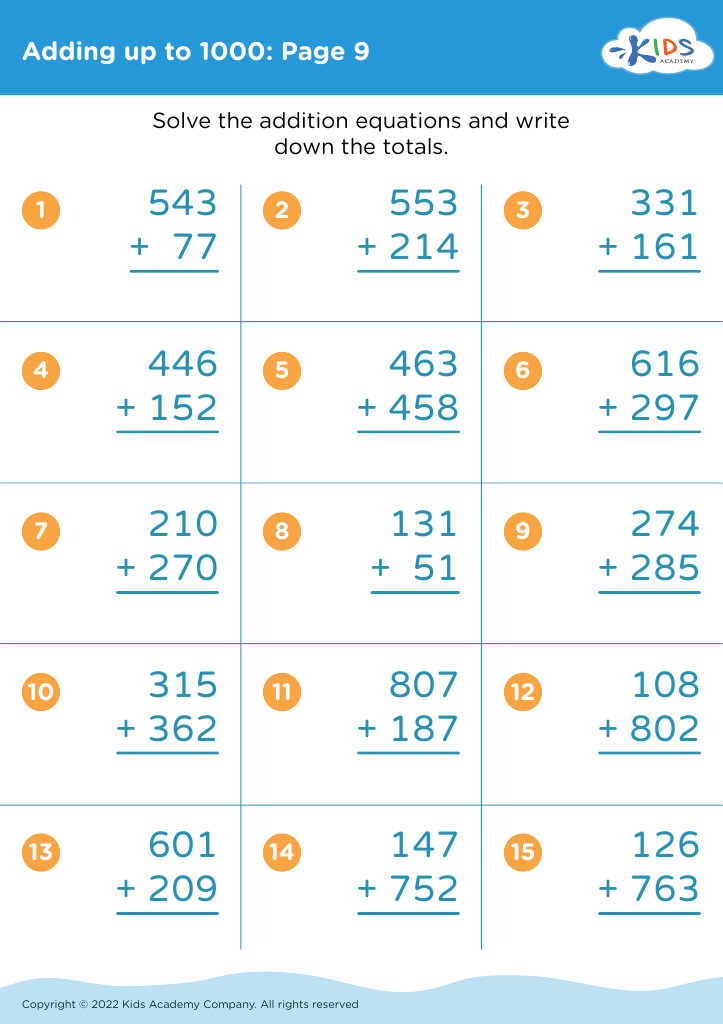
Adding up to 1000: Page 9

Adding up to 1000: Page 9

Adding up to 1000: Page 9
Worksheet
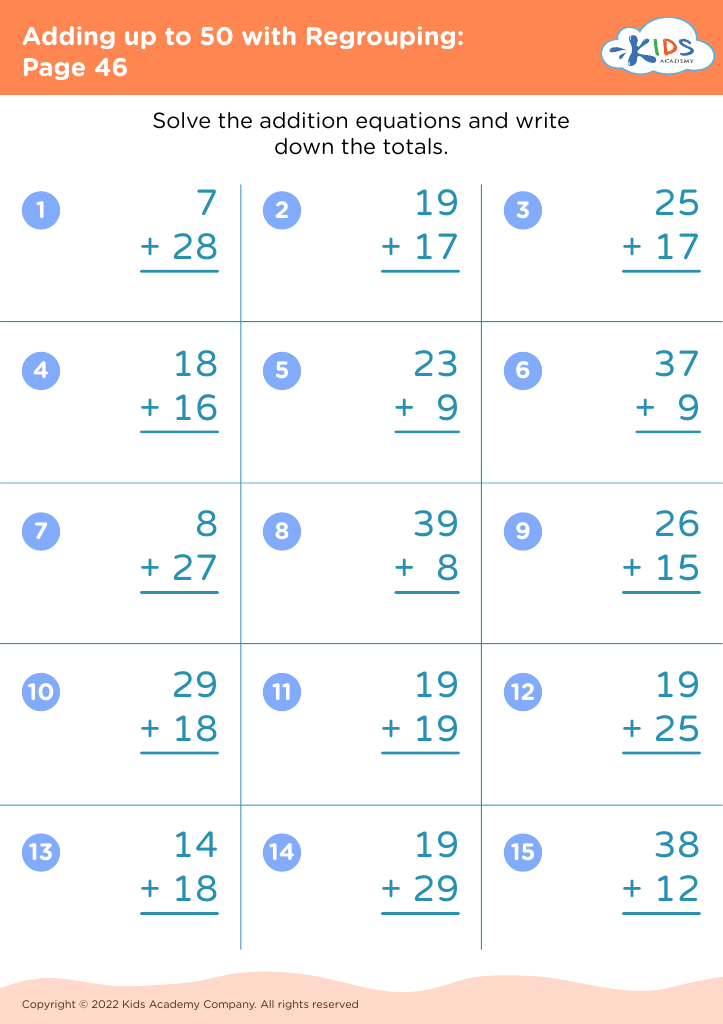
Adding up to 50 with Regrouping: Page 46
Worksheet
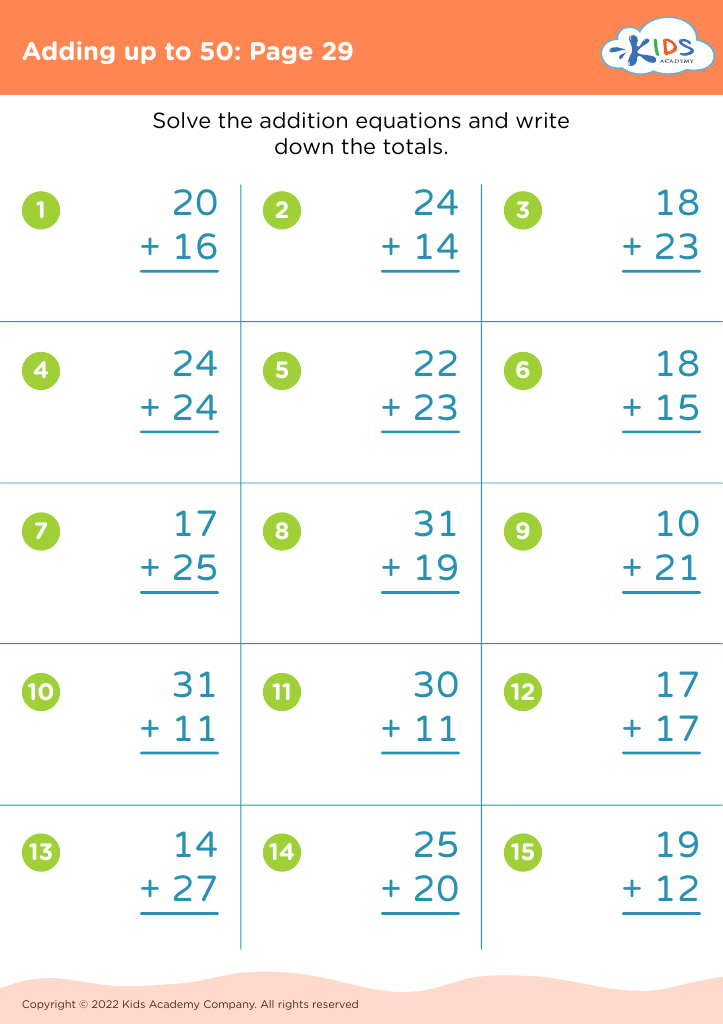
Adding up to 50: Page 29

Adding up to 50: Page 29

Adding up to 50: Page 29
Worksheet


Understanding fractions and mastering addition and subtraction in Grade 2 are fundamental components of early math education. Parents and teachers should care about these skills because they lay the groundwork for more advanced mathematical concepts essential for future academic success. When children grasp the basics of fractions, they learn to comprehend parts of a whole, which enhances their ability to deal with measurements, probability, and statistics later on. Adding and subtracting fractions build critical thinking and problem-solving skills by teaching children how to manipulate and combine components logically.

Furthermore, proficiency in these early math skills fosters a positive attitude towards math. Young learners who achieve success in Grade 2 math are more likely to have high self-esteem, motivation, and a lifelong interest in learning. Additionally, these skills are needed for everyday tasks, like cooking or managing finances, making them practically useful.

Parents and teachers play a crucial role in shaping attitudes and proficiencies. By focusing on fractions and arithmetic early on, they help ensure children have a solid foundation. This foundation is not only crucial for academic development but also for equipping children with the essential tools they’ll use throughout life. Therefore, caring about these basics in early education is an investment in a child's long-term intellectual growth and everyday competence.