Understanding sequencing Grade 2 Addition & Subtraction Worksheets
7 filtered results
-
From - To
Explore our "Understanding Sequencing Grade 2 Addition & Subtraction Worksheets" designed to enhance your child's mathematical skills! These engaging worksheets focus on the crucial concepts of sequencing and order of operations for addition and subtraction. By working through various problems, students develop their ability to organize information and solve equations logically. Each activity encourages critical thinking and reinforces foundational mathematical skills, preparing young learners for more advanced concepts. Ideal for classroom use or home practice, these age-appropriate resources make math enjoyable and accessible. Help your second grader boost their confidence and proficiency in math with our expertly crafted worksheets today!
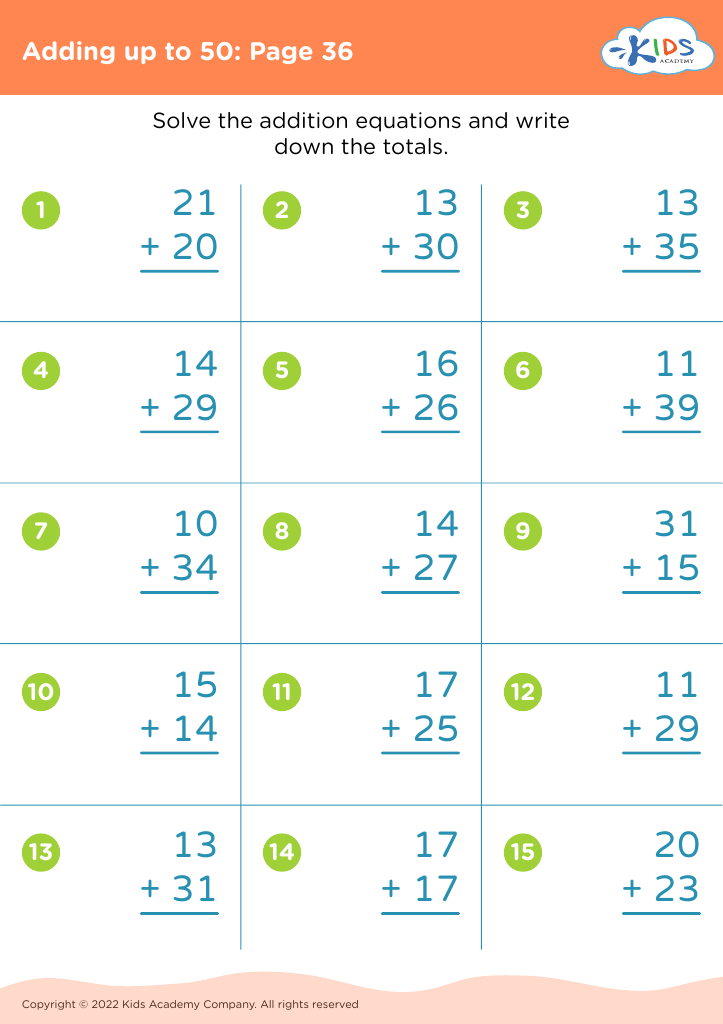
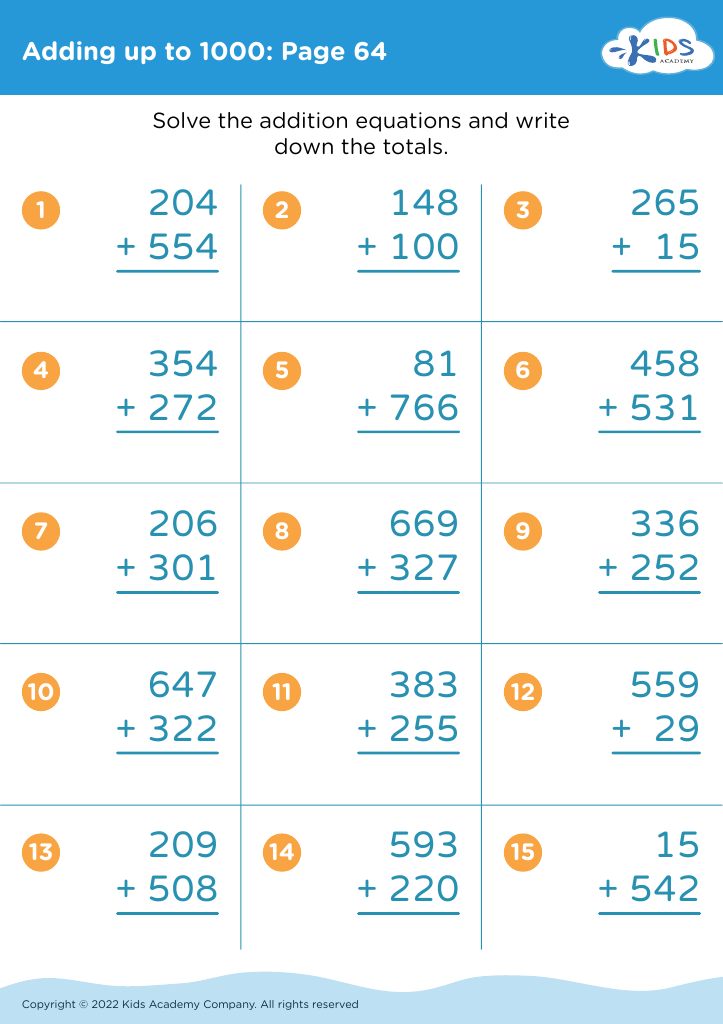
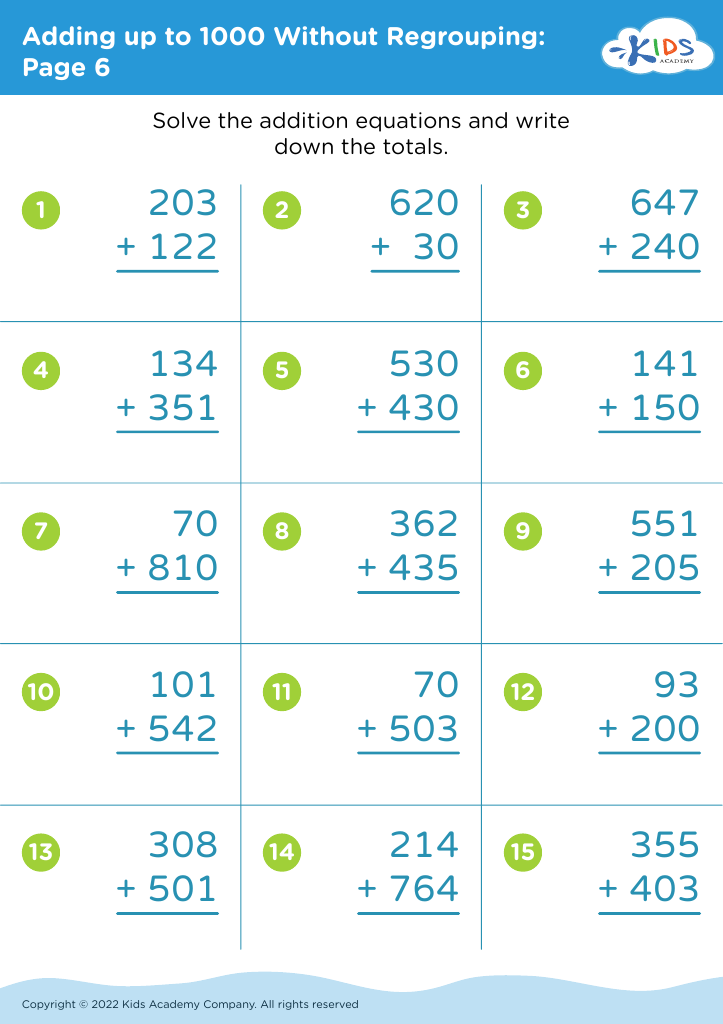
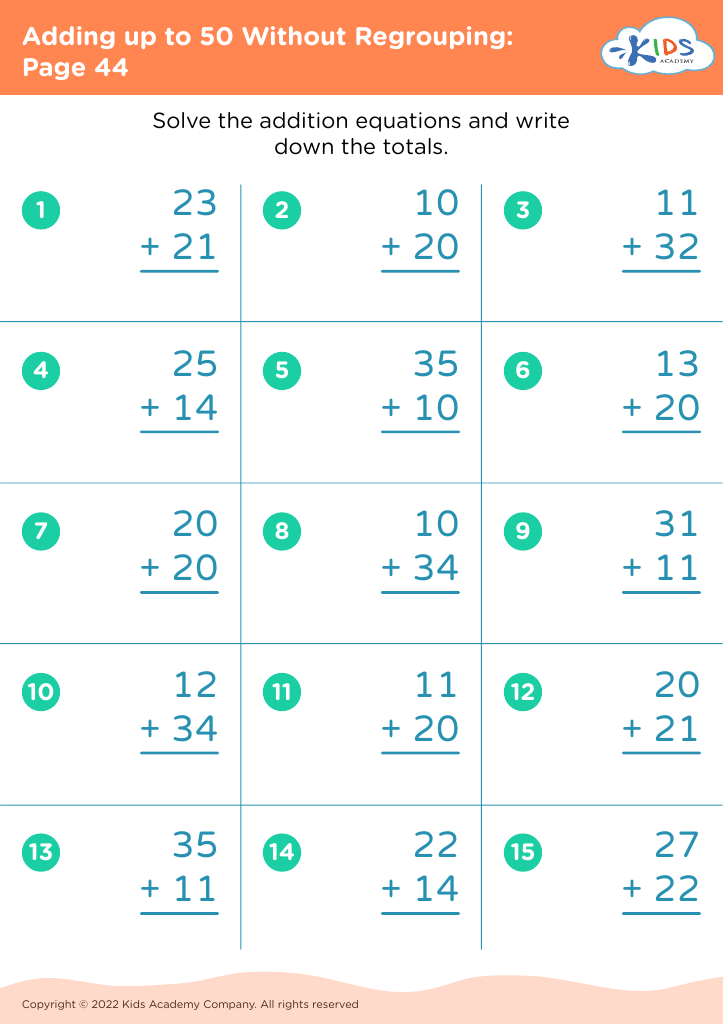
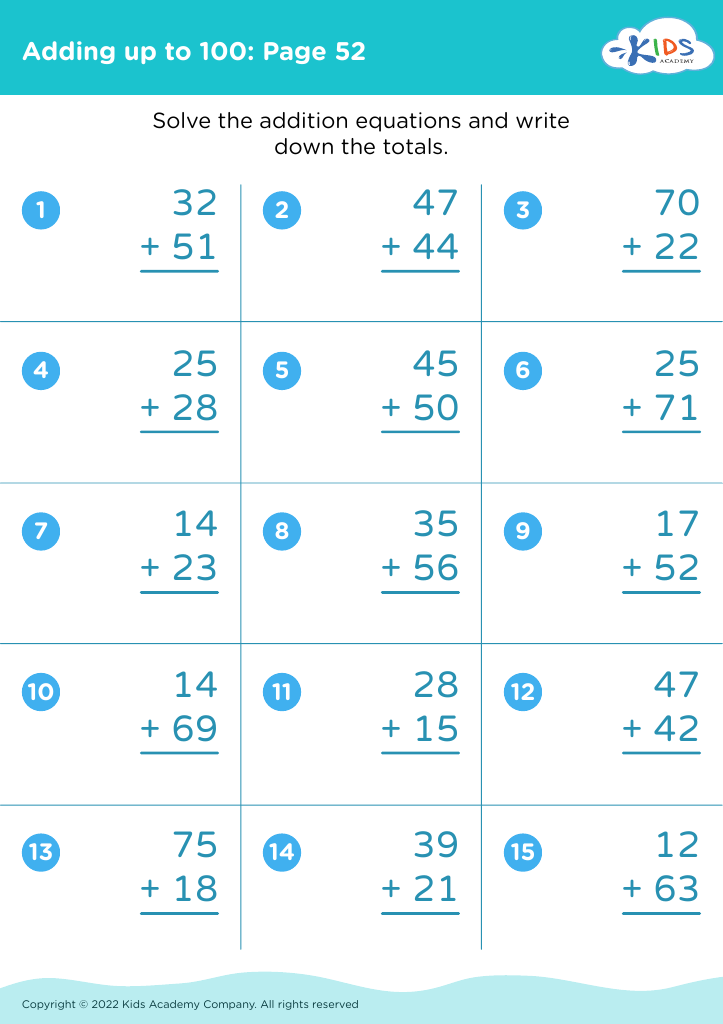
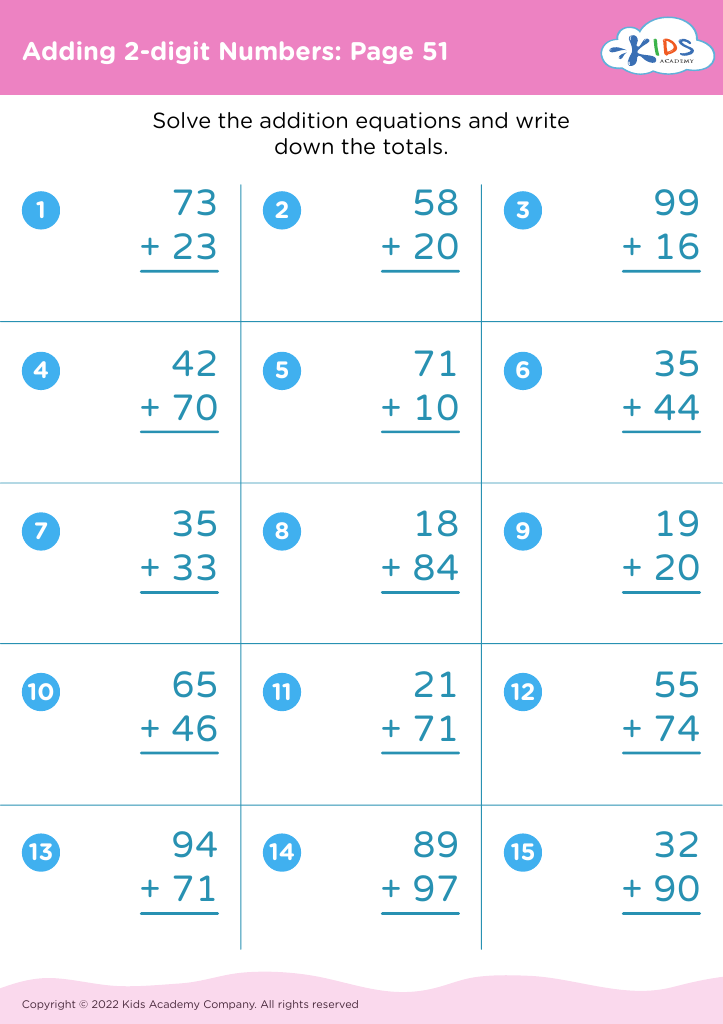
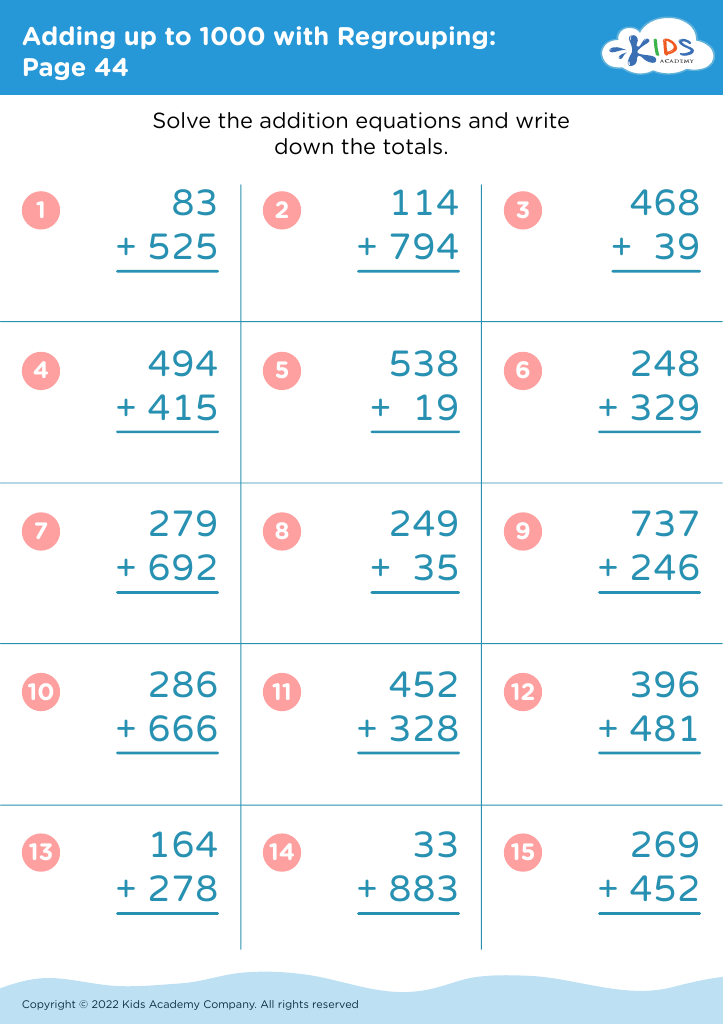








Understanding sequencing in Grade 2 addition and subtraction is crucial for both parents and teachers as it lays the foundation for a child’s mathematical development. In Grade 2, students start to develop advanced problem-solving skills, moving beyond simple calculations to understanding how numbers relate to each other. Sequencing helps children grasp the step-by-step process required to solve multi-step problems, a skill essential for their academic growth.
When parents and teachers emphasize sequencing, they provide children with strategies to break down complex problems into manageable parts. This not only fosters independence in learning but also enhances critical thinking skills, which are vital in all subjects. Grasping how to follow a logical order in addition and subtraction problems enables students to predict and understand patterns, building a stronger number sense that will support their future learning in mathematics.
Additionally, when parents and teachers recognize and support sequencing strategies, they can celebrate children’s small victories while building their confidence. A confident child is more likely to engage actively in math, cultivating a positive attitude towards the subject. Therefore, understanding sequencing in addition and subtraction is essential for nourishing a child’s confidence, mathematical proficiency, and overall academic experience.